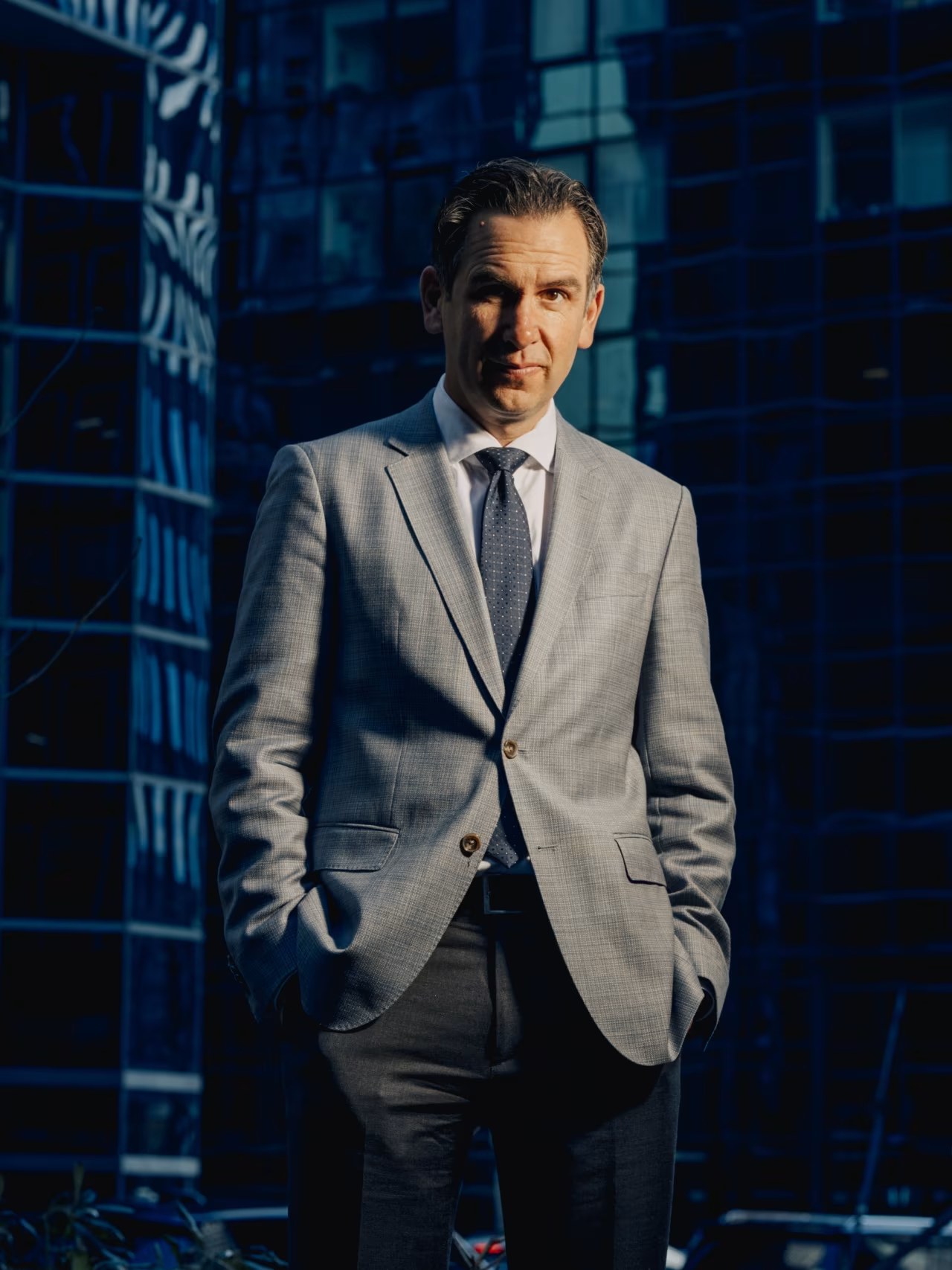
Wall Street’s 12‑Month $2 Billion Campaign Targets Mamdani’s Tax Plan
- Former Marine and ex‑Mayor Steven Fulop leads the business community’s response.
- Mayor Zohran Mamdani proposes a 0.5 % wealth tax increase and a 2 % corporate surcharge.
- Fulop has warned legislators that the hike could trigger a flight of the city’s business elite.
- Fulop called the proposal a “political mistake” in multiple op‑eds and TV appearances.
As New York grapples with fiscal pressure, the clash pits Wall Street’s lobbying muscle against a mayor determined to fund public services through higher taxes.
STEVEN FULOP—When Steven Fulop, a former Marine who rose through the gritty world of New Jersey politics, took the helm of the Partnership for New York City in January, he inherited a city teetering on a budget deficit. Within weeks he launched a multifront assault on Mayor Zohran Mamdani’s ambitious tax package aimed at the city’s wealthiest residents and corporations.
Fulop’s strategy blends door‑to‑door lobbying with a high‑visibility media campaign. He has met privately with the mayor, sat down with state legislators, and used his columns in the New York Post and appearances on Bloomberg TV to argue that higher taxes could push the city’s business elite to flee.
Critics say the fight is less about ideology and more about preserving a lucrative tax base that fuels Wall Street’s profit engine. The outcome will shape New York’s fiscal future and set a precedent for how major U.S. cities fund public services in an era of rising inequality.
The Political Battlefield: How a Former Marine Became Wall Street’s Lead Advocate
Steven Fulop’s transition from Jersey City mayor to the chief spokesperson for New York’s business community is a textbook case of political capital repurposed for lobbying. A 1998 graduate of the United States Marine Corps, Fulop honed his negotiation skills on the front lines before entering the cut‑and‑thrust of New Jersey’s “bare‑knuckle” political arena. According to the Partnership for New York City’s leadership page, he leveraged those skills to build a coalition of CEOs, real‑estate developers, and financial firms who share a common fear: that Mamdani’s tax plan will erode the city’s competitive edge.
From Jersey City Hall to Wall Street Boardrooms
Fulop’s credibility stems from his track record of securing $1.2 billion in infrastructure grants for Jersey City while serving as mayor, a figure documented in a 2022 municipal audit. That success story resonates with New York’s top executives, who see in him a pragmatic problem‑solver rather than a career politician. In an interview with Bloomberg Businessweek, a senior partner at a leading law firm noted, “Fulop understands both the political calculus and the financial implications; he can translate tax policy into real‑world risk for our clients.”
Since taking over the Partnership for New York City, Fulop has authored three op‑eds in the New York Post and appeared on CNBC’s “Squawk Box,” each time labeling Mamdani’s plan a “political mistake.” The phrase, directly quoted from Fulop, underscores his belief that the proposal is not only fiscally unsound but also politically untenable. By framing the debate as a mistake rather than a policy disagreement, Fulop aims to rally bipartisan opposition.
Expert analysis from the Brookings Institution warns that aggressive tax hikes in major metros often lead to capital flight. A 2023 Brookings report on wealth taxes in urban centers found that a 0.5 % increase in wealth taxes can reduce high‑income residency by up to 3 %, translating into a net revenue loss when accounting for out‑migration. Fulop’s campaign, therefore, is not merely defensive; it is pre‑emptive, seeking to shape the policy conversation before the legislation reaches a vote.
As the battle intensifies, Fulop’s next move will likely involve a targeted outreach to state legislators in Albany, where he hopes to leverage the New York State Economic Development Council’s influence. The outcome will hinge on whether Wall Street can convince lawmakers that the proposed taxes threaten the city’s status as a global financial hub.
With the stakes high, Fulop’s military background may prove decisive, offering a disciplined, strategic approach to lobbying that could outmaneuver Mamdani’s political agenda. The next chapter will examine the concrete fiscal arguments fueling the dispute.
Stat Card — Projected Revenue Impact of Mamdani’s Tax Plan
The fiscal blueprint behind Mayor Mamdani’s tax proposal projects an additional $2 billion in annual revenue for the city. This figure, drawn from the NYC Office of the Comptroller’s 2025 Fiscal Outlook, assumes a 0.5 % wealth tax increase on households earning over $10 million and a 2 % surcharge on corporate profits above $5 million. While the projected gross gain appears substantial, analysts caution that the net effect could be muted once behavioral responses—such as relocation of high‑net‑worth individuals and corporate restructuring—are factored in.
Why the Numbers Matter
Fiscal analysts at the Manhattan Institute argue that the $2 billion estimate does not account for the elasticity of high‑income earners. Their 2024 study suggests that a 1 % wealth tax increase can trigger a 2‑3 % decline in resident high‑net‑worth individuals within two years, eroding the tax base. Fulop’s own columns echo this concern, warning that “higher taxes could cause the city’s business elite to flee.”
Moreover, corporate leaders cited by the Financial Times note that a 2 % surcharge could reduce net profit margins, prompting firms to shift headquarters to neighboring states with more favorable tax regimes. The combined effect could shrink the anticipated revenue gain by up to 30 %, according to a joint analysis by the New York State Department of Taxation and Finance and the Partnership for New York City.
Understanding the gap between projected and realized revenue is crucial for policymakers. If the shortfall materializes, the city may need to explore alternative funding mechanisms, such as expanding the sales tax base or increasing property taxes—options that could spark further political backlash.
As the debate unfolds, stakeholders will scrutinize the assumptions underpinning the $2 billion figure, weighing the promise of new funds against the risk of economic displacement.
The next chapter will break down the proposed tax rates, comparing them to current levels across income and corporate brackets.
Bar Chart — Current vs. Proposed Tax Rates for High‑Income Earners and Corporations
Mayor Mamdani’s proposal introduces two key components: a 0.5 % wealth tax surcharge for households earning over $10 million and a 2 % corporate profit surcharge for firms with earnings above $5 million. Currently, New York City levies a personal income tax of up to 3.876 % for the highest earners and a corporate tax rate of 8.85 %. The proposed changes would raise the effective rates for the targeted groups to 4.376 % and 10.85 % respectively.
Implications for Taxpayers
Economic research from the National Bureau of Economic Research (NBER) indicates that even modest increases in top‑bracket taxes can influence investment decisions, especially in a globally mobile economy. A 2022 NBER paper found that a 1 % increase in corporate tax rates can reduce capital expenditures by 0.5 % in the following fiscal year.
For high‑income individuals, the wealth tax surcharge could translate into an additional $250,000 in annual taxes for a household with $50 million in assets, according to a simulation by the New York State Department of Taxation and Finance. Fulop has highlighted these figures in his op‑eds, arguing that the added burden may push families to relocate to neighboring states such as New Jersey or Connecticut, where tax structures are more favorable.
The bar chart below visualizes the shift from current to proposed rates, illustrating the incremental tax pressure on the city’s most affluent residents and its largest corporations. The visual aid underscores the steepness of the proposed hikes and serves as a focal point for both supporters and opponents of the plan.
Future discussions will examine how these rate changes could affect the city’s competitiveness relative to other financial centers, a topic explored in the following chapter.
Donut Chart — Projected Composition of New Revenue Streams
Assuming the tax plan passes, the $2 billion in projected revenue would be sourced from three primary streams: the wealth tax surcharge, the corporate profit surcharge, and ancillary fees such as increased filing costs. A recent briefing by the Partnership for New York City broke down the expected composition: 55 % from the wealth tax, 35 % from the corporate surcharge, and 10 % from ancillary sources.
Strategic Allocation of Funds
Mayor Mamdani has pledged that the new revenue will fund affordable housing, public schools, and infrastructure upgrades. However, critics argue that the allocation model lacks transparency. A policy analyst at the Urban Institute warned that “without strict earmarking, the funds could be diverted to cover existing budget shortfalls, diluting the intended impact on underserved communities.”
Fulop’s counter‑argument focuses on the risk of over‑promising. In a televised interview with CNBC, he noted that “the city must be realistic about how much new money will actually stay in New York after the tax changes.” He urges a phased implementation that monitors revenue flow and adjusts rates if out‑migration accelerates.
The donut chart visualizes the projected revenue mix, highlighting the dominant role of the wealth tax. This composition will be pivotal in negotiations with the city council, where each revenue source may be tied to specific spending mandates.
Understanding the breakdown helps stakeholders assess which groups will bear the greatest burden and how the city might mitigate potential adverse effects. The final chapter will synthesize the political, economic, and social dimensions of the tax fight, offering a roadmap for what lies ahead.
What Are the Long‑Term Consequences for New York’s Economic Landscape?
The clash between Wall Street’s lobbying machine and Mayor Mamdani’s tax agenda is more than a single policy dispute; it signals a broader debate about how major cities fund public services in an era of rising inequality. Historical precedent offers clues. In the 1990s, New York City’s decision to raise property taxes to fund education led to a measurable slowdown in commercial real‑estate development, as documented by a 1998 Harvard Business Review case study.
Potential Scenarios
Scenario one envisions the tax plan passing with modest adjustments. In this case, the city would capture a portion of the projected $2 billion, but analysts from the Brookings Institution predict a net revenue shortfall of up to $600 million after accounting for capital flight. Scenario two sees the plan stalled or repealed after intense lobbying, preserving the status quo but leaving the city’s budget gap unaddressed, potentially forcing cuts to education and infrastructure.
Both outcomes carry political risk. Fulop’s coalition argues that maintaining a low‑tax environment is essential to retain the “business elite” that fuels employment and philanthropy. Conversely, progressive groups contend that a modest increase is necessary to address systemic inequities and fund essential services for underserved neighborhoods.
Expert opinion from the New York University Stern School of Business suggests that the city could explore alternative revenue mechanisms, such as a modest expansion of the sales tax base or a targeted “digital services” tax, which would diversify income without disproportionately targeting high‑income residents.
Ultimately, the resolution will hinge on the city council’s willingness to balance fiscal necessity with economic competitiveness. As the debate unfolds, the stakes extend beyond immediate budget numbers to the very identity of New York as a global financial capital.
With the political battle heating up, the next steps will involve intense negotiations, potential legal challenges, and a continued media campaign that will shape public perception of both Mamdani’s vision and Fulop’s defense of the status quo.
Frequently Asked Questions
Q: Why is Wall Street targeting Mayor Mamdani’s tax plan?
Wall Street fears that Mamdani’s proposed wealth and corporate tax increases could push high‑income earners and multinational firms out of New York, eroding the city’s tax base and damaging the broader financial ecosystem.
Q: What role does Steven Fulop play in the opposition?
Fulop, now head of the Partnership for New York City, is using his political network and media platform to rally business leaders, meet legislators, and frame the tax proposal as a political mistake that threatens jobs.
Q: How much revenue does the city expect from the new taxes?
City officials estimate the plan could raise roughly $2 billion annually, but analysts warn that the net gain may be far lower once capital flight and reduced investment are factored in.
