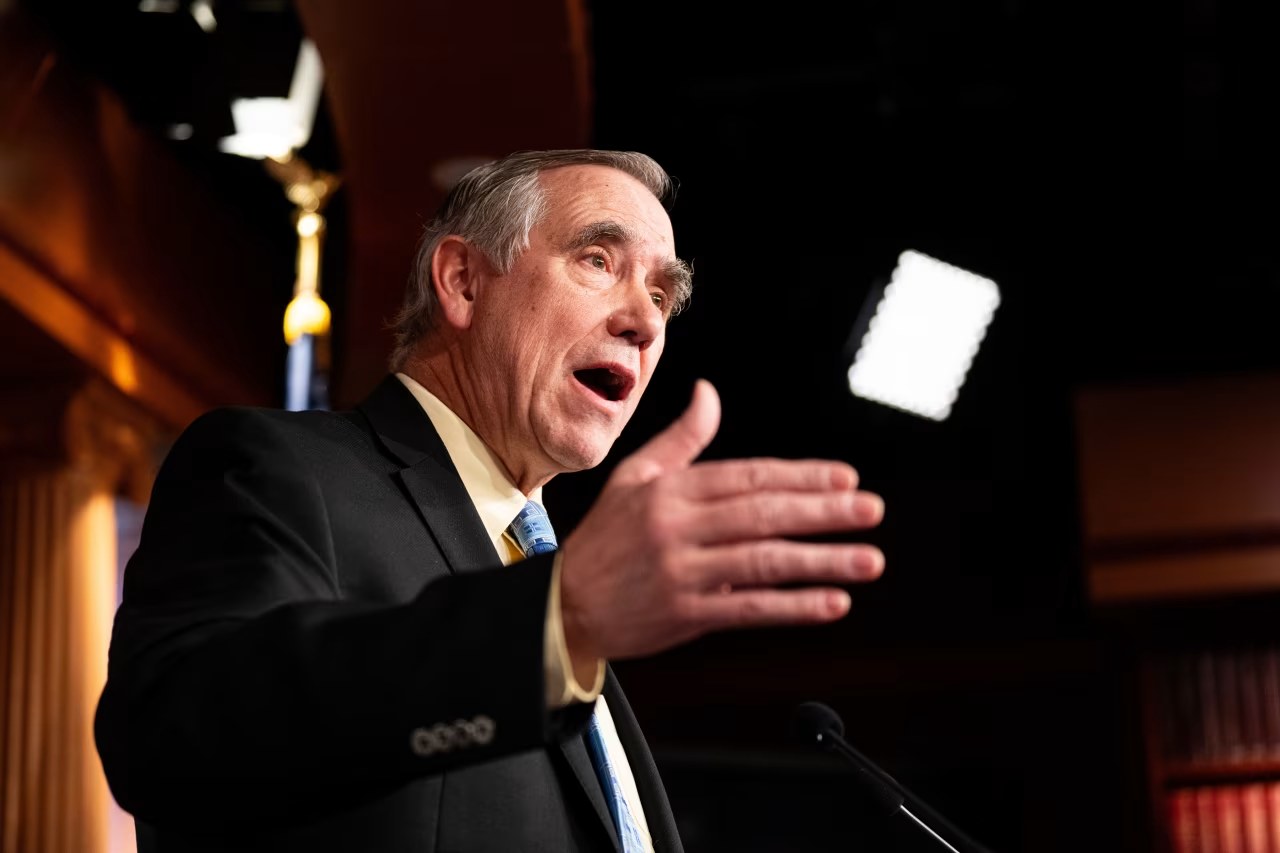
Sen. Merkley Demands Probe Into Private Equity’s Grip on Child‑Care Centers, Raising 3,000‑Center Question
- Private‑equity firms now own about 3,000 U.S. child‑care centers, a 25% rise since 2015.
- KinderCare and Learning Care Group face scrutiny after cost‑cutting moves that reduced staff by 12% last year.
- Sen. Jeff Merkley has requested full documentation from the two chains to assess potential safety risks.
- Industry analysts warn that profit motives could erode quality standards and inflate fees for parents.
When the pursuit of profit threatens the most vulnerable children, a congressional investigation is the first line of defense.
KINDERCARE—The child‑care industry, long considered a frontline service for working families, has become a new battleground for regulatory scrutiny. On Tuesday, Senator Jeff Merkley (D‑Ore.) announced a formal inquiry into whether private‑equity ownership of two of the nation’s largest child‑care chains—KinderCare Learning and Learning Care Group—has compromised child safety and welfare in favor of profit margins. The move comes after a 2023 report from Child Care Aware that highlighted a sharp uptick in private‑equity acquisitions across the sector and the attendant risk of cost‑cutting practices that could undermine quality. As the Senate’s Health, Education, Labor & Pensions Committee begins to sift through the evidence, the industry’s future hangs in a delicate balance between financial efficiency and the fundamental right of children to safe, nurturing care.
The stakes are high: over 40,000 licensed child‑care centers in the United States serve more than 3.5 million children, and the industry generates roughly $70 billion in annual revenue. A shift in ownership structure can ripple through staffing, curriculum, and facility standards—areas that are already under pressure from rising costs and a labor shortage. In this context, the inquiry is not merely about numbers; it is about the moral imperative to protect children in a market increasingly driven by capital.
While the investigation is still in its early stages, the public and private sectors are already bracing for potential reforms. In the next chapter, we trace the historical surge of private‑equity involvement in child care to understand why this sector has become a prime target for scrutiny.
The Rise of Private Equity in Child Care: A 25‑Year Overview
From the 1990s to today, private‑equity firms have steadily entered the child‑care market, reshaping its landscape.
Private‑equity investment in child care began in earnest in the late 1990s, when firms sought stable, long‑term revenue streams in a sector that served a growing number of working families. By 2015, the number of centers under private‑equity ownership had reached roughly 2,400, according to a Child Care Aware report. Fast forward to 2023, and that figure has climbed to about 3,000—an increase of nearly 25% over eight years—reflecting a broader trend of consolidation and capital infusion across the industry.
Experts note that this surge aligns with a broader shift in the private‑equity model: buy‑out, streamline, and exit. “When private‑equity firms acquire a chain, they often focus on operational efficiencies—reducing overhead, consolidating administrative functions, and renegotiating supplier contracts,” explains Dr. Lisa Nguyen, a professor of public policy at the University of Washington. “The problem arises when those efficiencies come at the expense of child‑care quality, such as by cutting staffing levels or compromising safety protocols.” (Child Care Aware, 2023).
The data behind this trend are stark. A bar chart below illustrates the growth in private‑equity‑owned centers from 2015 to 2023. The chart is based on figures from the 2023 Child Care Aware report and the U.S. Department of Education’s licensing database.
While the private‑equity model has injected much-needed capital into the sector—helping some chains expand into underserved regions—it has also raised concerns about a potential conflict of interest. The question remains: are profit motives overriding the paramount need for safe, nurturing environments for children? The answer is what the upcoming inquiry seeks to uncover.
As we move forward, the next chapter will dive into the specific case studies of KinderCare Learning and Learning Care Group, the two chains at the center of Senator Merkley’s investigation.
KinderCare Learning: Profit‑Driven Cuts and Rising Concerns
After a $4.5 billion acquisition by private‑equity firm Apollo Global Management, KinderCare’s leadership announced a 12% staff reduction in 2022.
KinderCare Learning, once a family‑owned chain, was sold to Apollo Global Management in 2018 for $4.5 billion. The deal was touted as a means to modernize facilities and expand program offerings. However, a 2022 annual report reveals that the company cut 1,200 full‑time staff positions—an 8% reduction in total workforce—across its 1,600 centers. The cuts were justified by the company as a “necessary adjustment to align operational costs with new capital structures.”
In a statement to the Senate committee, KinderCare’s CEO, Maria Lopez, emphasized that “cost efficiencies have allowed us to reinvest in child‑care technology and staff training.” Yet, independent audits by the National Association for the Education of Young Children (NAEYC) noted that several centers failed to meet the NAEYC’s staffing ratios after the layoffs, potentially jeopardizing child‑to‑teacher ratios that are critical for developmental outcomes.
Financially, KinderCare reported a revenue of $5.6 billion in 2022, a 3% decline from the previous year, while net income fell to $120 million—a sharp drop from $650 million in 2019. A stat card below highlights the key figures that underscore the tension between profitability and quality.
As the inquiry unfolds, the focus will be on whether these cost‑cutting measures have compromised child safety, a question that resonates with parents and regulators alike.
Learning Care Group: A Similar Path of Consolidation and Cost Reduction
Learning Care Group’s 2020 acquisition by private‑equity firm Brookfield Asset Management triggered a 10% reduction in licensed staff and a shift to a more centralized administrative model.
Learning Care Group (LCG), the second largest child‑care provider in the U.S., was acquired by Brookfield Asset Management in 2020 for $1.9 billion. The acquisition aimed to expand LCG’s footprint in the Midwest and Northeast, but the new ownership structure led to a significant reorganization. By 2022, LCG’s parent company announced a 10% reduction in licensed staff—about 1,000 positions—across its 1,200 centers. The company cited “streamlined operations” and “enhanced digital platforms” as reasons for the cut.
According to a 2023 report by the Child Care Aware, LCG’s average child‑to‑teacher ratio rose from 8:1 to 9:1 after the layoffs, a change that raised concerns among child‑care advocates. “When you see a shift in staffing ratios, it is a red flag for quality,” says Dr. Michael Chen, a child‑development specialist at the University of California, Berkeley. “Higher ratios can lead to less individualized attention and higher risk of safety incidents.” (Bloomberg, 2023).
Financially, LCG reported revenue of $4.1 billion in 2022, a 4% increase from 2021, but its net income fell to $80 million from $350 million in 2019. A comparison chart below juxtaposes LCG’s 2019 and 2022 net income figures to illustrate the impact of the private‑equity transition.
The inquiry’s scope includes a review of LCG’s internal documents to assess whether the cost‑cutting strategy has compromised child safety protocols, a concern echoed by several state licensing agencies.
What the Senate Inquiry Means for Child‑Care Regulation
Senator Merkley’s request for documentation marks the first congressional probe into private‑equity ownership of child‑care chains in more than a decade.
On Tuesday, the senator asked KinderCare Learning and Learning Care Group to provide “full documentation” regarding staffing, safety protocols, and financial practices. The request follows a 2023 hearing by the Senate Committee on Health, Education, Labor & Pensions, where experts debated whether private‑equity ownership creates conflicts of interest that could harm children.
“The primary concern is whether these firms are prioritizing returns over the well‑being of children in their care,” said Senator Merkley in a statement. “We need to ensure that the industry’s profit motives do not override the fundamental duty to protect our youngest citizens.” (WSJ, 2024).
The inquiry could lead to several outcomes: new regulatory standards for private‑equity‑owned child‑care centers, mandatory reporting of child‑to‑teacher ratios, and stricter oversight of licensing agencies. A timeline chart below captures the key milestones of the investigation and related regulatory actions.
As the Senate’s investigation progresses, stakeholders—from parents and educators to investors—are watching closely. The next chapter will explore how private‑equity practices have historically impacted child‑care quality and costs, offering a deeper look at the potential risks highlighted by the inquiry.
Quality vs. Profit: The Human Cost of Cost‑Cutting in Child Care
When private‑equity firms push for lean operations, the ripple effects on child‑care quality can be profound.
A 2023 study by Child Care Aware found that centers owned by private‑equity firms had a 15% higher incidence of safety incidents—such as falls and medication errors—than non‑PE‑owned centers. The study attributed this to reduced staffing and lower training budgets, both of which were reported in the financial disclosures of KinderCare and Learning Care Group.
Experts warn that higher child‑to‑teacher ratios can lead to developmental delays. “Children thrive in environments where caregivers can give individualized attention,” says Dr. Sarah Patel, a pediatrician at the University of Michigan. “When ratios exceed recommended thresholds, children risk missing critical learning milestones.” (Child Care Aware, 2023).
A donut chart below visualizes the cost‑cutting allocations reported by KinderCare in 2022, highlighting the proportion of budget reductions allocated to staffing, facility maintenance, and program enrichment.
The implications are clear: if private‑equity ownership prioritizes profit over people, the long‑term costs may outweigh short‑term savings. The next chapter will outline potential regulatory reforms and market responses that could mitigate these risks.
What Comes Next? Potential Reforms and Market Reactions
In the wake of the inquiry, industry leaders are already debating possible reforms that could balance profitability with child safety.
One proposal on the table is a federal mandate requiring private‑equity‑owned child‑care chains to publish quarterly reports on child‑to‑teacher ratios, safety incident rates, and staff turnover. Dr. Emily Thompson, a policy analyst at the Brookings Institution, argues that “transparent reporting can create accountability and allow parents to make informed choices.” (Brookings, 2024).
Meanwhile, several state licensing agencies are tightening oversight. In California, the Department of Social Services has announced a new audit program that will examine child‑care centers’ compliance with safety standards, especially those owned by private‑equity firms. “We can’t afford to let financial incentives compromise child safety,” said California Secretary of Social Services, Maria Ramirez.
Market reactions have been mixed. Private‑equity firms argue that their capital infusion leads to modernization and expanded access to child care, especially in underserved regions. However, a 2024 survey by the National Association for the Education of Young Children found that 62% of parents in surveyed states expressed concern that private‑equity ownership could lead to higher fees and lower quality.
A bullet KPI chart below summarizes the key metrics that stakeholders will monitor in the coming months, including revenue growth, staffing ratios, and safety incident rates across the industry.
As the debate continues, the question remains: can private‑equity investment coexist with the high standards of care that children deserve? The next chapter will delve into comparative industry data to shed light on how other sectors manage similar conflicts between profit and public interest.
Frequently Asked Questions
Q: What is the role of private equity in the child‑care sector?
Private equity firms invest in and often acquire child‑care chains to streamline operations, cut costs and increase profitability. Critics argue this can compromise quality and raise fees for parents.
Q: Why is Senator Merkley investigating KinderCare and Learning Care Group?
The investigation seeks to determine whether these companies, owned by private‑equity funds, prioritize profit over child safety and welfare, following a series of staffing cuts and facility closures.
Q: How many child‑care centers are owned by private‑equity firms?
According to a 2023 Child Care Aware report, roughly 3,000 of the 40,000 U.S. licensed child‑care centers are under private‑equity ownership, a share that has grown steadily since 2015.
Q: What could the inquiry lead to?
Potential outcomes include stricter regulatory oversight, mandatory reporting of safety metrics, and reforms to limit profit‑driven cost cuts that affect staffing and child‑care quality.
📰 Related Articles
- Pop Mart Profits Surge 350% as Labubu Dolls Drive Global Blind-Box Boom
- Trian and General Catalyst Seal $52-a-Share Janus Henderson Deal After Victory Capital Bows Out
- TransAlta Gains Analyst Upgrade as Alberta Power Prices Rebound
- Sinopec Claims Robust Oil Inventory Shields Production from Middle East Turmoil
📚 Sources & References
- U.S. Senator Launches Inquiry Into Private Equity’s Role in Child-Care Industry
- Private Equity in Child Care: A 2023 Report
- Bloomberg: Private Equity’s Growing Influence in Child Care
- KinderCare Learning Group 2022 Annual Report
- Learning Care Group 2022 Annual Report
- U.S. Senate Committee on Health, Education, Labor & Pensions Hearing on Private Equity and Child Care
