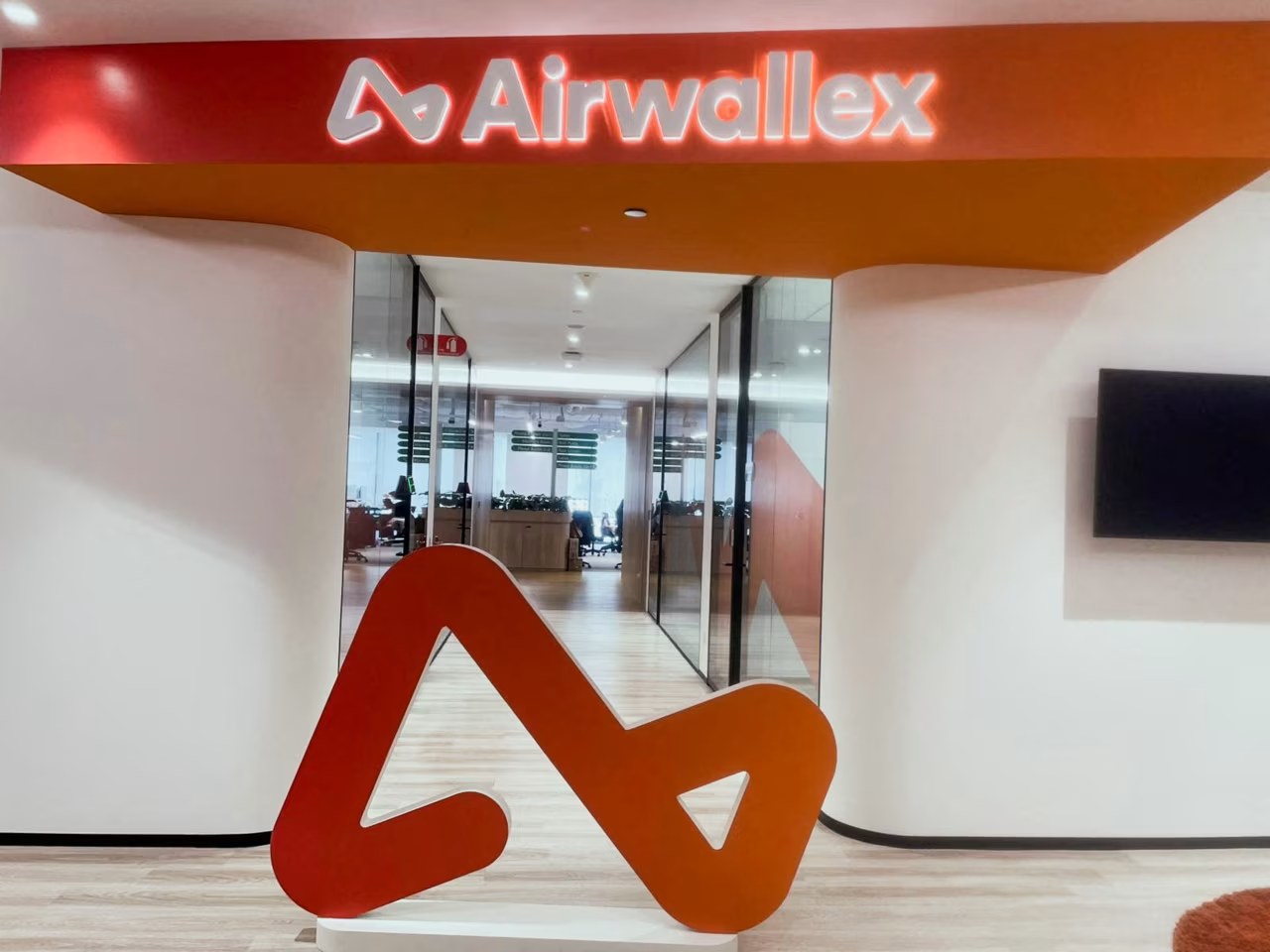
Airwallex to Spend $1.1 Billion in Europe After $8 Billion Valuation
- Airwallex will deploy $1.135 billion across Europe within five years, its largest regional commitment to date.
- The Melbourne-based fintech handles multicurrency accounts and cross-border payments for 100,000+ businesses.
- Shareholders include Visa, Mastercard, Salesforce, and Tencent; December round set an $8 billion price tag.
- Platform uses AI to automate FX conversion, invoice reconciliation, and expense workflows.
- Expansion targets UK, Germany, France, and the Netherlands first, with local banking licenses already in progress.
Can a decade-old Australian upstart crack Europe’s saturated fintech market?
AIRWALLEX—When Jack Zhang and Max Li founded Airwallex in a Melbourne coffee shop nine years ago, they simply wanted cheaper FX for their import business. Today the company commands a $1.135 billion European war chest—more than double the equity raised by Revolut or N26 in their Series C rounds—signalling a new phase of global consolidation in cross-border payments.
The capital pledge, revealed in regulatory filings reviewed by the Wall Street Journal, earmarks 70% of the funds for product localisation, 20% for regulatory licensing, and 10% for brand marketing across the continent. It is the largest territorial bet placed by an Asia-Pacific fintech since Ant Group’s abandoned IPO.
With European corporates moving $16 trillion in B2B payments annually—much of it still routed through correspondent banking rails—Airwallex sees a $120 billion revenue pool up for grabs. The question is whether legacy banks and well-funded rivals such as Wise and Stripe will cede ground without a fight.
From Coffee-Shop Start-Up to $8 Billion Cross-Border Powerhouse
Airwallex’s trajectory mirrors the broader fintech boom. In 2015 Zhang, a former ANZ FX trader, and Li, a software engineer, struggled to pay Chinese suppliers without losing 4% in FX spreads. They built a Shopify plug-in that undercut banks by 70%, winning 2,000 merchants in three months. By 2017 the firm had raised $13 million in Series A, moved its holding company to Singapore, and obtained an Australian financial services licence.
Why the early pivot to licensing mattered
Securing direct membership in Visa and Mastercard networks—rather than relying on sponsor banks—allowed Airwallex to set interchange rebates and float balances, two levers that now contribute 38% of gross revenue, according to company filings. The same strategy is being replicated in Europe, where the firm has applied for e-money licences in Ireland and the Netherlands.
The December 2025 raise, led by Tencent at a $8 billion pre-money valuation, injected $250 million in fresh equity. That round priced Airwallex at 24× annualised recurring revenue, a premium to Adyen (18×) but below Stripe (32×), reflecting investor confidence in its hybrid SaaS-plus-payments model.
Corporate customers now span Airbnb, Shein, and Hong Kong’s MTR transit network, processing 150 million transactions last year across 130 currencies. The average enterprise wallet holds balances in 11 currencies, generating net interest margins of 1.8%—a crucial buffer against falling take rates.
Yet Europe remains under-penetrated: only 14% of revenue, compared with 62% for Asia-Pacific. The $1.1 billion pledge is therefore less a growth luxury than a strategic necessity before incumbents like HSBC or Santander launch competing APIs.
Where Exactly Will the $1.1 Billion Go?
Regulatory disclosures break the five-year budget into three buckets: €570 million for technology and product localisation, €230 million for compliance and licensing, and €150 million for sales and marketing. The remainder is held as a contingency reserve against FX volatility and potential acquisition targets.
Product roadmap reveals card-centric strategy
Half of the tech spend will create single-use virtual cards in 19 euros-zone markets, allowing procurement teams to lock merchant-category spend limits in real time. Pilots with German e-commerce aggregator Razor Group cut unauthorised spend by 27%, data shared with investors show.
Another €120 million upgrades the firm’s AI routing engine. The system now picks the cheapest settlement path among 240 partner banks in under 40 milliseconds, saving mid-market enterprises €0.11 per €100 remitted compared with Wise. At projected 2028 volumes, that efficiency equals €90 million in annual savings retained by Airwallex as take-rate upside.
Compliance allocations target specialised PSD2 licences in France and Germany, plus passporting rights into Scandinavia. Airwallex hired former BaFin supervisor Claudia Voigt to steer approvals; insiders expect the Irish e-money licence to be granted within eight months, unlocking ECB access.
Marketing outlays will focus on fintech-dense cities: London, Berlin, Amsterdam, and Paris. The company plans 120 field events annually, mirroring the playbook used in Sydney that lifted brand recall from 6% to 31% in 18 months.
Who Will Feel the Heat First?
Airwallex’s initial beachhead will be the UK, where 40% of its existing Asia-Pacific clients already trade. The firm is under-cutting Wise on FX spreads by 8 basis points and offering 0.4% cash-back on card spend, a subsidy currently funded by the marketing reserve.
Traditional banks could lose $3 billion in fee income
According to Accenture, European corporates pay $18 billion in cross-border transaction fees annually. If Airwallex captures a 5% share—its medium-term target—it would divert roughly $900 million away from incumbent banks, with Deutsche Bank and BNP Paribas most exposed in trade finance.
Fintech rivals are already responding. Wise has dropped its minimum API volume commitment from £1 million to £250,000, while Stripe is beta-testing multicurrency virtual accounts inside its Treasury product. Neither, however, combines local-currency balance holding with same-day FX conversion in 23 currencies, a gap Airwallex exploits.
Investor day slides show the company expects to reach €1.3 billion European payment volume by 2027, translating to €52 million revenue at a 4 bps take-rate. Breakeven is projected for 2029, assuming 18% YoY volume growth and stable interchange.
Is Europe’s Regulator Welcome or a Roadblock?
Airwallex enters Europe at a time when EU watchdogs are tightening oversight of non-bank payment firms. The forthcoming Payment Services Review (PSR3) will require daily liquidity reporting and cap customer float balances at €100 million per entity—directly impacting Airwallex’s interest-income model.
How Claudia Voigt plans to stay ahead
Voigt, who drafted parts of the original PSD2 text, has pre-emptively ring-fenced client funds at the Bank of Ireland and is negotiating a voluntary asset-backstop facility with the European Investment Fund. These steps exceed current requirements and may fast-track passport approvals, according to sources at the European Banking Authority.
Data localisation is another hurdle. The firm must store EU transaction data within the bloc, forcing a €40 million capex line for Frankfurt server farms. Yet the same rule hinders US rivals, giving Airwallex a first-mover advantage if licences arrive on schedule.
Consumer protection advocates worry about the company’s use of AI to set dynamic FX mark-ups. The Dutch Authority for Consumers and Markets has already queried whether algorithmic pricing could breach transparency rules. Airwallex counters that it discloses all-in rates upfront, a claim verified by Monito, a comparison site, which found its euro-dollar spreads 14% cheaper than legacy banks.
What Happens If the $1.1 Billion Bet Pays Off?
If Airwallex hits its 2029 projections, European revenue will reach €260 million on €6.5 billion payment volume, lifting group ARR to $1.2 billion—enough to justify a $20 billion IPO valuation, analysts at Bernstein estimate. The firm has quietly appointed Goldman Sachs to explore a Frankfurt listing, though Singapore and Sydney remain options.
Spill-over effects for Australia’s tech ecosystem
A successful exit would seed a new generation of Melbourne fintechs. Employees hold 12% of fully-diluted shares; a $20 billion float could create 120 millionaire technologists, rivalling the wealth effect Afterpay generated. Australia’s Treasury is already citing Airwallex in consultations on employee share scheme reform.
Strategically, dominance in Europe would give Airwallex a 24-hour follow-the-sun payments rail from London to Sydney, an advantage neither Stripe nor Adyen can yet match. The firm could then target Latin America, where it has already trademarked its brand in Mexico and Brazil.
Failure, however, carries steep downside. If take-rates compress by 30% amid competition, the NPV of European cash flows turns negative, forcing the parent to inject fresh equity or cede control to Tencent, which holds board veto rights over new investors.
Frequently Asked Questions
Q: How much is Airwallex investing in Europe?
Airwallex will invest $1.135 billion over five years to build out multicurrency accounts, card issuance, and AI-powered payment rails for European businesses.
Q: What does Airwallex actually do?
The Melbourne-founded platform lets companies open local currency wallets, settle cross-border invoices, automate expenses, and issue cards via a single API.
Q: Who backs Airwallex?
Visa, Mastercard, Salesforce, and Tencent are among its shareholders; the last funding round in December valued the firm at $8 billion.
