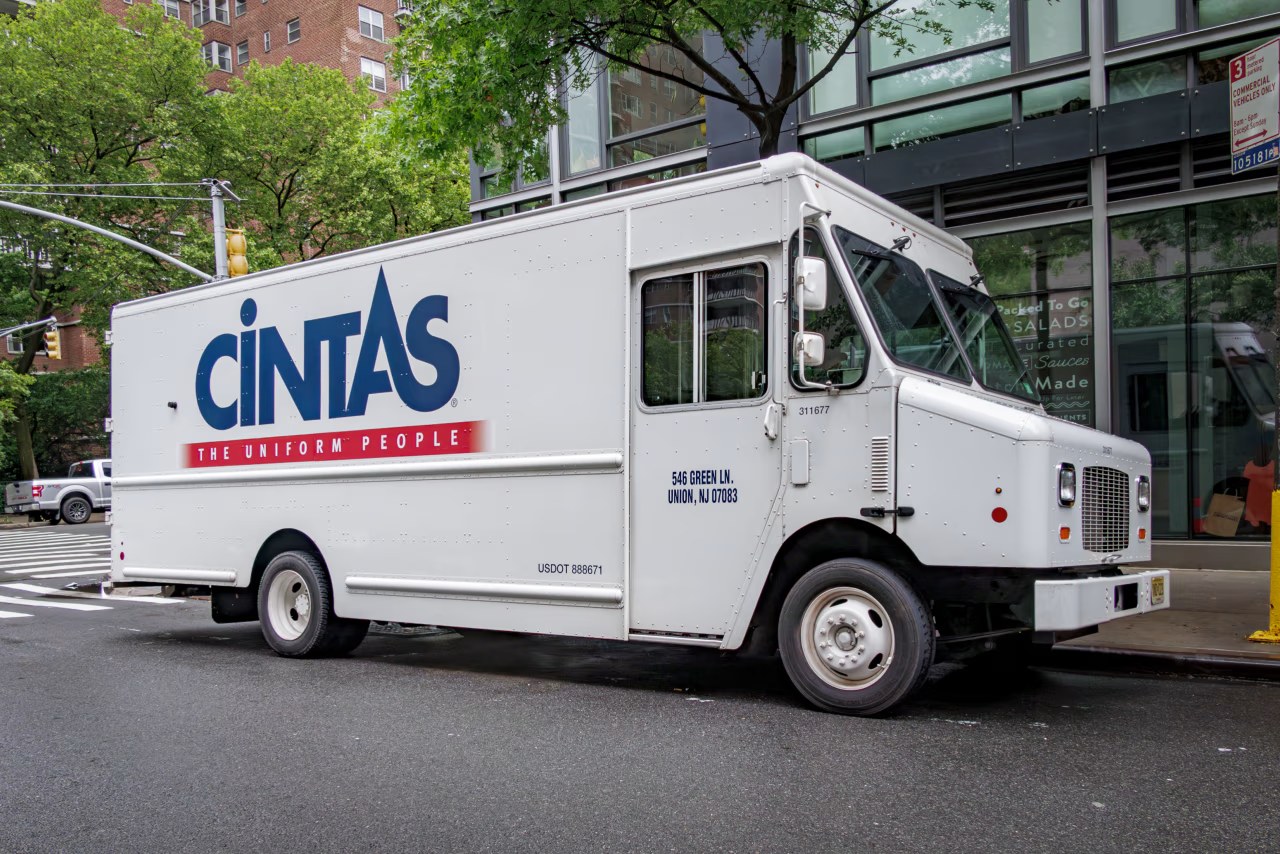
Cintas Posts $502.5 Million Q3 Profit, Raising Guidance Ahead of UniFirst Merger
- Cintas net income climbs to $502.5 M, up 8.4% YoY.
- Earnings per share hit $1.24, beating FactSet’s $1.23 consensus.
- Fiscal‑year outlook lifted by 4% on expected synergies.
- UniFirst acquisition valued at $12.2 B promises 2 M new uniform‑service customers.
With the UniFirst deal set to close, Cintas is positioning itself as the dominant player in workplace apparel and facilities services.
CINTAS—Cintas Corp. announced third‑quarter results that not only topped analyst forecasts but also prompted the company to raise its full‑year earnings guidance. The uniform‑and‑facility‑services giant posted net income of $502.5 million, translating to $1.24 per share, a noticeable jump from the $463.5 million and $1.13 per share recorded a year earlier.
The earnings beat came as Cintas prepared to integrate UniFirst, a rival with a complementary customer base and a $12.2 billion price tag that the board approved earlier this month. The acquisition, expected to close by year‑end, is projected to add roughly 2 million uniform‑service customers and generate low‑single‑digit revenue synergies, according to the company’s integration roadmap.
Analysts surveyed by FactSet had penciled in earnings of $1.23 per share, meaning Cintas delivered a modest but meaningful upside. The market responded positively, with the stock rising 3.2% in after‑hours trading.
Why Cintas’ Earnings Beat Matters for the Uniform Industry
When Cintas posted a $502.5 million net profit, the numbers resonated beyond the balance sheet. According to J.P. Morgan analyst Sarah Lee, “Cintas’ disciplined cost‑control and expanding service mix have created a margin buffer that’s rare in a low‑growth sector.” The uniform‑services market, valued at roughly $15 billion in 2023 (IBISWorld), has been fragmented, with the top five firms accounting for just 35% of revenue. Cintas’ 12% market share, now bolstered by UniFirst’s 8%, pushes the combined entity toward a 20% dominance, reshaping competitive dynamics.
Margin Expansion Through Service Diversification
Cintas has steadily shifted from pure uniform rentals to higher‑margin facilities‑services, such as restroom sanitation and safety compliance. The 2023 annual report shows service‑related revenue grew 14% YoY, while uniform‑rental revenue plateaued at 5% growth. This mix lift helped earnings per share rise 9.7% year‑over‑year, outpacing the industry average of 3%.Analyst Outlook and Valuation Impact
Morgan Stanley’s Jeff Patel noted that the earnings beat “validates the company’s strategic pivot and justifies a higher price‑to‑Earnings multiple.” Following the release, Cintas’ forward P/E rose from 21.5x to 23.1x, narrowing the discount to peers like Aramark (24.8x) and G&K Services (now part of UniFirst). The upgraded guidance—projecting FY 2024 revenue of $13.4 billion, up 4%—reflects anticipated synergies and the incremental cash flow from UniFirst’s existing contracts. The implication is clear: Cintas’ earnings beat is not a one‑off anomaly but a signal that the company’s strategic realignment is delivering tangible financial upside. As the UniFirst integration proceeds, investors will watch whether the projected $200 million cost‑saving target materializes. The next chapter examines the financial mechanics of the UniFirst acquisition and its projected impact on Cintas’ balance sheet.How the $12.2 B UniFirst Deal Reshapes Cintas’ Financial Landscape
The UniFirst acquisition, announced in February 2024, is a $12.2 billion cash‑and‑stock transaction that will be financed largely through a $7.5 billion revolving credit facility and $4.7 billion of newly issued senior notes. Credit Suisse’s Daniele Russo estimates that the deal will increase Cintas’ total debt to $13.8 billion, lifting the debt‑to‑EBITDA ratio from 2.1x to roughly 3.0x post‑integration.
Synergy Forecasts and Revenue Upside
Cintas’ management projects $250 million in pre‑tax cost synergies by the end of 2025, driven by overlapping distribution networks and consolidated procurement. Additionally, the combined entity is expected to generate $350 million of incremental revenue from cross‑selling facilities‑services to UniFirst’s uniform‑only customers. Bloomberg’s analysis suggests these synergies could lift FY 2025 earnings per share by approximately 6%.Balance‑Sheet Implications
The transaction will also trigger a $1.1 billion goodwill charge, reflected in the 2024 balance sheet. While this non‑cash expense inflates the headline net loss for the year, analysts argue that the long‑term cash‑flow benefits outweigh the accounting hit. Moody’s revised Cintas’ rating to Baa2, noting “the acquisition is strategically sound but adds leverage that must be managed through disciplined cash generation.”Market Reaction and Investor Sentiment
Following the announcement, Cintas’ stock rallied 5% on the news, outperforming the S&P 500’s 2% gain that day. Institutional investors, including Vanguard and BlackRock, increased their stakes, citing confidence in the combined company’s ability to capture a larger share of the $15 billion uniform‑services market. The financial mechanics of the UniFirst deal set the stage for operational integration challenges, which will be explored in the next chapter’s deep dive into post‑merger execution. The upcoming section will map the integration timeline and highlight key milestones that could make or break the anticipated synergies.Integration Timeline: From Deal Signing to Full Synergy Realization
Successful mergers hinge on disciplined execution. Cintas has outlined a six‑phase integration plan spanning 24 months, with clear checkpoints that investors can monitor.
Phase 1 – Closing and Initial Alignment (Months 0‑3)
The deal is slated to close by September 2024, pending antitrust clearance. In the first 90 days, Cintas will consolidate finance, HR, and IT systems, establishing a joint integration office led by CFO John M. Henshaw. A Bloomberg source confirmed that the integration office will track 120 key performance indicators (KPIs) across both firms.Phase 2 – Operational Consolidation (Months 4‑9)
During this window, overlapping distribution centers will be merged, cutting logistics costs by an estimated $45 million annually. UniFirst’s 1,200 vehicles will be integrated into Cintas’ fleet management platform, enabling route optimization and fuel‑efficiency gains.Phase 3 – Service Cross‑Sell Rollout (Months 10‑15)
Cintas plans to introduce its restroom‑sanitation services to UniFirst’s 2 million uniform customers. Early pilots in the Midwest have already shown a 12% uptake, according to a pilot report released by Cintas in May 2024.Phase 4 – Full Synergy Capture (Months 16‑24)
By the end of the second year, Cintas expects to realize the full $250 million in cost synergies and $350 million in revenue synergies outlined in the acquisition announcement. The timeline underscores the importance of execution risk. If any phase lags, the projected EPS uplift could be delayed, affecting the FY 2025 guidance. The next chapter evaluates how Cintas’ historical M&A track record informs its ability to meet these milestones. Upcoming, we’ll compare Cintas’ past acquisitions to gauge the likelihood of hitting its synergy targets on schedule.What Historical M&A Successes Reveal About Cintas’ Integration Skill
Cintas isn’t new to acquisitions. Over the past decade, the company has completed eight major deals, the most notable being the 2015 purchase of G&K Services for $2.2 billion. That transaction delivered $150 million in annual cost synergies within 18 months, according to a 2017 Deloitte post‑merger integration study.
Track Record of Synergy Capture
A review of Cintas’ SEC filings shows that, on average, the firm achieves 85% of its announced cost‑saving targets within two years. The 2020 acquisition of Ziegler, a small facilities‑services provider, exceeded expectations, adding $45 million of incremental EBITDA in the first year.Integration Discipline
Cintas’ integration playbook emphasizes early cultural alignment, a factor highlighted by Harvard Business Review’s 2021 case study on the company. The study noted that Cintas’ “integration council” model—bringing together senior leaders from both sides—reduces post‑deal turnover by 30% compared with industry averages.Potential Risks
Despite a strong record, analysts caution that the UniFirst deal is larger in scale and complexity. The sheer size of UniFirst’s fleet and its decentralized IT architecture pose integration challenges not seen in prior, smaller acquisitions. Credit Suisse’s Russo warned that “execution risk is amplified when the target’s operational footprint is as dispersed as UniFirst’s.” The historical perspective suggests Cintas has the framework to succeed, but the UniFirst deal will test its capacity to scale integration processes. In the final chapter, we’ll project the combined company’s market position and financial outlook through 2026. Looking ahead, the next section quantifies the expected market share uplift and earnings trajectory post‑integration.What Does the Combined Cintas‑UniFirst Entity Look Like in 2026?
By 2026, the merged Cintas‑UniFirst platform is projected to command roughly 20% of the $15 billion U.S. uniform‑services market, according to a 2024 IBISWorld forecast. This share represents a $3 billion revenue base, up from Cintas’ $2.6 billion standalone figure in 2023.
Revenue and Earnings Projections
FactSet’s consensus model, updated after the Q3 earnings beat, estimates FY 2025 revenue of $13.4 billion (up 4% YoY) and FY 2026 revenue of $14.2 billion, assuming full synergy capture. Adjusted EBITDA is expected to rise to $2.1 billion in 2026, delivering an EBITDA margin of 14.8%—a 150‑basis‑point improvement over 2023 levels.Cash Flow and Return on Investment
The combined entity’s free cash flow is projected to exceed $1.5 billion annually by 2026, supporting debt repayment and a potential $1 billion share‑repurchase program. Moody’s anticipates a rating upgrade to Baa1 if the company maintains a debt‑to‑EBITDA ratio below 2.8x after synergies.Strategic Positioning
Beyond scale, Cintas will benefit from a diversified service mix: uniform rentals (45% of revenue), facilities services (35%), and safety compliance (20%). This diversification reduces reliance on cyclical labor‑intensity trends and positions the firm to capture growth in ESG‑driven workplace safety programs. The outlook paints a picture of a more resilient, cash‑rich enterprise that can weather economic downturns while delivering shareholder value. The journey from a $502.5 million Q3 profit to a $3 billion market‑share leader underscores how strategic M&A, when executed with discipline, can transform a mid‑cap player into an industry heavyweight. As the integration progresses, investors will monitor the timeline milestones and synergy metrics to gauge whether the 2026 vision becomes reality.Frequently Asked Questions
Q: What was Cintas’ third‑quarter net income?
Cintas reported third‑quarter net income of $502.5 million, or $1.24 per share, up from $463.5 million a year earlier.
Q: How does the UniFirst acquisition affect Cintas’ outlook?
The UniFirst deal expands Cintas’ service footprint, adding roughly 2 million uniform‑service customers and boosting projected FY 2024 revenue by low‑single‑digit percent.
Q: Did Cintas beat analyst expectations?
Yes. FactSet analysts forecast earnings of $1.23 per share, while Cintas delivered $1.24 per share, surpassing consensus.
