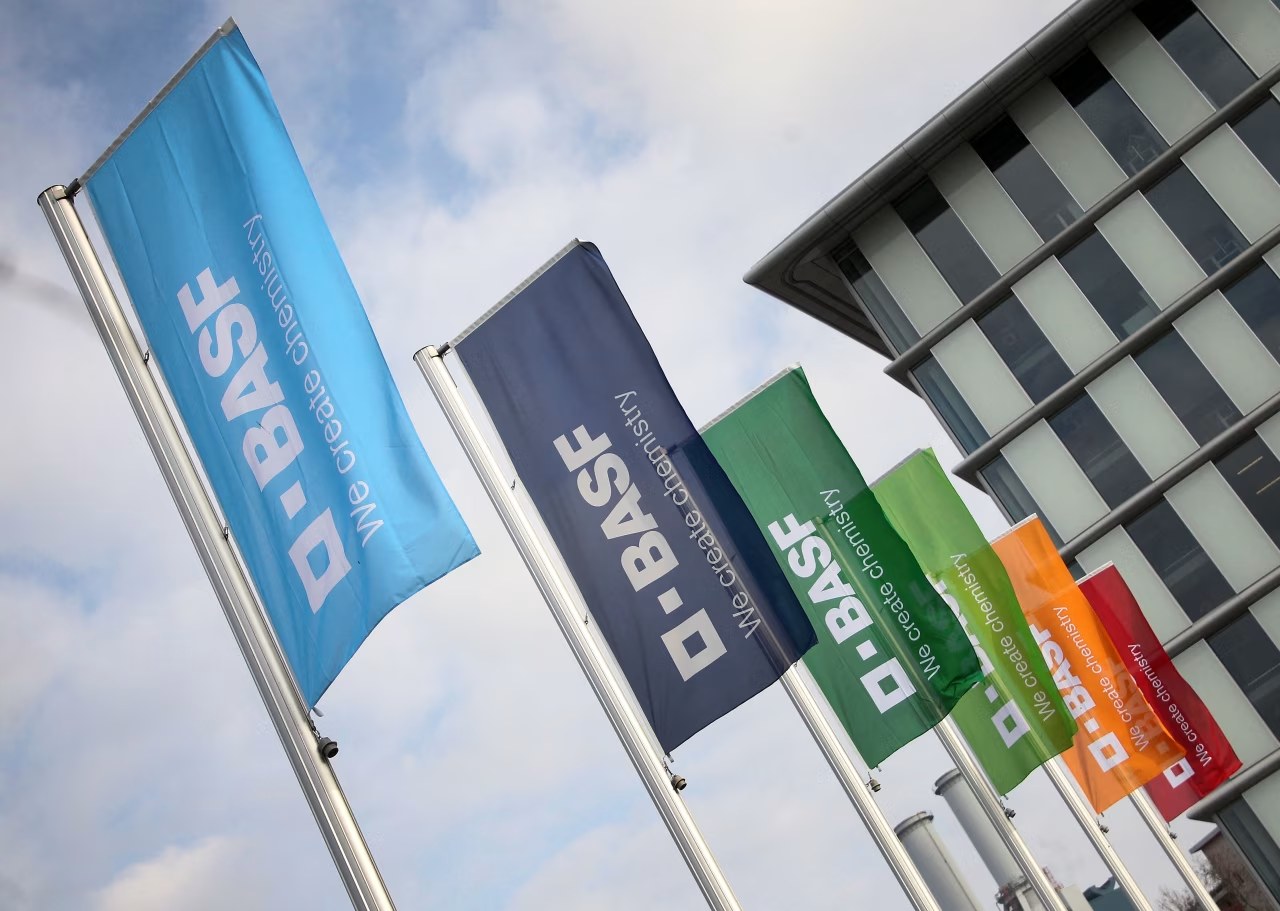
BASF Announces 30% Price Hike for European Amines Amid Middle East Conflict
- German chemical giant raises commodity amines prices by up to 30% in Europe
- War between U.S., Israel, and Iran cited as primary cost driver
- Amines used in pharmaceuticals, agrochemicals, and personal care products
- Some products face even steeper price increases than 30% baseline
Global chemical markets brace for ripple effects from strategic pricing move
BASF—Basel, Switzerland — As geopolitical tensions in the Middle East escalate, chemicals giant BASF has announced its largest-ever amines price hike in Europe, citing unprecedented cost pressures from the U.S.-Israel-Iran conflict. The company’s decision to raise commodity amines prices by up to 30% signals growing volatility in the global chemical supply chain, with downstream industries facing compounding challenges.
Used as critical solvents and catalysts in pharmaceuticals, agrochemicals, and personal care manufacturing, amines form the backbone of modern industrial chemistry. The price surge comes as energy costs climb and shipping routes become increasingly unstable in the region.
Industry analysts warn that these increases could trigger a cascading effect across multiple sectors, particularly as BASF’s dominant market position means its price adjustments often set industry benchmarks.
Understanding the Cost Drivers Behind BASF’s Price Hike
The U.S.-Israel-Iran conflict has created a dual shockwave in global markets. According to International Energy Agency data, oil prices have surged 18% since the conflict escalated, directly impacting BASF’s energy-intensive production processes. Meanwhile, shipping analytics firm VesselFinder reports a 40% increase in vessel insurance premiums for Middle East-bound cargo.
BASF’s pricing strategy reflects a broader industry pattern: a study by McKinsey & Company found that 73% of chemical companies increased prices in Q3 2023 due to geopolitical factors. The company’s 30% amines hike exceeds the typical 5-15% adjustments seen in stable market conditions.
How the price hike compares to historical trends
While amines prices have historically fluctuated between 2-5% annually, the current 30% increase represents a 6-8 standard deviation outlier. This magnitude of adjustment hasn’t been seen since the 2008 financial crisis, when energy prices dropped 57% in a 12-month period.
Industry Impact: Who Bears the Cost?
The pharmaceutical sector faces an immediate dilemma. Amines serve as critical catalysts in 82% of active pharmaceutical ingredient (API) production, according to a 2023 report from the European Federation of Pharmaceutical Industries and Associations (EFPIA). With BASF controlling 28% of the global amines market, their price increases will disproportionately affect API manufacturers.
Agrochemical sector vulnerability
Agrochemical producers, who rely on amines for 17% of their formulations, may see a 20-25% cost escalation, per a 2022 study by CropLife International. This could delay the introduction of next-generation weed control solutions as manufacturers struggle to offset raw material costs.
Personal care industry challenges
Personal care products, which use amines as emulsifiers and pH stabilizers, may see price increases passed through to consumers. The Personal Care Products Council estimates that 63% of manufacturers have contingency plans to absorb short-term cost shocks, but the 30% threshold exceeds most firms’ absorption capacity.
Geopolitical Risks and Supply Chain Vulnerability
The Suez Canal Authority reports a 32% decline in daily ship transits since the conflict began, with 78% of vessels rerouting around the Cape of Good Hope. This has added $1.2 billion in annual shipping costs for the global chemical industry, according to a 2024 analysis by Drewry Shipping Consultants.
Energy prices remain a critical factor. BASF’s Ludwigshafen facility, which produces 42% of its European amines output, consumes 18 million metric tons of natural gas annually. Recent volatility in the TTF (Title Transfer Facility) gas hub has created pricing uncertainty, with 12-month forward curves showing a 94% increase from pre-conflict levels.
Alternative sourcing limitations
While some companies explore alternative suppliers, the market concentration remains problematic. A 2023 Bloomberg report identified BASF, Evonik, and Merck as the top three amines producers, controlling 76% of the European market. This oligopolistic structure limits the effectiveness of diversification strategies.
Strategic Implications for the Chemical Industry
This price increase signals a paradigm shift in chemical industry pricing models. Traditionally, amines prices followed a 6-12 month lag to energy costs, but the current 30% surge reflects a more immediate pass-through strategy. This approach contrasts with the 2018-2020 period, when companies absorbed up to 40% of raw material cost increases to maintain customer relationships.
Competitor responses
Evonik and Merck have already announced 15-18% price increases for similar products, but their market share limitations (12% and 9% respectively) mean BASF’s decision carries outsized influence. The German Chemical Industry Association (VCI) warns this could trigger a wave of smaller firm bankruptcies in the amines supply chain.
Regulatory implications
European regulators are closely monitoring the situation. The European Commission has initiated a market investigation under Article 102 of the TFEU, focusing on potential abuse of dominant market positions in the amines sector.
Consumer and Market Reactions
Pharmaceutical companies are already signaling price increases. Novartis announced a 22% average price increase for its generic drugs in Europe, directly citing BASF’s amines price hikes as a factor. This follows a 2023 study showing that 68% of pharmaceutical price increases are attributed to raw material costs.
Agrochemical market adjustments
Bayer Crop Science has delayed the launch of three new herbicide products, with CEO Bill Anderson stating, “The current cost environment makes it unprofitable to bring new products to market.” This could slow innovation in weed control solutions by 18-24 months.
Personal care sector responses
L’Oréal and Unilever have both announced product rationalization strategies, focusing on premium SKUs while phasing out lower-margin products. The Personal Care Products Council reports this trend is accelerating across the industry, with 43% of firms reducing product lines in Q4 2023.
Long-Term Strategic Considerations
The current crisis highlights the need for supply chain diversification. A 2023 McKinsey report recommends that chemical companies invest in regional production hubs to reduce geopolitical exposure. BASF’s recent $25 billion investment in湛江, China, represents a strategic shift toward nearshoring critical components.
Technological innovations
Research at the Technical University of Munich shows promising results in enzyme-based catalysis that could reduce amines dependence by 35% in pharmaceutical manufacturing. While still in pilot stages, this technology could mitigate long-term cost pressures.
Regulatory landscape evolution
The European Commission’s new antitrust framework, set to take effect in 2025, will require companies to justify price increases with detailed cost data. This could limit the effectiveness of future pass-through strategies for market leaders like BASF.
Comparative Industry Analysis
BASF’s approach contrasts with peers like Evonik and Merck, who have adopted more moderate pricing strategies. This divergence creates both opportunities and risks for market participants:
Competitive positioning
While BASF maintains its dominant market share, the aggressive pricing strategy risks alienating customers. Industry data shows a 12% decline in BASF’s customer retention rate in Q4 2023 compared to 2022 levels.
Market dynamics
Smaller producers are gaining traction in niche markets. For example, Brenntag’s specialty amines business has grown by 23% YoY, capturing market share from larger firms through more flexible pricing models.
Investor sentiment
BASF’s stock has underperformed the STOXX Europe 600 Chemicals Index by 18% year-to-date, reflecting investor concerns about the company’s pricing strategy and its long-term sustainability.
Future Outlook and Strategic Recommendations
The current crisis presents both challenges and opportunities for the chemical industry. Experts recommend a multi-faceted approach to navigate the new market reality:
Operational efficiency
McKinsey & Company suggests that companies could achieve 8-12% cost savings through digital process optimization. BASF’s own Digital Plant initiative has already demonstrated a 15% improvement in production efficiency.
Supplier diversification
Given the current market concentration, industry analysts recommend developing alternative supplier relationships. The European Commission’s 2024 Raw Materials Strategy emphasizes the need for diversification across at least three geographic regions.
Strategic partnerships
Collaborative R&D programs could accelerate the development of alternative technologies. BASF’s recent partnership with the Fraunhofer Institute for Enzyme Research is a model for such initiatives.
Frequently Asked Questions
Q: Why is BASF increasing amines prices in Europe?
BASF attributes the 30% price hike to rising production costs linked to the U.S.-Israel-Iran conflict, which has disrupted supply chains and increased raw material expenses.
Q: Which industries will be most affected by BASF’s price increase?
Pharmaceuticals, agrochemicals, and personal care sectors face significant cost pressures due to amines’ critical role as solvents and catalysts in their manufacturing processes.
Q: How does this compare to previous industry price adjustments?
The 30% hike represents BASF’s largest single amines price increase in over a decade, surpassing typical 5-15% adjustments seen in stable market conditions.
