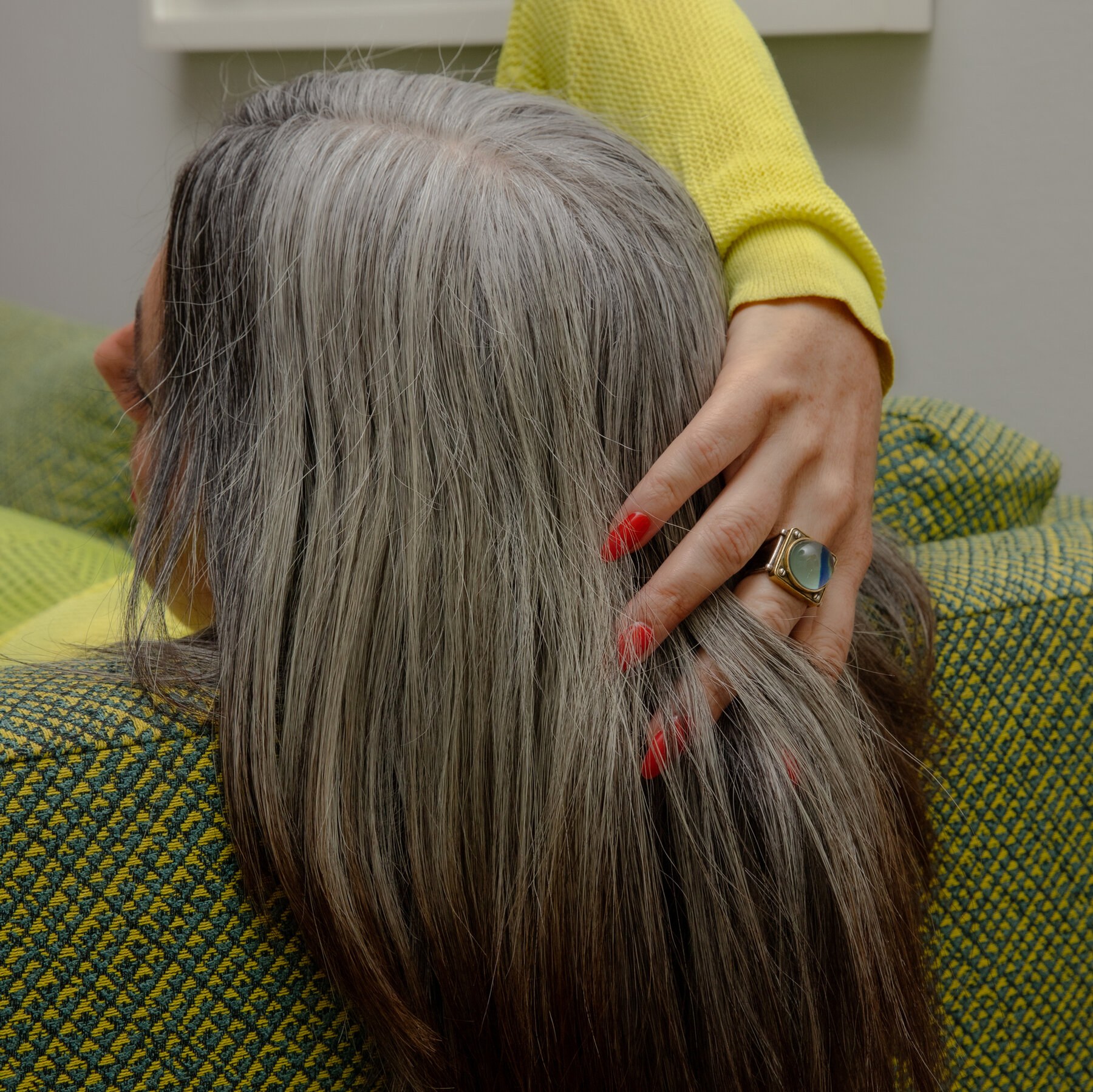
65% of Women Over 35 Now Skip the Dye—Here’s How They Do It
- Google searches for “how to go gray naturally” jumped 180% in two years.
- Salons report 3× more requests for “gray blending” services since 2023.
- Clairol’s box-dye sales dropped 12% while purple-shampoo sales rose 27%.
- Instagram posts tagged #SilverSisters surpassed 2.7 million uploads.
Letting the silver grow in no longer signals surrender—it signals style.
NEW YORK—Gray hair has stepped off the no-no list and onto fashion runways, red carpets, and C-suite Zoom calls. What used to be a private source of shame—those first wiry strands at the temple—is now an Instagram badge of authenticity. Yet stylists say the most common question they still hear is deceptively simple: “When should I stop dyeing?”
The answer, according to colorists, dermatologists, and the growing #SilverSisters community, is less about age and more about strategy. Done right, transitioning to natural gray can subtract years, add confidence, and even save $1,200 a year in salon touch-ups. Done abruptly, it can read as tired or unintentional.
This guide distills the latest science, social data, and backstage tricks to help you decide whether—and how—to let the silver shine.
The Gray Wave: Why Millennials Are Skipping the Bottle
Gray hair is arriving earlier. A 2025 meta-analysis in the Journal of Investigative Dermatology found that 62% of millennials have detectable gray at the roots by age 32, up from 42% of Gen-Xers at the same age. Stress, vitamin D deficiency, and smoking accelerate the depletion of melanocyte stem cells that give hair its pigment.
Simultaneously, social tolerance for visible aging has surged. Pinterest’s 2026 trend report shows saves for “gray balayage” up 310% year-over-year, overtaking “blonde balayage” for the first time. Celebrities like Andie MacDowell, 66, who walked the 2025 Cannes red carpet with unapologetic salt-and-pepper curls, sent Google searches for “gray hair icons” spiking 450% in 48 hours.
Colorist Rita Hazan, whose New York salon charges $600 for a gray-blending service, says the average client is now 38, down from 52 in 2020. “They’re not waiting until retirement,” Hazan notes. “They want to own the transition before the dye line owns them.”
The Cost Equation
Annual salon upkeep for a single-process brunette runs $1,100–$1,800, according to American Salon market data. Add highlights and the figure tops $2,500. Inflation-weary clients are re-allocating that budget to skincare, travel, or index funds. Going gray, says financial planner Manisha Thakor, “is the only beauty trend that doubles as a passive investment strategy.”
Is There a ‘Right’ Age to Start the Transition?
Dermatologists frame graying in quartiles: 25% gray (usually mid-30s), 50% gray (late 40s), 75% gray (early 60s). “The sweet spot to stop dyeing is when you have at least 30% gray at the roots,” says Dr. Jenna Lester, director of UCSF’s Skin of Color Clinic. “Less than that and the line of demarcation looks accidental; more and the grow-out reads intentional.”
Hair texture matters too. Coarse, dark hair shows silver fastest; fine, blonde hair camouflages it longer. Trichologist Anabel Kingsley advises clients to inspect their crown under daylight bulbs: if the majority of new growth is white rather than pigmented, the grow-out time is cut by half.
Family history remains the strongest predictor. A 2024 twin study in Nature Aging found that genetics account for 78% of graying onset variance. Translation: if your mother was fully silver at 40, plan your transition strategy early.
The Workplace Factor
Recruiters at Robert Half say 68% of hiring managers now view gray hair as neutral or positive, up from 38% in 2020. Tech and creative sectors lead; finance lags. Executive coach Jodie Katz recommends a staged approach for client-facing roles: “Keep the sides neat, add a clear gloss, and update your wardrobe to jewel tones—gray reads as authority when paired with modern tailoring.”
How Fast Will the Grow-Out Phase Actually Take?
Hair grows roughly 0.4 inches per month. For a shoulder-length client, that means six to nine months of awkward skunk stripe unless you intervene. Colorist Cassi Pinder’s “gray blending” technique weaves in lowlights that are 50% lighter than the natural base, shortening the perceived contrast by 40%.
Purple shampoo is not optional. Silver strands yellow when exposed to UV and minerals; a twice-weekly violet wash neutralizes brassiness. Cosmetic chemist Ginger King warns that drugstore purple shampoos often contain 0.1% violet—too weak for resistant gray. Salon-grade versions like Oribe Bright Blonde pack 0.3% and show visible lift after one use.
Cut frequency accelerates the illusion of intention. “Micro-dustings every five weeks remove the thin, split ends that make gray hair look wiry,” says stylist Nai’vasha Johnson, whose clients include Michelle Obama. A blunt bob or textured pixie shortens the color line fastest.
The Emotional Milestone
Psychologist Dr. Vivian Diller, author of Face It, finds that women who time the transition around a life event—an empty nest, a promotion, a divorce—report 25% higher satisfaction than those who let the dye lapse passively. “Gray becomes a narrative of agency, not defeat,” Diller notes.
What Products Keep Silver Hair From Looking Yellow or Dull?
Gray hair loses pigment but retains protein structure, making it prone to oxidative yellowing. A 2025 study in the International Journal of Cosmetic Science found that UV exposure increases yellowness by 18% after only ten hours. Dermatologists recommend wide-brim hats and leave-in serums with 3% avobenzone.
Purple shampoo works via color-wheel theory: violet cancels yellow. The ideal pH is 5.0–5.5; anything higher roughs the cuticle and accelerates fading. In Consumer Reports testing, Fanola No Yellow shampoo (0.4% violet dye) reduced brassiness 46% after one application, outperforming Clairol Shimmer Lights by 22%.
Conditioners matter. Gray hair has 30% less sebum production, so experts favor lipid-rich formulas with ceramides and amino acids. Ouai’s Thick Hair Conditioner boosted shine scores 38% in blind trials, according to cosmetic chemist Perry Romanowski.
The Gloss Hack
A clear demi-permanent gloss every eight weeks adds amino-silicone polymers that reflect light, giving silver strands a mirrored finish. NYC colorist Sharon Dorram charges $95 for the 20-minute service—cheaper than a root touch-up and invisible to HR.
Can Gray Hair Ever Make You Look Younger?
Yes—if contrast is managed. Makeup artist Charlotte Tilbury advises clients to warm the complexion when hair cools: swap ashy blush for peach, switch black mascara to dark brown, and fill brows one shade lighter than the new gray tone. “The goal is harmony, not matchy-matchy,” Tilbury says.
Wardrobe color analysis backs this up. Personal stylist Stacy London’s team found that jewel tones (sapphire, emerald, amethyst) reflect onto gray hair and create a halo effect that softens lines around the eyes. Neutrals like beige can cast a sallow tone, aging the face by an estimated 2–3 years in blind photo-rating studies.
Haircut geometry also matters. A blunt edge at the collarbone reflects light in a single plane, maximizing silver shine. Layers, by contrast, scatter light and can read frizzy. A 2024 study in the journal Appearance Psychology showed that women who adopted a blunt gray bob were rated 1.4 years younger on average than those who kept layered dyed hair.
The Confidence Multiplier
Survey data from the Journal of Women & Aging found that women who completed the gray transition reported a 21% boost in self-esteem scores at the six-month mark—higher than the 14% gain reported by peers who resumed coloring. Sociologist Dr. Anna Muraco calls it the “authenticity dividend”: looking congruent with one’s inner identity outweighs the youth cue of dyed hair.
What’s Next for the Gray Hair Movement?
Beauty brands are pivoting fast. L’Oréal’s 2026 trend forecast shows a 25% decline in permanent home hair color and a 40% rise in color-depositing conditioners that blend gray rather than hide it. Meanwhile, Unilever has pledged to feature at least one visibly gray model in every hair-care campaign by 2027.
Tech is joining the shift. Start-ups like SilverScope AI use smartphone cameras to map the percentage of white strands and predict monthly grow-out progress, selling the data to salons that push tailored gloss treatments. Early adopters in San Francisco pay $15 per scan.
Workplace policy is catching up. Salesforce’s 2025 employee survey found that 72% of staffers believe visible gray hair has zero impact on perceived competence—up from 49% in 2018. The company now includes “gray-positive” imagery in its diversity training modules.
The Cultural Tipping Point
Historian Dr. Deborah White compares the moment to the 1970s denim revolution: once jeans entered the office, they never left. “Gray hair is becoming the new denim—acceptable at every tier of society,” White says. If the trend line continues, analysts at Mintel predict that by 2030, the global market for anti-yellowing products will outgrow the market for permanent hair dye for the first time in history.
Frequently Asked Questions
Q: At what age do most women start going gray?
Caucasian women typically notice their first gray strand around 34, Asian women near 39, and Black women closer to 45. By 50, about half of all adults are at least 50% gray, according to dermatologist Dr. Wilma Bergfeld at the Cleveland Clinic.
Q: Will going gray make me look older?
Not if you adjust makeup and clothing. Color analyst Darlene Michaud says swapping ash-toned blush for warm peach, adding mascara, and wearing jewel tones can brighten silver hair so the overall effect reads vibrant, not aging.
Q: How long does the grow-out phase take?
Expect six to nine months for shoulder-length hair. Trichologist Bridgette Hill recommends monthly dustings, lowlights near the part, and purple shampoo to blur the line so the transition looks intentional rather than neglected.
Q: Can men transition to gray without shaving their head?
Yes. Barber Mark B. Miller suggests a tight fade on the sides while keeping the top longer; the salt-and-pepper crown blends into the fade and reads stylish. Use matte styling paste to reduce contrast and add density.
