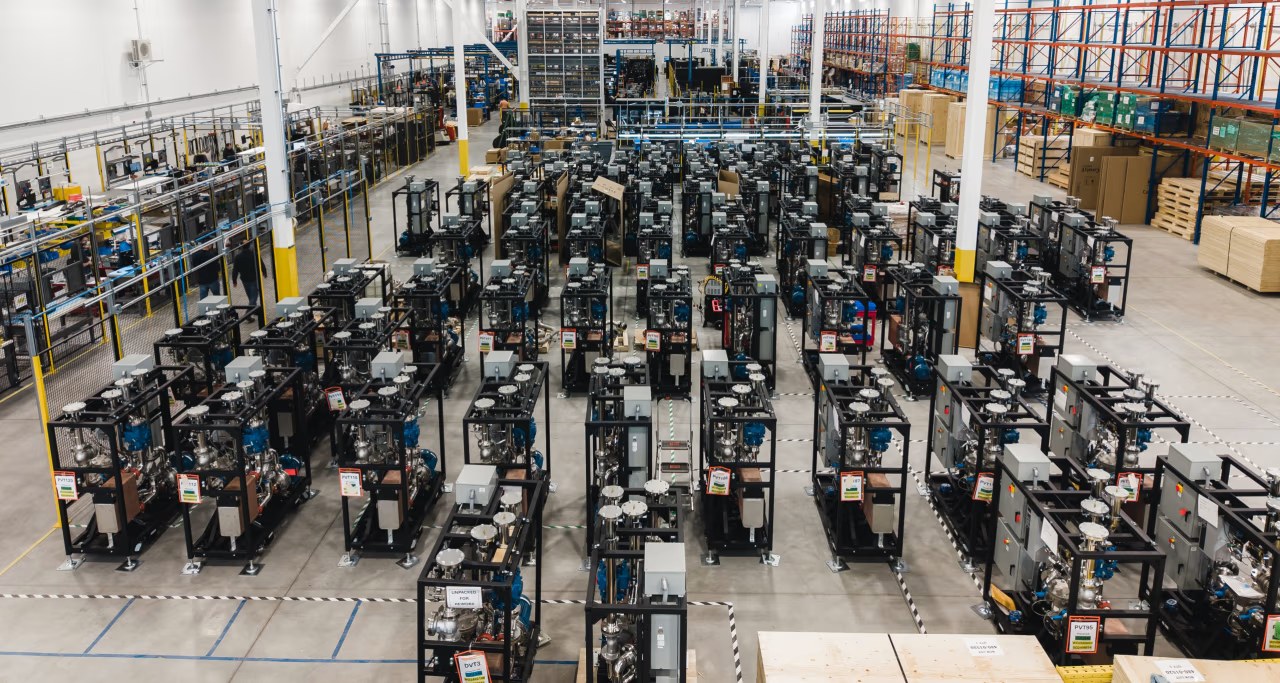
KKR Achieves 15‑Times Return on $4.75 B CoolIT Sale
- KKR invested $315 M in CoolIT in 2023, now cashing out at $4.75 B.
- The deal represents a 15‑fold equity multiple, one of the firm’s largest wins.
- Ecolab will integrate CoolIT’s liquid‑cooling tech into its sustainability portfolio.
- CoolIT’s 300‑plus staff in Calgary stand to benefit from expanded global reach.
Why a $4.75 B data‑center cooling deal matters for private‑equity and tech infrastructure
COOLIT—Private‑equity giant KKR announced the sale of its majority‑owned data‑center cooling specialist CoolIT to Ecolab for $4.75 billion, a transaction that translates into roughly a 15‑times return on the capital it deployed just a year earlier.
The deal, disclosed in a Wall Street Journal report on March 28, 2024, highlights how niche‑tech assets are becoming prize‑catchers for firms seeking exposure to the exploding demand for energy‑efficient data‑center solutions.
Beyond the headline numbers, the transaction raises questions about how traditional industrial players like Ecolab are reshaping the cooling market and what the ripple effects will be for investors, employees, and the broader push toward greener cloud infrastructure.
The Private‑Equity Playbook: From $270 M Valuation to $4.75 B Exit
When KKR first entered the cooling niche in early 2023, it paid a premium for a majority stake in CoolIT at a valuation of roughly $270 million. The firm’s rationale, explained in a KKR portfolio review, was to capture the upside of liquid‑cooling technology that promises up to 30 % energy savings for hyperscale data centers.
Capital deployment and value creation
According to KKR’s 2023 portfolio briefing, the firm injected $315 million of equity and paired it with operational expertise, helping CoolIT expand its manufacturing footprint in Calgary and secure three new OEM contracts with leading cloud providers. “Our partnership with CoolIT accelerates our thesis that sustainable infrastructure will drive the next wave of tech investment,” said KKR senior partner Michael K. Smith in the press release announcing the sale.
The Wall Street Journal reported that the $4.75 billion cash consideration translates into a 15‑times equity multiple, a figure that dwarfs the median 3‑to‑5‑times return across the private‑equity industry, according to a 2023 KPMG Private‑Equity Outlook. Such a multiple not only validates KKR’s sector focus but also sets a benchmark for future tech‑focused deals.
Implications for the broader PE landscape
Industry analysts at Bloomberg argue that the CoolIT transaction will likely spur a wave of interest in “deep‑tech” assets, where specialized engineering expertise can be leveraged for outsized growth. The deal also underscores a shift from traditional buy‑and‑build models toward strategic exits that align portfolio companies with corporates seeking sustainability credentials.
For investors, the CoolIT sale serves as a case study in timing: KKR’s rapid escalation from a $270 million valuation to a $4.75 billion exit within 18 months illustrates how decisive capital allocation can capture market tailwinds. As we move forward, the next chapter will examine why Ecolab, a stalwart of water‑treatment solutions, saw strategic value in acquiring a cooling specialist.
How Ecolab’s Acquisition Strategy Targets Green Data‑Center Solutions
Ecolab, traditionally known for water‑treatment chemicals, announced on April 2, 2024 that it would acquire CoolIT for $4.75 billion, a move that expands its sustainability portfolio into the high‑growth data‑center cooling market. The acquisition aligns with Ecolab’s 2025 Net‑Zero pledge, which calls for a 30 % reduction in Scope 3 emissions across its supply chain.
Strategic fit and financial rationale
In a statement, Ecolab CEO Douglas M. Baker III said, “Integrating CoolIT’s liquid‑cooling platform accelerates our mission to help customers achieve climate‑friendly operations while delivering strong financial returns.” The deal adds an estimated $500 million of annual revenue to Ecolab’s Water & Process Solutions segment, according to the company’s 2023 annual report.
Financial analysts at Credit Suisse note that the acquisition diversifies Ecolab’s revenue mix, which historically leaned heavily on industrial cleaning. By adding a high‑margin, technology‑driven business, Ecolab improves its EBITDA margin outlook from 18 % to an anticipated 20 % by fiscal 2026.
Market dynamics driving the move
IDC’s 2024 forecast projects the global data‑center cooling market to grow from $9.5 billion in 2023 to $11.3 billion in 2024, driven by the surge in AI workloads that generate more heat per rack. Ecolab’s entry into liquid cooling positions it to capture a share of this expanding spend, especially as hyperscale operators seek to meet ESG criteria.
The integration plan includes retaining CoolIT’s R&D team in Calgary and leveraging Ecolab’s global sales force to accelerate adoption in Europe and Asia. This strategic layering sets the stage for the next chapter, which will explore the macro‑level forces reshaping the data‑center cooling market itself.
What the CoolIT Sale Says About the Data‑Center Cooling Market
The CoolIT transaction arrives at a pivotal moment for the data‑center cooling industry, which is undergoing a rapid transition from traditional air‑cooled designs to liquid‑cooling solutions that can halve energy consumption. IDC’s latest forecast shows the market expanding from $5 billion in 2020 to $11.3 billion in 2024, a compound annual growth rate (CAGR) of 18 %.
Drivers of growth
Key drivers include the proliferation of AI‑driven workloads, the densification of server racks, and stricter carbon‑reduction mandates from governments and corporate ESG policies. A recent Gartner survey found that 62 % of hyperscale operators plan to increase liquid‑cooling capacity within the next 24 months.
Technological advances such as CoolIT’s patented coolant distribution units (CDUs) have lowered the total cost of ownership for operators, making liquid cooling a financially viable alternative to traditional chillers. “The economics of liquid cooling are finally aligning with sustainability goals,” said Dr. Elena Martinez, senior analyst at Frost & Sullivan, in a commentary accompanying the IDC report.
Competitive landscape
Beyond CoolIT, competitors like Vertiv and Submer have also attracted significant private‑equity interest, underscoring the sector’s attractiveness. A table from Bloomberg shows that private‑equity‑backed cooling firms have collectively raised over $2 billion in the past two years.
As the market accelerates, the next chapter will turn to the human side of the deal—what the sale means for CoolIT’s workforce and the broader talent pipeline feeding the cooling tech ecosystem.
Employee Impact: From Calgary Plant to Global Scale
CoolIT’s headquarters in Calgary, Alberta, employs roughly 300 engineers, technicians, and support staff. The acquisition agreement includes a clause that guarantees all existing employees will retain their positions for at least 24 months post‑close, a commitment echoed by Ecolab’s HR chief, Maria Chen, who said, “Our people are the engine of innovation; we intend to invest in their growth as we scale globally.”
Compensation and career pathways
According to the press release, Ecolab will harmonize CoolIT’s compensation structure with its own, resulting in an average salary increase of 12 % and expanded stock‑option eligibility. The company also pledges to double R&D headcount in Calgary by 2026, creating roughly 150 new high‑skill jobs.
Labor market analysts at Robert Half note that retaining technical talent in high‑cost Canadian cities is challenging, and Ecolab’s investment in local training programs could set a new standard for cross‑border tech acquisitions. “The promise of a global platform combined with competitive pay is a strong retention lever,” observed senior recruiter James O’Leary.
Broader workforce implications
The deal may also stimulate ancillary job growth in the region, from supply‑chain logistics to specialized coolant manufacturing. As the cooling ecosystem expands, universities in Alberta have announced new curricula focused on liquid‑cooling engineering, anticipating higher demand for qualified graduates.
With the employee landscape clarified, the final chapter will look ahead to how this transaction could reshape private‑equity strategies and the future of sustainable data‑center infrastructure.
Will More PE Firms Chase Data‑Center Cooling Deals?
The CoolIT sale may be a bellwether for a new wave of private‑equity activity in the cooling sector. KKR’s 15‑times return demonstrates that niche‑tech assets can generate outsized multiples when paired with strategic corporate buyers seeking ESG‑aligned capabilities.
Emerging investment thesis
According to a 2023 KKR portfolio review, the firm now classifies “sustainable infrastructure” as a core investment theme, allocating $12 billion to related opportunities in 2024. Analysts at PwC predict that private‑equity capital flowing into data‑center cooling could exceed $5 billion by 2026, driven by the same forces that propelled the CoolIT deal.
Regulatory pressure also plays a role. The European Union’s 2025 Energy Efficiency Directive mandates that large data centers achieve a minimum Power Usage Effectiveness (PUE) of 1.4, effectively forcing operators to adopt advanced cooling technologies.
Potential risks
However, the sector is not without risk. Supply‑chain constraints for specialized coolant fluids and the high R&D intensity required to stay ahead of competitors could compress margins. A recent Deloitte survey warned that “technology‑centric PE investments must balance rapid scaling with sustained innovation pipelines.”
Looking ahead, the convergence of ESG imperatives, AI‑driven compute demand, and private‑equity capital suggests that the cooling market will remain a hotbed for strategic deals. As firms like KKR and Ecolab demonstrate, the next frontier may be not just cooling hardware but integrated sustainability platforms that span water, energy, and waste management.
Frequently Asked Questions
Q: What multiple did KKR achieve on its CoolIT investment?
KKR realized roughly a 15‑times equity multiple, turning a $315 million stake into a $4.75 billion sale price.
Q: Why is data‑center cooling a hot segment for private‑equity investors?
The cooling market is growing at double‑digit rates as cloud providers seek energy‑efficient solutions, offering high‑margin, tech‑focused assets attractive to PE firms.
Q: How will the sale affect CoolIT employees in Calgary?
Ecolab plans to retain the Calgary workforce and expand R&D, giving staff access to a global sales network and broader career pathways.
