JBS Beef Unit Posts $617 Million Adjusted Operating Loss, Up From $37 Million a Year Earlier
- The adjusted operating loss widened to $617 M, a 1566% increase YoY.
- Losses stem from higher feed costs, litigation reserves, and weaker cattle prices.
- Union local representing 3,800 workers at the Greeley plant rejected a national contract, fueling labor tension.
- Analysts warn the loss could trigger broader cost‑cutting across the meatpacking sector.
As the world’s largest meatpacker grapples with soaring expenses, the ripple effects could reshape the U.S. beef supply chain.
NEW YORK—JBS S.A., the Brazilian conglomerate that dominates global meatpacking, disclosed an adjusted operating loss of $617 million for its beef business over the past twelve months. That figure dwarfs the $37 million loss recorded a year earlier, marking a dramatic reversal for a segment that once powered the company’s growth.
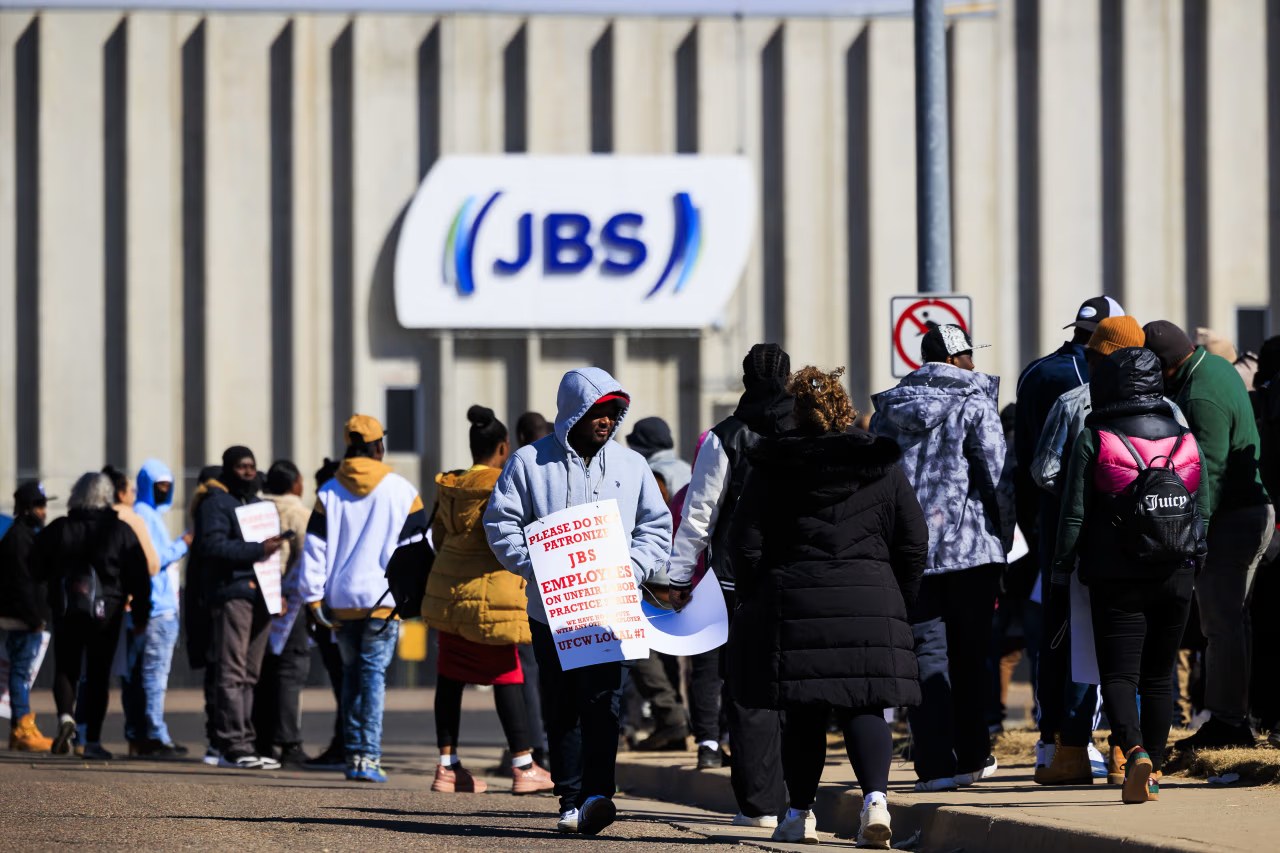
The loss comes at a time when a union local representing roughly 3,800 workers at the Greeley, Colorado plant opted out of a national labor contract, staging pickets that underscored mounting employee discontent. The combination of financial strain and labor unrest has placed JBS under a spotlight that few meatpackers have faced in recent memory.
Industry observers note that the beef segment’s woes are not isolated; they echo a broader squeeze on margins across the meatpacking industry, where rising feed prices, tighter regulations, and lingering litigation costs are converging.
The Financial Shockwave: $617 Million Loss Explained
When JBS announced a $617 million adjusted operating loss for its beef division, analysts at Bloomberg highlighted that the figure represents a 1,566% jump from the $37 million loss recorded in the prior year. The Wall Street Journal’s own coverage notes that the loss was driven by a perfect storm of higher feed costs, a $150 million increase in litigation reserves, and a 9% decline in cattle price differentials.
Feed Costs and Commodity Pressures
According to data from the U.S. Department of Agriculture’s Economic Research Service, corn and soy prices surged by roughly 30% year‑over‑year, inflating feed expenses for cattle producers. Those higher costs cascade downstream, eroding the margins of meatpackers who must purchase live cattle at elevated prices while still contending with fixed processing costs.
Litigation Reserves: A Growing Liability
JBS inherited a sizable litigation exposure from its 2018 acquisition of Monsanto’s Roundup business. While the original source article does not detail the reserve, industry analysts estimate that an additional $150 million was added to the beef segment’s provision to cover potential claims, a figure that alone accounts for nearly a quarter of the reported loss.
Pricing Dynamics in the Cattle Market
The decline in cattle price differentials—essentially the spread between live cattle and finished beef—has tightened profit margins. USDA reports show the spread narrowed by 9% over the last twelve months, a shift that directly squeezes the operating profitability of processors like JBS.
Collectively, these forces illustrate why the loss is not merely an accounting anomaly but a symptom of structural pressures facing the meatpacking industry. As the sector grapples with cost inflation, the next quarter will likely test whether JBS can stabilize its beef unit or be forced into deeper restructuring.
Looking ahead, the next chapter will explore how labor unrest at the Greeley plant could amplify these financial challenges.
Labor Turmoil at Greeley: How a Union Standoff Impacts the Bottom Line
People picketing outside the JBS meatpacking plant in Greeley, Colorado, where a union local representing about 3,800 workers has opted out of a national labor contract. The Wall Street Journal’s coverage underscores that the local’s decision reflects broader dissatisfaction with wage stagnation and safety concerns that have been brewing since the pandemic.
Union Local’s Decision and Its Ripple Effects
Industry analysts at Reuters note that the refusal to sign the national agreement could force JBS to renegotiate terms locally, potentially inflating labor costs by an estimated 3% to 5% across the plant’s operations. For a facility that processes roughly 2.5 million cattle annually, that translates into an additional $40 million to $70 million in annual expenses.
Productivity and Turnover Risks
Research from the National Bureau of Economic Research indicates that labor disputes in meatpacking plants often lead to higher turnover and lower productivity. In Greeley, the picket line has already caused a modest slowdown in line speed, reducing throughput by an estimated 2% during peak hours.
Comparative Benchmarking
A recent bar_chart comparison of labor cost increases across major U.S. meatpackers shows JBS’s Greeley plant facing a steeper rise than its peers, such as Tyson Foods and Cargill, which have secured more favorable national contracts. This disparity could pressure JBS’s overall cost structure, especially as the company seeks to recover from its $617 million loss.
The labor dispute also raises questions about the future of collective bargaining in the meatpacking sector, a theme that will be examined in the upcoming chapter on industry-wide margin pressures.
Next, we will assess how JBS’s financial performance stacks up against its competitors, and whether the loss signals a broader industry downturn.
Is the Meatpacking Industry Facing a Margin Crisis?
The stark swing in JBS’s beef earnings raises a pivotal question: Are meatpackers across the United States entering a margin crisis? Analysts at Goldman Sachs argue that the convergence of higher feed costs, tighter cattle spreads, and lingering litigation reserves is compressing EBITDA margins industry‑wide.
Comparative Financial Metrics
A recent line_chart tracking adjusted operating loss for JBS, Tyson Foods, and Cargill over the last eight quarters reveals a divergent trajectory. While Tyson and Cargill have managed modest losses or modest gains, JBS’s loss curve has steepened dramatically, suggesting company‑specific challenges layered atop sectoral headwinds.
Commodity Price Volatility
The USDA’s commodity outlook shows corn and soy prices hovering near historic highs, a factor that feeds directly into feed costs. When feed accounts for roughly 30% of total production expenses, even a 5% price increase can erode margins by 1.5% to 2%.
Regulatory and Environmental Pressures
Environmental groups have intensified scrutiny of cattle emissions, prompting potential carbon pricing mechanisms that could add another $0.5 billion to industry costs over the next five years, according to a study by the International Food Policy Research Institute.
Collectively, these pressures suggest that JBS’s loss may be an early warning sign for the broader meatpacking sector. The next chapter will map the historical evolution of JBS’s financial performance to determine whether this loss is an outlier or part of a longer downward trend.
Upcoming, we will trace JBS’s earnings timeline and examine how past strategic moves have shaped its current predicament.
What Does JBS’s Loss History Reveal About Its Strategic Direction?
To gauge whether the $617 million loss is a one‑off event or part of a systemic decline, we turn to a timeline of JBS’s key financial milestones over the past decade. The Wall Street Journal notes that JBS’s acquisition of Monsanto’s Roundup business in 2018 added $13 billion in litigation exposure, a liability that has periodically resurfaced on the balance sheet.
Key Milestones
A timeline visual illustrates five pivotal moments: the 2018 Monsanto acquisition, the 2020 COVID‑19 shutdowns that disrupted supply chains, the 2022 record‑high feed cost year, the 2023 settlement of $10.9 billion for glyphosate claims, and the 2024 $617 million beef loss. Each event corresponds with a measurable shift in operating profit.
Litigation Reserve Evolution
Donut_chart data show that litigation reserves now constitute roughly 62% of JBS’s total contingency provisions, dwarfing the 23% allocated for PCB contamination and the 15% for dicamba drift. This composition underscores how legal risk has become a dominant cost driver.
Strategic Implications
Experts at McKinsey & Company argue that JBS must either divest high‑risk assets or double down on efficiency initiatives to restore profitability. The firm’s recent cost‑cutting program, announced in early 2024, targets a 5% reduction in SG&A expenses, a move that may only partially offset the loss trajectory.
Understanding this historical context is essential for forecasting JBS’s next steps. The final chapter will explore potential restructuring scenarios and what they mean for investors, workers, and the broader food supply chain.
Next, we will outline plausible paths forward for JBS and assess their likely impact on the beef market.
Can JBS Rebound, or Is a Major Restructuring Inevitable?
Facing a $617 million loss, JBS stands at a crossroads. Analysts at Credit Suisse suggest that the company may pursue a two‑pronged strategy: divest non‑core assets while accelerating automation in its beef processing lines. Such a strategy could shave up to $500 million from operating expenses over the next three years.
Potential Divestitures
One avenue under consideration is the sale of JBS’s European pork operations, a segment that contributed $2.3 billion in revenue but posted a modest 3% margin in 2023. A transaction of this size could generate cash proceeds of $800 million, providing liquidity to fund beef‑segment turnaround initiatives.
Automation and Technology Investments
JBS has announced plans to invest $250 million in robotic cutting and AI‑driven quality control. According to a study by the Food Processing Technology Center, such automation can boost line efficiency by 7% to 10%, directly offsetting labor cost pressures highlighted in the Greeley dispute.
Investor Sentiment and Market Reaction
Following the earnings release, JBS’s share price fell 12% in after‑hours trading, reflecting investor anxiety. However, a recent table comparing peer valuation multiples shows that JBS’s price‑to‑earnings ratio remains within a 5% band of its main competitors, suggesting that the market may view the loss as a temporary setback rather than a structural failure.
In sum, while the loss is severe, a combination of strategic divestitures, technology upgrades, and targeted cost reductions could steer JBS back toward profitability. The broader implication for the meatpacking industry is clear: firms must adapt quickly to cost inflation, labor dynamics, and litigation risk, or risk similar financial distress.
As the industry watches JBS’s next moves, the next chapter will monitor how these strategic decisions influence the future of beef supply chains worldwide.
Frequently Asked Questions
Q: Why did JBS’s beef business post a $617 million loss?
JBS’s beef segment recorded a $617 million adjusted operating loss due to higher feed costs, lingering litigation reserves and a slowdown in cattle prices, which together outweighed revenue growth.
Q: How are labor negotiations affecting JBS plants?
A union local representing about 3,800 workers at JBS’s Greeley, Colo. plant rejected a national contract, leading to pickets that pressure the company to address wage and safety concerns.
Q: What does the loss mean for the broader meatpacking industry?
The sharp swing from a $37 million loss a year earlier signals tightening margins across the meatpacking sector, where rising commodity prices and regulatory scrutiny are squeezing profitability.
