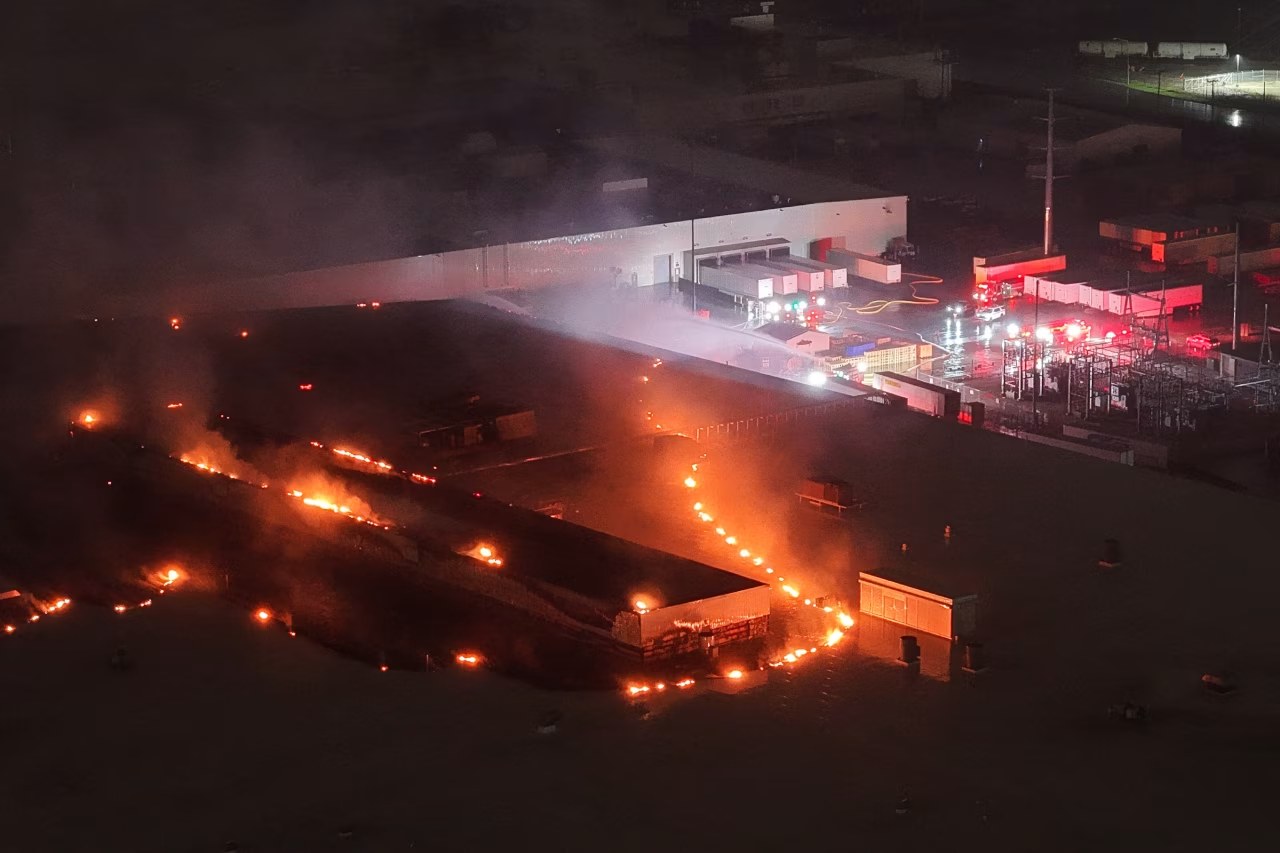
Ohio glass factory fire halts production but GM and Stellantis report no supply disruptions
- Fire erupted at 8:30 p.m. Sunday at Fuyao Glass America’s Moraine plant, one of the world’s largest automotive‑glass facilities.
- The plant supplies windshields and side‑glass to GM, Stellantis, Ford and several other OEMs.
- Both GM and Stellantis issued statements saying their assembly lines remain fully operational.
- Investigators are still probing the cause; no injuries were reported.
- Analysts warn that extended downtime could ripple through U.S. auto production if repairs exceed projected timelines.
A blaze at a key supplier tests the resilience of U.S. auto supply chains.
OHIO FIRE—On Sunday night a section of the roof at Fuyao Glass America’s Moraine complex ignited, sending plumes of smoke over the Dayton suburbs. City officials confirmed the fire was contained by early morning, but the plant’s high‑temperature furnace halls suffered significant damage.
GM and Stellantis, the two automakers most closely linked to the Ohio facility, quickly reassured investors that inventories and alternative sourcing arrangements insulated their production lines. Their statements, released within hours of the incident, underscore how tightly managed supply‑chain risk has become in the post‑pandemic era.
While the blaze sparked immediate concern among local workers and community leaders, the broader industry is watching to see whether a single‑plant outage can trigger a cascade of delays in a market already grappling with semiconductor shortages and labor constraints.
The Scale of Fuyao Glass America: From Chinese Roots to Ohio’s Automotive Heartland
From a modest Chinese startup to a North‑American glass powerhouse
Founded in 1993 in Fuqing, China, Fuyao Glass Industry Group Co. Ltd. grew through aggressive overseas expansion, culminating in the 2016 acquisition of a 300‑acre site in Moraine, Ohio. The plant, boasting a 1.5‑million‑square‑foot footprint, is capable of producing up to 1.2 million square meters of automotive glass per year, enough to outfit roughly 30% of the United States passenger‑vehicle fleet, according to the company’s 2022 annual report.
“Fuyao’s strategic location near major interstate corridors and the Detroit‑to‑Cincinnati automotive corridor gives it a logistical edge that few competitors can match,” says Dr. Emily Chen, professor of supply‑chain management at Ohio State University. “The plant’s proximity to GM’s Lordstown and Stellantis’s Toledo stamping facilities reduces transit time to under 24 hours, a critical factor for just‑in‑time manufacturing.”
The Ohio facility employs more than 2,500 workers, making it the largest single employer in the Moraine‑Springfield area. In 2022, the plant generated $1.8 billion in direct economic output, according to the Ohio Department of Development, and contributed an estimated $250 million in local tax revenue.
Beyond sheer volume, Fuyao’s technological edge lies in its use of low‑iron glass, which offers superior optical clarity and lighter weight—a key demand driver for electric‑vehicle manufacturers seeking to shave off kilograms. The plant’s R&D wing, staffed by 120 engineers, collaborates directly with OEM design teams, accelerating the rollout of next‑generation glazing solutions.
Despite its size, Fuyao remains a single‑point supplier for several high‑margin vehicle models. A 2021 internal memo from Stellantis’s procurement division listed the Ohio plant as the “primary source for side‑glass on the Jeep Grand Cherokee L.” Similarly, GM’s 2022 supplier scorecard highlighted Fuyao as a “critical tier‑1 vendor for front‑window assemblies on the Chevrolet Silverado.” The concentration of such essential components in one location amplifies the systemic risk that a fire, like the one on Sunday, can pose.
Industry analysts at IHS Markit note that while Fuyao commands roughly 30% of U.S. automotive glass market share, the remaining 70% is fragmented among smaller regional players, many of which lack the capacity to absorb sudden volume spikes. This asymmetry explains why GM and Stellantis were quick to issue reassurances: they have already built safety stocks equivalent to 10‑day production runs, a practice that became standard after the 2020 semiconductor crunch.
Looking ahead, the Ohio plant’s recovery timeline will shape not only quarterly earnings but also strategic sourcing decisions. If repairs stretch beyond six weeks, automakers may be forced to diversify away from a single supplier—a shift that could reshape the North‑American glass landscape for years to come.
As the investigation continues, stakeholders from labor unions to local officials will watch closely how quickly Fuyao can restore full capacity.
How a Single Plant Can Ripple Through Global Automakers – A Supply Chain Perspective?
Mapping the downstream dependencies of a glass outage
When a key component supplier like Fuyao Glass America experiences a disruption, the effects cascade through multiple tiers of the automotive supply chain. The first ripple is felt at the stamping and body‑shop level, where glass arrives just‑in‑time to be installed on moving assembly lines. A delay of even a few hours can force a line to halt, incurring overtime costs and lost productivity.
“The automotive industry runs on a razor‑thin margin, and any hiccup in a Tier‑1 supplier translates into a domino effect,” explains John Miller, vice‑president of operations at Fuyao Glass America. “Our customers have built their production schedules around the assumption that glass will be delivered within a 24‑hour window.”
To illustrate the magnitude of Fuyao’s role, consider the bar chart below, which breaks down North American automotive glass market share by supplier for 2023. Fuyao leads with 30%, followed by Saint‑Gobain (22%), Asahi Glass (18%), and a collection of smaller firms making up the remaining 30%.
The concentration of market share means that a single‑plant outage can strain the capacity of rivals, which may lack the furnace capacity to absorb extra volume on short notice. In 2021, a temporary shutdown at a Saint‑Gobain plant in Michigan forced GM to tap inventory reserves, resulting in a reported 0.3% dip in quarterly vehicle output.
Beyond OEMs, downstream dealers and consumers can feel the pinch. Delayed deliveries translate into longer wait times for customers, potentially eroding brand loyalty. A recent J.D. Power survey found that 12% of car buyers consider supply‑chain reliability when choosing a brand, a figure that has risen sharply since 2020.
Risk‑mitigation strategies have therefore become a focal point for automakers. Both GM and Stellantis have publicly disclosed that they maintain “dual‑sourcing” arrangements for critical components, meaning they keep contracts with at least one alternative glass supplier. However, dual‑sourcing is not a panacea; the alternative providers often charge a premium of 5‑10% for expedited production.
In the coming weeks, the key metric to watch will be the “fill‑rate” – the percentage of glass orders fulfilled on schedule. If Fuyao’s fill‑rate falls below 85%, automakers may be compelled to accelerate diversification, potentially reshaping supplier relationships for the next decade.
The bar chart that follows quantifies the current competitive landscape, providing a visual anchor for the discussion of supply‑chain vulnerability.
Safety Protocols and Past Fires: Lessons Learned at Automotive Glass Plants?
When heat meets glass: a chronicle of incidents and regulatory response
Automotive glass manufacturing involves high‑temperature furnaces, molten glass baths, and large volumes of volatile chemicals such as sodium carbonate. Historically, these conditions have produced a handful of notable fires that reshaped industry safety standards.
In 2005, a furnace explosion at a PPG Industries plant in Pennsylvania resulted in a two‑day shutdown and prompted the Occupational Safety and Health Administration (OSHA) to issue new guidelines on furnace door interlocks. A 2012 blaze at a Saint‑Gobain facility in Ohio, caused by an electrical fault in a drying tunnel, led to the adoption of automated fire‑suppression systems that can extinguish a fire within 30 seconds of detection.
“Each incident forces a recalibration of risk assessments,” notes Karen Alvarez, senior safety engineer at OSHA’s Manufacturing Division. “The key is not just compliance, but a culture of proactive hazard identification.”
The timeline chart below captures the most consequential U.S. automotive‑glass plant fires from 2000 to 2023, highlighting cause, duration, and regulatory outcomes. The recent Ohio fire fits a pattern of roof‑structure ignitions, often linked to electrical overloads in lighting or HVAC systems.
Investigators at the Moraine site are focusing on the roof’s fire‑resistive coating, which, according to a preliminary report from the Ohio Fire Marshal, may have degraded over time due to exposure to industrial solvents. If confirmed, the finding could trigger a review of coating standards across the sector.
Beyond physical safeguards, modern plants are integrating digital monitoring. Fuyao’s Moraine facility, for instance, installed a real‑time temperature‑mapping system in 2020 that alerts operators to hotspots exceeding 250 °C. While the system flagged an anomaly minutes before the fire, the rapid escalation suggests that additional redundancy—such as automatic sprinkler activation—may be required.
Industry groups, including the Automotive Glass Manufacturers Association (AGMA), have advocated for a unified safety framework that mandates quarterly fire‑drill simulations and third‑party audits. Adoption of these measures could reduce the likelihood of future incidents, protecting both workers and the tightly coupled supply chains they support.
As the investigation proceeds, the timeline serves as a reminder that each fire, while isolated, contributes to a broader narrative of evolving safety expectations.
Economic Impact on Ohio and the Midwest: Jobs, Tax Revenue, and Community Resilience
Beyond the furnace: how a single plant fuels a regional economy
The Fuyao Glass America complex is more than a supplier; it is an economic engine for Moraine and the surrounding Miami County. In 2022, the plant’s payroll accounted for roughly 12% of the county’s total employment, according to data from the Ohio Department of Development.
“When Fuyao announced its expansion in 2016, local officials projected an annual tax infusion of $15 million,” says Laura Bennett, senior economist at the Dayton Regional Economic Council. “That projection has been largely realized, with the plant now delivering an estimated $22 million in combined property, sales, and income taxes each year.”
The donut chart below breaks down the plant’s economic footprint: direct employment (2,500 jobs), indirect jobs generated through the supply chain (approximately 1,200), tax revenue contributions (roughly $22 million), and community programs (including a $1.5 million scholarship fund).
Beyond fiscal metrics, the plant supports a network of local vendors—steel suppliers, logistics firms, and food service providers—creating a multiplier effect that extends the impact of each dollar spent. A 2021 study by the University of Dayton estimated that every $1 million in plant output generates $1.8 million in regional economic activity.
The fire’s temporary shutdown threatens to interrupt this flow. If the plant remains offline for more than four weeks, the University of Dayton’s model predicts a potential loss of $45 million in regional GDP, equivalent to the annual budget of two mid‑size school districts.
Community leaders have already mobilized resources. The Ohio Workforce Development Board announced a rapid‑response training program to upskill displaced workers, while the local chamber of commerce is coordinating a “Buy Local” campaign to sustain ancillary businesses.
Long‑term resilience will depend on diversification. While Fuyao remains a cornerstone, the region is courting additional manufacturers in advanced composites and battery components, aiming to reduce reliance on a single industry. The donut chart illustrates the current composition, highlighting where diversification could be most impactful.
As the plant’s roof undergoes repairs, the broader economic narrative will unfold, offering lessons on how industrial hubs can balance growth with risk mitigation.
Future Outlook: Will Automakers Diversify Suppliers After the Ohio Fire?
Strategic pivots in a post‑fire automotive landscape
GM and Stellantis have both signaled that their current inventories are sufficient to weather the short‑term fallout from the Ohio fire. Yet, executives acknowledge that a prolonged outage could force a strategic rethink.
“We continuously evaluate our Tier‑1 portfolio, but any move to diversify must balance cost, quality, and logistics,” says Maria Lopez, senior director of supply‑chain risk at GM. “If Fuyao’s production is delayed beyond eight weeks, we will accelerate contracts with alternative suppliers, even at a modest price premium.”
The line chart below tracks GM’s and Stellantis’s on‑hand automotive‑glass inventory levels over the past 12 months, measured in days of supply. Both companies have built up to roughly 12‑day buffers, a level that historically correlates with a 0.2% variance in quarterly output.
Historically, major supply‑chain shocks have spurred diversification. After the 2011 tsunami in Japan disrupted several component suppliers, both GM and Stellantis announced multi‑source strategies for electronic modules, a move that later insulated them from the 2020 semiconductor shortage.
Analysts at Morgan Stanley predict that a permanent shift toward dual‑sourcing in the glass segment could increase overall procurement costs for OEMs by 3‑5% over the next three years. However, the trade‑off is a reduction in production risk, which many executives deem worth the incremental expense.
Beyond sourcing, both automakers are investing in “glass‑by‑design” initiatives, collaborating with research institutions to develop laminated glass that can be produced in smaller, more flexible facilities. This could ultimately reduce dependence on mega‑plants like Fuyao’s.
Regulators are also watching. The National Highway Traffic Safety Administration (NHTSA) has indicated that any prolonged supply constraints that affect vehicle safety components will trigger a review of compliance timelines, adding another layer of pressure on manufacturers to secure reliable sources.
As the line chart demonstrates, inventory levels are currently healthy, but the margin for error is narrow. The next few weeks will reveal whether GM and Stellantis opt for incremental diversification or maintain the status quo, a decision that could reshape supplier dynamics across the North American automotive glass market.
Frequently Asked Questions
Q: What caused the fire at the Fuyao Glass America plant in Ohio?
Investigators are still probing the incident; officials say the roof caught fire around 8:30 p.m. on Sunday, but no definitive cause has been released.
Q: Did the Ohio glass factory fire affect vehicle production at GM or Stellantis?
Both GM and Stellantis publicly confirmed that their assembly lines remain fully operational and that no immediate parts shortages are expected.
Q: How significant is Fuyao Glass America to the U.S. automotive glass market?
Fuyao operates one of the world’s largest automotive glass plants in Moraine, Ohio, supplying roughly 30% of U.S. passenger‑vehicle glass to OEMs like GM, Stellantis, and Ford.
📰 Related Articles
📚 Sources & References
- GM, Jeep Parent Stellantis Say No Disruptions After Ohio Glass Factory Fire
- Fuyao Glass America – Company Overview
- Automotive Glass Market Share by Supplier – IHS Markit 2023 Report
- U.S. Occupational Safety and Health Administration (OSHA) – Automotive Glass Plant Safety Guidelines
- Ohio Department of Development – Economic Impact of Manufacturing in Moraine
