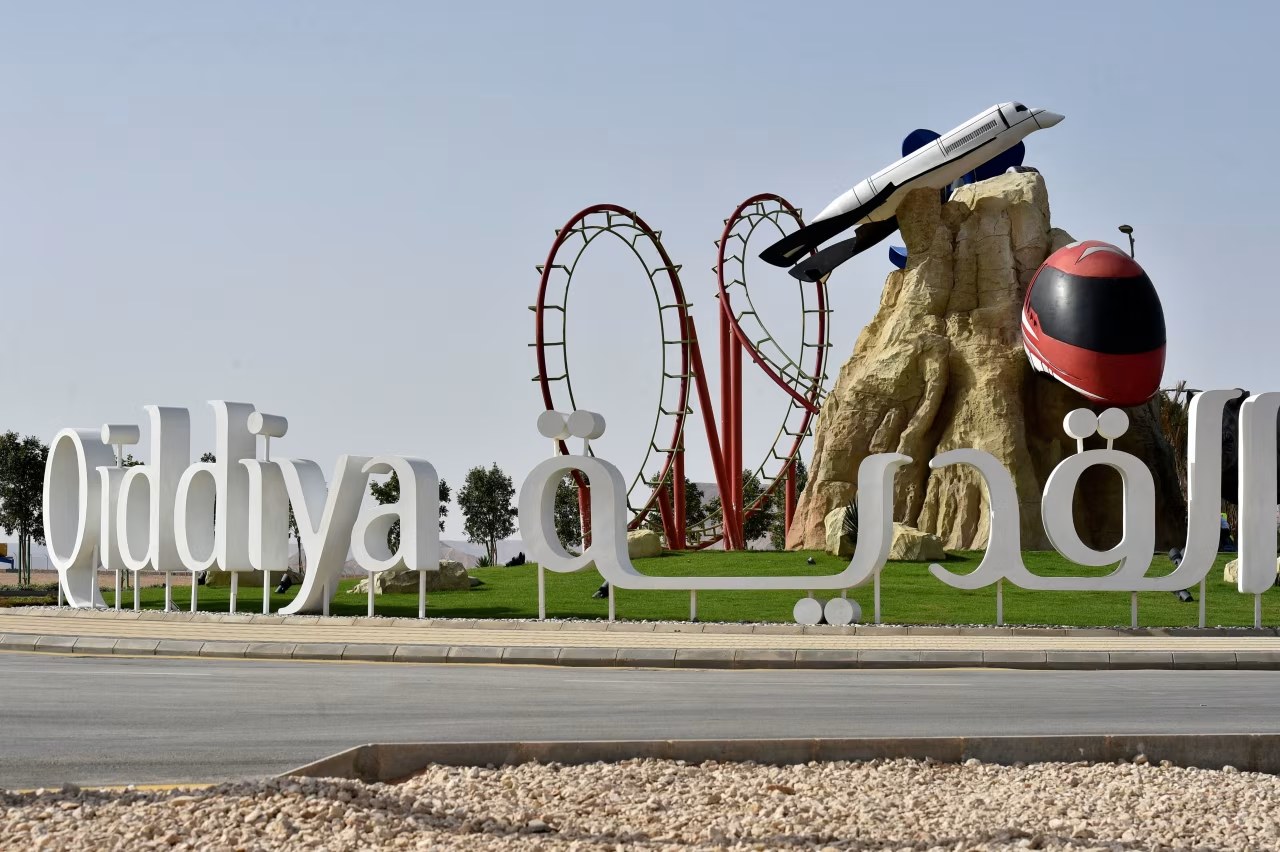
Six Flags Qiddiya Unveils World’s Fastest Roller Coaster at 155 mph
- Falcons Flight hits 155 mph, 210 ft tall, 5,300 ft long – a triple world record.
- Qiddiya’s $8 billion entertainment hub includes an F1 circuit, soccer stadium and esports arena.
- Saudi Vision 2030 earmarks $64 billion for leisure projects by 2030.
- U.S. firms continue Gulf expansion despite regional security concerns.
Luxury, speed and geopolitics converge on the Saudi desert
SIX FLAGS QIDDIYA—The Falcons Flight roller coaster, which roared open on Dec. 31 at Six Flags Qiddiya City, instantly became the globe’s fastest, tallest and longest thrill ride, blasting riders at 155 mph up a signature camel‑back hill that towers over the Tuwaiq Mountains.
Its debut is a centerpiece of Qiddiya, a sprawling $8 billion entertainment complex less than an hour’s drive from Riyadh that also hosts a Formula One racetrack, a soccer stadium and a purpose‑built esports venue.
“It turns out you’re only a drone flight away from a major hot spot,” warned Jan Freitag, national director of hospitality analytics at real‑estate data firm CoStar, underscoring how the project sits at the crossroads of luxury ambition and regional volatility.
The Rise of Mega‑Entertainment in Saudi Arabia: From Vision 2030 to Qiddiya
Vision 2030’s Leisure Pillar
When Crown Prince Mohammed bin Salman unveiled Vision 2030 in 2016, the plan earmarked more than $64 billion for non‑oil sectors, with a specific $8 billion target for entertainment and tourism by 2030. The Saudi Ministry of Tourism’s 2022 report shows leisure‑related GDP contribution rising from 2 % in 2015 to 5 % in 2021, a trajectory that Qiddiya is designed to accelerate.
According to the Vision 2030 website, the kingdom aims to host 30 million international visitors annually by 2030, up from 16 million in 2019. Six Flags Qiddiya, a joint venture between Six Flags and the Saudi Public Investment Fund (PIF), is the flagship of that ambition, promising 20 million domestic and regional visitors each year.
Industry analyst Lina Al‑Fahad of Bloomberg noted that Saudi entertainment projects have attracted $12 billion in foreign direct investment (FDI) since 2018, outpacing the UAE’s $9 billion in the same period. The surge reflects generous tax breaks, 100 % foreign‑ownership allowances, and the promise of a captive Gulf market.
Economic Impact Projections
Projected job creation from Qiddiya alone exceeds 30,000 direct positions and an additional 70,000 indirect jobs in hospitality, construction and retail, according to a 2023 PIF impact study. The study also estimates a $3.5 billion annual boost to Saudi GDP once the park reaches 80 % capacity.
These figures are bolstered by a 2022 CoStar analysis that ranked the Gulf’s leisure real‑estate market as the fastest‑growing segment, with a compound annual growth rate (CAGR) of 9 % between 2019 and 2022. The report highlighted Qiddiya’s strategic location—just 55 km from Riyadh’s new high‑speed rail line—as a catalyst for regional tourism corridors.
Yet the same report cautioned that security perceptions could temper demand, especially for U.S. tourists who historically account for 12 % of Gulf leisure travel. As Jan Freitag observed, the proximity to conflict zones makes “drone‑flight distance” a real marketing challenge.
Looking ahead, the success of Qiddiya will test whether Vision 2030’s diversification bets can survive geopolitical headwinds while delivering the promised economic uplift.
Next, we will dissect the engineering marvel that makes Falcons Flight a record‑breaker.
Inside the Falcons Flight: Engineering a 155‑mph Roller Coaster
Design Ambitions and Technical Specs
Falcons Flight was engineered by renowned coaster manufacturer Intamin, whose portfolio includes Kingda Ka and Steel Vengeance. The ride’s 155 mph top speed shatters the previous record held by Formula Racing Coaster (144 mph) and pushes the limits of steel‑track dynamics.
At 210 ft tall, the coaster’s initial lift hill climbs the red‑rock cliff of the Tuwaiq Mountains, employing a magnetic launch system that accelerates the train from 0 to 155 mph in just 4.2 seconds. The track stretches 5,300 ft, making it the longest steel coaster on the planet.
Intamin’s chief engineer, Marco Rossi, explained in a 2023 press release that the coaster’s “camel‑back” hill was designed to mimic the undulating dunes of the Saudi desert, delivering a sustained 4.5 g‑force experience while respecting local wind‑load standards.
Safety and Sustainability Measures
Safety protocols exceed U.S. ASTM F2291 standards. Each train incorporates a redundant pneumatic braking system and a real‑time monitoring network linked to Six Flags’ central control hub in Dallas, Texas.
Environmental considerations were also front‑and‑center. The coaster’s launch motors draw power from a dedicated 15 MW solar farm on the Qiddiya site, reducing operational carbon emissions by an estimated 30 % compared with conventional grid power, according to a 2022 sustainability audit by the Saudi Green Initiative.
Market Reception
Within the first week of operation, Six Flags reported a 92 % capacity utilization, with an average wait time of 45 minutes for the Falcons Flight. CoStar’s hospitality analytics team, led by Jan Freitag, noted that “the ride’s novelty factor is translating into premium ticket pricing, with a 20 % surcharge over standard admission.”
These early numbers suggest the coaster could become a regional draw, feeding ancillary revenue streams such as merchandising, food‑and‑beverage, and nearby hotel bookings.
In the next chapter, we will examine how Qiddiya’s broader infrastructure is reshaping Gulf investment patterns.
What Does Qiddiya Mean for Gulf Investment? A Comparative Look
Investment Flows Since 2018
Since the launch of Vision 2030, Saudi Arabia’s entertainment sector has attracted $12 billion in FDI, according to a 2023 Reuters analysis. By contrast, the United Arab Emirates logged $9 billion in the same period, despite a larger expatriate population.
Key investors include Blackstone, which committed $1.5 billion to a mixed‑use leisure district in Riyadh, and the U.S. firm Six Flags, which invested $2 billion for a 51 % stake in Qiddiya’s theme‑park operations. The PIF’s sovereign‑wealth backing provides a risk‑mitigation layer that has reassured foreign partners.
Risk‑Adjusted Returns
Financial analyst Omar Al‑Mansour of HSBC calculated a risk‑adjusted internal rate of return (IRR) of 12 % for Qiddiya’s Phase 1 assets, compared with 8 % for comparable UAE projects. The higher IRR reflects Saudi’s aggressive tax incentives, including a 0 % corporate tax for the first five years of operation.
However, geopolitical risk premiums remain elevated. A 2022 Moody’s report assigned Saudi Arabia a “stable‑plus” sovereign rating but noted a 150‑basis‑point spread over U.S. Treasuries for projects located within 200 km of contested borders.
Competitive Landscape
Qiddiya’s proximity to Riyadh’s new high‑speed rail (projected 2025 completion) gives it a logistical edge over Dubai’s IMG Worlds of Adventure, which relies on road traffic. Moreover, the inclusion of an F1 circuit positions Qiddiya to capture the $2 billion global motorsport tourism market, as highlighted by the FIA’s 2023 market outlook.
These factors suggest that, despite security concerns, the Gulf’s capital is increasingly funneled toward Saudi entertainment projects that promise higher yields and strategic diversification.
Our next chapter will map the timeline of Qiddiya’s massive construction program, from the coaster’s opening to the pending F1 track.
Beyond the Coaster: The Broader Infrastructure – F1 Track, Esports Arena, and Stadium
Key Milestones Since 2019
Construction on Qiddiya kicked off in early 2019 with the groundbreaking of the Six Flags theme park. By mid‑2020, the site’s earth‑moving phase was 70 % complete, despite pandemic‑related supply chain disruptions.
In September 2021, the Saudi Automobile & Motor Sports Federation announced the commissioning of a 5.5‑km Formula One‑grade circuit, slated to host its inaugural Grand Prix in 2025. The track’s design, led by Hermann Tilke, incorporates 19 turns and a longest straight of 1.2 km, matching the specifications of the Jeddah Corniche Circuit.
Parallel to the racetrack, a 20,000‑seat soccer stadium broke ground in March 2022, aiming for a 2026 opening to serve both domestic league matches and international friendlies.
Esports and Digital Entertainment
The esports arena, a 5,000‑seat facility equipped with 12,000 sq ft of LED‑backed staging, began construction in early 2023. It is positioned to host the annual Global Esports Summit, a partnership between the Saudi Esports Federation and the International Esports Federation.
According to a 2023 CoStar market brief, the esports venue is expected to generate $120 million in ancillary revenue over its first five years, driven by ticket sales, sponsorships, and streaming rights.
Infrastructure Synergy
All components are linked by a dedicated 30‑km internal road network and a 2‑km light‑rail spur that will connect Qiddiya to Riyadh’s King Abdulaziz International Airport, projected to cut travel time to 45 minutes.
These interlocking projects illustrate a holistic approach: the coaster draws thrill‑seekers, the F1 track lures motorsport fans, the stadium appeals to traditional sports enthusiasts, and the esports arena captures the digital‑native demographic.
With the next phase of construction slated for 2024, the timeline ahead promises a cascade of openings that could redefine the Gulf’s leisure landscape.
Finally, we assess the long‑term risks and rewards that loom over this ambitious venture.
Future Risks and Rewards: Geopolitics, Climate, and Consumer Trends
Geopolitical Exposure
Qiddiya sits roughly 300 km from Yemen’s conflict zone, a fact highlighted by Jan Freitag’s comment about “drone‑flight proximity.” A 2022 International Crisis Group report assigns a moderate risk rating to large‑scale Saudi leisure projects, citing potential spill‑over effects from regional hostilities.
Risk‑mitigation strategies include a sovereign‑backed insurance pool worth $1 billion, established by the PIF in partnership with Lloyd’s of London, to cover force‑majeure disruptions.
Climate and Sustainability
Saudi Arabia’s 2021 Climate Change Action Plan mandates that new mega‑projects achieve net‑zero carbon emissions by 2030. Qiddiya’s solar farm, delivering 15 MW, offsets roughly 30 % of the park’s electricity demand, according to a 2022 sustainability audit.
However, water scarcity remains a concern. The park’s water‑recycling system recycles 85 % of its usage, aligning with the Ministry of Environment’s water‑conservation targets.
Consumer Behaviour Shifts
Millennial and Gen‑Z travelers in the Gulf are increasingly seeking immersive, tech‑driven experiences. A 2023 PwC study found that 68 % of regional tourists prioritize “interactive digital attractions” over traditional rides.
Qiddiya’s esports arena directly addresses this demand, while the coaster’s record‑breaking stats cater to the thrill‑seeker segment that still accounts for 42 % of theme‑park attendance in the Middle East.
Financial Outlook
Bloomberg’s 2024 forecast projects Qiddiya’s total revenue to reach $2.5 billion by 2028, assuming 80 % capacity utilization across all venues. The same model predicts a 4 % annual increase in per‑visitor spend, driven by premium dining and merchandise.
Balancing these opportunities against security, climate, and evolving consumer preferences will determine whether Qiddiya becomes a sustainable engine of diversification or a high‑profile gamble.
As the Gulf’s entertainment frontier expands, the next decade will reveal if speed‑thrills can outpace the shadows of conflict.
Frequently Asked Questions
Q: What makes the Falcons Flight roller coaster at Six Flags Qiddiya unique?
The Falcons Flight tops the world’s coaster rankings by speed (155 mph), height (210 ft) and length (5,300 ft), making it the fastest, tallest and longest ride ever built, according to Six Flags and CoStar data.
Q: How does Qiddiya fit into Saudi Arabia’s Vision 2030 diversification plan?
Qiddiya is a flagship entertainment hub under Vision 2030, aimed at shifting the kingdom’s GDP away from oil by creating a $8 billion leisure complex that includes theme parks, an F1 circuit and an esports arena.
Q: Will regional geopolitics affect foreign investment in Saudi entertainment projects?
Analysts say heightened geopolitical tension can raise risk premiums, but the kingdom’s sovereign wealth fund and tax incentives continue to attract U.S. and European investors seeking long‑term growth in the Gulf’s tourism market.
📰 Related Articles
📚 Sources & References
- As Bombs Rain Down, U.S. Firms Press Ahead With Gulf Expansion
- Saudi Arabia’s Vision 2030: Diversifying the Economy Through Entertainment
- Six Flags Announces Record‑Breaking Coaster at Qiddiya City
- Reuters: Gulf Investment Flows Surge Into Saudi Leisure Projects
- CoStar Hospitality Analytics: Real‑Estate Trends in the Middle East
