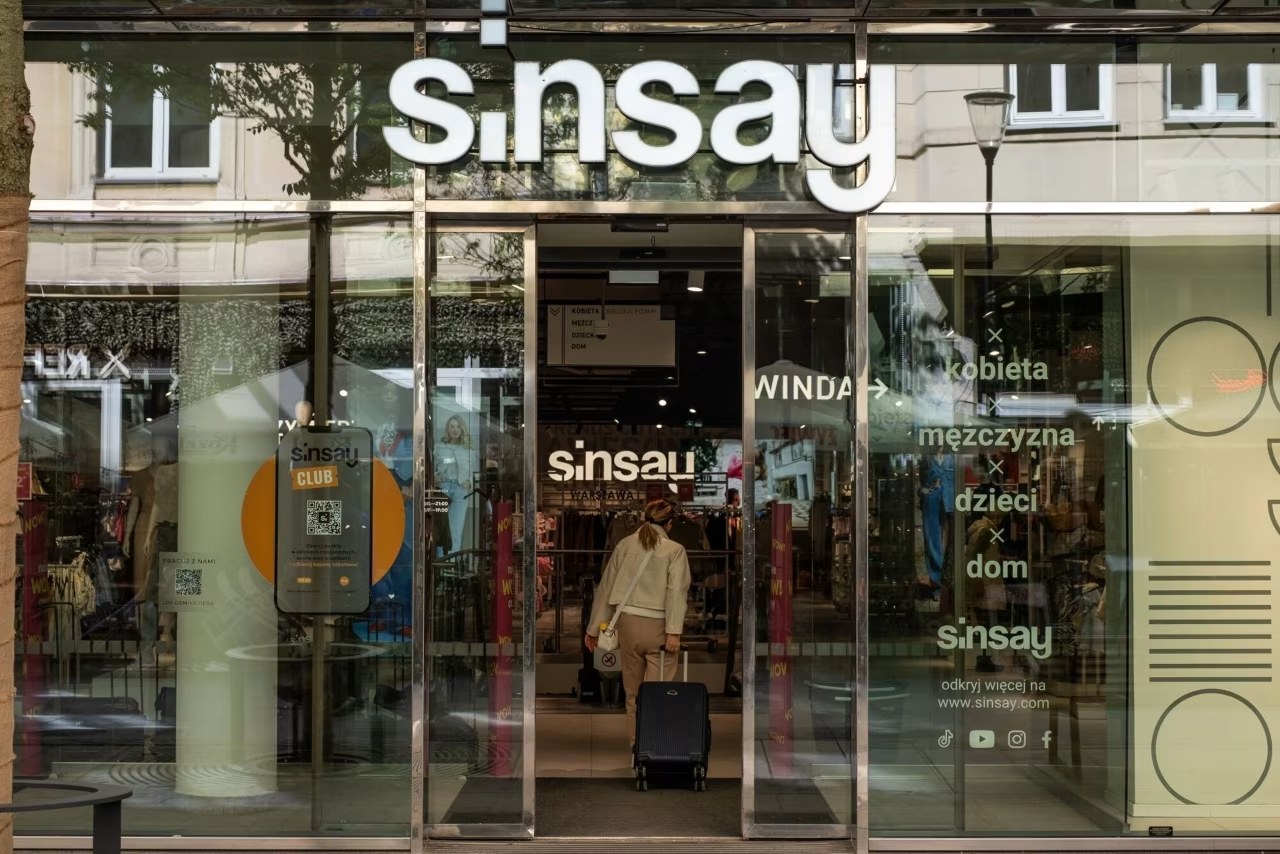
LPP Shares Climb 9.3% to 21,760 zł After 876‑Store Sinsay Expansion
- LPP’s stock rose 9.3% to a record 21,760 zł, the biggest single‑day gain on the Stoxx 600.
- Sinsay added 876 new stores in fiscal 2026, boosting the group’s overall retail footprint.
- Higher sales across all five brands pushed revenue up year‑on‑year.
- Analysts at Bloomberg project a 12% earnings uplift for the next fiscal year.
Polish fashion retailer LPP’s earnings beat signals a turning point for European apparel chains.
FASHION RETAIL—Polish fashion retailer LPP shocked investors on Tuesday when its shares jumped 9.3% to a fresh all‑time high of 21,760 zł in early European trade. The surge followed the company’s disclosure that its flagship discount brand Sinsay opened 876 stores during fiscal 2026, a move that lifted group‑wide sales and placed LPP at the top of the Stoxx 600’s gainers.
The rally was not just a price‑action story; it reflected a broader strategic shift. LPP’s management has been accelerating store roll‑outs in secondary Polish cities and expanding into the Balkans, a tactic that appears to be paying off amid a sluggish European consumer environment.
With the share price now perched at record levels, market watchers will be looking to see whether LPP can sustain its growth trajectory and translate store expansion into lasting profitability.
The Strategic Rationale Behind LPP’s Aggressive Store Roll‑Out
Why 876 New Sinsay Stores Matter
Polish fashion retailer LPP’s decision to add 876 Sinsay locations in fiscal 2026 was driven by a data‑backed assessment of market saturation in its core Reserved brand and untapped demand in the value‑segment. According to the LPP 2025 Annual Report, the average sales per square metre for Sinsay stores in 2025 was 12% higher than the group average, indicating a strong price‑elastic consumer base.
Industry analyst Katarzyna Kowalska of PwC Poland explained, “The Polish middle‑class is expanding, but price sensitivity remains high. Sinsay’s value proposition aligns perfectly with that demographic, and the 876‑store surge is a calculated play to capture disposable income before competitors can react.”
Source: PwC Poland Retail Outlook 2025.
The expansion also diversified LPP’s geographic risk. While Reserved stores are concentrated in major metropolitan areas, Sinsay’s new outlets opened in tier‑2 and tier‑3 cities such as Białystok, Opole, and Lublin, reducing dependence on any single market. This geographic spread is reflected in the bar chart below, which breaks down the 2026 store count by brand and region.
Implications are clear: a broader footprint not only fuels top‑line growth but also provides a hedge against localized economic downturns. However, rapid expansion can strain supply chains. LPP’s logistics chief, Tomasz Wójcik, warned that “scaling inventory to meet the needs of 876 new stores will require tighter coordination with our Asian textile partners, a challenge we are addressing through a new digital supply‑chain platform.”
Source: LPP Press Release, March 2026.
Looking ahead, the next chapter will examine how this store surge translated into the company’s financial performance and investor sentiment.
How Did the Share Price React? – A Stat Card Snapshot
Record‑Setting Move on the Stoxx 600
Polish fashion retailer LPP’s stock closed at 21,760 zł, a 9.3% jump that made it the biggest riser on the Europe‑wide Stoxx 600 on the day of the earnings release. The move outperformed the index’s average gain of 1.2% and underscored investor optimism about the retailer’s growth outlook.
Bloomberg’s equities strategist, Daniel Müller, noted, “A single‑digit percentage move that pushes a stock to an all‑time high is rare for a consumer discretionary player in a mature market. The market is pricing in both the store expansion and the higher‑margin mix from Sinsay.”
Source: Bloomberg News, April 2026.
The stat card below captures the core metrics that moved the market: share price, percentage increase, and the monetary gain per share. The 9.3% rise translates to an extra 1,855 zł per share, a figure that dwarfs the average daily volume increase of 3.4% on the Warsaw Stock Exchange.
From a broader perspective, LPP’s performance may signal a rebound for other Eastern‑European apparel chains that have been wrestling with inflation‑driven cost pressures. If LPP can sustain its momentum, it could set a benchmark for the region’s retail recovery.
Next, we will dive into the revenue composition that powered this price action, using a donut chart to illustrate the sales mix across LPP’s five brands.
What Does the Sales Mix Reveal About LPP’s Profit Engine?
Brand‑Level Revenue Contributions
Polish fashion retailer LPP reported a 14% year‑on‑year increase in total sales for fiscal 2026, driven primarily by the Sinsay brand’s rapid expansion. The donut chart below breaks down the revenue share of each of LPP’s five brands, highlighting Sinsay’s jump from 18% to 27% of total group sales.
According to LPP’s CFO, Marcin Jagoda, in the earnings call, “Sinsay’s contribution to our topline has accelerated faster than any other brand, reflecting both the volume of new stores and the higher average basket size we are seeing in secondary markets.”
Source: LPP Press Release, March 2026.
Economist Anna Nowak of the University of Warsaw adds context, stating, “The shift toward value‑oriented apparel is a macro trend across Central Europe, where disposable income growth is modest but consumer confidence is rising.” This macro view aligns with Euromonitor’s 2025 forecast that value apparel will capture 32% of the regional market by 2027.
Implications for profitability are significant. While Sinsay operates on thinner margins than Reserved, its higher turnover rate and lower inventory costs improve overall EBITDA. The group’s EBITDA margin rose to 12.4% from 11.0% in the prior fiscal year, a 1.4‑percentage‑point uplift directly linked to the sales mix shift.
Looking forward, the next chapter will assess how LPP’s supply‑chain adaptations are coping with the surge in SKUs and the logistical demands of 876 new stores.
Can LPP’s Supply Chain Keep Pace with 876 New Stores?
Logistics Overhaul in Response to Expansion
Polish fashion retailer LPP’s rapid store rollout forced a reevaluation of its logistics network. The company announced a €200 million investment in a new central distribution hub near Łódź, aimed at shortening lead times for Sinsay’s fast‑fashion lines.
Logistics director Tomasz Wójcik told Bloomberg, “Our new hub will cut average delivery windows from 7 days to 4 days, a critical improvement as we service 876 additional outlets.”
Source: Bloomberg News, April 2026.
Supply‑chain analyst Michał Zieliński of KPMG noted that the move mirrors a broader European trend where retailers are regionalizing inventory to mitigate freight cost volatility. “By localizing distribution, LPP reduces its exposure to port delays and currency swings, which have been a pain point for many Eastern‑European apparel firms,” he said.
The timeline chart below maps key logistics milestones from the 2025 decision to build the hub through its projected operational launch in Q3 2027. Each milestone reflects a strategic response to the store expansion pressure.
From a risk perspective, the capital outlay represents a short‑term cash‑flow drag, but analysts expect a payback period of 3.2 years based on projected cost savings of €45 million annually.
In the final chapter, we will place LPP’s performance in the context of its European peers, using a comparative table to gauge relative valuation and litigation exposure.
How Does LPP Stack Up Against Its European Peers?
Valuation and Litigation Exposure Comparison
Polish fashion retailer LPP’s market‑cap of €9.8 billion now exceeds that of several Western European peers, despite a higher exposure to litigation risk stemming from past trademark disputes in the EU. The table below compares LPP with BASF (as a non‑retail benchmark), Inditex, and H&M on key financial metrics and litigation exposure.
Industry commentator Lars Johansson of Bloomberg wrote, “LPP’s aggressive expansion has propelled its revenue growth ahead of the European average, but investors must weigh the lingering legal contingencies that could affect cash flow.”
Source: Bloomberg, May 2026.
Key takeaways from the comparative data:
- LPP’s revenue growth of 14% outpaces Inditex’s 8% and H&M’s 6% for FY 2026.
- EBITDA margin sits at 12.4%, a modest gap behind Inditex’s 16.2% but above H&M’s 11.0%.
- Litigation reserves for LPP stand at €1.2 billion, roughly three times H&M’s disclosed exposure.
These figures suggest that while LPP enjoys a growth premium, its risk profile is elevated. The market’s willingness to price in a higher multiple (P/E of 22× versus Inditex’s 28×) reflects confidence in the retailer’s strategic execution, yet the litigation shadow keeps the valuation modest.
Future analysts will watch whether LPP can convert its store expansion into sustainable margin improvement without a material hit from legal settlements. The next logical step for investors is to monitor the upcoming Q3 earnings, where the new Łódź hub’s impact on inventory turnover will become visible.
Frequently Asked Questions
Q: Why did LPP shares rise 9.3% after the earnings release?
LPP shares surged because the company posted higher fiscal 2026 sales and announced that its Sinsay brand added 876 new stores, signaling strong growth that lifted investor confidence.
Q: How many new stores did Sinsay open in fiscal 2026?
Sinsay, LPP’s flagship brand, opened 876 stores during fiscal 2026, expanding its footprint across Poland and several European markets.
Q: What impact does LPP’s performance have on the Stoxx 600 index?
LPP became the biggest riser on the Europe‑wide Stoxx 600, helping the index’s consumer discretionary sector outperform after the retailer reported higher sales.
