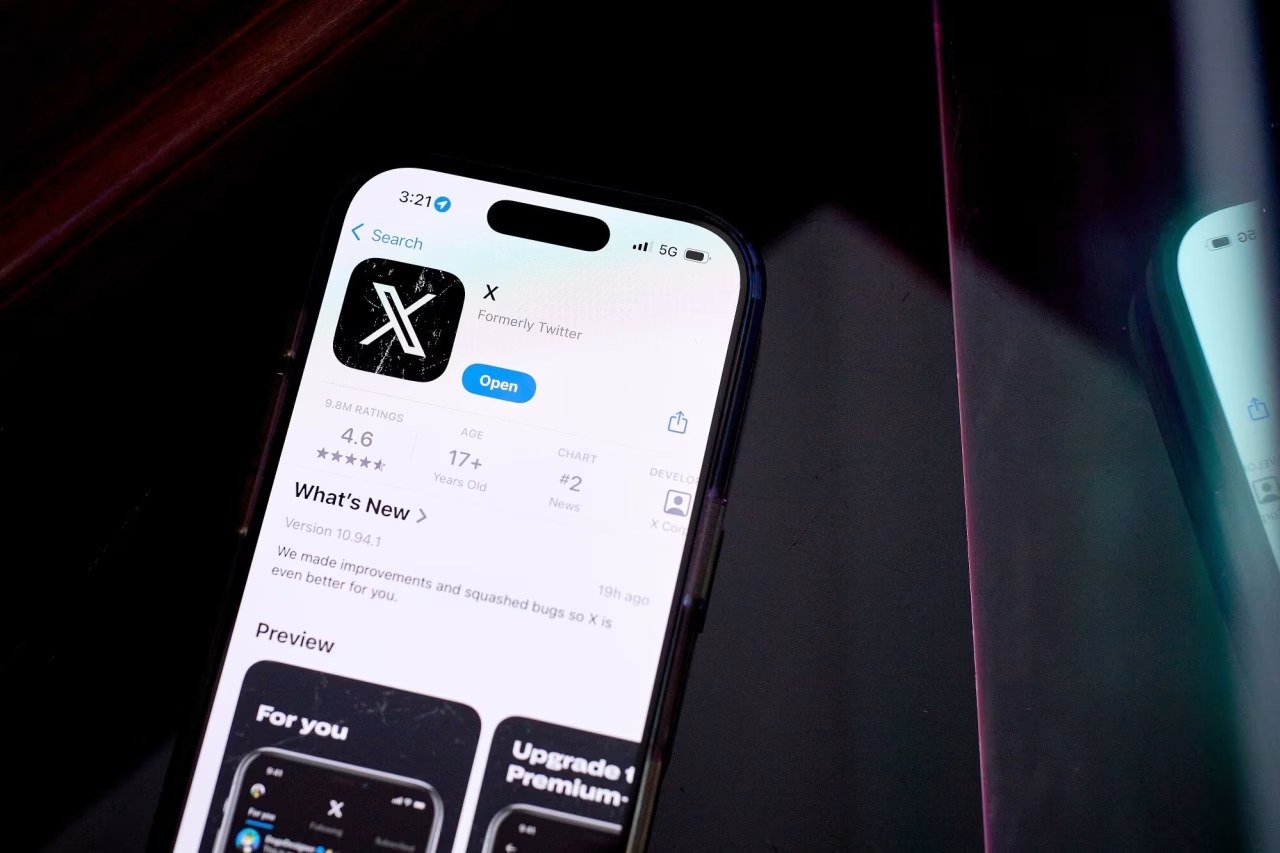
Federal Judge Rejects X’s Antitrust Claim Against CVS, Lego and Mars
- X accused the World Federation of Advertisers and 20-plus brands of a coordinated ad boycott.
- CVS Health, Lego, Colgate-Palmolive and Mars were among the original defendants.
- Nestlé and Shell were added later when X expanded the 2024 complaint.
- The court ruled the companies acted independently, not as an illegal cartel.
Why the ruling is a watershed moment for brand-safety decisions in social media.
X LAWSUIT—Elon Musk’s social-media company X lost a high-stakes gamble Thursday when a federal judge dismissed its antitrust suit against a who’s-who of global advertisers.
The platform had argued that the World Federation of Advertisers (WFA) orchestrated a group boycott by CVS Health, Lego, Colgate-Palmolive, Mars and others that cost X billions in lost revenue.
The judge’s terse order ends the litigation in its current form and leaves X without an immediate legal lever to recoup the ad dollars that evaporated after Musk’s 2022 takeover.
Inside the Lawsuit: What X Claimed the Brands Did
X filed the complaint in 2024, naming the WFA and a string of household brands as defendants. The platform alleged the companies had formed an illegal horizontal agreement to withhold advertising dollars, violating Section 1 of the Sherman Act.
According to the pleadings, CVS Health, Lego, Colgate-Palmolive and Mars worked through the WFA’s Global Alliance for Responsible Media (GARM) to set uniform brand-safety standards that effectively blacklisted X. The suit claimed these standards were a pretext for a coordinated boycott triggered by concerns over hate speech and misinformation on the platform after Musk relaxed content-moderation rules.
Internal slides cited in the complaint showed some advertisers discussing “pausing spend collectively” until X met stricter content policies. X’s legal team argued this constituted a per se illegal group boycott, a claim that requires proof of an actual agreement rather than parallel action.
John Newman, a University of Miami antitrust professor, said the complaint faced an uphill battle. “Courts rarely find an unlawful agreement when each company points to independent brand-safety audits,” he noted. The dismissal order, delivered without oral argument, signals the judge agreed.
The suit sought treble damages, estimated in court papers at more than $5 billion, plus an injunction forcing the brands to resume advertising at “competitive levels.” Those demands now evaporate unless X wins on appeal.
Antitrust precedent is unforgiving at the pleading stage. Under the Supreme Court’s 2007 Twombly decision, plaintiffs must allege facts that make a conspiracy plausible, not merely conceivable. X’s amended complaint, even after adding Nestlé and Shell, failed that test. The judge found the cited emails—mostly public statements praising GARM guidelines—insufficient to infer a secret deal.
The ruling leaves X with the option to petition the Fifth Circuit for leave to file a third amended complaint, but such motions are granted only when new, previously unavailable evidence surfaces. Legal scholars say that bar is rarely met in boycott cases where discovery has already produced thousands of documents.
Why Courts Rarely Punish Brands for Walking Away
American antitrust law prizes competition, but it also protects the right of any single firm to choose its business partners. That principle doomed X’s case from the start, according to former Federal Trade Commission officials.
“The Sherman Act targets agreements, not unilateral decisions to stop advertising,” said David Balto, who led the FTC’s competition bureau during the Clinton administration. “Each brand here asserted it independently evaluated brand-safety risks on X.”
The WFA reinforced that message in a post-ruling statement, noting that GARM’s guidelines are voluntary and that “every member decides where to place ads based on its own metrics.” The group’s membership includes more than 150 companies spending collectively over $90 billion annually on media.
Judicial precedent is stark. In the 1984 Monsanto v. Spray-Rite decision, the Supreme Court held that consciously parallel conduct, without additional evidence of conspiracy, is lawful. X tried to bridge that gap by citing industry e-mails and Slack messages, but the court found the communications fell short of demonstrating an illegal contract.
For companies facing public-relations risk, the ruling reaffirms a simple principle: they can pull ads without fear of antitrust reprisal if they act independently. That dynamic is especially potent in social media, where brand-safety controversies can erupt overnight.
The ruling also underscores a broader doctrinal shift. Since the 1980s, federal courts have increasingly required “plus factors”—evidence like price-fixing minutes or bid-rigging maps—to survive a motion to dismiss. Mere membership in a trade association, even one that drafts industry standards, is not enough. As a result, only a handful of advertiser-led boycotts have ever reached a jury, and none has resulted in treble damages since the 1970s.
Consumer advocates argue this latitude allows corporations to escape accountability. “When 100 firms exit simultaneously, the effect on a platform can be indistinguishable from a cartel,” said Sally Hubbard, director of enforcement strategy at the Open Markets Institute. Still, she concedes that proving an agreement without a smoking-gun document is “practically impossible” under current precedent.
How Much Revenue Did X Really Lose?
While the suit did not specify exact quarterly losses, X acknowledged in an August 2024 court filing that its U.S. ad revenue had dropped more than 60 percent year-over-year since Musk’s acquisition. Industry data show the platform earned roughly $4.7 billion from ads globally in 2021, the last full pre-Musk year.
By 2023, that figure had fallen to an estimated $1.9 billion, according to Sensor Tower, even as rival platforms grew. The shortfall forced X to introduce paid subscriptions and slash headcount by nearly 80 percent to stay cash-flow neutral.
“The exodus was swift and synchronized, but that doesn’t prove collusion,” said Brian Wieser, a media economist at Madison and Wall. “Advertisers reassessed X the same way they reassess any platform after a major policy shift.”
The ruling leaves X without legal recourse for those losses, but the company said in a statement it will “evaluate all appellate options.” Any new complaint would need to surmount the higher pleading standards for antitrust conspiracy claims, a hurdle rarely cleared in U.S. courts.
Internal X spreadsheets filed under seal reportedly show that the top 50 U.S. advertisers went from spending $2.1 billion in 2021 to $650 million in 2023. CVS Health alone reduced its X outlays from $34 million to $3 million, according to Pathmatics estimates. Lego halted all campaigns in December 2022 and has not resumed. Colgate-Palmolive’s spend fell below measurable thresholds.
The revenue collapse reverberated through X’s valuation. Fidelity, which owns an equity stake, marked down its holding by 65 percent between late 2022 and mid-2024. The mutual-fund giant cited “ongoing advertiser reluctance” as the primary driver.
What’s Next for X’s Fraught Relationship With Madison Avenue?
The legal defeat intensifies pressure on X to rebuild trust with advertisers rather than rely on litigation. Linda Yaccarino, brought in as CEO in 2023 to mend fences, has rolled out new content-adjacency tools and third-party verification partnerships with Integral Ad Science and DoubleVerify.
Early data show modest improvement. Pathmatics tracked a 12 percent quarter-over-quarter uptick in U.S. ad impressions during Q3 2024, the first gain since 2022. Yet the platform remains a rounding error for many blue-chip budgets. Omnicom Media Group still classifies X as “high risk,” advising clients to cap spend at 1 percent of total social budgets.
Musk’s own posts continue to complicate outreach. A November 2024 tweet endorsing an antisemitic conspiracy theory prompted Apple and Disney to pause campaigns within hours. “Brand CEOs can forgive policy chaos; they can’t forgive unpredictable public rhetoric,” said Pivotal Research analyst Michael Levine.
Without the prospect of court-ordered ad spend, X must persuade brands that the commercial upside outweighs reputational hazard. Thursday’s dismissal makes that pitch purely voluntary—and decidedly uphill.
X has responded by pivoting to performance advertisers, who care more about cost-per-click than brand-safety white lists. The platform’s average CPM fell 36 percent year-over-year in Q3 2024, according to Gupta Media, making it cheaper than TikTok for the first time since 2019. Yet even performance buyers demand basic metrics, and X’s self-serve dashboard has suffered repeated outages during high-traffic events like the 2024 presidential debates.
Long-term, X is exploring subscription tiers for businesses, a model that would reduce dependence on ads. But with only 1.2 million subscribers paying $8 a month, subscription revenue covers less than 5 percent of operating costs, company filings show.
Could Congress or Regulators Still Penalize the Brands?
Antitrust scholars note that legislative intervention, not litigation, may be the only remaining avenue for X. House Judiciary Committee Chair Jim Jordan has opened probes into whether advertisers’ brand-safety initiatives stifle conservative platforms. A hearing last July featured testimony from X executives who accused the WFA of “de-platforming via spreadsheet.”
Yet any statutory overhaul faces stiff headwinds. The American Advertising Federation, a trade body representing 40,000 agencies, argues that compelled ad spending would violate the First Amendment. “Government cannot force a company to associate its brand with content it deems unsafe,” said the group’s general counsel, Allison Pepper.
State-level bills in Texas and Florida that would impose fines for “politically motivated ad boycotts” stalled in committee last session after constitutional reviews. Meanwhile, the Federal Trade Commission has opened a rule-making on commercial surveillance but has signaled no appetite for mandating where ads must run.
The upshot: Thursday’s court loss likely closes the federal courthouse door for X, leaving the First Amendment—and market forces—as the final arbiters of where ad dollars flow.
Still, the debate is far from academic. Senator Mike Lee (R., Utah) has floated a draft bill that would treat large-scale ad boycotts as “market manipulation” if they exceed $50 million in aggregate impact. The proposal has gained little traction, but a high-profile hearing featuring Musk could revive it.
Even European regulators have stayed on the sidelines. The European Commission’s Directorate-General for Competition confirmed it “is monitoring the sector” but has opened no formal probe into GARM. Brussels insiders say the agency is wary of chilling legitimate brand-safety decisions, especially under the Digital Services Act’s stricter content-moderation obligations.
Ultimately, the ruling reinforces a durable reality: in the absence of a statutory mandate, platforms must compete for ad dollars by proving they are safe, scalable and brand-aligned. For X, that sales pitch now hinges on product fixes, not courtroom theatrics.
Frequently Asked Questions
Q: What was X’s core allegation in the boycott lawsuit?
X claimed the World Federation of Advertisers and dozens of big brands coordinated to withhold billions in ad spend, violating federal antitrust law.
Q: Which companies were named in the dismissed suit?
Original defendants included CVS Health, Lego, Colgate-Palmolive and Mars; Nestlé and Shell were added later.
Q: Why did the court dismiss the case?
The judge ruled X failed to show an illegal agreement; brands can individually pause spend over brand-safety concerns.
Q: How much revenue did X lose after the advertiser exodus?
X’s global ad revenue fell from an estimated $4.7 billion in 2021 to roughly $1.9 billion in 2023, according to Sensor Tower.
Q: Can X appeal the ruling?
Yes, X can appeal to the federal circuit court, but U.S. antitrust precedent makes overturning a dismissal at the pleading stage unusually difficult.
