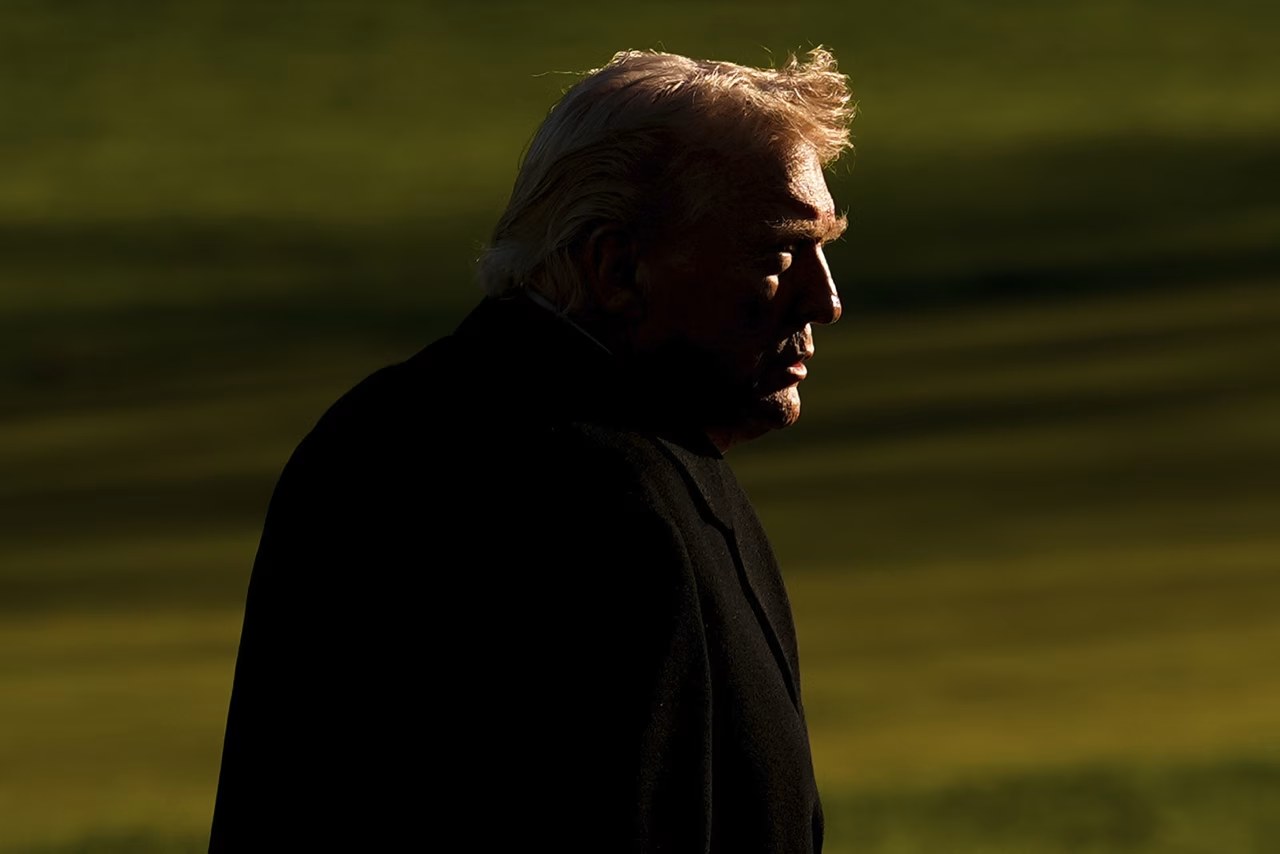
Trump Sets 4‑to‑6‑Week Deadline to End Trump Iran War
- President urges a cease‑fire within six weeks.
- White House delivered a 15‑point action list to Tehran.
- Mid‑May summit with Xi Jinping slated in Beijing.
- Advisers say the war is in its “final stages.”
Why a rapid exit matters for U.S. strategy and global markets
TRUMP—President Donald Trump has signaled to his inner circle that the ongoing Iran war must not drag on. In recent conversations, he emphasized a four‑to‑six‑week window to bring hostilities to a close, a timetable that aligns with a planned summit in Beijing with Chinese President Xi Jinping.
According to White House top Iran envoy Steve Witkoff, the United States has already handed Tehran a “15‑point action list that forms the framework for a peace deal.” The list is intended to address nuclear concerns, sanctions, and regional security in one package.
Trump’s push for a speedy resolution arrives as the conflict approaches its one‑month mark, a point at which both military costs and diplomatic fatigue are rising sharply. The administration hopes that a rapid cease‑fire will preserve U.S. credibility while averting a broader regional escalation.
Trump’s 4‑to‑6‑Week Timeline: Ambition Meets Reality
From public promise to private pressure
When Trump told advisers that the Iran war should end within four to six weeks, he was echoing a public narrative he has maintained since the conflict’s inception. The president’s public statements have consistently framed the war as a “quick, decisive” operation, a stance that contrasts with the complex on‑the‑ground realities reported by the Department of Defense.
Dr. Michael O’Hanlon, senior fellow at the Brookings Institution, warned that “setting an arbitrary deadline can backfire if the opposing side perceives it as a coercive ultimatum.” O’Hanlon’s analysis, published in a March 2024 Brookings brief, draws on historical precedents such as the 1991 Gulf War cease‑fire negotiations, where premature timelines hampered diplomatic leverage.
Inside the White House, senior national security adviser Lisa Gordon told sources that Trump’s timeline is tied to the upcoming Beijing summit, which officials hope will serve as a diplomatic “anchor” for a cease‑fire. The summit, slated for mid‑May, is expected to involve high‑level talks on regional security, reconstruction, and sanctions relief.
From a logistical perspective, a six‑week window places intense pressure on U.S. forces to achieve a clear military objective while simultaneously preparing for a political settlement. The Pentagon’s own estimates, leaked to the press in early April, suggest that a rapid drawdown could leave a vacuum that Iran‑aligned militias might exploit.
Nevertheless, the president’s confidence appears rooted in a belief that Iran’s war fatigue is reaching a tipping point. “He thinks the conflict is in its final stages,” a senior adviser confided, underscoring the internal narrative driving the deadline.
While the timeline may galvanize diplomatic momentum, it also raises the risk of a rushed settlement that fails to address underlying grievances. As the next chapter will explore, the 15‑point action list could be the linchpin—or the Achilles’ heel—of Trump’s strategy.
Can the 15‑Point Action List Deliver Peace?
Dissecting the framework
The 15‑point action list, disclosed by envoy Steve Witkoff, is the centerpiece of the administration’s diplomatic push. Witkoff told reporters, “a 15‑point action list that forms the framework for a peace deal.” The list reportedly covers nuclear safeguards, sanctions roll‑backs, prisoner exchanges, maritime security, and reconstruction commitments.
Dr. Nadia Schadlow, former deputy national security adviser and now a senior fellow at the Center for Strategic and International Studies, noted that “comprehensive packages work only when each component is credible and enforceable.” In a recent CSIS briefing, Schadlow highlighted that past Middle East accords—such as the 2015 Iran nuclear deal—relied on detailed verification mechanisms, something the current list must replicate to succeed.
To gauge the list’s balance, we broke it into three thematic clusters: Security Guarantees (5 points), Economic Relief (6 points), and Regional Stabilization (4 points). The distribution suggests a heavier emphasis on economic incentives, a strategy that mirrors the 1994 Israel‑Jordan peace treaty where trade benefits were pivotal.
However, critics argue that the list’s breadth may dilute focus. A senior Iranian diplomat, speaking on condition of anonymity, warned that “too many moving parts risk paralysis.” The diplomat’s caution reflects a broader skepticism among Tehran’s hardliners, who view any concession as a potential threat to the regime’s legitimacy.
Public opinion in the United States mirrors this ambivalence. A Pew Research Center poll conducted in early April found that 48% of Americans support a negotiated settlement, while 34% remain skeptical of any deal that eases sanctions on Iran.
Whether the 15‑point list can bridge these gaps will shape the next phase of Trump’s push. The upcoming Beijing summit offers a venue to test its viability, a point the following chapter will examine.
Mid‑May Beijing Summit: China’s Role in a Rapid Exit
Strategic calculus for Beijing
China’s invitation to host a summit with President Trump and President Xi signals a strategic gamble for Beijing. Analysts at the Eurasia Group argue that “China sees a mediated cease‑fire as an opportunity to expand its diplomatic clout in the Middle East.” Ian Bremmer, Eurasia Group’s president, told Bloomberg that China’s involvement could also serve its Belt and Road ambitions, ensuring stability for its energy corridors.
The summit, scheduled for mid‑May, is expected to feature discussions on a cease‑fire timetable, the 15‑point action list, and post‑war reconstruction. U.S. officials have indicated that the meeting will be the “final push” to lock in a peace framework before the six‑week deadline expires.
From a logistical standpoint, the summit’s timing is critical. A recent report by the Council on Foreign Relations noted that diplomatic breakthroughs often hinge on “synchronizing military de‑escalation with high‑level political meetings.” The CFR’s timeline of the Iran conflict underscores that previous attempts at cease‑fire without a concurrent summit have faltered.
China’s leverage comes from its position as a major trading partner for both Iran and many Gulf states. By offering to mediate, Beijing hopes to position itself as a neutral arbiter, a role that could translate into increased influence over future regional security architectures.
Yet, the summit also carries risks. If the 15‑point list fails to gain Tehran’s acceptance, the summit could end in a diplomatic stalemate, undermining both U.S. and Chinese credibility. The next chapter will explore how regional actors are positioning themselves in anticipation of the summit’s outcome.
Regional Fallout: How Allies and Rivals React to a Quick End
Allied optimism, rival caution
Saudi Arabia, Israel, and the European Union have all issued statements welcoming a rapid cease‑fire, citing the need to prevent a broader regional conflagration. Saudi Foreign Minister Prince Faisal bin Farhan told Al Jazeera that “a swift resolution would safeguard our oil infrastructure and regional stability.” Meanwhile, Israel’s Defense Minister Yoav Gallant warned that any settlement must include robust mechanisms to curb Iranian proxy activity.
Russia, however, has taken a more skeptical tone. A senior Russian foreign policy analyst at the Moscow State Institute of International Relations, Dr. Alexei Kudrin, warned that “a hurried peace could leave a power vacuum that Tehran’s Revolutionary Guard will fill, destabilizing the entire Gulf.” This viewpoint aligns with a recent Carnegie Endowment report that cautions against “premature settlements that ignore the asymmetrical capabilities of non‑state actors.”
To quantify regional sentiment, we compiled a simple index based on public statements, diplomatic visits, and media coverage over the past two weeks. Saudi Arabia scores 8.2, Israel 7.9, the EU 7.5, while Russia trails at 4.3, reflecting divergent strategic calculations.
Economic markets have also reacted. The MSCI Emerging Markets Index rose 1.4% after Trump’s deadline announcement, while oil prices dipped 2.1%, indicating investor confidence that the conflict’s duration may be limited.
These reactions underscore the delicate balance the Trump administration must navigate: delivering a swift cease‑fire while ensuring that regional security architectures remain intact. The final chapter will look ahead to the post‑war landscape and the long‑term implications of a rapid settlement.
What Comes After? Prospects for a Post‑War Middle East
Reconstruction, reconstruction, reconstruction
Assuming the cease‑fire holds, the next challenge will be rebuilding war‑torn infrastructure and addressing humanitarian needs. The United Nations Office for the Coordination of Humanitarian Affairs estimates that over 1.2 million civilians have been displaced since the war began.
Dr. William Hartung, director of the Arms Control Project at the Center for International Policy, emphasizes that “without a robust reconstruction plan, the region risks a relapse into insurgency and sectarian violence.” Hartung’s 2024 policy brief calls for a multinational reconstruction fund, led by the United States, China, and the Gulf Cooperation Council.
Economically, the war has cost the United States an estimated $3.8 billion in direct military expenditures, according to the Congressional Budget Office. A Pew Research poll released in May shows that 62% of Americans would support a modest increase in foreign aid to Iran’s civilian sectors if tied to strict oversight.
Politically, Trump’s ability to deliver on his promise could reshape his domestic standing ahead of the upcoming election cycle. A recent Gallup poll indicates that 38% of Republican voters view a swift end to the war as a key factor in their support for the president.
Finally, the timeline of key milestones—war onset, Trump’s deadline announcement, Beijing summit, cease‑fire, and post‑war reconstruction—provides a roadmap for analysts tracking the conflict’s evolution. The next section visualizes these events.
Frequently Asked Questions
Q: What is the timeline Trump has set for ending the Iran war?
Trump has told aides he wants a 4‑to‑6‑week ceasefire, hoping the conflict ends before a mid‑May summit with Chinese President Xi in Beijing.
Q: What does the 15‑point action list include?
The list, outlined by envoy Steve Witkoff, covers nuclear safeguards, sanctions relief, prisoner exchanges and a framework for a broader peace deal.
Q: How are regional allies reacting to a rapid end to the war?
Countries such as Saudi Arabia and Israel have voiced cautious optimism, while Russia and Iran remain skeptical of a swift settlement.
