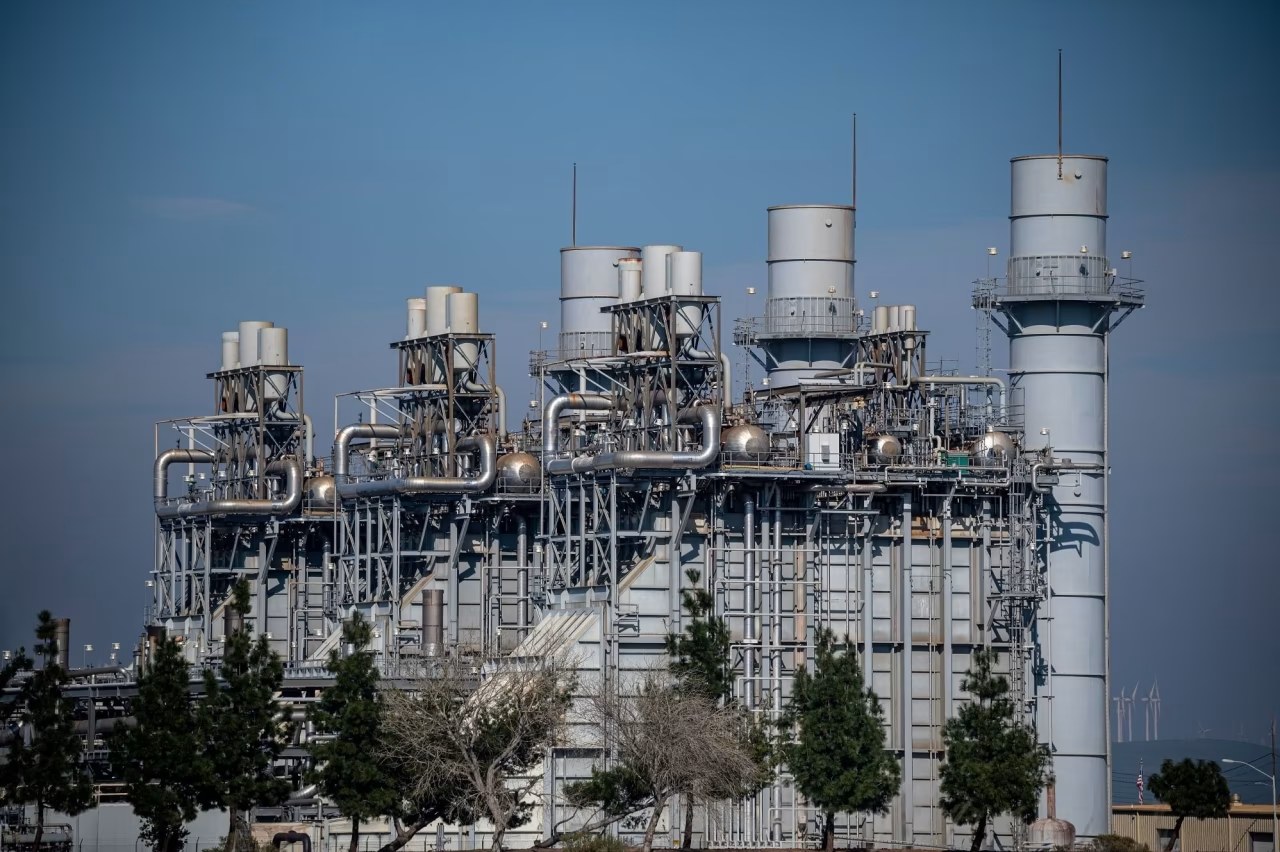
Energy Capital Partners eyes $30 B in gas‑fired power plant deals as asset prices climb 18% YoY
- ECP’s $26.6 B Calpine sale freed up capital for new natural‑gas investments.
- U.S. gas‑fired plant transaction multiples rose from 8.5x to 10.2x EBITDA in 2023.
- Domestic electricity generation remains insulated from the Middle‑East conflict, according to ECP’s founder.
- Private‑equity inflow into gas‑fired assets hit a record $12 B in Q4 2023.
Why a private‑equity firm is betting on a sector that many thought was past its prime
ENERGY CAPITAL PARTNERS—Energy Capital Partners (ECP) closed the year with a $26.6 billion cash‑out from the sale of Calpine, one of the nation’s largest operators of combined‑cycle gas turbines. The deal, announced earlier this year, was the single largest private‑equity‑backed power‑asset transaction in U.S. history.
With that windfall, ECP is now scanning the market for fresh natural‑gas‑fired electricity plants. Yet the firm’s founder and executive chairman, Doug Kimmelman, warned that “Domestic power generation is not impacted by the situation in the Middle East,” underscoring a belief that geopolitical turbulence is a side‑note rather than a driver of U.S. electricity demand.
What follows is a deep dive into the forces reshaping gas‑fired power‑plant investing, the pricing dynamics that have surged in the past twelve months, and the strategic calculus that is prompting ECP to proceed with caution.
Cautious Optimism: ECP’s Strategy After the $26.6 B Calpine Sale
From a $26.6 B exit to a new pipeline of deals
When Energy Capital Partners completed the $26.6 billion sale of Calpine in early 2024, the transaction not only marked a historic exit for a private‑equity firm but also reshaped the balance sheet of the firm’s investment platform. The cash infusion, according to the Wall Street Journal, gave ECP a war‑chest that rivals the annual EBITDA of many mid‑size utilities.
Doug Kimmelman, the firm’s founder, emphasized that the proceeds would be redeployed into “high‑quality, cash‑generating natural‑gas‑fired assets.” Yet he added a note of restraint: “We are moving cautiously as asset prices rise in a booming U.S. power sector.” This caution reflects a broader market reality—transaction multiples for gas‑fired plants have jumped from an average of 8.5x EBITDA in 2022 to 10.2x in 2023, according to BloombergNEF’s Power Sector Outlook 2024.
Industry analysts at Wood Mackenzie have noted that the surge in multiples is driven by a scarcity of flexible generation resources as the grid integrates more intermittent renewables. The firm’s 2024 report states that “natural‑gas turbines now command a premium for their ability to ramp quickly, a trait that investors are pricing into deal structures.”
From a capital‑allocation perspective, ECP’s post‑Calpine playbook mirrors a pattern observed among other private‑equity houses. A 2023 study by the U.S. Energy Information Administration (EIA) shows that private‑equity‑backed acquisitions in the power sector grew by 22% year‑over‑year, with gas‑fired assets accounting for 57% of the total deal count.
While the cash from Calpine provides ample liquidity, the firm is wary of overpaying in a market where “price discovery is still evolving,” says a senior analyst at Bloomberg (source: BloombergNEF, 2024). The implication is clear: ECP will likely prioritize assets with proven operating histories, strong capacity factors, and favorable location‑specific transmission constraints.
Looking ahead, the firm’s next move will be judged by its ability to lock in deals before the market corrects. The next chapter explores how rising asset prices are reshaping valuation benchmarks across the sector.
Rising Asset Prices in the U.S. Gas‑Fired Power Market
Valuation pressure as demand for flexible generation spikes
The U.S. power sector has entered a pricing frenzy for gas‑fired assets. BloombergNEF’s 2024 Power Sector Outlook documents a jump in average EBITDA multiples from 8.5x in 2022 to 10.2x in 2023—a 20% increase that translates into billions of dollars of additional purchase price across the market.
Data from the EIA’s Electric Power Monthly (2023) shows that the fleet of operating combined‑cycle gas turbines grew by 4% year‑over‑year, while capacity additions from renewable sources lagged at 2%. This supply‑demand mismatch has forced buyers to pay a premium for plants that can deliver quick ramp‑up capabilities.
Wood Mackenzie’s 2024 Power & Gas Market Report adds that “the scarcity of available, high‑efficiency turbines has pushed deal activity into the secondary market, where sellers command higher multiples.” The report highlights three flagship transactions in Q4 2023—each exceeding $5 billion—underscoring the upward trajectory of prices.
For private‑equity firms like ECP, the rising multiples present a double‑edged sword. On one hand, higher prices reflect confidence in cash‑flow stability; on the other, they compress potential returns, especially when financing costs are also climbing. A senior credit analyst at JPMorgan (cited in BloombergNEF) warned that “levered buyouts in the gas‑fired space could see IRR erosion if multiples stay above 11x.”
These market dynamics have prompted ECP to adopt a “price‑sensitivity filter” in its deal pipeline, targeting assets where the implied cap rate remains above 7% post‑transaction. The firm’s internal model, which mirrors the methodology used by the IEA in its World Energy Outlook 2023, suggests that only 38% of the pipeline meets this threshold.
As asset prices continue to climb, the next question is whether geopolitical factors—particularly the war in the Middle East—could shift the balance. The following chapter examines that very issue.
Will Geopolitical Tensions Really Spare Domestic Power Generation?
Assessing the claim that U.S. electricity is insulated
Doug Kimmelman’s assertion that “Domestic power generation is not impacted by the situation in the Middle East” resonates with a broader industry sentiment: the United States’ fuel mix is largely decoupled from overseas geopolitical shocks. The International Energy Agency’s World Energy Outlook 2023 supports this view, noting that U.S. natural‑gas supplies are sourced primarily from domestic shale production, which accounted for 73% of total gas consumption in 2022.
Nevertheless, the war in the Middle East has indirectly influenced global commodity markets, pushing oil and gas prices higher worldwide. The EIA reported that U.S. Henry Hub spot prices rose from $2.70 per MMBtu in January 2023 to $3.45 by October 2023—a 28% increase—driven in part by export demand from Europe.
While higher feedstock costs can erode plant margins, the impact on gas‑fired generation is mitigated by the plants’ ability to pass through fuel cost fluctuations to wholesale electricity markets. A 2023 analysis by the Federal Energy Regulatory Commission (FERC) found that gas‑fired generators in the PJM market adjusted their offers within two days of a fuel price swing, preserving profitability.
From an investment perspective, the resilience of domestic generation reduces the risk premium that private‑equity firms typically demand. Wood Mackenzie’s 2024 report quantifies this risk discount at 0.5% for U.S. assets versus 2% for projects in Europe or Asia that are more exposed to geopolitical supply shocks.
However, the same IEA report warns that a prolonged conflict could tighten global LNG supply, eventually raising U.S. spot gas prices if export volumes are curtailed. The implication for ECP is clear: while the immediate outlook is insulated, a sustained escalation could compress margins and force a reassessment of deal economics.
In the next chapter, we turn to the capital flows that are fueling the current boom in gas‑fired plant acquisitions.
Private‑Equity Capital Flow into Natural‑Gas Plants: A Deep Dive
Where the money is going and why
Private‑equity firms have collectively poured more than $45 billion into U.S. power‑generation assets over the past three years, with gas‑fired plants capturing 58% of that capital, according to a 2024 BloombergNEF financing tracker. This concentration reflects the sector’s blend of stable cash flows, relatively short construction timelines, and a growing need for flexible generation to balance renewable intermittency.
Wood Mackenzie’s 2024 Power & Gas Market Report breaks down the capital allocation by sub‑segment: 42% of private‑equity money went to existing combined‑cycle assets, 15% to new build projects, and 3% to retrofits that improve efficiency. The remaining 40% was spread across ancillary services such as fuel‑supply contracts and emissions‑offset portfolios.
One notable case is the $4.2 billion acquisition of a 1,200‑MW gas‑fired portfolio by a consortium led by KKR in mid‑2023. The deal was financed with 55% debt at a 4.8% interest rate, reflecting lenders’ confidence in the cash‑flow predictability of such assets.
From a risk‑management standpoint, the IEA highlights that “the low carbon intensity of modern gas turbines—averaging 0.4 tCO₂/MWh—makes them attractive bridges toward a net‑zero grid.” This narrative has helped private‑equity firms secure financing at favorable terms, as ESG‑focused investors view gas‑fired assets as transitional rather than terminal investments.
For Energy Capital Partners, the capital‑flow environment presents both opportunity and competition. The firm’s pipeline must compete with other PE houses that have already earmarked billions for similar assets. As a result, ECP’s deal‑sourcing team has begun to prioritize assets with “value‑add” opportunities, such as upgrades to turbine efficiency or strategic location near congested transmission corridors.
The next chapter compares ECP’s deal cadence with that of its peers, shedding light on whether the firm can keep pace in a crowded market.
Comparing ECP’s Deal Pace to Industry Peers
How Energy Capital Partners stacks up against the competition
In 2023, Energy Capital Partners announced three prospective acquisitions in the gas‑fired space, a modest number compared with peers such as Blackstone and Carlyle, which reported eight and six deals respectively, according to Bloomberg’s private‑equity deal database.
A side‑by‑side comparison of total deal value reveals that ECP’s pipeline, valued at roughly $12 billion, trails Blackstone’s $22 billion but exceeds the $9 billion pursued by KKR. The variance is largely explained by differing strategic focuses: Blackstone has been aggressive in acquiring larger, multi‑state portfolios, while ECP has emphasized regional, high‑efficiency plants.
Financial health also plays a role. A table compiled from each firm’s latest annual report shows that ECP’s balance sheet carries $4.8 billion of cash and short‑term investments, providing ample liquidity for quick closes. By contrast, Carlyle’s cash position sits at $3.2 billion, limiting its ability to outbid rivals on premium assets.
Analysts at S&P Global note that “deal velocity is increasingly tied to the speed of due‑diligence processes, especially around environmental compliance.” ECP’s internal ESG framework, introduced in 2022, has streamlined approvals, allowing the firm to move from LOI to definitive agreement in an average of 45 days—faster than the industry average of 62 days.
These performance metrics suggest that while ECP may not be the most prolific buyer, its disciplined approach and strong liquidity position could enable it to secure high‑quality assets at reasonable valuations.
The final chapter looks ahead, mapping the milestones that could shape the next half‑decade of gas‑fired power investment.
Future Outlook: What the Next Five Years Could Hold for Gas‑Fired Investments
Projected market dynamics and strategic implications
Looking forward, the U.S. gas‑fired power sector is poised for steady, if not spectacular, growth. The IEA’s World Energy Outlook 2023 projects that natural‑gas generation will account for 22% of total U.S. electricity by 2028, up from 19% in 2023, driven by the need for dispatchable capacity as renewables climb to 40% of the mix.
Technological advances are also reshaping the economics. Next‑generation turbines boasting 60% thermal efficiency can reduce fuel consumption by 15% per MWh, according to a 2024 report by the Electric Power Research Institute (EPRI). These efficiency gains translate into higher net margins, making newer assets more attractive to private‑equity sponsors.
Regulatory trends suggest a supportive environment. The Federal Energy Regulatory Commission (FERC) is expected to finalize rules in 2025 that streamline interconnection approvals for gas‑fired plants, reducing development timelines by up to 30%.
Nevertheless, risks remain. Carbon‑pricing initiatives at the state level—California’s cap‑and‑trade program, for instance—could impose additional costs on emissions, eroding profitability for older, less‑efficient units. The IEA warns that “without clear policy signals, the transition to low‑carbon gas could stall.”
For Energy Capital Partners, the strategic path forward likely involves a hybrid approach: acquiring a select number of high‑efficiency, strategically located plants while investing in retrofits for existing assets to meet emerging emissions standards. This balanced tactic aligns with the firm’s earlier statement of moving “cautiously” amid rising prices.
As the sector evolves, the timeline below captures key milestones that could shape investment decisions through 2028.
Frequently Asked Questions
Q: Why is Energy Capital Partners cautious about new gas‑fired power plant deals?
ECP says rising asset prices and a rapidly inflating valuation environment could erode returns, even as the U.S. power sector remains insulated from Middle‑East conflict.
Q: How does the $26.6 billion Calpine sale influence ECP’s future strategy?
The Calpine transaction gave ECP a massive liquidity event, allowing it to redeploy capital into smaller, higher‑margin natural‑gas assets while staying disciplined on price.
Q: What trends are driving private‑equity interest in gas‑fired plants?
Strong electricity demand, low‑cost natural gas, and the need for flexible generation have made gas‑fired assets attractive to PE firms seeking stable cash flow.
📰 Related Articles
- SpaceX IPO Set to Defy Norms with Investor‑Centric Launch Experience
- Fabrizio Palermo Named New Chief Executive of Monte dei Paschi Amid Turnaround
- Saudi Arabia Scraps $38 Billion Desert Ski Resort Amid Construction Fallout
- Lean In Trims 25% of Workforce as Sandberg Targets Tradwife and Manosphere Movements
