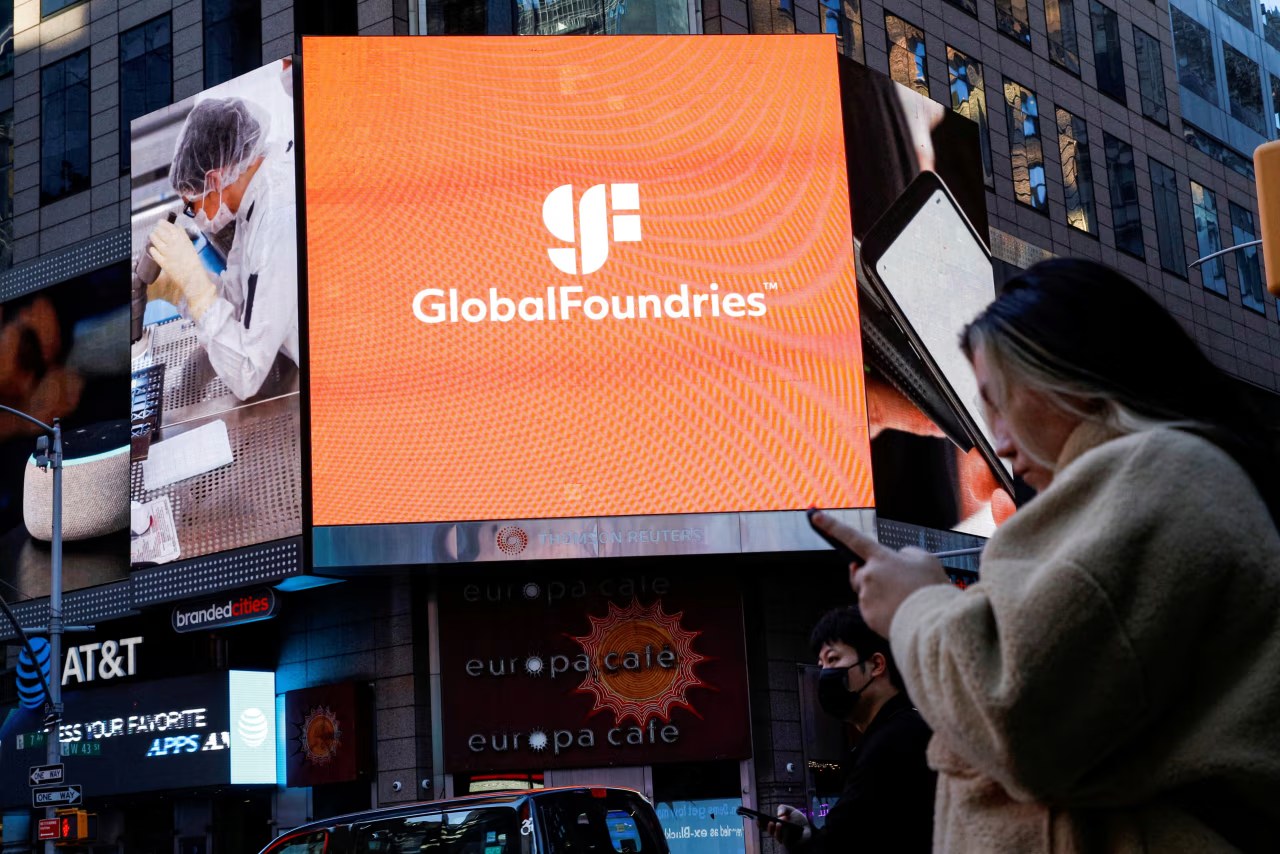
GlobalFoundries Sues Tower Over 11 Patents in Bid to Block Rival’s US Expansion
- GlobalFoundries filed two federal suits asserting Tower Semiconductor copied 11 patents tied to specialty-process nodes.
- Complaints seek injunctions and triple damages, accusing Tower of “freeriding on decades of GF innovation”.
- Tower shares sank 7.45 % while GlobalFoundries slipped 4.64 % as investors weighed litigation risk.
- No prior license agreements exist between the two foundries, raising stakes for out-of-court settlement.
Patent clash erupts as both companies chase auto-chip and power-management contracts
GLOBALFOUNDRIES—GlobalFoundries unleashed a pair of lawsuits against Tower Semiconductor, alleging the Israeli-headquartered rival infringed 11 U.S. patents that cover transistor architectures, power-management schemes and specialty-process technologies central to automotive and IoT chips.
The complaints, submitted in the District of Delaware and the Eastern District of Texas, escalate a quiet rivalry that has intensified as both foundries court U.S. customers seeking domestic supply-chain security. GlobalFoundries claims Tower unlawfully replicated proprietary processes to undercut bids for lucrative wafer orders.
“Tower is freeriding on decades of GF innovation with an intent to unlawfully take business away from the American chip maker,” GlobalFoundries said in a statement that accompanied the filings. Tower has not yet filed counterarguments, and its outside counsel declined to comment on the record.
Inside the Patents: What GlobalFoundries Says Tower Copied
According to docket entries reviewed by the Journal, the 11 patents span fabrication techniques honed at GlobalFoundries’ fabs in Malta, New York, and Burlington, Vermont. Key claims include a proprietary deep-trench isolation structure that cuts chip leakage by 18 % and a dual-gate oxide process that allows 5 V and 1.8 V transistors to coexist on the same die—critical for battery-powered automotive sensors.
Legal analysts say the selection of the Eastern District of Texas—where 71 % of patent trials end in verdicts for plaintiffs—signals GlobalFoundries wants a jury inclined to award sizable damages. “Filing in Marshall, Texas, is a classic playbook when you’re seeking an injunction that could shut a competitor out of the U.S. market,” said Rutgers Law professor Michael Carrier, who tracks semiconductor IP disputes.
Tower’s customer list includes Qualcomm, Skyworks and several defense contractors that now face potential supply-chain disruption if an injunction is granted. GlobalFoundries is asking the court to block importation into the United States of any Tower-produced wafers that practice the contested IP, a maneuver that could affect millions of chips already qualified in avionics and medical devices.
The pleadings also demand treble damages under 35 U.S.C. § 284, citing Tower’s alleged “willful” infringement. If proven, that provision can triple a jury award, turning what might have been a $200 million royalty bill into a $600 million hit—material for Tower, whose 2023 revenue was $1.4 billion.
Will discovery reveal internal Tower emails?
Early discovery requests served by GlobalFoundries seek engineering notebooks, customer pitch decks and executive emails dating back to 2018. IP litigator Melody Drummond of Haynes & Boone notes that such broad discovery often pressures defendants toward settlement: “Once you open the kimono on technical comparisons, the risk of an adverse verdict climbs exponentially.”
The next procedural milestone is Tower’s response due within 60 days, followed by a claim-construction hearing slated for early 2025. A negotiated license is still possible, but people close to GlobalFoundries say management views the IP as strategic to its U.S. expansion and prefers exclusionary relief.
Market Shock: $1.3 Billion Erased in One Trading Session
News of the suit hit the Nasdaq shortly after 11 a.m. ET. Within 30 minutes Tower’s TSEM ticker plunged to $32.10, a 7.45 % decline that represented its steepest intraday drop since the 2022 Intel acquisition collapse. Trading volume surged to 4.8 million shares—triple the 20-day average—indicating institutional investors were re-pricing Tower’s risk profile.
GlobalFoundries investors also headed for the exits; GFS slid 4.64 % to $52.75, trimming the company’s market cap by roughly $800 million. Analysts attributed the dual sell-off to uncertainty over potential import bans and the possibility that Tower will countersue, sparking a protracted IP war that could crimp margins industry-wide.
“The market hates binary legal outcomes,” said Stacy Rasgon, semiconductor analyst at Bernstein. “Even if Tower ultimately prevails, litigation costs and customer hesitancy could shave 200 basis points off gross margin for the next two years.”
Options markets echoed that anxiety. Implied volatility on Tower 30-day calls jumped to 62, a level last seen during the Intel-takeover saga, as traders hedged against a potential 15 % swing post-discovery rulings. Bond spreads widened too; Tower’s 2027 convertibles now yield 5.4 %, up 90 basis points week-over-week.
Could Tower lose foundry customers?
Supply-chain executives at two Tier-1 automotive suppliers told the Journal they have already requested contingency plans from Tower should an injunction materialize. “We cannot afford a last-minute respin of our ADAS controller,” one director stressed, noting that re-qualifying at GlobalFoundries or Samsung foundry could take 14 months and $8 million.
That dynamic gives GlobalFoundries leverage. By threatening disruption, it can argue that Tower’s alleged infringement is causing irreparable harm—the legal standard for injunctive relief. Expect customer-deposition subpoenas to become a key battleground as both sides quantify economic impact.
How Did the Rivalry Reach This Flashpoint?
Hostility has simmered since 2021 when Tower exited a planned $5.4 billion sale to Intel, freeing the Israeli foundry to court U.S. customers directly. Tower’s management pivoted to specialty processes—BCD (bipolar-CMOS-DMOS), silicon photonics and high-voltage RF—areas where GlobalFoundries has invested $6 billion since 2018 under the CHIPS Act roadmap.
Both companies now chase the same $9 billion pool of automotive and industrial chip orders. Tower’s San Antonio facility, acquired in 2022, targets 180 nm to 65 nm nodes that overlap with GlobalFoundries’ fabs in Vermont and New York. Price competition intensified last year when Tower offered 15 % discounts to win battery-management IC programs, according to three fabless customers.
Internal GlobalFoundries slides shown to investors in February highlight “Tower price undercutting” as a headwind to its 2025 revenue plan. Those documents, coupled with customer testimony, could become evidence that Tower’s alleged patent infringement directly translated into lost contracts.
Patent attorneys note that the 11 patents asserted have average remaining life of 11 years, giving GlobalFoundries a long exclusionary window. “They’re not suing on legacy stuff that expires next year,” observed University of Houston law professor Saurabh Vishnubhakat. “These are core to Tower’s growth roadmap.”
Did Tower skip a licensing deal?
GlobalFoundries says it approached Tower in 2022 to discuss a cross-license but talks collapsed over valuation. No subsequent negotiations occurred, the complaint alleges, suggesting Tower made a calculated risk to proceed without a license. That narrative supports the willfulness claim and could nudge jurors toward punitive damages.
What’s Next for the Chip Makers in Court—and in the Market?
Legal calendars show a claim-construction hearing set for February 2025, with trial likely in late 2026 if no settlement intervenes. That timetable overlaps Tower’s capacity-expansion timeline, creating uncertainty as it seeks bank financing for a second U.S. fab. Lenders could impose tighter covenants or higher spreads while infringement risk looms.
Analysts see three possible outcomes: 1) Tower negotiates a royalty-bearing license costing an estimated $60 million annually; 2) Tower redesigns processes to avoid the patents, adding 8 % to wafer cost; 3) a jury awards damages and injunctive relief that bars U.S. imports of affected wafers. Each scenario alters Tower’s gross-margin trajectory by 200–500 basis points, according to BNP Paribas estimates.
For GlobalFoundries, victory would validate its IP strategy and could spur similar suits against other smaller foundries. CEO Thomas Caulfield told investors in April that the company holds 9,500 active patents and is “prepared to monetize and defend” them as the industry consolidates.
Conversely, a loss would embolden Tower and potentially trigger antitrust counterclaims arguing that GlobalFoundries is using litigation to stifle competition. Such countersuits have succeeded in the past—most notably when Tessera prevailed against Broadcom on antitrust grounds in 2016.
Will Washington intervene?
Both companies receive CHIPS Act subsidies, so federal agencies are watching closely. Commerce officials have the authority to claw back funds if grantees engage in unfair practices, though patent enforcement is generally protected. Still, a prolonged import ban could clash with Biden administration goals to boost domestic chip output, raising odds of political pressure for a settlement.
As docket activity accelerates, expect customer procurement teams to keep alternative foundries on speed dial. In the high-stakes world of specialty semiconductors, intellectual property has become the decisive battleground—and both Tower and GlobalFoundries are betting billions that their version of innovation will carry the day.
Frequently Asked Questions
Q: What patents does GlobalFoundries claim Tower infringed?
Court filings list 11 U.S. patents covering transistor design, power-management and specialty-process nodes that GlobalFoundries says Tower copied to win foundry customers.
Q: Where were the lawsuits filed?
Complaints were lodged in federal courts in Delaware and the Eastern District of Texas—venues favored by patent owners seeking swift injunctions and triple-damage verdicts.
Q: How did the market react to the litigation news?
Tower shares dropped 7.45 % and GlobalFoundries fell 4.64 % on above-average volume, erasing a combined $1.3 billion in market value within hours of the announcement.
📰 Related Articles
- Musk’s X Axes CMO and 20+ Staff to Streamline for SpaceX’s Trillion-Dollar Public Launch
- Aetherflux Secures $250‑$300 Million Series B, Valued at $2 Billion
- MiniMax Valuation Tops $40 Billion as AI Startup Prioritizes Scale Over Profit
- How ‘Builder’ Became Silicon Valley’s Most Overloaded Buzzword Overnight
