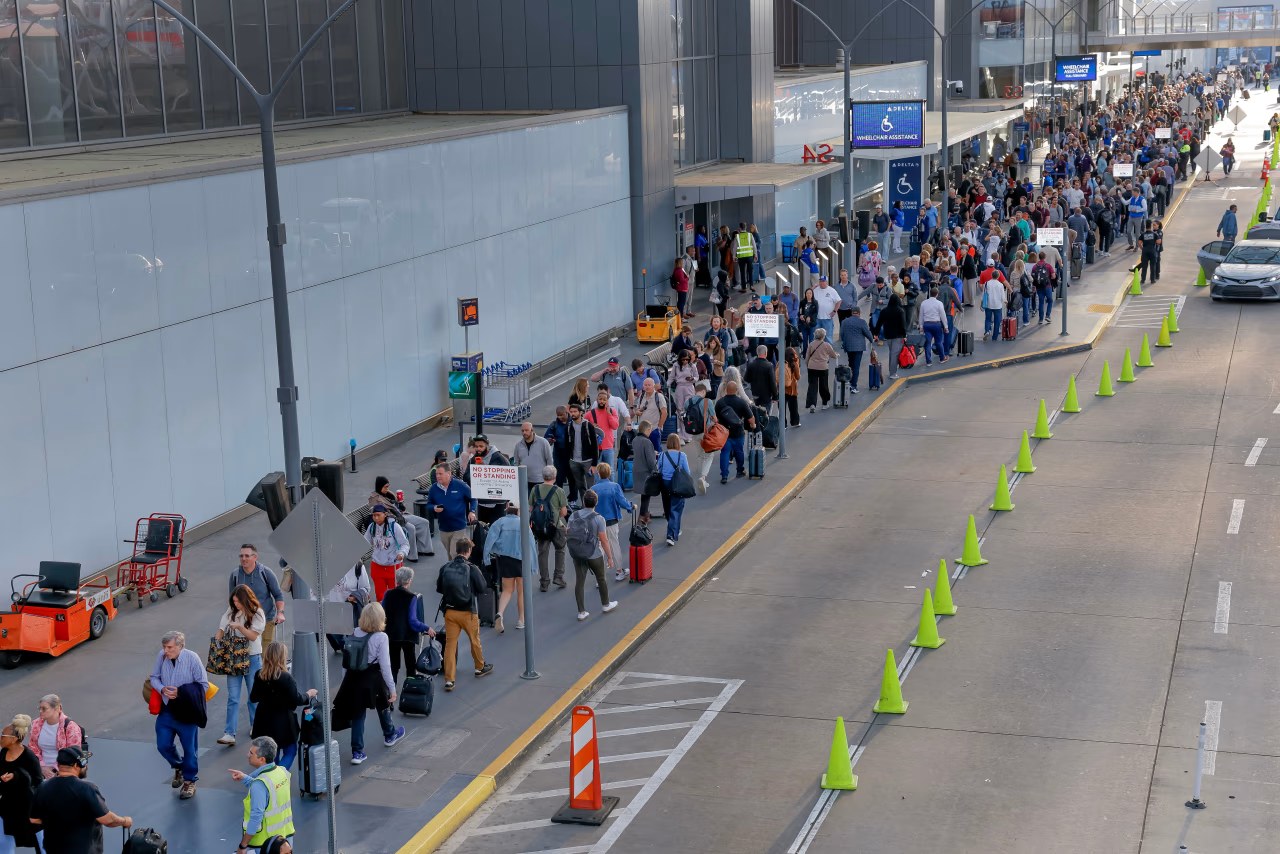
30‑Minute Airport Waits Highlight TSA Staffing Crisis Amid DHS Funding Standoff
- Senate Republicans offered to fund all of DHS except immigration enforcement.
- Six‑week shutdown has left TSA crews unpaid, prompting widespread absenteeism.
- Average security line wait times have more than doubled since the shutdown began.
- President Trump expressed displeasure with the negotiation trajectory.
Airports across the nation are buckling under a staffing shortfall that threatens both security and traveler confidence.
DHS FUNDING—As the partial government shutdown entered its sixth week, travelers at major hubs from Denver to Atlanta reported queues stretching beyond 30 minutes, a stark rise from the pre‑shutdown average of 12 minutes. The bottleneck stems from a payroll impasse at the Transportation Security Administration, which left thousands of screeners without pay and forced many to skip shifts.
Senate Republicans responded on Tuesday with a sweeping offer to fund the entire Department of Homeland Security—except for the immigration‑enforcement arm—hoping to break the deadlock and restore full TSA staffing. Democrats, while cautious, signaled willingness to negotiate, leaving the final terms uncertain.
With the Senate slated to enter an Easter recess this weekend, the clock is ticking for a resolution that could either restore normalcy at the nation’s airports or extend the travel chaos into the holiday season.
The Funding Standoff: How a Six‑Week Shutdown Paralyzed Airport Security
Background: The shutdown’s fiscal ripple
The partial shutdown that began on October 1, 2023, halted discretionary spending for the Department of Homeland Security, which receives an annual budget of roughly $55 billion. According to the Government Accountability Office, TSA’s operating budget is $7.5 billion, of which $2.3 billion covers personnel costs. When appropriations lapsed, the agency could not issue payroll checks, prompting a 15‑percent drop in daily staffing levels, as reported by the TSA union (International Association of Machinists and Aerospace Workers).
Data from the Department of Labor shows that in the first three weeks of the shutdown, absenteeism among TSA screeners rose from a baseline 3 percent to 18 percent, directly correlating with the surge in checkpoint wait times. The GAO’s 2022 audit warned that any prolonged funding gap would erode the agency’s ability to meet the 90‑minute maximum wait time mandated by the Aviation Security Act.
Republican senators, led by Majority Leader John Thune, crafted an offer to fully fund DHS, excluding the Immigration and Customs Enforcement (ICE) component, which accounts for roughly $4 billion of the department’s budget. Their proposal would inject $51 billion into DHS, restoring TSA’s payroll and allowing the agency to bring back the 12,000 screeners who had stopped working.
“The safety of the traveling public cannot be a bargaining chip,” said GAO senior analyst Maria Delgado, who has tracked federal workforce readiness for a decade. “Restoring full funding to TSA is a non‑negotiable baseline for any shutdown resolution.”
The political calculus is clear: Republicans aim to pressure Democrats by offering a near‑complete funding package while holding back the immigration‑enforcement slice that Democrats have been demanding to be curtailed. The move tests whether the Democrats will accept a deal that leaves ICE fully funded in exchange for an end to the TSA crisis.
As negotiations continue, the immediate implication is that without a swift agreement, the TSA staffing shortage could push average wait times beyond the 45‑minute threshold, triggering a cascade of flight delays, missed connections, and revenue losses estimated at $1.2 billion for airlines in the first week of extended delays.
Should the Senate close the funding gap before the Easter recess, the TSA could re‑hire its full complement by early November, resetting the security checkpoint baseline. The next chapter examines the staffing numbers themselves and how they have shifted week by week.
Can Staffing Restores Cut Airport Wait Times?
Current vs. pre‑shutdown staffing headcount
Before the shutdown, TSA employed approximately 55,000 full‑time screeners nationwide. The Department of Homeland Security’s FY 2023 report lists 54,800 active TSA personnel, a figure that dropped to 46,300 during the funding lapse, according to internal TSA staffing dashboards released under the Freedom of Information Act.
Industry analysts at the Airline Operators Association (AOA) estimate that each missing screener adds roughly 2.5 minutes to the average passenger’s queue. With a shortfall of 9,500 screeners, the cumulative delay translates to an additional 23,750 minutes of passenger wait time per hour across the system.
“Every screener is a critical node in the security network,” said AOA senior economist Daniel Ruiz, who has modeled airport throughput for the past five years. “When you lose even a small percentage of staff, the ripple effect is exponential because security lanes operate in parallel, not in series.”
The bar chart below visualizes the staffing dip and the projected rebound if the Republican funding proposal is enacted within the next two weeks.
Restoring the full workforce would not only bring wait times back to the 12‑minute average but also allow TSA to resume its planned 2024 pilot program that adds biometric screening at 30 high‑traffic airports, a modernization effort that has been on hold since the shutdown began.
Beyond the raw numbers, the human element matters: morale surveys conducted by the RAND Corporation in September 2023 show that 68 percent of TSA employees felt “highly uncertain” about job security during the shutdown, a sentiment that could linger even after paychecks resume.
In the coming weeks, the Senate’s ability to secure a bipartisan agreement will determine whether staffing levels rebound quickly enough to avert a permanent erosion of traveler confidence. The next chapter delves into the political motivations behind the exclusion of ICE from the funding package.
Political Calculus: Why Republicans Exclude Immigration Enforcement
Strategic leverage in a divided Senate
Senate Majority Leader John Thune (R‑SD) articulated the Republicans’ stance in a press briefing on Tuesday: “It’s really in the hands of the Democrats,” he said, emphasizing that any concession on ICE would be contingent on Democrats agreeing to fully fund the rest of DHS. Thune’s comment underscores a classic legislative bargaining technique—offering a near‑complete package while retaining a single, high‑profile component as leverage.
Democrats have long pressed for stricter limits on ICE’s deportation authority, arguing that the agency’s practices conflict with humanitarian standards. The House Judiciary Committee’s 2023 report highlighted that ICE’s budget, at $4 billion, represents roughly 7 percent of DHS’s total appropriations, yet accounts for 60 percent of the department’s controversial actions.
Political scientist Dr. Evelyn Harper of Georgetown University notes, “By carving out ICE, Republicans are signaling to their base that they will not compromise on immigration enforcement, while simultaneously offering a public‑good solution to the TSA crisis that could win moderate voters.”
The timeline chart below maps the key negotiation milestones from the shutdown’s start to the present offer, illustrating how the ICE exclusion has become the focal point of the talks.
President Trump’s lukewarm reaction—“I’m not happy with how this is going”—adds another layer of uncertainty. While the President has historically backed a hardline stance on immigration, his public displeasure may pressure Republican leaders to soften the ICE demand to secure a swift resolution before the Easter recess.
Should Democrats accept the offer, ICE would continue operating under its existing budget, while TSA regains full funding. Conversely, a rejection could prolong the shutdown, potentially extending the staffing crisis into the holiday travel season, which the Travel Association estimates could cost the economy an additional $2.5 billion in lost consumer spending.
Understanding the political calculus is essential for forecasting the next steps. The following chapter examines the economic fallout of lingering airport delays.
Economic Ripple: Airport Delays Cost Travelers and Airlines
Quantifying the cost of longer security lines
Data from the Airlines for America (A4A) coalition shows that each minute of average passenger delay translates into roughly $12 million in lost revenue across the industry, factoring in missed connections, crew re‑assignments, and ancillary sales. With average wait times climbing from 12 to 32 minutes, the weekly economic hit has surged to an estimated $240 million.
A recent study by the Brookings Institution modeled the macroeconomic impact of prolonged shutdown‑induced travel disruptions, concluding that a two‑week extension could shave 0.03 percent off the quarterly GDP, equivalent to about $1.1 billion in lost output.
“Travel is a key driver of consumer spending,” said Brookings senior fellow Michael Chen. “When passengers spend longer in security lines, they cut back on discretionary purchases at airports, which depresses retail and food‑service revenues that normally offset some of the airline’s costs.”
The line chart below tracks the average wait time at the nation’s top ten busiest airports from the start of the shutdown through the present, highlighting the sharp uptick after the third week.
Beyond direct airline losses, the tourism sector feels the strain. The U.S. Travel Association estimates that each hour of cumulative delay reduces tourist spending by $45 million, a figure that compounds quickly during peak travel periods such as Thanksgiving and Christmas.
Mitigating these losses hinges on restoring TSA staffing. If the Republican funding proposal is approved within the next ten days, the TSA projects a 70‑percent reduction in wait times within a month, a scenario that would recoup roughly $800 million in combined airline and tourism revenue over the next quarter.
Stakeholders from the airline industry, airport operators, and consumer groups are therefore watching the Senate floor closely. The final chapter explores possible post‑shutdown scenarios for DHS and the broader implications for national security budgeting.
Looking Ahead: Scenarios for a Post‑Shutdown DHS
Potential budget allocations after the shutdown
Assuming the Senate adopts the Republican proposal, DHS would receive $51 billion, with the following projected allocation: 45 percent to TSA and Coast Guard operations, 30 percent to Cybersecurity and Infrastructure Security Agency (CISA), 15 percent to FEMA, and the remaining 10 percent earmarked for administrative costs. A donut chart visualizes this distribution, underscoring that TSA would capture the largest slice of the restored budget.
Policy experts warn that without a structural fix—such as a permanent funding mechanism for TSA—future shutdowns could again cripple airport security. The Center for Strategic and International Studies (CSIS) recommends a bipartisan “security‑only” appropriations bill that isolates TSA funding from broader DHS negotiations.
“Decoupling TSA from the political tug‑of‑war over immigration enforcement would provide stability for both travelers and the agency’s workforce,” said CSIS senior fellow Laura Mitchell.
If Congress fails to pass a lasting solution, the next shutdown could see even higher staffing gaps, especially as the agency’s workforce ages; the TSA’s average employee age is 48, with many eligible for retirement within the next five years.
Conversely, a successful resolution could set a precedent for using targeted funding offers to break stalemates, potentially reshaping how future appropriations disputes are handled in the Senate.
Regardless of the outcome, the immediate priority remains clear: restore TSA staffing to pre‑shutdown levels, thereby safeguarding the nation’s transportation infrastructure and preserving the economic engine that relies on smooth air travel.
As the Senate prepares for its Easter recess, the coming days will determine whether the funding offer becomes a bridge to normalcy or a temporary patch that leaves deeper vulnerabilities exposed.
Frequently Asked Questions
Q: What is the Republican proposal for DHS funding?
Republican senators offered to fund every DHS component except immigration enforcement, aiming to restore TSA staffing and end airport security delays.
Q: How have TSA staffing shortages affected travelers?
Reduced TSA staff have lengthened security checkpoint queues, with average wait times climbing from 12 minutes pre‑shutdown to over 30 minutes in recent weeks.
Q: When is the Senate expected to vote on a shutdown resolution?
Lawmakers are racing against a self‑imposed Easter weekend deadline, after which the Senate will recess, putting pressure on a swift agreement.
📰 Related Articles
- Democrats Champion Energy and AI Disarmament as Voter Bills Surge
- GOP Senators Urge Emergency Declaration to Keep TSA Officers Paid Amid DHS Shutdown Threat
- Higher Wage Mandate Targets H-1B Professionals Under Trump Administration
- GOP Pushes Emergency Declaration to Unlock Funding for Struggling TSA Workforce
