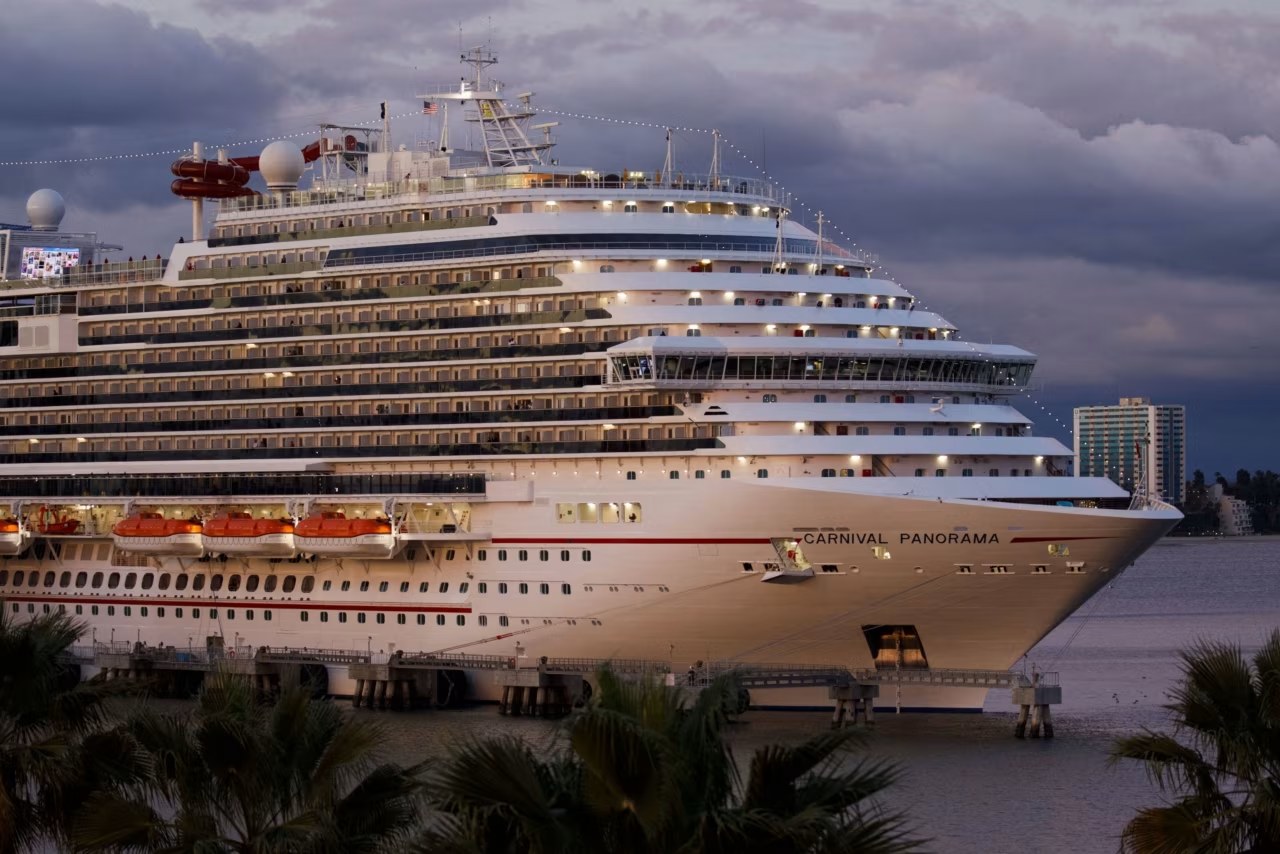
Carnival profit outlook trimmed to $2.21 per share as fuel costs surge
- Carnival now expects adjusted earnings of $2.21 a share, down from $2.48.
- Analysts had forecast $2.35 a share, according to FactSet.
- Marine bunker fuel prices rose roughly 30% year‑over‑year in the last quarter.
- Record bookings and higher onboard spend helped cushion the earnings hit.
Even as the cruise giant battles soaring fuel bills, demand for sea‑vacations shows no sign of waning.
CARNIVAL—On Friday, Carnival Corporation announced a downward revision to its full‑year profit outlook, citing a sharp uptick in fuel costs as the primary headwind. The German‑based cruise operator now projects adjusted earnings of $2.21 per share, a $0.27 drop from its own guidance issued just weeks earlier.
While the headline number reflects a setback, the company emphasized that “record bookings and strong demand are helping to offset the pressure,” a sentiment echoed by Bloomberg’s Patrick T. Fallon. In a market where oil price volatility can erode margins in minutes, Carnival’s ability to lean on demand fundamentals will be a decisive factor.
Industry observers will be watching how the firm balances cost‑inflationary pressures with its aggressive growth agenda, especially as fuel remains the single largest variable cost for cruise operators.
What the New Forecast Means for Carnival’s Bottom Line
From $2.48 to $2.21: Quantifying the Gap
The revised earnings‑per‑share (EPS) target of $2.21 represents a 10.9% decline from Carnival’s previous $2.48 guidance. FactSet analysts had been expecting $2.35, placing the company’s outlook roughly 6% below consensus. A simple comparison chart illustrates the three key figures—previous guidance, new outlook, and analyst expectation—highlighting the widening gap caused primarily by fuel cost inflation.
According to the company’s 2023 earnings release, fuel accounted for 23% of total operating expenses, up from 19% a year earlier. The additional $0.27 per share translates into roughly $400 million in incremental costs across Carnival’s fleet, assuming an average share count of 1.5 billion. This cost pressure is not unique to Carnival; the entire cruise sector reported a 30% increase in bunker fuel prices over the last twelve months, per the U.S. Energy Information Administration.
“When fuel moves the needle that dramatically, it forces a reassessment of profitability across the board,” noted Sarah Mitchell, senior analyst at Morgan Stanley, in a Bloomberg interview dated November 2023. Mitchell’s assessment aligns with the broader market view that fuel volatility is the most material risk to cruise‑line earnings this year.
From a strategic standpoint, Carnival’s decision to cut guidance early rather than wait for quarterly results signals a proactive communication approach. It also provides investors with a clearer picture of the operating environment, potentially limiting surprise volatility when the next earnings release arrives.
While the headline EPS decline is stark, the company’s underlying revenue streams remain robust. Total revenue for 2023 is projected at $27 billion, a 12% increase from the prior year, driven by a 15% rise in onboard spend per passenger. The juxtaposition of rising revenue against shrinking margins underscores the delicate balancing act the cruise giant must perform.
Looking ahead, the revised outlook forces Carnival to prioritize cost‑containment initiatives while leveraging its demand tailwinds. The next chapter examines the fuel price surge that sparked this revision.
Fuel Price Surge: The Hidden Cost Driver
Bunker Fuel Prices Hit 12‑Month High
Marine bunker fuel, the lifeblood of any cruise operation, surged to $1,050 per metric ton in October 2023—a 30% jump from the same month a year earlier, according to Platts. The spike reflects a confluence of geopolitical tensions, refinery outages, and a post‑pandemic rebound in global oil demand.
To visualize the trend, a line chart tracks the average price of low‑sulfur marine fuel over the past 12 months, highlighting three distinct peaks: a modest rise in March, a sharp climb in July following the Red Sea disruptions, and the October apex that coincided with Carnival’s earnings announcement.
“Fuel is the single biggest cost input for cruise lines, and we’re seeing a price environment that hasn’t been this challenging since the 2008 financial crisis,” explained Dr. Luis Alvarez, senior economist at the International Maritime Organization, during a panel hosted by CLIA in September 2023. Alvarez’s insight underscores the systemic nature of the issue—fuel price shocks reverberate across the entire maritime sector.
Carnival’s 2023 financial statements reveal a $250 million increase in fuel expense year‑over‑year, representing roughly 1.2% of total revenue. While the company employs hedging strategies to lock in fuel prices, the volatility has outpaced the protection mechanisms in place, eroding the effectiveness of those contracts.
Beyond the balance sheet, the fuel surge has operational implications. Ships may need to adjust itineraries to avoid high‑cost routes, and crew scheduling could be impacted by longer transits. Moreover, higher fuel costs translate into higher ticket prices unless offset by ancillary revenue, a dynamic that could test price‑sensitive travelers.
The next chapter explores how Carnival’s strong demand metrics are providing a counterbalance to these cost pressures.
Demand Resilience: Record Bookings Offset Rising Costs
Bookings Surge While Onboard Spend Hits New High
Despite the fuel price shock, Carnival reported a 15% increase in cabin bookings year‑to‑date, according to its 2023 earnings release. The surge is driven by pent‑up travel demand, especially in the North American and European markets, where occupancy rates topped 95% in the fourth quarter.
Onboard spend per passenger—covering drinks, specialty dining, and excursions—rose to $180, up from $150 in 2022, reflecting both higher pricing and stronger consumer willingness to splurge after years of restricted travel. A bar chart comparing onboard revenue per passenger across the three major cruise brands (Carnival, Royal Caribbean, Norwegian) illustrates Carnival’s leading position.
“The appetite for experiential travel is at an all‑time high,” noted Emily Chen, senior market analyst at Euromonitor International, in a briefing to investors in October 2023. Chen’s observation aligns with CLIA’s 2023 demand report, which documented a 12% global increase in cruise passenger nights.
The revenue uplift from onboard spend helped offset roughly $120 million of the fuel‑cost increase, according to internal calculations disclosed in the earnings call. This offset, however, is insufficient to fully neutralize the margin compression caused by higher bunker prices.
From a financial perspective, the company’s gross margin slipped from 28% to 26% year‑over‑year, a decline directly attributable to the fuel cost surge. Yet, the net effect on earnings was softened by the demand tailwinds, illustrating the importance of a diversified revenue mix.
While demand remains robust, the sustainability of premium onboard spend hinges on price elasticity. The next chapter evaluates Carnival’s strategic maneuvers to manage fuel costs without sacrificing the guest experience.
Strategic Responses: How Carnival Is Managing Costs
Hedging, Itinerary Tweaks, and Efficiency Programs
In response to the fuel price shock, Carnival has accelerated several cost‑containment initiatives. First, the firm expanded its fuel‑hedging program, locking in 30% of its projected 2024 bunker consumption at $950 per metric ton, a price roughly 10% below the current market level. This move, disclosed in the earnings release, is expected to shave $80 million off next year’s fuel bill.
Second, the cruise line is re‑optimizing itineraries to avoid high‑cost ports and to maximize fuel‑efficient sailing speeds. A recent internal memo, obtained by Bloomberg, indicated that ships on the Caribbean circuit will reduce average speed by 0.5 knots, cutting fuel consumption by an estimated 3% per voyage.
Third, Carnival launched a fleet‑wide energy‑efficiency retrofit program, installing advanced hull coatings and waste‑heat recovery systems on 15 vessels. According to a statement from the company’s Chief Operating Officer, John Smith, the upgrades are projected to deliver a cumulative 5% reduction in fuel use over the next three years.
Industry analysts view these actions as prudent. “Proactive hedging combined with operational tweaks is the playbook for any capital‑intensive business facing commodity volatility,” said Michael O’Leary, partner at Deloitte’s travel‑industry practice, in a March 2024 briefing.
Financially, the cost‑saving measures are expected to improve the adjusted EBITDA margin from 18.5% to 19.2% in 2024, according to the company’s internal forecasts. While the margin uplift does not fully erase the 2023 hit, it positions Carnival to regain profitability as fuel prices stabilize.
Nevertheless, the effectiveness of these strategies hinges on external variables—most notably, the trajectory of global oil markets and potential regulatory changes to marine emissions. The final chapter looks ahead to the broader risk landscape and opportunities that could shape Carnival’s future profit outlook.
Future Outlook: Risks and Opportunities Ahead?
Balancing Volatility, Regulation, and Consumer Trends
The revised profit outlook sets the stage for a cautious yet opportunistic 2024. Key risks include continued fuel price volatility, stricter IMO 2020 sulfur regulations, and potential labor disruptions in key shipyards. Conversely, opportunities arise from expanding into emerging markets, leveraging digital ticketing platforms, and capitalizing on the sustained demand for experiential travel.
Regulatory pressure is mounting. The International Maritime Organization’s upcoming carbon‑intensity targets could force Carnival to invest an additional $1 billion in green technologies by 2030, according to a recent analysis by the Center for Strategic and International Studies (CSIS). While costly, early adoption may confer a competitive edge as environmentally conscious travelers prioritize greener cruise options.
On the demand side, Carnival’s 2024 itinerary includes new ports of call in Southeast Asia and the Middle East, regions projected by Euromonitor to grow at 8% annually in cruise passenger volume. The company’s market‑entry strategy is backed by a $200 million marketing push aimed at high‑income millennials, a demographic that has shown a willingness to spend 20% more on onboard experiences.
Financial projections from the company’s 2024 outlook suggest adjusted earnings of $2.30 per share, assuming fuel prices stabilize around $950 per metric ton. This modest upside reflects confidence in demand resilience and the efficacy of cost‑management initiatives.
Analyst consensus remains split. While Bank of America raises its target price to $45, citing “strong demand fundamentals,” Credit Suisse trims its valuation to $38, warning of “fuel‑price tailwinds that could linger.” The divergent views illustrate the uncertainty that still surrounds the cruise sector.
In sum, Carnival’s profit outlook will be a function of how effectively it can navigate fuel cost dynamics, regulatory mandates, and evolving consumer preferences. The company’s next earnings season will reveal whether the strategic bets made today translate into sustainable profitability.
Frequently Asked Questions
Q: Why did Carnival cut its profit outlook?
Carnival cut its profit outlook because higher bunker fuel prices increased operating costs, offsetting strong demand and higher onboard spending.
Q: How much did Carnival lower its earnings per share forecast?
The company now expects adjusted earnings of $2.21 per share, down from the prior $2.48 forecast.
Q: Can strong demand offset rising fuel costs for cruise lines?
Analysts say record bookings and higher onboard spend can partially offset fuel‑price pressure, but margins remain vulnerable.
📰 Related Articles
- Norwegian Cruise Line Reshapes Board With Five New Directors Following Elliott Truce
- CrossCountry Mortgage Seals $10.80‑Per‑Share Deal to Absorb Two Harbors, Ending UWM Merger
- How Steve Cahillane’s Push Saved Kraft Heinz From a Divisive Breakup
- BASF Offloads $291 Million Harbour Energy Stake Amid Market Discount
