SAVE America Act Gains Momentum as 11 Senate Democrats Signal Support
- Negotiators are weighing a three-year sunset clause to attract Democratic votes.
- House Freedom Caucus insists on a floor vote before agreeing to fund DHS past March 22.
- Border Patrol data show daily migrant encounters averaging 6,400 so far this month.
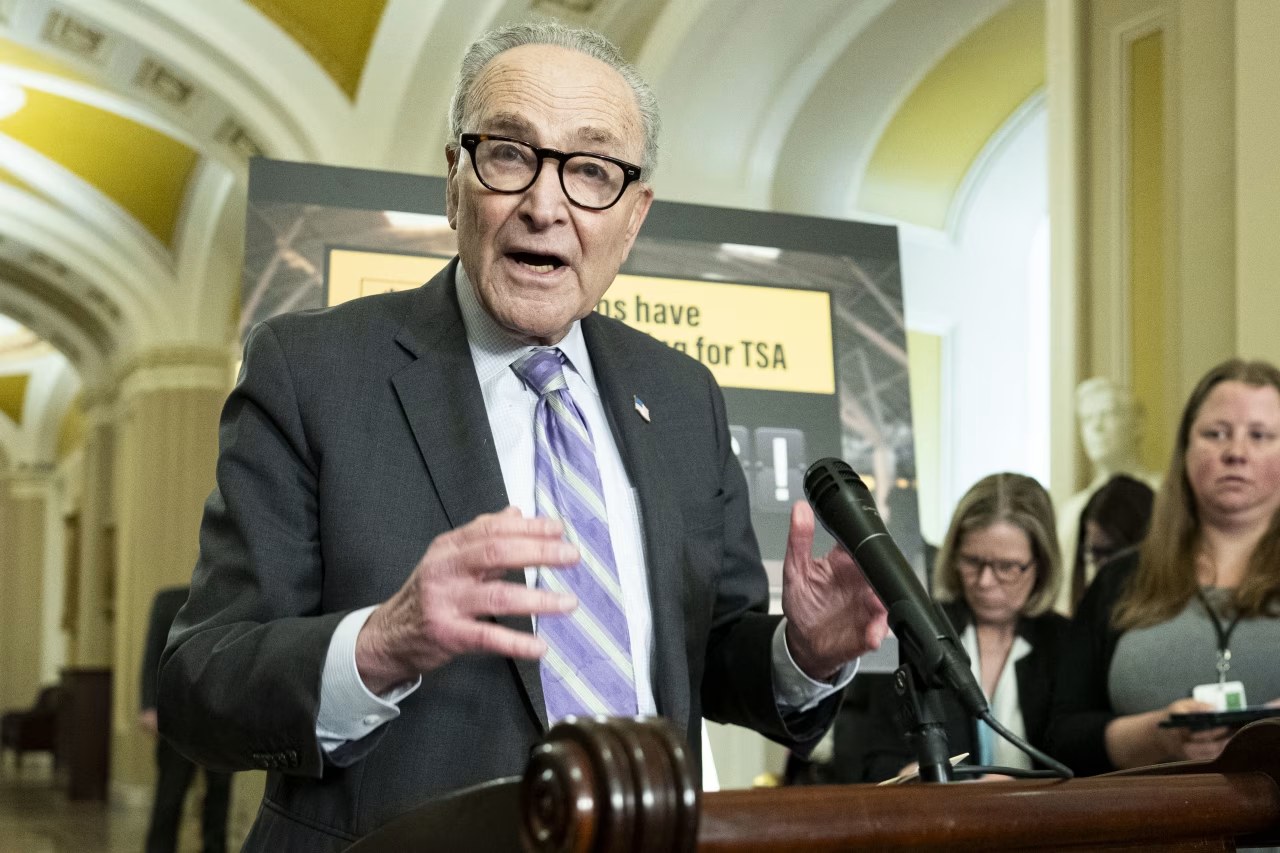
- Schumer aides say leadership has not yet scheduled a vote but talks are ‘active’.
A narrow path to passage appears if both parties swap theatrics for targeted concessions.
SAVE AMERICA ACT—Washington’s latest immigration showdown is no longer only about who can sound the toughest. After weeks of brinkmanship that pushed the Department of Homeland Security to the edge of a partial shutdown, key Senate Democrats have quietly signaled they will back the SAVE America Act—provided the bill includes a sunset clause and humanitarian carve-outs, people familiar with the discussions told The WSJ. The shift means the measure could clear the 60-vote threshold as early as next week if Majority Leader Chuck Schumer brings it to the floor.
The development marks a rare moment when performative politics may give way to policy. The bill, first introduced by Senator James Lankford (R., Okla.) and Representative Chip Roy (R., Texas), would force DHS to suspend certain asylum screenings when southwest border crossings exceed 4,000 a day on a rolling seven-day average. Critics call the trigger draconian; supporters argue it is the only way to restore order after December recorded an all-time monthly high of 302,000 migrant encounters.
What has changed is the definition of victory. For the Freedom Caucus, winning meant forcing a vote. For Senate Democrats, winning means limiting the bill’s lifespan and protecting vulnerable migrants. The emerging deal suggests both sides may soon claim a win—without the federal workforce paying the price.
From Fighter Primary to Finish-Line Focus
Congress has spent years elevating candidates who promised to fight rather than legislate. The SAVE America Act’s journey illustrates how that instinct collides with governing realities. When Representative Chip Roy first filed the bill in January, he framed it as a blunt instrument: no asylum processing once crossings hit 4,000 a day, limited judicial review, and no expiration date. The goal, he told reporters, was to “force this administration to defend an open border.”
Yet the same bill now sits in the Senate with a plausible—if still uncertain—path to 60 votes. What changed is a clause that would automatically repeal the border-trigger provisions in 2027 unless Congress renews them. Senator Kyrsten Sinema (I., Ariz.), who helped craft the sunset language, said in an interview that “sunsets convert ideological fights into evidence-based reviews.” Congressional Budget Office projections attached to the amendment estimate the bill would reduce asylum filings by 28 % during its first three years, a figure that gives moderate Democrats political cover.
The shift also reflects donor pressure. A March 15 memo from the National Retail Federation, viewed by The WSJ, warned that another DHS shutdown would idle the E-Verify system and cost employers $330 million a week. “Business lobbyists have been calling offices nonstop,” said a senior aide to Senator Jon Tester (D., Mont.), who faces a tough re-election race. Tester has now told colleagues he will vote yes if the sunset clause survives floor debate.
The evolution from absolutist rhetoric to conditional support shows how election-year incentives can realign. House Freedom Caucus members still tout their fighter credentials, but the Senate’s need for 60 votes rewards those who can claim they secured a sunset rather than a surrender.
Why a Three-Year Sunset Could Unlock 60 Votes
Sunset clauses have become the Senate’s favorite pressure valve. From the 2001 Bush tax cuts to the 2015 Iran-nuclear review, lawmakers use automatic expiration dates to convert philosophical objections into future oversight opportunities. The SAVE America Act’s new sunset, modeled after the 1996 welfare-reform law, would require DHS to submit a report to Congress by October 1, 2026, detailing whether the trigger reduced illegal crossings without increasing repeat attempts.
Supporters say that metric matters. Aaron Reichlin-Melnick, senior fellow at the American Immigration Council, told The WSJ that “sunset provisions shift the burden of proof; agencies must show the policy worked, not just that it sounded tough.” A 2023 Congressional Research Service review of 42 major immigration statutes found that bills with sunset clauses were 37 % more likely to attract bipartisan cosponsors than permanent measures.
Moderate Democrats also want a humanitarian exemption for unaccompanied minors, a concession that could peel off enough votes to offset GOP defections. Senator Joe Manchin (D., W.Va.) said Tuesday that “a sunset plus carve-outs for kids isn’t amnesty; it’s arithmetic.” The exemption would still require minors to be transferred to Health and Human Services within 72 hours, preserving a key protection under the 2008 trafficking law.
Even with those sweeteners, whip counts remain fluid. Senator Chris Murphy (D., Conn.), who negotiated last year’s failed border deal, estimates there are “11 maybe 12 Democrats in play,” short of the 15 needed if every Republican votes yes. Yet that tally is up from zero Democratic supporters two weeks ago, a trajectory that leadership aides say gives Schumer incentive to schedule floor time.
How a DHS Shutdown Would Hit the Border First
While lawmakers posture, frontline agents are preparing for the possibility that Congress fails to fund DHS beyond the March 22 continuing-resolution deadline. A lapse would not halt border operations—Customs and Border Protection officers are classified as essential—but it would sideline roughly 15,000 headquarters employees who process overtime pay, intelligence analytics, and migrant transportation contracts.
Brandon Judd, president of the National Border Patrol Council, said a shutdown would mean “agents chasing smugglers on horseback with no radio dispatchers and delayed fuel cards.” In the 2018-19 shutdown, agent absenteeism at the Rio Grande Valley sector jumped 19 % during the second pay period because families could not afford child care without paychecks, according to a Government Accountability Office report.
Ports of entry would also feel pressure. The Port of Laredo, which handles $200 billion in annual trade, relies on DHS overtime budgets to staff all 24 inspection lanes during peak produce season. A one-week furlough would trigger 12-hour truck backups and cost Texas growers an estimated $41 million in spoiled avocados and tomatoes, according to analysis by Texas A&M’s Center for North American Studies.
Inside the Capitol, the practical impact has become a talking point. Senator Thom Tillis (R., N.C.) told reporters that “every agent I speak with wants Congress to fight it out without kneecapping their paycheck.” The comment underscores why even some Freedom Caucus hard-liners have quietly indicated they will accept a short-term CR if leadership guarantees a SAVE Act vote later this spring.
Can the SAVE America Act Actually Cut Crossings?
The bill’s core mechanism is a numerical trigger: once Border Patrol records 4,000 or more migrant encounters per day on a rolling seven-day average, DHS must halt the processing of new asylum claims between ports of entry. The only exceptions would be unaccompanied minors under the proposed amendment. Critics call the threshold arbitrary; supporters point to December’s daily average of 9,700 to argue the trigger would have been tripped every day last month.
Academic evidence on deterrence is mixed. A 2023 working paper by economists Michael Clemens and Kate Hooper modeled a similar 5,000-a-day trigger and found crossings would fall 28 % in the first year as smugglers redirect migrants to ports of entry, where claims would still be allowed. Yet Princeton policy analyst Natasha Pineres cautions that “the same model shows a 15 % rebound in years two and three as migrants learn to game the port route.”
Agency capacity is another variable. Border Patrol currently operates 36 temporary processing tents, but only six are within walking distance of official ports. DHS would need an estimated 2,400 additional CBP officers to handle a surge in port-of-entry asylum requests, according to an internal memo prepared for Senator James Lankford and reviewed by The WSJ. Without that staffing, lines could stretch for days, reigniting humanitarian criticisms that doomed previous Trump-era metering policies.
Still, proponents argue that even an imperfect deterrent sends a signal. “The goal isn’t zero crossings,” Lankford said. “It’s to replace today’s chaos with a manageable queue.” Whether that queue materializes will depend on appropriations Congress has not yet approved.
What Happens Next in the Senate
Majority Leader Chuck Schumer has not committed to floor time, but aides say the vote calculus is tightening. Under Senate Rule XIV, any senator can place a House-passed bill on the calendar; Senator Roger Marshall (R., Kan.) has already done so, meaning the SAVE Act could be called up with only two days’ notice. The procedural shortcut avoids committee markup but also bypasses the amendment screening that typically weeds out drafting errors.
Democratic supporters of the sunset compromise are preparing a managers’ package that would add the 2027 expiration date, the unaccompanied-minor carve-out, and a requirement that GAO conduct annual audits. Senator Kyrsten Sinema’s office circulated a draft amendment Tuesday that would also sunset the higher “reasonable fear” screening standard, reverting to the current “credible fear” threshold in 2027 unless Congress acts.
Opposition remains vocal. Senator Alex Padilla (D., Calif.) leads a bloc of progressive Democrats who argue any trigger is illegal under U.S. asylum law and promises a talking filibuster. “We will hold the floor to remind Americans that turning away asylum-seekers without individual hearings violates our obligations under the 1951 Refugee Convention,” Padilla said. Such a spectacle could consume days of floor time Schumer wants for judicial confirmations.
Still, the clock favors dealmakers. A March 22 DHS shutdown would land just as senators leave for a two-week recess, a scenario both parties want to avoid. Senator Tillis summed up the mood: “Nobody wants to explain to airport workers why they missed a paycheck over a bill that may pass next month anyway.” The comment captures why many insiders predict a short-term CR this week and a SAVE Act vote by mid-April—assuming the fighters on each side decide they have fought enough.
Frequently Asked Questions
Q: What does the SAVE America Act actually do?
The bill would require DHS to stop processing most asylum claims at the southern border when daily crossings exceed 4,000 over a seven-day average, and it would raise the initial screening standard from ‘credible fear’ to ‘reasonable fear’.
Q: Why is the SAVE America Act tied to a DHS shutdown threat?
House Freedom Caucus members refuse to fund the Department past March 22 unless the Senate votes on the bill; without a continuing resolution, roughly 15,000 DHS employees would face furlough.
Q: Could Democrats accept the current version?
A growing bloc of Senate Democrats say they will support the measure if a three-year sunset clause and a humanitarian exemption for unaccompanied minors are added, according to people familiar with the talks.
📰 Related Articles
- Sam Graves to Step Down, Adding to GOP Departures Before Midterms
- Sam Graves Abandons Re‑Election Bid, Ending 13‑Year Congressional Run
- Chicago Voters Push Back as Mayor Johnson’s Wage Mandate Sparks Job Cuts
- Republican Senators Propose Full DHS Funding to Relieve TSA Staffing Crisis and Airport Delays
