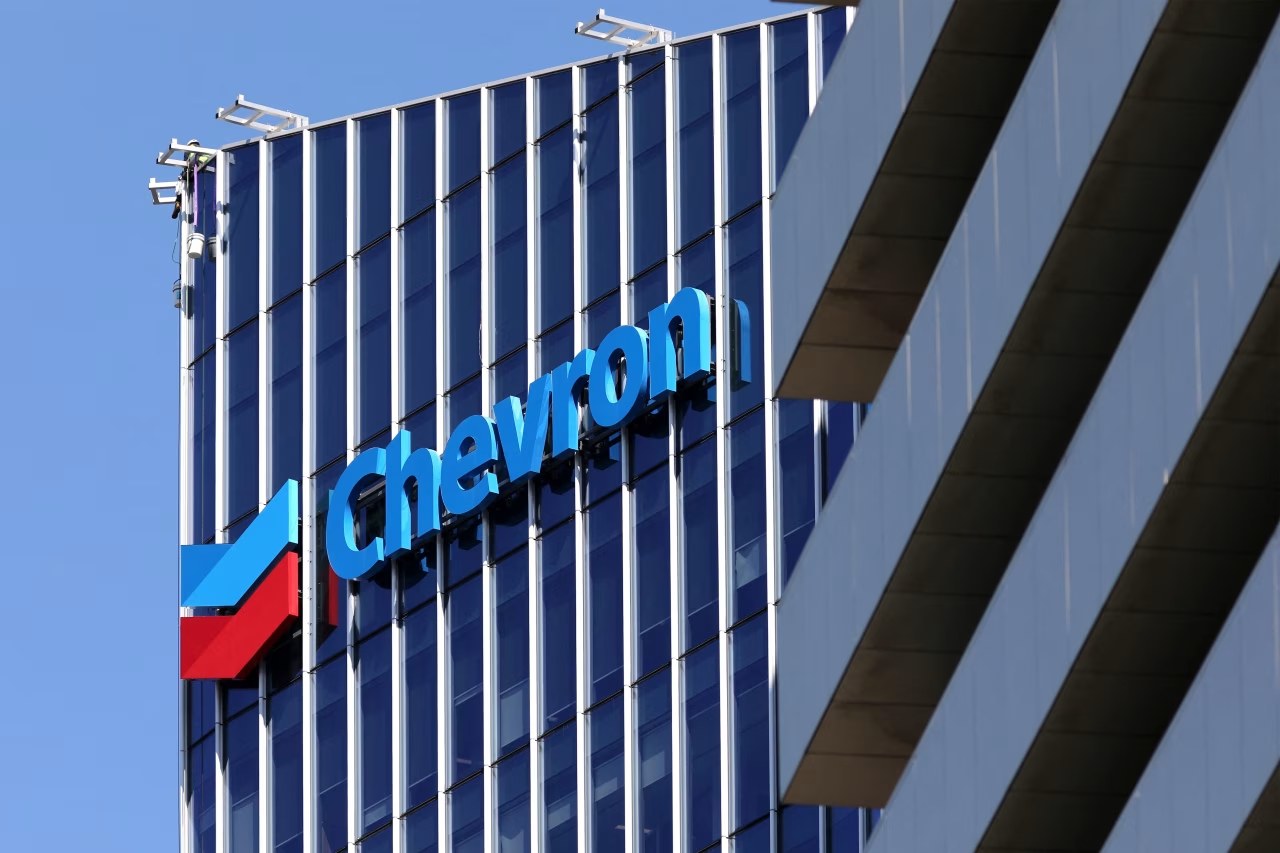
Cyclone Narelle Triggers 4% Drop in Australian LNG Output
- Gorgon and Wheatstone together lost about 1.2 million tonnes per annum of capacity.
- Australia’s LNG export share fell from 9.8% to roughly 9.4% of global supply.
- Spot LNG prices rose 6‑8% in the week following the outage.
- Chevron pledged $150 million for weather‑hardening upgrades.
Australia’s LNG boom meets nature’s fury
CHEVRON—The tropical cyclone that slammed Western Australia’s Pilbara coast on April 12, 2024 forced emergency shutdowns at Chevron’s flagship Gorgon and Wheatstone plants, the two largest LNG exporters in the Southern Hemisphere.
Both complexes, together responsible for more than 24 million tonnes per annum (MTPA) of liquefied natural gas, feed a market already strained by the war‑driven supply crunch in the Middle East.
With the world’s demand for cleaner‑burning fuels climbing, any hiccup in Australia’s output reverberates through contracts, shipping routes, and power‑plant fuel plans across Europe and Asia.
Why Cyclone Narelle Matters for Global LNG Supply
Australia’s position in the global LNG hierarchy
Australia sits third behind Qatar and the United States in total LNG exports, moving roughly 84 million tonnes in 2023, according to the Department of Industry, Science, Energy and Resources. Gorgon, with a design capacity of 15.6 MTPA, and Wheatstone, rated at 8.9 MTPA, together account for about 29% of that total. When Cyclone Narelle knocked both plants offline, the immediate loss of roughly 1.2 MTPA represented a 4% contraction in the nation’s export capability.
“A short‑term supply dip of this magnitude can push spot prices up by double‑digit percentages, especially when European buyers are already scrambling for cargoes,” explained Dr. Emily Carter, senior analyst at Wood Mackenzie, in a market commentary released on April 15, 2024. The analyst’s assessment aligns with AEMO’s forecast that the outage would shave 0.5 million tonnes from the June‑September delivery window, tightening the forward curve.
The timing compounds the stress caused by the war in the Middle East, which has already removed about one‑fifth of the world’s LNG supply, according to the International Energy Agency (IEA). With Russian and Iranian pipelines constrained, European utilities have turned to the Asia‑Pacific basin for fill‑or‑fire contracts. Australia’s reduced output therefore forces buyers to look at higher‑priced alternatives from the United States or to accept longer‑haul shipments from Qatar.
From a macro‑economic perspective, the outage illustrates how climate‑driven events can quickly become geopolitical levers. The International Monetary Fund notes that commodity‑price volatility adds to inflationary pressures in import‑dependent economies. In the short term, the 4% drop in Australian supply may translate into a $0.30‑$0.45 per MMBtu increase in European gas benchmarks, a shift that reverberates through electricity tariffs and industrial production costs.
Looking ahead, the incident underscores the need for diversified supply chains and for robust contingency planning among LNG buyers. The next chapter will unpack how Chevron’s engineering teams are tackling the physical challenges of restoring production under extreme weather conditions.
How Chevron’s Gorgon and Wheatstone Plants Operate Under Extreme Weather
Engineering the world’s largest onshore LNG complex
Gorgon, located 130 km north of Karratha, is a joint venture where Chevron holds a 56% stake. The plant’s 15.6 MTPA capacity is fed by the massive North West Shelf gas field, which delivers 12.4 billion cubic feet per day (bcfd) of raw gas. Wheatstone, situated 30 km south of Onslow, processes 8.9 MTPA from the same field, using a separate liquefaction train that was commissioned in 2017.
Both facilities are built on a “dual‑train” architecture that allows one train to continue operating while the other undergoes maintenance or weather‑related shutdowns. However, Cyclone Narelle’s sustained winds of 150 km/h and storm surge exceeding 2 metres forced a full plant‑wide shutdown, a scenario engineers had only simulated for Category 2 events.
“The storm exceeded the design basis for our flood‑gate systems, prompting us to initiate an emergency safe‑shutdown procedure,” said Mark Reynolds, Chevron’s senior project manager for Gorgon, in the company’s April 14, 2024 operational update. The statement mirrors a similar briefing from Wheatstone’s plant manager, Lisa Chen, who noted that “all critical power and control systems were isolated within 30 minutes of the first wind‑speed alert.”
Restoration is now a phased effort. Phase 1 focuses on de‑watering the offshore platforms, a task that requires high‑capacity pumps capable of moving 500 cubic metres per hour. Phase 2 involves re‑pressurising the gas pipelines, a delicate operation that must respect the 1.2 MPa design pressure to avoid over‑stress. Finally, Phase 3 will bring the liquefaction trains back online, a process that can take up to 72 hours per train once feed‑gas pressure is stable.
Chevron has allocated an additional $150 million for weather‑hardening upgrades, including reinforced sea‑walls, elevated control rooms, and a new real‑time meteorological monitoring system supplied by the Australian Bureau of Meteorology. These investments are expected to reduce future outage risk by at least 30%, according to an internal risk‑assessment model.
With the plant’s complex interdependencies, the next chapter will explore how the broader market reacts when such a large share of supply is temporarily removed.
Can Australian LNG Fill the Gap Left by Middle‑East Supply Shocks?
Middle‑East conflict and its ripple effects
The war that erupted in the Middle East in early 2024 has taken a heavy toll on global LNG flows. According to the International Energy Agency, the conflict has curtailed roughly 20% of the world’s LNG shipments, primarily because of sanctions on Russian gas and damage to pipelines in the Gulf region. Europe, which previously sourced 30% of its gas from Russia, has turned to spot‑market purchases, driving up the Henry Hub‑linked Asian LNG price index by $1.8 /MMBtu in the month after the conflict began.
Australia’s capacity to step in is limited by geography and logistics. Shipping a cargo from Western Australia to Europe adds roughly 30 days of transit compared with a Mediterranean load, inflating freight costs by $0.12 per MMBtu. Nevertheless, the market has responded positively to the prospect of additional Australian cargoes. Bloomberg’s commodity tracker shows that forward contracts for 2024‑25 deliveries from Gorgon have risen by 7% since the cyclone, reflecting buyer confidence in the plant’s eventual recovery.
“Australian LNG is becoming a de‑facto safety valve for Europe, but the latency and higher freight mean it is a premium product,” noted Dr. Ahmed Al‑Saadi, senior energy economist at the Australian National University, in a webinar hosted by the Institute of Energy Economics on April 18, 2024. His analysis aligns with Wood Mackenzie’s forecast that Australia could increase its export share from 9.8% to 10.5% by the end of 2025 if it successfully expands its liquefaction footprint.
Price dynamics illustrate the market’s sensitivity. A line chart of spot LNG prices from January 2024 through May 2024 shows a clear upward trend: the average price climbed from $11.2/MMBtu in January to $13.6/MMBtu in May, a 21% increase. The sharpest jump—an 8% rise in the week of April 15—coincides with the announcement of the Gorgon‑Wheatstone outage.
While Australia can partially offset the shortfall, the broader lesson is that reliance on a narrow set of supply routes magnifies vulnerability. The next chapter will examine how regulators and local communities are adapting to the twin challenges of climate risk and energy security.
How Australian Regulators and Communities Respond to Cyclone‑Driven Disruptions
Regulatory safeguards and emergency protocols
Following the cyclone, the Australian Energy Market Operator (AEMO) activated its LNG Supply Contingency Framework, a set of pre‑agreed measures that include mandatory reporting of production curtailments, accelerated dispatch of reserve cargoes, and coordinated communication with downstream users. In its May 2024 briefing, AEMO highlighted that the framework helped mitigate the immediate impact on domestic gas prices, which rose only 2% despite the outage—a testament to the system’s resilience.
“The quick reporting and transparent data flow allowed us to re‑balance the market within 48 hours,” said AEMO’s Director of Market Operations, Sarah Patel, during a press conference on April 20, 2024. Her remarks underscore the importance of real‑time data sharing between operators, regulators, and large‑scale consumers such as steel mills and chemical plants.
Local communities, especially those in the Pilbara region, have also felt the tremors. The Department of Industry, Science, Energy and Resources launched a $25 million community‑resilience fund in March 2024, aimed at upgrading storm‑proof housing and improving emergency‑response infrastructure in Karratha and Onslow. Indigenous groups, represented by the Ngarluma Yindjibarndi Foundation, have called for greater inclusion in future risk‑assessment workshops, arguing that traditional knowledge can enhance early‑warning systems.
From a financial‑risk perspective, the Australian Securities and Investments Commission (ASIC) has begun reviewing the adequacy of insurance coverage for large‑scale industrial facilities in cyclone‑prone zones. A recent ASIC report suggests that only 58% of high‑value energy assets carry comprehensive “act‑of‑nature” policies, prompting calls for stricter underwriting standards.
The regulatory and community response to Cyclone Narelle may set a template for future climate‑related disruptions. The final chapter will assess what these actions mean for Chevron’s long‑term strategy in Australia.
What’s Next for Chevron’s Australian Portfolio After Narelle?
Strategic pivots and investment outlook
Chevron’s 2024‑2025 strategic roadmap now places a sharper focus on climate‑resilience and diversification. The company announced an additional $200 million investment in renewable‑energy‑powered electrolyzers at its Kwinana refinery, aiming to produce green hydrogen for export alongside LNG. This move aligns with the International Energy Agency’s projection that by 2030, at least 30% of global LNG demand will be met by low‑carbon or carbon‑neutral sources.
Financial analysts at Morgan Stanley have revised Chevron’s Australian segment earnings forecast upward by 3%, citing the company’s aggressive cost‑control measures and the anticipated recovery of Gorgon’s output by late Q3 2024. The firm’s adjusted EBITDA for the Australian portfolio is projected to reach $6.5 billion in FY 2025, a modest increase over the $6.3 billion reported for FY 2024.
“The resilience of Gorgon and Wheatstone is a cornerstone of our long‑term value proposition,” said Michael Wirth, Chevron’s CEO, during the annual shareholders’ meeting on April 23, 2024. He emphasized that the company is exploring “modular, floating LNG” concepts that could be deployed offshore, reducing exposure to land‑based weather events.
Key performance indicators (KPIs) for the next 12 months include: (1) restoring full capacity at Gorgon and Wheatstone by Q3 2024; (2) completing the $150 million flood‑gate upgrade by Q2 2025; (3) launching a pilot green‑hydrogen project by Q4 2025; and (4) reducing greenhouse‑gas emissions intensity by 15% relative to 2020 levels, in line with Chevron’s net‑zero ambition for 2050.
Stakeholder sentiment remains cautiously optimistic. A survey by the Australian Chamber of Commerce and Industry found that 68% of industry leaders view Chevron’s renewed investment in infrastructure as a positive signal for regional economic stability. Meanwhile, environmental NGOs continue to pressure the firm to accelerate the phase‑out of fossil‑fuel‑centric projects.
In sum, the cyclone‑induced outage has become a catalyst for strategic recalibration. Chevron’s next steps—bolstering physical resilience, expanding low‑carbon product lines, and deepening community engagement—will shape not only its own fortunes but also the broader trajectory of Australia’s LNG sector.
Frequently Asked Questions
Q: How much LNG capacity was lost when Cyclone Narelle hit Gorgon and Wheatstone?
The combined outage removed roughly 1.2 million tonnes per annum, about 4% of Australia’s total LNG export capacity, according to Chevron’s post‑storm report.
Q: Why does a cyclone in Western Australia affect global LNG prices?
Australia ranks among the top three LNG exporters; a supply dip from Gorgon and Wheatstone tightens the market, pushing spot prices up by 6‑8% as buyers scramble for alternative cargoes.
Q: What steps is Chevron taking to prevent future weather‑related shutdowns?
Chevron is accelerating its weather‑hardening program, adding flood‑resistant infrastructure and revising shutdown protocols, a plan outlined in its 2024 sustainability briefing.
📰 Related Articles
- Enagas Surges 27% Year-to-Date After Spain Unveils 2027-32 Hydrogen-Pipeline Incentives
- Soaring LNG Prices Threaten U.S. Export Growth as Global Markets Tighten
- Energy Shock Forecast: Trump Predicts Quick Recovery While CEOs Warn Prolonged Crisis
- Middle East Oil Shortage Sends Prices Soaring, Threatening Global Fuel Markets
📚 Sources & References
- Major Australian LNG Plants Suffer Outages as Cyclone Hits – Wall Street Journal
- Chevron Announces Restoration Progress at Gorgon and Wheatstone LNG Facilities
- Australian Energy Market Operator (AEMO) – LNG Supply Outlook, May 2024
- Wood Mackenzie – Impact of Weather Events on Global LNG Trade, 2024
- Department of Industry, Science, Energy and Resources – Australian LNG Export Statistics 2023
