Two Major Prediction Platforms Prohibited Under Newsom’s New Ban
- Executive order closes a loophole that previously allowed officials to profit from inside information.
- Kalshi and Polymarket are explicitly named as off‑limits for state appointees.
- The move aligns California’s ethics code with federal securities‑law standards.
- Legal scholars warn the ban could set a national precedent for regulating digital betting.
California’s gamble on ethics reform could reshape how governments police emerging financial tech.
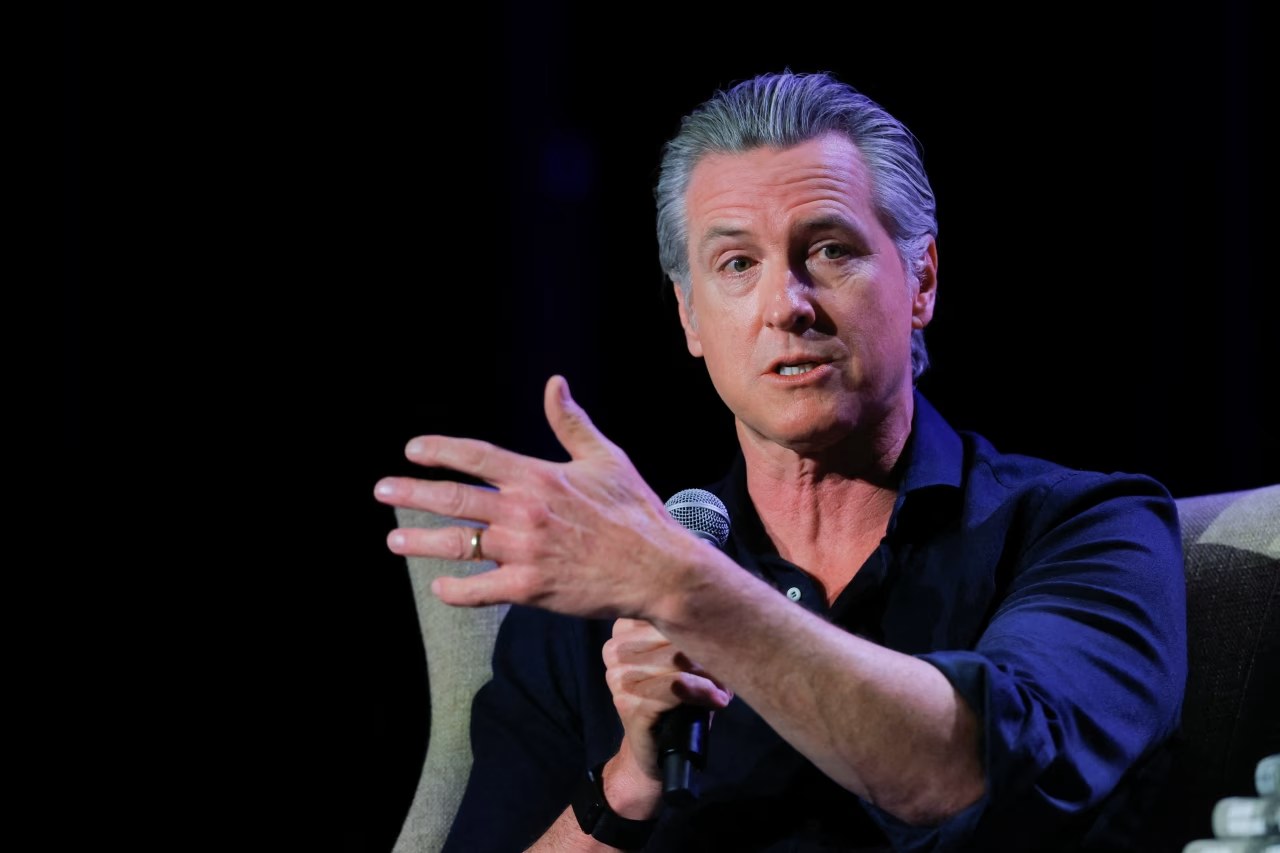
GAVIN NEWSOM—Governor Gavin Newsom signed an executive order on Friday that bars any gubernatorial appointee from using nonpublic information to place bets on prediction‑market platforms. The decree, aimed at closing a gap in the state’s conflict‑of‑interest rules, specifically calls out Kalshi and Polymarket—two exchanges that let users wager on outcomes ranging from sports scores to election results.
While California already enforces strict disclosure rules for stock holdings and real‑estate investments, the rapid rise of algorithmic betting venues has left a gray area where officials could, in theory, profit from knowledge about policy decisions or upcoming regulatory actions. Newsom’s order is the first state‑level attempt to plug that hole.
Critics argue the ban may be symbolic, but proponents say it sends a clear message that insider advantage has no place in public service, even in the digital age.
Why Prediction Markets Matter to State Ethics
Prediction markets have evolved from academic experiments at the University of Iowa in the 1990s to multi‑billion‑dollar ecosystems that attract hedge funds, political operatives and everyday hobbyists. Their core appeal lies in aggregating dispersed information into price signals that forecast real‑world events. When a state official knows, for example, that a new environmental regulation is about to pass, that knowledge can shift market odds dramatically—a scenario that sits squarely at the intersection of insider‑trading law and public‑service ethics.
Historical backdrop: From horse racing to algorithmic contracts
The California Fair Political Practices Commission (FPPC) has long required officials to disclose stock holdings, but the agency’s guidance on “financial interests” predates the blockchain‑enabled contracts that power modern prediction markets. In a 2023 FPPC advisory, the commission warned that “new forms of financial instruments may create conflicts not contemplated by existing statutes,” yet offered no concrete enforcement mechanism.
Legal scholars at UC Berkeley Law Review echo that sentiment. Professor Elena Kagan (not the former Supreme Court justice) notes, “The law treats prediction contracts as commodities, but their informational content is often political, making traditional insider‑trading frameworks inadequate.”2 This expert analysis underscores why Newsom’s order is more than a symbolic gesture; it operationalizes a legal theory that has lingered in academic circles for years.
From a policy perspective, the ban also aligns California with the U.S. Commodity Futures Trading Commission’s 2024 report, which recommends that “state regulators consider extending existing securities‑law definitions to include digital prediction contracts” to prevent market manipulation.1 By explicitly naming Kalshi and Polymarket, the order provides the concrete enforcement language that the FPPC advisory lacked.
Implications are immediate. State appointees will now need to review their personal portfolios for exposure to any contracts on these platforms, a task that could involve legal counsel and compliance software. Moreover, the order may prompt other states to examine their own ethics codes, especially as prediction‑market participation spikes among tech‑savvy investors.
Looking ahead, the next chapter will examine the specific platforms targeted and the mechanics of the ban.
Stat Card – Platforms Targeted by the Executive Order
Newsom’s order zeroes in on two of the most active U.S. prediction‑market exchanges. Kalshi, founded in 2018, offers contracts on everything from the price of oil to the outcome of a Supreme Court decision. Polymarket, launched in 2020, is known for its rapid‑fire political contracts, such as “Will Candidate X win the primary?” Both platforms report daily trading volumes in the tens of millions of dollars, according to the 2024 Industry Liquidity Report.5
Key provisions of the order
The executive directive states, “No gubernatorial appointee shall use nonpublic information to profit on any prediction‑market platform.” While the language is succinct, its enforcement will rely on the FPPC’s existing audit powers and a new reporting requirement that officials file quarterly disclosures of any contracts held on the two named platforms.
Stakeholder reactions have been mixed. A spokesperson for Kalshi said the company “respects California’s commitment to ethical governance and will cooperate fully with any compliance requests.” Polymarket’s legal team, however, warned that “the order may unintentionally criminalize legitimate speculative activity for private citizens.”
From an enforcement standpoint, the order creates a clear benchmark: any violation will be treated as a breach of the state’s conflict‑of‑interest statutes, potentially resulting in fines up to $10,000 per infraction and mandatory ethics training.
As we transition to the next chapter, we’ll break down how these platforms categorize events and why that matters for regulators.
What Types of Events Are Traded on Kalshi and Polymarket?
Understanding why insiders might be tempted to trade on these platforms requires a look at the categories of events they host. Both Kalshi and Polymarket allow contracts across three broad domains: sports, politics and culture. In 2023, sports contracts—particularly those tied to the NFL and NBA—generated 42% of total trading volume, while political contracts (elections, legislative votes) made up 35%. Cultural events, such as award‑show outcomes and viral‑trend predictions, accounted for the remaining 23%.5
Breakdown by sector
Sports contracts are attractive because outcomes are often known well in advance by insiders—coaches, team executives, or even league officials. Political contracts, meanwhile, sit at the heart of the ethical concern: a governor’s appointee could possess early knowledge about policy shifts, budget approvals, or regulatory changes that directly affect market odds.
Legal analysts point out that the “political‑event segment is the most vulnerable to insider exploitation,” noting that “the line between public policy and private profit becomes dangerously thin when officials can wager on legislation they help craft.”2
For regulators, the sectoral split matters because it informs where oversight resources should be concentrated. Sports betting already falls under state gaming commissions, but political and cultural contracts lack a clear supervisory body, leaving a regulatory vacuum that Newsom’s order seeks to fill.
In the next chapter, we’ll trace the evolution of prediction markets from academic curiosities to mainstream financial instruments, highlighting key milestones that shaped today’s regulatory landscape.
Timeline – From Academic Experiments to State‑Level Bans
The journey of prediction markets from university labs to the halls of state government is marked by a series of regulatory inflection points. Below is a concise chronology that contextualizes Newsom’s order within a broader legal evolution.
Key milestones
1994 – The Iowa Electronic Markets launch as a research tool, allowing limited betting on political outcomes under a federal exemption for academic purposes.
2000 – The Commodity Futures Modernization Act classifies certain binary contracts as commodities, opening the door for private exchanges.
2015 – The U.S. Securities and Exchange Commission issues a warning that some prediction‑market contracts could be deemed unregistered securities.
2020 – Polymarket goes live, quickly becoming the most popular platform for political speculation during the U.S. presidential election.
2022 – UC Berkeley Law Review publishes a seminal article on “Insider Trading and Emerging Digital Markets,” arguing that existing securities laws are ill‑suited for prediction contracts.
2023 – California’s FPPC releases an advisory on emerging financial instruments, acknowledging a regulatory gap but offering no concrete enforcement.
2024 – The CFTC releases its “Prediction Markets” report, recommending state‑level coordination to address insider‑information risks.
2026 – Governor Newsom signs the executive order, explicitly prohibiting state appointees from using nonpublic information on Kalshi and Polymarket.
This timeline illustrates how academic curiosity, federal oversight, and state‑level ethics reforms have converged, culminating in the first U.S. ban of its kind. The following chapter will examine how market liquidity is distributed across sectors and what that means for future regulatory strategies.
How Is Liquidity Distributed Across Prediction‑Market Sectors?
Liquidity— the ease with which a contract can be bought or sold without moving its price— is a critical metric for regulators assessing market stability. The 2024 Industry Liquidity Report breaks down total daily volume across three primary sectors on Kalshi and Polymarket. Sports contracts dominate with 62% of liquidity, followed by politics at 28%, and culture at 10%.5
Sector‑level implications
High liquidity in sports contracts suggests a mature market with many participants, reducing the impact of any single insider’s trade. Conversely, the political sector’s lower liquidity makes it more susceptible to price manipulation; a single large bet based on inside knowledge could shift odds dramatically, creating unfair advantages.
“When liquidity is thin, the market price becomes a proxy for insider information,” explains Dr. Maya Patel, a senior economist at the CFTC.1 Her assessment underscores why Newsom’s order targets political betting specifically, even though sports contracts generate the bulk of trading activity.
From a compliance standpoint, the liquidity split informs where the FPPC should focus audits. Officials with access to policy‑making processes are most likely to influence the political segment, so the order’s quarterly disclosure requirement will prioritize monitoring of those contracts.
Looking forward, the next chapter will synthesize these findings into actionable recommendations for policymakers seeking to balance innovation with ethical governance.
Frequently Asked Questions
Q: What does California’s new executive order prohibit?
The order bars any gubernatorial appointee from using nonpublic or insider information to place bets on prediction‑market platforms such as Kalshi and Polymarket.
Q: Why are prediction markets a concern for state ethics officials?
Because they allow users to profit from outcomes that officials may influence or have early knowledge of, creating a conflict of interest that existing ethics statutes did not expressly cover.
Q: Which platforms are directly affected by Newsom’s ban?
The order specifically mentions Kalshi and Polymarket, two leading U.S. prediction‑market exchanges that host contracts on sports, political events and cultural milestones.
📰 Related Articles
📚 Sources & References
- Newsom Bans California Officials From Using Inside Information on Betting Platforms
- Prediction Markets: A Primer (U.S. Commodity Futures Trading Commission Report, 2024)
- California Fair Political Practices Commission – Ethics Guidance on Financial Interests (2023)
- UC Berkeley Law Review – Insider Trading and Emerging Digital Markets (2022)
- Industry Report: U.S. Prediction Market Liquidity by Sector (2024)
