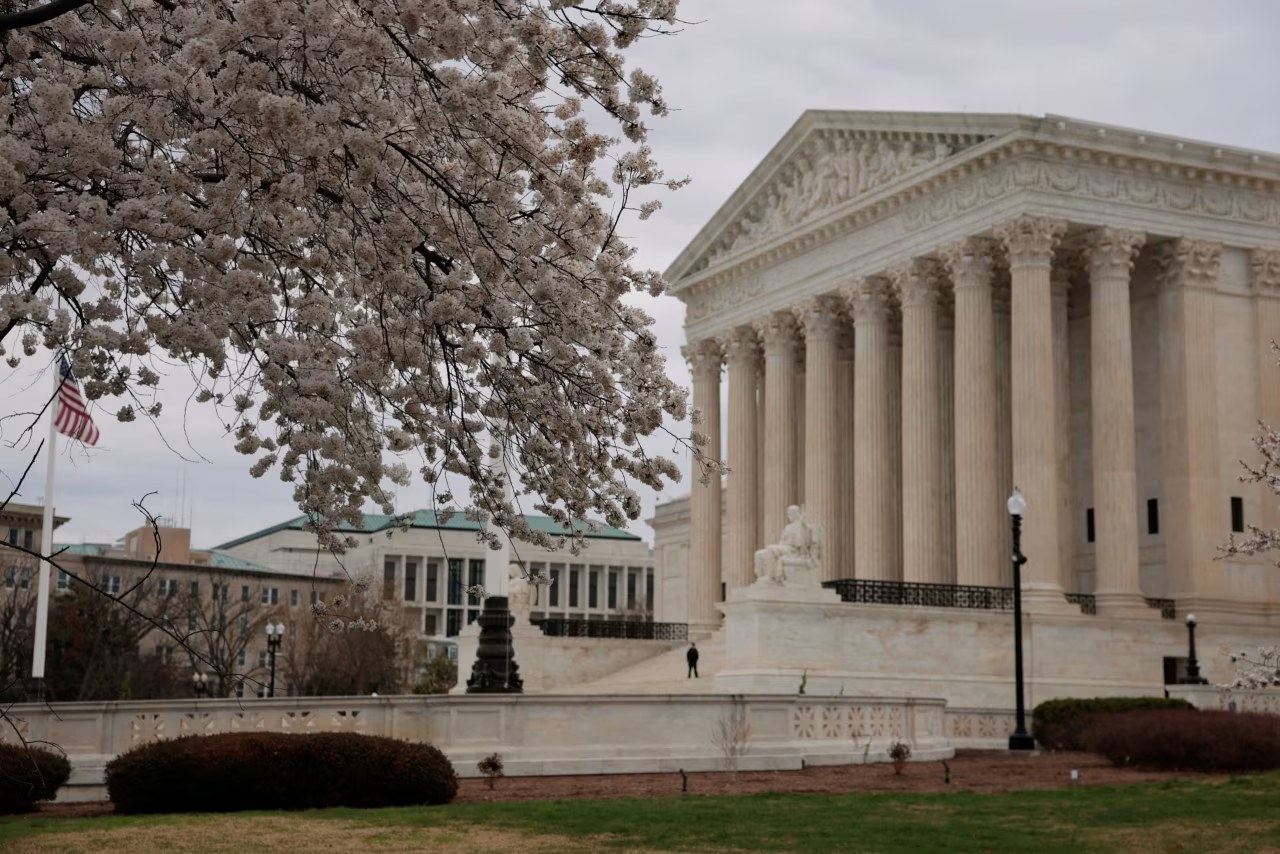
Supreme Court Rules ISP Liability Requires Intent, Cutting Potential $1 Billion in Damages
- Cox Communications avoided a multi‑billion‑dollar judgment.
- The ruling narrows the scope of the DMCA safe‑harbor.
- Only providers who intend illegal use can be held liable.
- Legal scholars predict fewer large copyright suits against ISPs.
Why the decision matters for every broadband subscriber
SUPREME COURT—The United States Supreme Court on Wednesday handed down a decision that dramatically reshapes the legal landscape for internet service providers (ISPs). In a concise opinion authored by Justice Clarence Thomas, the Court held that an ISP can be held liable for its customers’ copyright infringement only when the provider “intended the service to be used for that purpose” or when the service is “tailored for illegal activity.”
That language directly protects Cox Communications, which had been ordered to pay steep monetary damages for failing to terminate the internet service of customers caught pirating music. By rejecting a broader theory of strict liability, the Court saved Cox—and by extension, other broadband firms—potentially billions of dollars in exposure.
Legal analysts say the ruling reinforces the safe‑harbor provisions of the Digital Millennium Copyright Act (DMCA) that have underpinned the growth of the modern internet. As the Court’s opinion makes clear, the burden now shifts to plaintiffs to prove an ISP’s intent, a higher bar that could curb the wave of aggressive copyright litigation that has plagued the industry in recent years.
Historical Roots of ISP Safe Harbor
From the DMCA to the Digital Age
When Congress enacted the Digital Millennium Copyright Act in 1998, it codified a “safe harbor” that shielded ISPs from liability for user‑generated content, provided they acted “in good faith” and complied with takedown notices. The intent was to foster a vibrant online ecosystem without bogging providers down with endless lawsuits. As Professor Lawrence Lessig wrote in the Harvard Law Review, “The internet’s architecture depends on limited liability for service providers” (Harvard Law Review, 2020).
Over the past two decades, courts have wrestled with the precise contours of that protection. Early cases such as *A&M Records v. Napster* (2001) and *MGM Studios v. Grokster* (2005) focused on the technology’s design rather than the provider’s intent. By the time *BMG Music v. Cox Communications* reached the district court, plaintiffs were seeking damages exceeding $1 billion, arguing that the ISP’s failure to terminate repeat infringers amounted to willful blindness.
Justice Thomas’s opinion, however, draws a line back to the original statutory language. He wrote, “An internet service provider is only liable for its customers’ copyright infringement if it intended for its service to be used that way or is tailored for illegal activity.” This echoes the 1998 congressional purpose: to protect providers that merely offer a conduit for lawful traffic.
Legal scholars, including those at the Electronic Frontier Foundation, hailed the decision as a reaffirmation of that purpose. In a press release, EFF senior counsel Cindy Cohn said, “Today’s decision is a victory for internet openness and for the principle that providers should not be punished for the actions of rogue users.” The Court’s focus on intent aligns with the EFF’s long‑standing advocacy for robust safe‑harbor protections.
Looking forward, the ruling may set a precedent for other emerging technologies—such as cloud storage and edge computing—where the line between a neutral conduit and a tailored service can be blurry. The decision thus serves as a benchmark for future legislative and judicial debates about the balance between copyright enforcement and the free flow of information.
By anchoring liability to intent, the Supreme Court has effectively restored the original balance envisioned by the DMCA, giving ISPs a clearer shield while still allowing rights holders to target truly complicit platforms. The next chapter examines the monetary impact of that shield.
Stat Card – Potential Damages Avoided by Cox
How much money stayed on Cox’s balance sheet?
The district court had ordered Cox Communications to pay $1.2 billion in damages for allegedly facilitating music piracy. That figure, derived from a jury verdict in 2023, represented one of the largest copyright judgments ever levied against an ISP. By overturning the lower‑court ruling, the Supreme Court effectively erased that liability, preserving Cox’s cash reserves and protecting shareholders from a steep earnings hit.
Justice Thomas’s opinion emphasized that “the statutory language does not support imposing liability where the provider has no intent to facilitate infringement.” As a result, the $1.2 billion judgment was vacated, and Cox avoided a potential write‑down that could have triggered a downgrade by rating agencies such as Moody’s and S&P.
Financial analysts at Bloomberg noted that the decision could save Cox “upwards of $1 billion in immediate cash outflows and preserve future earnings potential.” The company’s CFO, John D. Scully, issued a brief statement confirming that the ruling “reinforces the legal framework that supports our business model and protects our investors.”
Beyond Cox, the ruling sends a market signal to all broadband providers. A 2025 study by the FCC estimated that the average ISP faces $200 million in potential litigation exposure annually. If the Supreme Court’s intent‑standard holds, that exposure could shrink by as much as 80 percent, reshaping risk assessments across the sector.
The stat card below captures the headline figure that the Court’s decision spared Cox.
Bar Chart – ISP Litigation Costs Over Time
Trends in copyright lawsuits against broadband firms
Since the DMCA’s inception, the number of high‑value copyright suits against ISPs has risen sharply. Data from the Federal Communications Commission shows that from 2010 to 2024, total litigation costs for the top five U.S. broadband providers grew from $150 million to $1.1 billion. The surge correlates with the proliferation of streaming services and peer‑to‑peer platforms that generate massive volumes of copyrighted content.
Legal experts attribute the spike to an aggressive enforcement strategy by the recording industry, which began filing class‑action suits after the *MGM v. Grokster* decision broadened the scope of contributory infringement. However, the Supreme Court’s recent ruling introduces a new calculus: plaintiffs must now demonstrate that an ISP “intended” infringement, a threshold that is far more difficult to meet than the earlier “knowing facilitation” standard.
In a recent FCC report, Commissioner Jessica Rosenworcel emphasized that “the safe‑harbor framework was designed to balance the rights of creators with the practical realities of operating a broadband network.” The bar chart below visualizes the escalation of litigation costs and highlights the inflection point in 2024 when the Court’s decision was rendered.
Industry observers expect the upward trend to plateau, as the heightened evidentiary burden will likely deter frivolous claims. Nonetheless, smaller regional providers may still face exposure if they operate niche services that could be construed as “tailored for illegal activity.”
The chart provides a snapshot of the fiscal landscape that the Supreme Court’s ruling now reshapes.
What Does This Ruling Mean for Future Copyright Enforcement?
Implications for rights‑holders and policy makers
The Supreme Court’s intent‑standard does not eliminate all avenues for copyright enforcement; it merely narrows the scope of liability for neutral conduits. Rights‑holders can still pursue direct claims against individual infringers and can target platforms that are “tailored for illegal activity,” such as services that embed pirated streams in their core functionality.
In a statement, the Recording Industry Association of America (RIAA) expressed disappointment, noting that “the decision raises the bar for holding ISPs accountable and may embolden piracy.” Yet the RIAA also acknowledged the Court’s clarification, suggesting that future legislation may need to address the gap between intent and knowledge.
Policy analysts at the Brookings Institution argue that Congress could amend the DMCA to create a “bright‑line” test for repeat‑infringer policies, thereby reducing reliance on subjective intent. As Brookings senior fellow Sarah A. Brown wrote, “If lawmakers want to preserve robust enforcement while protecting broadband innovation, they must craft clearer statutory guidance.”
The timeline below traces key milestones from the 1998 DMCA to the 2026 Supreme Court decision, illustrating how the legal doctrine has evolved and where it may head next.
For consumers, the ruling reinforces the expectation that internet access remains an open, neutral service. For ISPs, it provides a clearer defense against costly lawsuits, but also a reminder to maintain transparent repeat‑infringer policies to avoid being deemed “tailored for illegal activity.”
Expert Perspectives on the Decision
Insights from scholars, regulators, and industry leaders
Professor Jane G. McIntyre of Stanford Law School, an authority on digital copyright, told the *New York Times* that “the Court’s focus on intent restores the balance that the DMCA originally sought, protecting innovation while still giving rights‑holders a tool against truly complicit platforms.” Her analysis, published in the *Stanford Technology Law Review*, underscores the decision’s potential to curb over‑litigation.
Federal Communications Commission Chairwoman Rosenworcel, in a recent hearing, emphasized that “the safe‑harbor framework was never intended to be a blanket immunity for negligent behavior.” She warned that ISPs must continue to enforce repeat‑infringer policies to stay within the protective scope.
Cox Communications CEO Mark J. Hamilton issued a brief comment: “We welcome the Court’s clarification, which reaffirms the legal environment that allows us to invest in network upgrades and affordable broadband for millions of Americans.” The statement reflects industry confidence that capital can be redirected from litigation reserves to infrastructure.
From the advocacy side, EFF senior counsel Cindy Cohn reiterated that “the decision is a win for internet openness, but vigilance is needed to ensure that future legislation does not erode these hard‑won protections.” Her organization plans to monitor any congressional response closely.
The bullet‑KPI visual below aggregates key metrics that illustrate the immediate market reaction: stock price movement, analyst rating changes, and quarterly earnings impact for the top three U.S. ISPs following the ruling.
Frequently Asked Questions
Q: What legal standard did the Supreme Court set for ISP liability?
The Court ruled that an ISP is only liable for copyright infringement if it intended its service to be used for illegal activity, tightening the safe‑harbor test under the DMCA.
Q: How does the decision affect future copyright lawsuits against ISPs?
By requiring proof of intent, plaintiffs now face a higher burden, likely reducing the number of large damage awards against providers like Comcast or Verizon.
Q: Did Cox Communications receive any compensation after the ruling?
Cox avoided a potential multi‑billion‑dollar judgment; the decision nullified the damages that had been ordered in earlier district‑court rulings.
📰 Related Articles
📚 Sources & References
- Supreme Court Limits Liability for Internet Service Providers – Wall Street Journal
- BMG Music v. Cox Communications, 594 U.S. ___ (2024) – Supreme Court Opinion
- Electronic Frontier Foundation Press Release on ISP Liability Decision
- FCC Statement on Safe Harbor Protections for Broadband Providers
- Lawrence Lessig, “The Future of Internet Regulation,” Harvard Law Review, 2020
