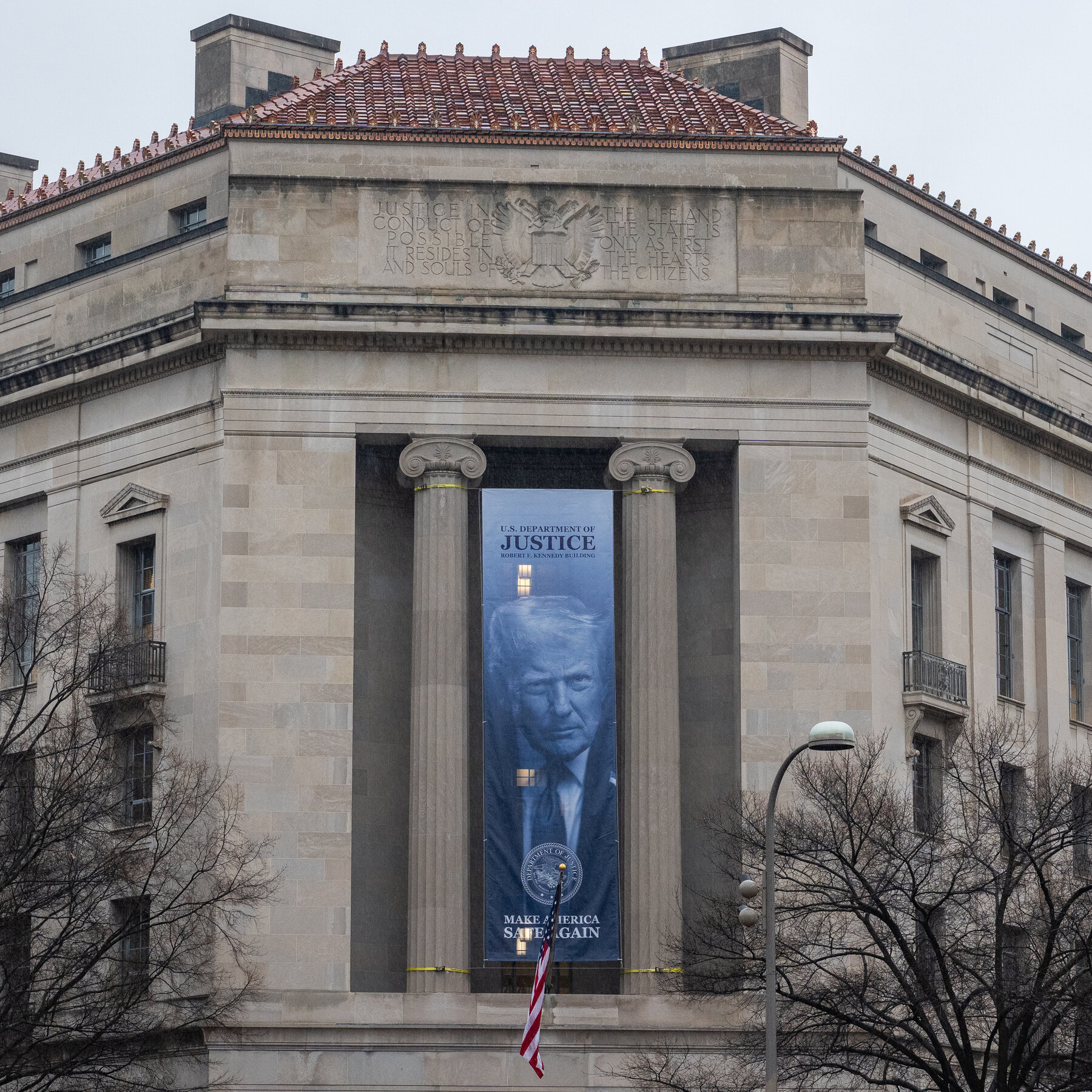
WASHINGTON— A new banner featuring President Trump has been hung on the Justice Department headquarters in Washington D.C., sparking controversy and debate. This development comes amid a series of similar installations on other federal buildings across the nation’s capital, raising questions about the use of government property for political messaging.
Banners and Federal Property
The appearance of these banners has ignited a discussion about the appropriation of federal property for political purposes. Critics argue that using government buildings to display political banners undermines the neutrality and impartiality that such institutions should maintain. Proponents, on the other hand, see it as a form of political expression and a celebration of the current administration.
Legal experts are weighing in on the matter, with some suggesting that the display of these banners could potentially violate laws or regulations governing the use of federal property. The debate highlights the complex relationship between political speech and the use of government resources.
The Justice Department’s Role
The Justice Department, in particular, has found itself at the center of political controversy during the Trump administration. The hanging of a Trump banner on its headquarters has been seen by some as a symbol of the administration’s influence over the department. This perception is significant, given the Justice Department’s critical role in ensuring the rule of law and its independence from political pressure.
Observers are closely watching how the Justice Department and other federal agencies respond to these banners, as their reactions could set a precedent for future interactions between the executive branch and the judiciary.
Implications for Political Expression
The debate over the Trump banners on federal buildings touches on broader issues of political expression and the limits of free speech. While the First Amendment protects political speech, the use of government property to convey political messages introduces complexities. The outcome of this controversy could have implications for how political expression is regulated on federal property in the future.
Moreover, the situation highlights the challenges of maintaining neutrality in the face of deeply polarized political environments. As the nation grapples with these issues, the display of political banners on federal buildings serves as a poignant reminder of the ongoing struggle to balance political speech with the need for governmental institutions to remain impartial.
