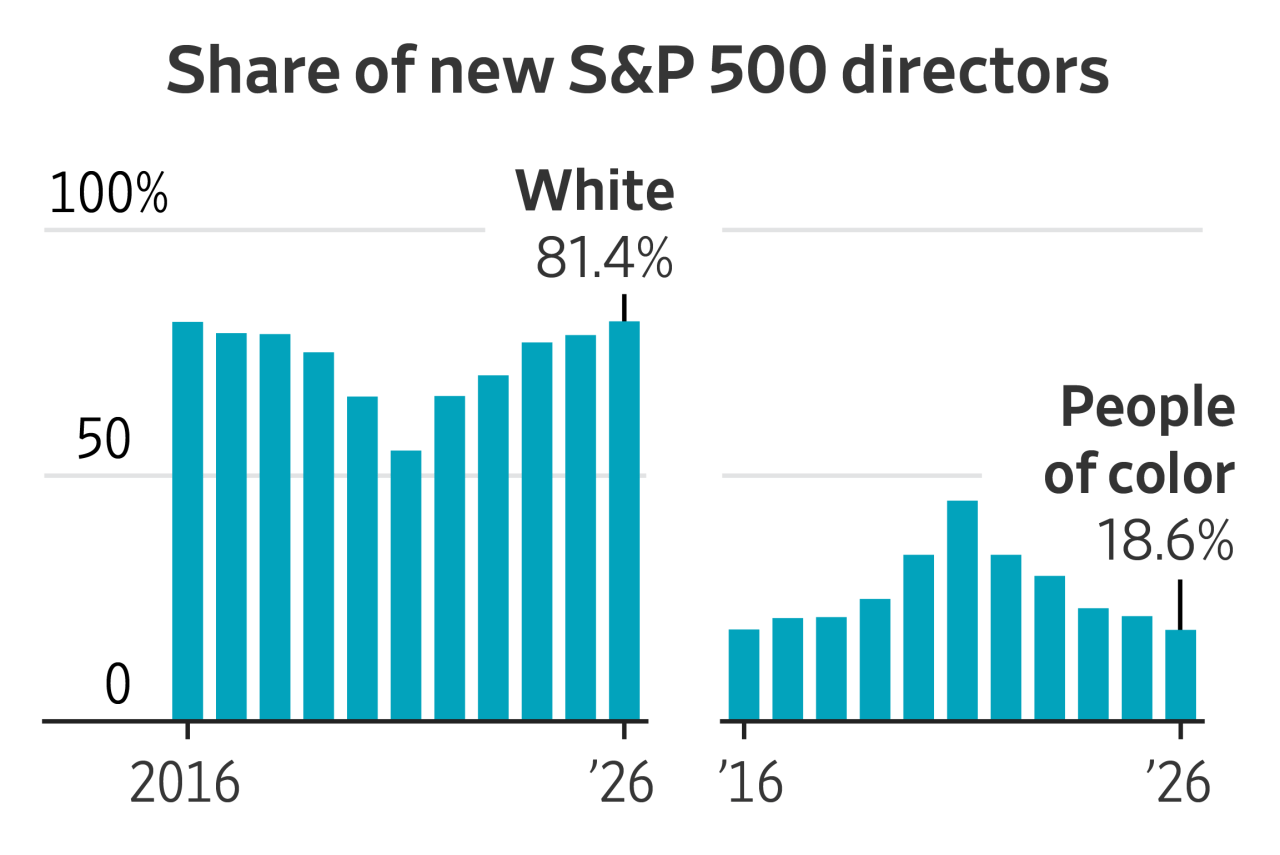
WASHINGTON— A significant shift in corporate governance is underway as companies revert to appointing fewer women and minorities to their boards, marking a decline in diversity, equity, and inclusion (DEI) efforts. This change comes as political pressures have altered, affecting the composition of corporate boards.
The Rise and Fall of DEI Initiatives in Corporate Boards
Until recently, there has been a noticeable increase in the appointment of women and minorities to corporate boards, driven by societal pressures and the recognition of the importance of diversity in leadership. However, with shifting political landscapes, these efforts seem to be waning. This chapter explores the factors contributing to the rise and subsequent decline of DEI initiatives in corporate governance.
Companies that once prioritized diversity now seem to be backtracking, citing various reasons including political pressures, regulatory changes, and a shift in shareholder priorities. The impact of these changes on the overall diversity of corporate boards is significant, with potential long-term implications for corporate governance and societal representation.
Impact of Political Pressures on Corporate Governance
Political pressures have played a significant role in shaping corporate governance practices, including the composition of corporate boards. As political landscapes change, so do the priorities of companies. The decline in DEI-focused appointments reflects a broader trend where political shifts influence corporate decision-making. This chapter delves into the relationship between political pressures and corporate governance, highlighting how these pressures can either promote or hinder diversity and inclusion efforts.
The influence of political pressures on corporate boards is multifaceted, affecting not only the diversity of appointees but also the overall governance structure of companies. Understanding these dynamics is crucial for assessing the future of DEI initiatives in corporate governance.
Consequences of Declining Diversity in Corporate Boards
The decline in diversity among corporate board appointments has significant implications for corporate governance, company performance, and societal representation. Diverse boards are associated with better decision-making, enhanced innovation, and improved financial performance. A lack of diversity can lead to groupthink, reduced competitiveness, and diminished public trust in corporations.
This chapter examines the potential consequences of declining diversity in corporate boards, including the impact on company reputation, shareholder value, and the broader social implications. It also discusses the role of regulatory bodies, investors, and other stakeholders in promoting diversity and inclusion in corporate governance.
Regulatory and Investor Responses to DEI Challenges
Regulatory bodies and investors play a crucial role in promoting and maintaining diversity, equity, and inclusion in corporate governance. In response to the decline in DEI-focused appointments, there is a growing call for stricter regulations and investor activism to ensure that companies prioritize diversity. This chapter looks at the current regulatory landscape, investor initiatives, and potential future directions for promoting DEI in corporate boards.
Effective regulatory frameworks and active investor engagement can incentivize companies to prioritize diversity and inclusion. However, the complexity of corporate governance and the varied interests of stakeholders pose challenges to creating and implementing effective measures. This chapter discusses the potential solutions and obstacles in promoting DEI through regulatory and investor actions.
Future of DEI in Corporate Governance
The future of diversity, equity, and inclusion in corporate governance hangs in the balance as companies navigate changing political pressures and regulatory landscapes. Despite the current decline in DEI-focused appointments, there is a recognition among many stakeholders of the importance of diverse and inclusive corporate boards. This final chapter considers the paths forward for promoting DEI in corporate governance, including the role of technology, education, and cultural shifts in advancing diversity and inclusion.
As societal values evolve and the benefits of diverse corporate boards become more apparent, there is potential for a resurgence in DEI initiatives. The chapter concludes by highlighting the importance of sustained efforts from all stakeholders to ensure that corporate governance reflects the diverse societies they serve, promoting a more equitable and inclusive business environment.
