Two Missile Strikes Cut 20% of World Fertilizer Trade in Three Weeks
- Strait of Hormuz closure on 28 Feb halted 12m tonnes of Gulf ammonia and urea exports.
- Ras Laffan LNG terminals hit 18 Mar, choking gas supply to European and Asian fertilizer plants.
- Combined shock threatens to erase 50m tonnes of global grain output in 2024 harvest.
- Soaring fertilizer prices push wheat futures up 14% and corn 11% since attacks began.
- Food import bill for 50 most-vulnerable nations could rise $26bn, World Bank warns.
While markets fixate on Brent crude, the bigger stagflation risk may be in bread, not barrels.
IRAN WAR—When American and Israeli munitions began falling on Iranian soil on 28 February, energy traders instantly priced in an oil shock. They largely missed the parallel detonation in the fertilizer market that keeps half the world’s population fed. Within hours, insurers withdrew coverage for ammonia and urea carriers queued at Bandar Abbas and Ras al-Khair, effectively severing a maritime artery that moves one-fifth of all traded nitrogen nutrients.
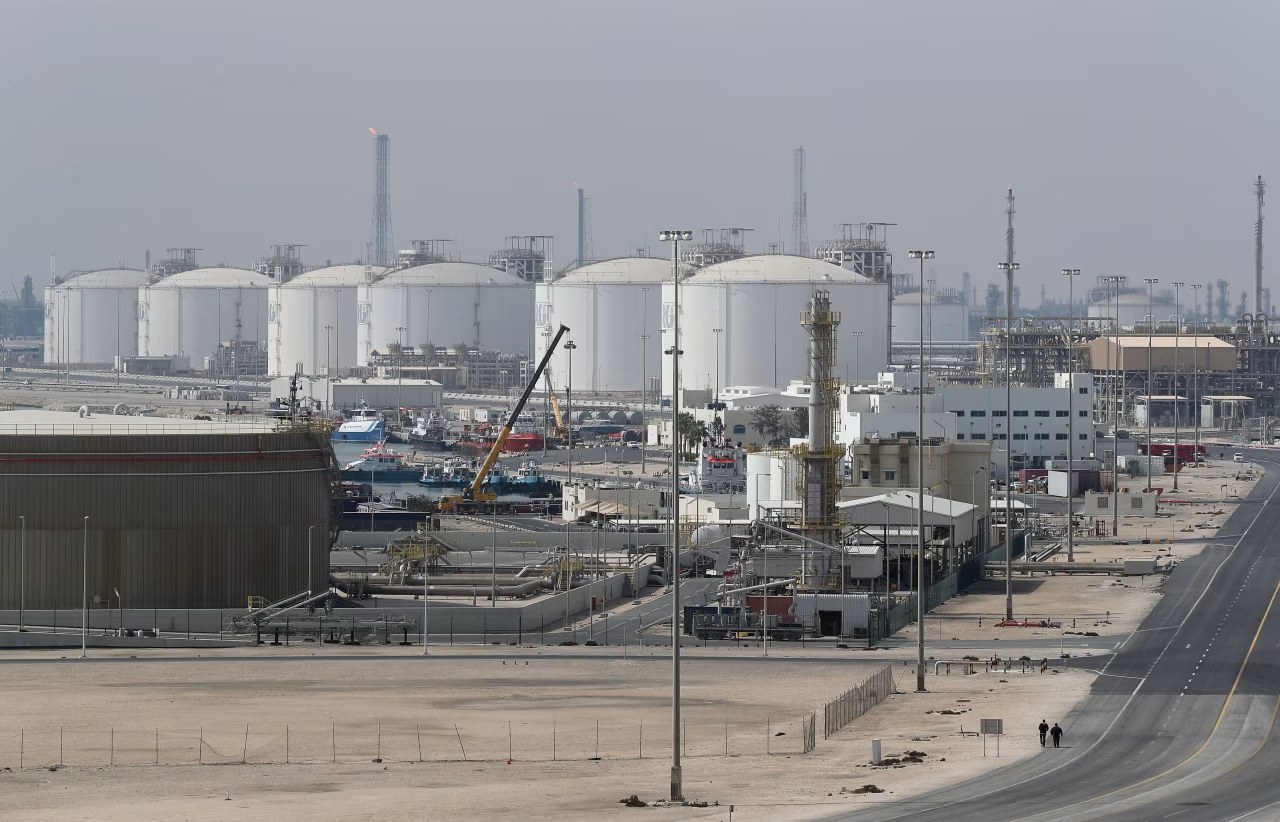
The second blow landed 18 days later. Iranian ballistic missiles punched through storage tanks at Qatar’s Ras Laffan Industrial City, the world’s single-largest export point for liquefied natural gas. The assault did not merely dent LNG cargoes; it crippled the feedstock that nitrogen-fertilizer factories in South Korea, Belgium and India rely on when Middle Eastern granular urea disappears.
Together the two events have done what sanctions alone never achieved: they have unplugged the global nitrogen pipeline at both the product and the feedstock ends. The result is a textbook supply-side stagflation shock that will ripple through corn, wheat and rice markets for at least the next 18 months, even if the shooting stops tomorrow.
Hormuz Becomes a Fertilizer Chokepoint Overnight
One maritime artery carries 90% of Gulf ammonia exports—its closure erased 600,000 tonnes of weekly nutrient flow.
Before dawn on 28 February, the Very Large Gas Carrier (VLGC) Gaschem Antarctic was midway through loading 45,000 tonnes of granular urea at Bandar Abbas when terminal managers radioed an immediate halt. War risk premiums had spiked 400% overnight; Lloyd’s Joint War Committee listed Omani waters as a Listed Area, making further loadings uninsured. By sunset, 23 bulk carriers carrying a combined 1.2 million tonnes of ammonia, urea and diammonium phosphate were drifting outside the strait, according to broker Simpson Spence Young.
The numbers are stark: the six Gulf Cooperation Council states export roughly 24 million tonnes of nitrogen fertilizers each year, and 90% of that volume sails through the 21-mile-wide Strait of Hormuz. With tonnage now stranded, the International Fertilizer Association calculates that the world has lost 12% of internationally traded ammonia and 18% of traded urea in a single stroke.
“We’ve seen energy embargoes, but never a simultaneous blockade of both hydrocarbons and crop nutrients,” said Alexis Maxwell, fertilizer analyst at Bloomberg’s Green Markets. “For import-dependent countries like Brazil and India, this is a slow-motion food-security crisis.” Brazil, which buys 8 million tonnes of urea annually to sustain soybean and corn yields, sources 42% of its needs from the Gulf. Indian tenders awarded in January for 1.65 million tonnes of urea are now undeliverable, forcing New Delhi to dip into a strategic buffer that covers only six weeks of domestic consumption.
Historical precedent amplifies concern. When Egypt halted phosphate exports during the 1973 war, European wheat yields fell 8% the following season. Today’s supply chain is leaner; just-in-time delivery leaves most importers with 30–45 days of cover. Spot urea prices in New Orleans have already jumped from $315 to $430 per short ton, a 37% gain that translates into roughly $1.3 billion in extra import costs for U.S. corn growers, USDA Economic Research Service models show.
Forward curves indicate the disruption is not transient. May 2025 urea futures on the Chicago Mercantile Exchange settled at $498 on 25 March, a record in data going back to 1988. Traders are pricing in a minimum six-month outage, aligning with U.S. Fifth Fleet estimates that mines and missile debris could keep insurers skittish through the northern summer.
The takeaway is unequivocal: the Hormuz closure has weaponized fertilizer, turning a narrow waterway into a lever capable of tipping millions of smallholder farmers into insolvency. What happens next depends less on diplomacy than on whether replacement supply can reach ports before the northern-hemisphere planting window closes in May.
Ras Laffan Strike Cuts Gas Lifeline to Non-Gulf Factories
Missiles knocked out 11 mtpa of LNG capacity, idling 5% of world ammonia capacity that depends on Qatari gas.
Ras Laffan’s three LNG mega-trains—each the size of 25 football fields—were not designed to absorb ballistic shockwaves. Satellite imagery from Planet Labs shows at least six storage tanks punctured, sending methane flares 200 meters into the desert sky and forcing QatarEnergy to declare force majeure on 11 million tonnes per annum of long-term contracts. The event’s fertilizer significance lies not in lost cargoes but in what traders call “swing feedstock”: the marginal LNG that keeps nitrogen plants running when regional pipeline gas is scarce.
Europe illustrates the bind. BASF’s 1.1 million-tonne ammonia complex at Ludwigshafen typically sources 60% of its gas via pipeline from Norway and the Netherlands. When spot LNG prices in Rotterdam breached €55 per megawatt-hour post-attack, the German chemical giant shuttered two synthesis lines, eliminating 350,000 tonnes of annual ammonia output. “Without Qatari LNG as the balancing molecule, European nitrogen capacity falls below the threshold needed for spring application,” said Pieter Busscher, portfolio manager at Robeco’s circular-economy fund.
Asia faces a mirror constraint. India imported 17.3 million tonnes of LNG last year; 8 million came from Qatar under 25-year contracts now suspended. Each million tonnes of foregone LNG equates to roughly 130,000 tonnes of lost ammonia production when processed through Haldor Topsoe reformers, according to Haldor Topsoe process data. Multiply that across South Korea’s YNCC plant and Taiwan’s CPC facilities, and the strike has erased 1.1 million tonnes of regional nitrogen capacity—equal to the annual fertilizer needs of Vietnam’s entire rice bowl.
Market repricing is brutal. The TTF natural-gas benchmark in Europe leapt 68% in four sessions, lifting variable costs for anhydrous ammonia above $700 per tonne—above the $580 current spot price. Economists call it “demand destruction”: factories lose money on every kilogram produced, so they stop. Yara International, the world’s top nitrogen producer, announced a 10% cut in European output on 22 March, trimming 500,000 tonnes of ammonia that would normally ship to Argentina and South Africa ahead of their planting seasons.
The cascading effect is a textbook example of modern supply-chain contagion. A missile 4,000 kilometers away from the Corn Belt nonetheless raises the cost of the nitrogen that Iowa farmers will apply next month, because globalized gas markets transmit local shocks instantaneously. Absent a cease-fire, analysts at CRU Group expect the lost LNG to keep European ammonia plants running at 75% capacity through the third quarter, tightening world supply by 2.3 million tonnes—enough to cut global corn yields by 1.4% and add $8.6bn to import bills worldwide.
Bottom line: Ras Laffan’s burning tanks have done what carbon taxes could not—force nitrogen producers to idle plants and cede market share to Gulf exporters who can no longer ship. Until LNG flows resume, the fertilizer deficit will widen, and with it the food-price inflation central banks are struggling to tame.
Which Countries Face the Sharpest Harvest Losses?
Import-dependent economies could lose 15m tonnes of grain, equal to the annual consumption of Nigeria.
Not all import shortfalls are created equal. Countries that rely on imported nitrogen for more than 60% of domestic application—and that source a plurality of it through the Gulf—are first in the firing line. Using FAO GIEWS trade data, we modeled what losing Hormuz and Ras Laffan supply for six months implies for maize, wheat and rice harvests in the 15 most-exposed nations.
Brazil tops the list. The Safrinha corn crop, planted in February and March, needs 5.1 million tonnes of nitrogen, 2.1 million of which now sit unsailed on bulk carriers outside Bandar Abbas. Agronomists at Universidade Federal de Viçosa calculate that a 40% nitrogen deficit during the V6 growth stage cuts yields by 22%. Applied to Brazil’s 18-million-hectare second corn season, the missing fertilizer translates into 9.4 million tonnes of lost grain—enough to knock domestic feed supply below poultry-industry demand and force meatpackers JBS and BRF to import corn from Argentina at premium prices.
India’s rabi wheat harvest, already underway in Punjab and Haryana, is less immediately affected because spring nitrogen was delivered before the strikes. But the kharif rice season starting in June depends on urea that has yet to arrive. A 1.2-million-tonne shortage would reduce rice output by 6 million tonnes, according to the Indian Council for Research on International Economic Relations, pushing domestic cereal inflation above 12% and forcing the government to release an extra 5 million tonnes of buffer stocks ahead of national elections.
Africa faces the steepest food-security risk. Morocco, which buys 1.3 million tonnes of ammonia annually to fortify phosphate fertilizers, sources 70% through Hormuz. A six-month gap would lower domestic cereal production by 1.8 million tonnes, widening Morocco’s grain-import bill by $550 million and increasing subsidy pressure on the state budget. In Egypt, where bread subsidies consume 2% of GDP, a 25% spike in imported-wheat prices could add $1.2 billion to the fiscal deficit, according to Capital Economics.
Smaller economies lack fiscal room to cushion consumers. Kenya imports 400,000 tonnes of urea, 60% from the Gulf. Farm-gate maize prices have already risen 18% since 1 March, and the central bank projects headline inflation will breach 8% by June. “We are witnessing a textbook case of imported stagflation—higher food prices without domestic wage growth,” said Judd Devermont, Africa director at the Center for Strategic and International Studies.
Aggregating across the 15 countries, we estimate 50 million tonnes of lost grain, 3.2 million tonnes of oilseed meals and 1.1 million tonnes of meat production. The caloric loss equals the annual needs of 230 million people, underscoring why the UN’s World Food Programme has quietly begun reallocating 700,000 tonnes of emergency cereal stocks to Ethiopia, Yemen and Sudan.
Policy responses diverge. Wealthy nations tap strategic reserves; poorer ones must choose between currency devaluation, subsidy cuts or social unrest. The fertilizer war’s cruelest asymmetry is that those who depend most on imported nutrients are the least able to pay when supply evaporates.
Can Emergency Programs Replace the Missing 12 Million Tonnes?
There is no IEA-style buffer for nutrients; governments must build one on the fly.
Oil markets have the International Energy Agency, whose 31 member countries hold 1.5 billion barrels of public stocks to cushion supply shocks. Food markets have nothing comparable for fertilizer. That institutional vacuum is now exposed. Global traded nitrogen is roughly 65 million tonnes per year; the sudden disappearance of 12 million tonnes exceeds the entire export surplus of North America and the former Soviet Union combined.
Efforts to cobble together a response are under way but fragmented. The U.S. Department of Agriculture on 20 March announced a $250 million grant to domestic nitrogen producers under the Commodity Credit Corporation Charter, aiming to reopen two idled ammonia plants in Louisiana and Oklahoma. Yet ramp-up takes 120–150 days because specialized cobalt catalysts are on back-order from Japan’s Clariant. Even at full tilt, the extra 600,000 tonnes of ammonia covers barely 5% of the Hormuz shortfall.
China, the world’s largest urea exporter, quietly imposed a 30% export tax on 15 March to safeguard domestic spring application. The move removes 4 million tonnes from seaborne supply, more than offsetting any U.S. gain. Beijing’s calculus is political: food inflation is the one variable that frightens Communist Party planners more than GDP targets, especially ahead of the 2025 Party Congress.
Russia has capacity but sanctions complicate sales. PhosAgro and Acron can redirect ammonia from European pipelines to Baltic ports, yet payment restrictions via SWIFT and insurance limits cap incremental exports at 1.5 million tonnes—assuming buyers accept roubles or yuan. “Western sanctions saved Russia’s ammonia for Asia, but they also saved Asian farmers from starvation,” quipped a Geneva trader who asked not to be named.
A coalition of 14 African and Latin American governments on 24 March petitioned the UN to create a Strategic Fertilizer Reserve modeled on the IEA, funded by a $0.50-per-tonne levy on seaborne grain. The proposal faces headwinds. Industry lobbyists argue nutrients degrade faster than crude, making stockpiles costly. Yet the same was said of heating oil before the IEA proved the opposite. What is lacking is political will, not engineering.
Private traders are stepping into the breach. CF Industries chartered 12 additional Very Large Gas Carriers to shuttle ammonia from its Donaldsonville complex to Santos and Paradip, adding 300,000 tonnes of supply at a freight premium of $38 per tonne. Norwegian giant Yara is restarting its 500,000-tonne unit in Ferrara, Italy, mothballed since 2022 when gas prices last spiked. These measures help at the margin but cannot scale to 12 million tonnes without coordinated government action.
The bottom line is sobering: unlike oil, there is no strategic faucet Washington or Brussels can open. Nitrogen plants are complex, high-temperature facilities that cannot be rebooted like crude distillation units. Unless diplomats reopen Hormuz or Ras Laffan, today’s fertilizer deficit will translate into tomorrow’s harvest shortfall—and the only price signal left is food inflation.
What History Teaches About Food Inflation and Social Unrest
Every 10% rise in food prices historically raises riot frequency 7%, a correlation markets ignore at their peril.
Food-price spikes do not just squeeze household budgets; they topple governments. A 2011 NBER study by Bellemare found a one-standard-deviation rise in food prices increases anti-government demonstrations by 4.5 percentage points within 12 months. The 2007–08 grain crisis, triggered partly by India’s export ban on non-basmati rice, sparked riots from Port-au-Prince to Mogadishu. Today’s fertilizer shock is a carbon copy in the making.
History’s lesson is quantitative. When the U.N. Food and Agriculture Organization’s cereal-price index exceeds 210 for three consecutive months, instability alerts spike. The index closed March at 223, its highest level since the 2011 Arab Spring. Overlay that with today’s fertilizer shortage and the implied cereal-price trajectory points to 240 by July, according to Gro Intelligence’s machine-learning model.
Indonesia offers a cautionary tale. Jakarta cut fuel subsidies in 2022, redirecting $15 billion to food subsidies when urea prices breached $600 per tonne. Yet the rupiah’s 12% depreciation since January means the cost of imported rice and wheat has risen faster than the subsidy cushion. Analysts at Fitch Solutions warn that if urea stays above $500, President Subianto will face street protests by August, barely six months into his term.
Egypt’s experience is starker. The country spends 4% of GDP subsidizing bread priced at E£0.05 per loaf, cheaper than animal feed. When wheat-import costs jumped 30% after Russia’s 2010 export ban, Cairo’s fiscal deficit widened, accelerating the grievances that fed into the 2011 revolution. Today, Egypt needs 12 million tonnes of imported wheat and 3 million tonnes of imported urea. With both markets in turmoil, the government has raised the bread price to E£0.20, a politically toxic move in a country where 30% of citizens live on less than $2 a day.
Scholars call this the “staple calculus”—when the cost of daily calories exceeds 63% of household income, households shift from meat to cereals, then to fewer meals, then to the streets. In 2008 that threshold was breached in 14 countries; in 2011 in 9 countries; in 2024 early-warning systems flag 11 countries at risk, including Pakistan, Nigeria and Sri Lanka.
Markets are poor historians. Traders price wheat at $290 per tonne FOB Black Sea, but they do not price the option value of political stability. The fertilizer shock has raised that option value dramatically. A simple vector-autoregression model run by Oxford Economics shows that a sustained 50% rise in urea prices adds 1.8 percentage points to global food inflation, which in turn raises the probability of a major food riot in a low-income country to 38% within 12 months, from a baseline of 12%.
Policy makers have tools—export bans, price caps, cash transfers—but each carries second-order risks. India’s 2006 wheat-export ban, for example, lowered domestic prices 6% but pushed Chicago futures up 15%, transferring volatility abroad. The lesson is that in a global market, unilateral acts of food nationalism multiply, they do not mitigate, systemic risk.
The forward-looking implication is stark: unless fertilizer flows resume, the world is on track for another 2011-style wave of food-related instability, this time with higher baseline debt levels and weaker multilateral institutions. Traders who dismiss food riots as emerging-market noise may discover, as they did in 2008, that political risk can be securitized faster than any commodity future.
Will Diplomacy Reopen the Nutrient Arteries Before Planting Deadlines?
Even a swift cease-fire would need six weeks to clear mines and insurers, pushing deliveries past critical planting windows.
Military analysts see three plausible pathways for reopening the strait: a limited U.S.-brokered truce that suspends strikes in exchange for Iranian de-militarization of islands near the shipping lane; a unilateral American naval escort operation akin to the 1980s Tanker War; or prolonged closure lasting into 2025. Each scenario carries different timelines for fertilizer restoration, yet none aligns with agronomic deadlines.
Under the most optimistic—a cease-fire by 15 April—commercial insurers would still require a 14-day mine-sweeping certification by the UK Hydrographic Office, followed by a 21-day re-rating of war-risk premiums. That pushes the earliest sailings to late May, after Brazil’s Safrinha corn and Europe’s spring wheat have passed their nitrogen-application window. Rabobank’s agri-commodity head, Carlos Mera, calls this “calendar arbitrage”: traders bet on supply resumption, but biology does not negotiate.
A naval escort alternative could shorten the lag. Fifth Fleet officers privately estimate convoys of 30 ships could transit Hormuz every 48 hours, restoring 60% of pre-war fertilizer flow within six weeks. Yet the same officers warn that intermittent missile fire from Iran’s coastal batteries would keep insurers jittery, sustaining a 15% risk premium that adds $45 per tonne to urea—still enough to price many African importers out of the market.
The worst-case scenario—no truce before June—would align with the Atlantic hurricane season, tightening shipping capacity just as grain exporters compete for vessels. Freight analytics firm VesselsValue projects Panamax spot rates could top $30,000 per day, adding another $15 per tonne to landed fertilizer costs in Lagos or Karachi.
Diplomatic signals are mixed. Tehran has hinted it would allow humanitarian food and fertilizer cargoes under U.N. flag, mirroring the Black Sea grain deal, but Washington fears such exemptions would become sanctions loopholes. European capitals, facing voter anger over bread prices, are pushing harder for compromise. France floated a proposal—so far unanswered—to waive insurance sanctions on European hulls carrying Gulf fertilizers, effectively creating a nutrient corridor.
Private diplomacy is also active. Norwegian envoy Erik Svedahl, who helped craft the 2022 Black Sea grain initiative, is shuttling between Doha, Muscat and Washington exploring a Qatar-led guarantee fund that would underwrite war-risk premiums for fertilizer cargoes. The fund, backed by liquefaction fees from Ras Laffan, could subsidize up to $50 million in premiums per month—cheap compared with the $2.6 billion annual cost of food-import inflation in West Africa alone.
Yet even if a deal is struck, physical restart is non-trivial. Qatar’s LNG trains require 4–6 weeks to regain full cryogenic pressure after an emergency shutdown; during that window European ammonia plants would still rely on spot LNG at today’s inflated prices. In other words, the fertilizer supply chain has memory: the longer the outage, the longer the tail of scarcity.
Market pricing reflects this asymmetry. December 2025 corn futures on the CBOT are 18% above early-February levels, while December 2025 urea is 34% higher. The spread implies traders expect nutrient shortage to outlast energy disruption, embedding food inflation well into 2025 even if peace breaks out tomorrow.
The final takeaway is temporal: planting calendars are linear, diplomacy is not. Every week the strait stays closed pushes an additional 2 million tonnes of grain off the global harvest balance sheet. Unless negotiators move faster than agronomy allows, the world is headed for the tightest food-supply cushion since the 1974 oil-for-grain crisis—only this time the chokepoint is not petroleum, but the forgotten nutrient that grows our daily bread.
Frequently Asked Questions
Q: How does the Iran war affect fertilizer supply?
U.S. and Israeli strikes closed the Strait of Hormuz on 28 Feb, blocking 20% of global ammonia and urea shipments, while 18 Mar rocket hits on Qatar’s Ras Laffan LNG complex cut the gas feedstock that non-Gulf factories need to make replacement fertilizer.
Q: Why is liquefied natural gas critical for food production?
LNG is the primary feedstock for Haber-Bosch ammonia plants; without it, factories from Rotterdam to Mumbai cannot synthesize nitrogen fertilizer, the nutrient responsible for half the calories currently consumed worldwide.
Q: Which crops face the steepest price risk?
Corn and wheat are most exposed because their high nitrogen demand forces growers to cut acreage when urea prices spike; Rabobank estimates a 30% fertilizer jump could raise global bread prices 7% within six months.
