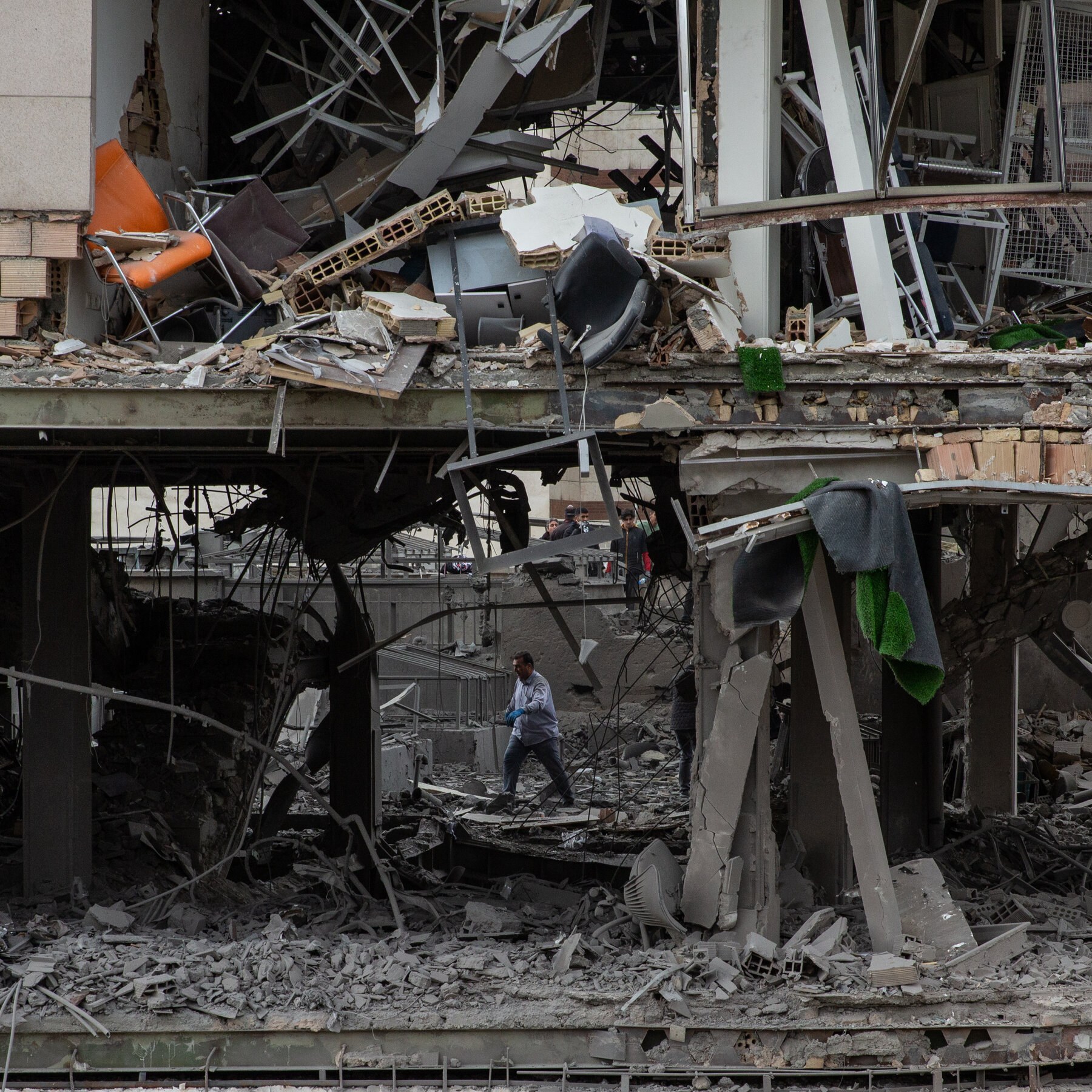
Oil rockets 9% to $116 after Gaza war engulfs Iran and 2,500 U.S. Marines deploy
- Brent crude surged to $116 per barrel on Monday, the highest since 2022, after Israeli airstrikes hit Tehran and the Houthis vowed more Red Sea attacks.
- Asian stock markets fell 2.4% as investors priced in a widening Middle East war that threatens roughly one-fifth of global seaborne oil exports.
- President Trump ordered 2,500 Marines and hundreds of special-operations troops to the region to secure shipping lanes, according to defense officials.
- Gasoline futures jumped 9% in Singapore, yet U.S. retail pump prices remained stable—for now—because refiners are drawing down stored crude.
An expanding conflict is pushing energy markets toward a supply shock reminiscent of the 1973 embargo.
MIDDLE EAST WAR—Crude markets opened Monday with a jolt. By noon in London, Brent futures had vaulted $9.60 to $116 a barrel, the biggest one-day percentage gain since Iraq invaded Kuwait in 1990. The catalyst: a cascading series of attacks that began when Israel bombed Iranian military sites near Tehran and the Iran-aligned Houthi movement in Yemen launched a missile at Israel’s Red Sea port of Eilat.
Energy traders are pricing in what naval insurers already fear—a blockade of Gulf energy flows that could idle 20 million barrels a day of crude, liquefied natural gas and refined products. “The market is no longer treating this as a limited Gaza war,” said Helima Croft, head of commodities strategy at RBC Capital Markets. “We are now talking about a state-on-state conflict that puts the Strait of Hormuz back on the table.”
Asian equity benchmarks reflected the anxiety. Hong Kong’s Hang Seng slid 2.4%, Tokyo’s Nikkei 225 fell 1.9% and Seoul’s Kospi dropped 2.1%. U.S. equity-index futures pointed to a 1.3% opening loss for the S&P 500, while safe-haven gold climbed 1.8% to $2,142 an ounce.
How the Gaza War Reached Iran and Choked Oil Flows
The war that began in Gaza has now drawn in Tehran, Washington and the Houthis, creating a corridor of risk that stretches 1,200 miles from the Strait of Hormuz to the Bab al-Mandeb. Over the weekend, Israeli fighter jets struck radar sites near Bandar Abbas, Iran’s main oil-export terminal, according to satellite imagery reviewed by TankerTrackers.com. Within hours, Iran’s Revolutionary Guards fired a barrage of missiles at Israeli positions in the Golan Heights, and the Houthis declared they would “open the gates of fire” on Red Sea shipping.
What the 2,500 U.S. Marines deployment signals for energy markets
President Trump’s decision to send 2,500 Marines and “hundreds” of special-operations forces to Kuwait and Bahrain is being read by traders as a prelude to convoy escorts or even strikes on Houthi launch sites inside Yemen. “Every time U.S. boots hit the ground near chokepoints, the market adds $5–7 of geopolitical risk premium,” said Bob McNally, president of Rapidan Energy and a former White House official.
That premium is already visible in freight rates. The cost of chartering a Very Large Crude Carrier (VLCC) from Basra to Singapore leapt 18% overnight to $9.40 per barrel, according to Baltic Exchange data. Insurance underwriters at Lloyd’s of London have widened the “listed area” for war risk to include Omani waters, adding roughly $400,000 to the cost of a single voyage.
Analysts warn the most immediate threat is not a formal Iranian blockade but a de-facto one created by fear. During a similar flare-up in 2019, after the seizure of the Stena Impero, commercial traffic through the strait fell 25% even though no state closed the waterway. “Ship owners self-sanction,” said Richard Meade, editor of Lloyd’s List Intelligence. “If underwriters raise premiums faster than charterers can absorb them, cargoes simply don’t sail.”
The forward curve underscores the alarm. Brent for delivery in six months is now $6.50 above spot prices, a structure known as “super-contango,” which signals traders expect prolonged disruption. Yet the physical market is tighter than in 2019: U.S. strategic petroleum reserves sit at a 40-year low of 347 million barrels, down from 635 million in mid-2021, leaving Washington with less firepower to calm spikes.
Energy Aspects, a London consultancy, estimates that if Hormuz traffic fell by 50%, global inventories would draw by 2.5 million barrels a day—enough to push Brent above $130 within four weeks. Such a level would translate to roughly $4.50 per gallon U.S. gasoline, surpassing the record $5.02 hit after Russia’s invasion of Ukraine.
Could Gasoline Prices Hit $5 Again?
U.S. motorists have so far been shielded from Monday’s oil spike, but history shows that shield is fragile. The national average for regular gasoline stood at $3.51 a gallon on Sunday, unchanged from a week earlier, according to AAA. Yet wholesale futures in New York surged 9% to $2.73 per gallon, and refiners from Singapore to Rotterdam are scrambling to lock in crude before prices climb further.
Why pump prices lag—and then catch up with a vengeance
“Retail gasoline behaves like a ratchet,” said Tom Kloza, global head of energy analysis at OPIS. “Stations hold prices steady while margins evaporate, then they push through increases in a concentrated burst.” Kloza estimates that if Brent holds above $110 for two weeks, the U.S. average will jump 25–30 cents within ten days, lifting it to levels last seen in August 2022.
The lag exists because refiners typically buy crude 30–45 days before turning it into fuel. During the 2019 Abqaiq attack, Brent spiked $12 overnight but the national average rose only 11 cents the following week. Once inventories were replenished at higher cost, however, prices surged another 28 cents within a month.
Today’s refining backdrop is tighter. U.S. operable refinery capacity has fallen by 1.1 million barrels a day since 2020 as plants shuttered during the pandemic. Meanwhile, global diesel inventories are at a 14-year low, forcing refiners to maximize middle-distillate output at the expense of gasoline. “We’re entering driving season with 9% less refining capacity than in 2019,” said Kloza. “Any loss of crude or products will amplify price moves.”
State-level impacts will vary. California’s average, already $4.88, could breach $6 if the state’s waiver to import dirtier, cheaper crude is delayed by environmental litigation. Gulf Coast states, cushioned by proximity to refineries, would remain below the national mean, but even Texas could see $3.80 gasoline.
The political calculus is acute. A 30-cent rise would erase the 26-cent year-over-year decline that the White House has highlighted in recent speeches. “Every 10-cent increase at the pump pulls roughly 0.1% off U.S. GDP growth,” said Claudia Sahm, chief economist at Sahm Consulting and a former Fed economist. “If Brent stays at $116 through summer, headline inflation could re-accelerate above 4%, complicating any Fed rate-cut narrative.”
Who Wins—and Loses—When Crude Hits $116?
Triple-digit oil reshuffles the global economic deck. Exporters from Norway to Nigeria reap windfalls while import-heavy economies such as India and Turkey face ballooning trade deficits. In the United States, the picture is mixed: Texas drillers cheer, but Pennsylvania petrochemical plants groan under higher feedstock costs.
How U.S. shale producers react this time
American output has plateaued around 13.1 million barrels a day, down from a pre-pandemic peak of 13.3 million. Producers like Pioneer Natural Resources and EOG Resources have promised shareholders capital discipline rather than growth. “We’re not going to drill our way back to 2019 levels at $116,” said Pioneer CEO Scott Sheffield on a recent earnings call. “We’ll use excess cash to buy back shares and boost dividends.”
Yet $116 oil still matters. Rystad Energy estimates that at that price, the average Permian Basin well generates a 56% internal rate of return, up from 38% at $80. Private operators, unburdened by public-market promises, could add 400,000 barrels a day by year-end if prices hold. That would narrow the non-OPEC supply gap and cap further rallies.
State coffers also swell. North Dakota’s Department of Mineral Resources projects that every $10 increase in crude adds $110 million of monthly tax revenue. At $116, the state could erase its $250 million budget deficit within three months. Alaska, which funds 60% of its budget from oil royalties, would see a $1.2 billion surplus if prices average $110 for the fiscal year.
Losers are everywhere else. Japan, which imports 94% of its oil, faces a 0.4% drag on GDP growth, according to Oxford Economics. The European Union, already flirting with recession, would see its import bill rise €55 billion annually. Airlines are especially vulnerable: jet fuel is 34% of operating costs at $116 versus 24% at $80. Delta Air Lines said Monday it would accelerate capacity cuts if crack spreads remain elevated.
Emerging markets with subsidized fuel are in a bind. India’s retail diesel price is capped at roughly $1 per liter even though import parity is $1.25. State-run refiners absorb the difference, wiping out profits. “We estimate India’s fuel subsidy bill will rise $12 billion this year if Brent averages $110,” said Jeff Curry, global head of commodities at Goldman Sachs.
Is $130 the Next Stop if Hormuz Becomes a Battleground?
Historical precedent looms large. During the 1980s Tanker War, when Iraq and Iran attacked ships in the Gulf, Brent averaged $71 in today’s dollars—roughly $30 below today’s $116. Yet the strait was never fully closed. If it were, the International Energy Agency estimates 18.5 million barrels a day of crude and condensate would be stranded, equal to 20% of global supply.
What a partial closure could mean for prices
Goldman’s “strait-closure” model sees three scenarios: (1) a 30% traffic reduction for one month, pushing Brent to $125; (2) a 70% cut for three months, lifting prices to $150; (3) a full six-month shutdown, spiking crude to $200 and triggering global rationing. “The probability-weighted outcome is $130,” said Daan Struyven, the bank’s senior oil economist.
Market structure supports higher numbers. The front-month Brent contract is now $6.50 above the six-month future, a bullish backwardation that encourages inventory draws. If Hormuz disruptions extend, traders will bid for storage, flipping the curve into an extreme contango that could reach $20 per barrel.
Strategic petroleum reserves offer limited relief. The U.S. holds 347 million barrels, down from 635 million in 2021. China’s stockpile is opaque, but satellite tank data suggest 900 million barrels. Even if both released 2 million barrels a day, the gap would persist for months. “SPR releases buy time, they don’t replace barrels,” said Kevin Book, managing director at ClearView Energy Partners.
Demand destruction is the ultimate cap. At $130, Oxford Economics projects global oil demand would fall 2.5% within a year, enough to balance markets but at the cost of recession. “The cure for high prices is high prices,” Book said, “but the side effects are economic contraction and job losses.”
Policy responses are already being drafted. The White House is debating a ban on U.S. petroleum exports to keep domestic fuels cheap, a move that would alienate allies and violate WTO rules. Japan is pressing the G-7 to activate an emergency sharing mechanism last used during the Libyan civil war. And India is quietly asking Saudi Arabia for deferred-payment crude, reviving a 1970s-style barter system.
Frequently Asked Questions
Q: Why did oil prices jump to $116 a barrel?
Brent crude leapt to $116 after Israel struck Iranian infrastructure and the Houthis vowed more Red Sea attacks, raising fears that 20 million barrels a day of Gulf exports could be blocked.
Q: How does the Iran conflict affect gasoline prices?
Petrol futures rose 9 percent in Asia, but U.S. pump prices stayed flat for now because refiners still rely on inventories; sustained $116 oil would add roughly 30 cents per gallon within weeks.
Q: What role do the Houthis play in the oil spike?
The Iran-backed Houthi militia fired a missile at Israel and threatened further Red Sea strikes, reviving worries that they could again target tankers transiting the Bab al-Mandeb chokepoint.
Q: Could oil keep rising from here?
Analysts at Goldman Sachs and Rystad Energy say if U.S. forces escalate attacks on Iranian ports or if Tehran retaliates by mining the Strait of Hormuz, Brent could test the 2022 peak near $130.
