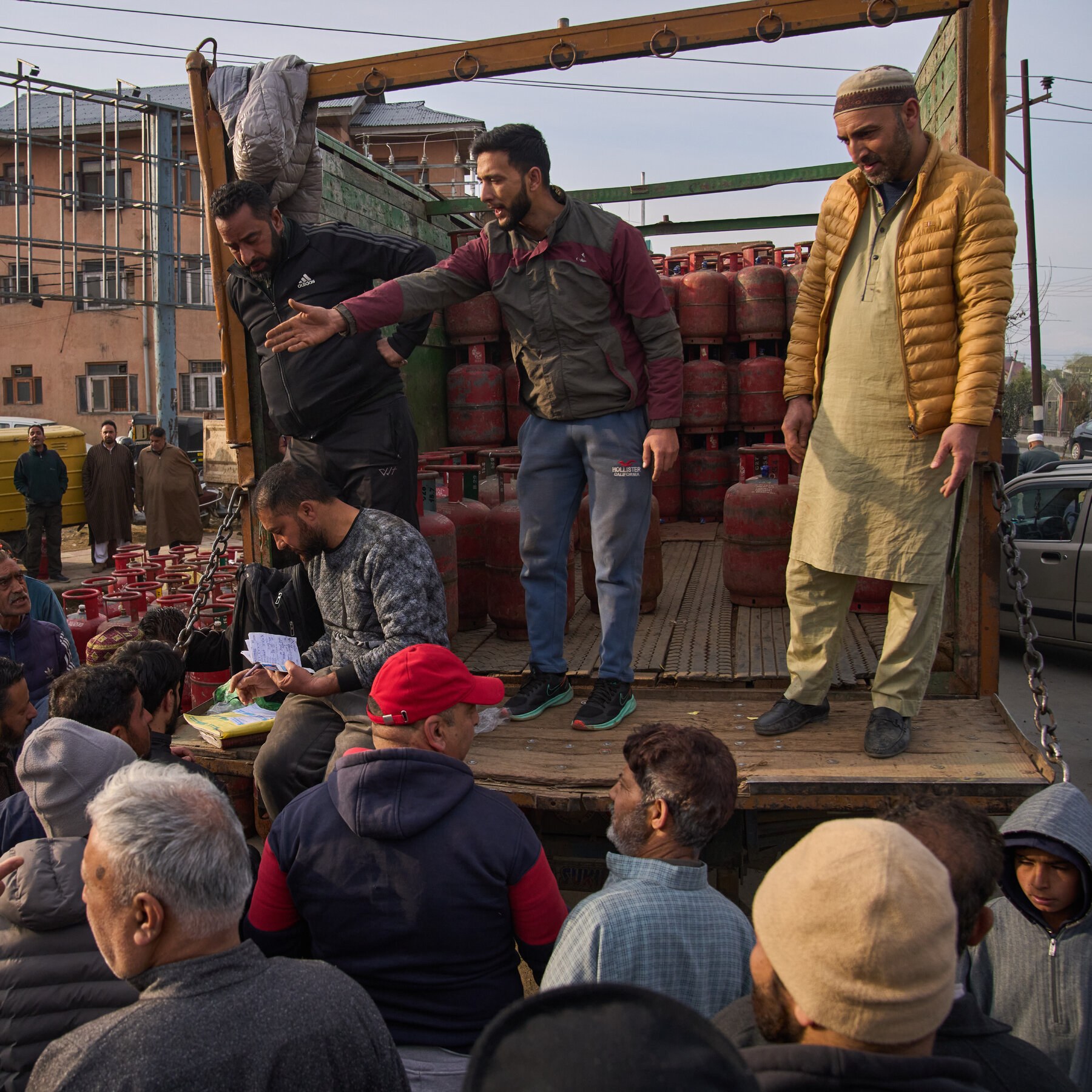
28 Million Tons of Middle East L.N.G. Disappear, Threatening Asian Power Grids
- Attacks on Qatar’s export complex and a Strait of Hormuz blockade have erased 28 million tons of supply—almost the entire global growth forecast for 2026.
- Asia buys 90 percent of Middle Eastern L.N.G.; the last pre-war cargoes will arrive within days, forcing utilities to burn more coal and oil.
- Energy consultancy Eurasia Group warns the crunch could last “until the end of the decade,” with no significant relief expected until U.S. projects start up in 2028.
- China, Japan, India, South Korea, Vietnam and Thailand are already curtailing consumption and switching fuels to keep factories running.
The world’s fastest-growing gas market is learning what happens when its main supplier region becomes a war zone
QATAR—TOKYO—A supply shock that energy ministers once called “unthinkable” is about to materialise. Within the next week the final liquefied-natural-gas cargoes that left the Persian Gulf before the outbreak of hostilities will have been off-loaded from tankers in Japan, China and South Korea. After that, roughly 28 million tons per year of Qatari and Iranian supply—equal to nearly all the new L.N.G. the world expected to add in 2026—will be offline for the foreseeable future.
“We’re now entering the physical-impact phase,” says Henning Gloystein, managing director for energy at Eurasia Group. “Asian buyers have no practical way to replace those volumes in the short term, so the rationing starts now.”
The immediate trigger was a double blow: repeated missile strikes on Qatar’s 77-million-ton-per-year Ras Laffan complex and a de-facto naval blockade of the Strait of Hormuz, through which almost every Qatari and Iranian cargo must pass. Together the disruptions have removed more supply from the market than the global industry added in 2025, leaving Asian utilities that depend on Middle Eastern gas scrambling for alternatives that are costlier, dirtier and, in many cases, simply unavailable.
Why Qatar’s Giants Matter: One Complex Supplies One-Third of Asian L.N.G.
QatarEnergy’s Ras Laffan Industrial City, 80 kilometres north of Doha, is quietly the single most important node in Asia’s energy diet. With three mega-trains totaling 77 million tons per year—each larger than the entire liquefaction fleet of some countries—the complex ships more than one in every three L.N.G. molecules that Asian terminals regasify.
The numbers are stark. Japan alone imported 72 million tons of L.N.G. in 2025, according to customs data; 31 million tons came from Qatar. South Korea’s tally was 48 million tons, with 22 million from the same source. Add China and India, and the four countries now face a collective shortfall equal to the annual output of the United Arab Emirates, a gap that cannot be closed by rerouting cargoes because the strait is sealed.
Inside the 28-million-ton supply collapse
Missile damage to three storage tanks and two loading berths at Ras Laffan has already forced QatarEnergy to declare force majeure on at least 17 cargoes scheduled for loading in April, traders tell Platts. Another 11 Iranian shipments are stuck at Assaluyeh because insurers have withdrawn tanker cover for voyages through the strait. The combined volume—roughly 28 million tons on an annualised basis—matches the amount of new supply the International Energy Agency had pencilled in for 2026 from projects in the United States, Mozambique and Mexico.
“You can’t just replace Qatar with spot cargoes,” explains Steve Hill, executive vice-president at Shell, which owns stakes in Qatari trains. “The molecules were pre-sold under 20-year contracts; the ships were dedicated; the berths were booked. When that system breaks, it breaks hard.”
Energy traders estimate that every lost Qatari cargo forces Asian buyers to bid up the few remaining Atlantic basin spot volumes, pushing Asian spot prices above $24 per million British thermal units—triple the 2020-24 average and high enough to shutter marginal users such as Bangladeshi fertiliser plants.
The geopolitical stakes are equally large. Tokyo has lodged formal protests with Tehran after two Japan-bound cargoes were diverted, while Beijing has quietly asked state-owned PetroChina to “prepare for worst-case rationing,” according to a company official who requested anonymity because the directive is confidential.
Forward curves on the Intercontinental Exchange show traders pricing in a supply recovery only after 2028, when U.S. Gulf Coast projects Golden Pass, Plaquemines and Rio Grande add a combined 65 million tons per year of new capacity. Until then, Asia must either pay up or burn dirtier fuels, a choice that could add 200 million tons of CO₂ annually, according to a preliminary estimate by Rystad Energy.
The long-term consequence may be a permanent shift in contract strategy. “Buyers who swore off long-term deals after 2020 are now begging QatarEnergy for 15-year firm volumes,” says Meg O’Neill, CEO of Woodside Energy. “This crisis is rewriting the playbook on how Asia thinks about energy security.”
Coal Comeback: Asia’s Fuel-Switching Adds 50 Million Tons of CO₂ in Months
With Qatari cargoes stuck behind a militarised strait, utilities from Taipower in Taiwan to PLN in Indonesia are doing exactly what climate diplomats feared: revving up coal plants that had been earmarked for retirement. The math is brutal. A single 500-megawatt combined-cycle gas turbine running at 55 percent efficiency produces roughly 0.35 tons of CO₂ per megawatt-hour. Replace that with a typical sub-critical coal unit and the figure jumps to 0.95 tons.
Multiply by thousands of hours and the carbon bill skyrockets. Rystad Energy calculates that every million-ton shortfall in L.N.G. forces Asian grids to burn an extra 1.3 million tons of coal, adding 3.3 million tons of CO₂. Apply that ratio to the 28-million-ton Qatari deficit and the region is on track to emit an additional 92 million tons of CO₂ this year—equal to the annual output of the Netherlands.
From gas turbines to coal barges
In Vietnam, state-owned EVN has ordered two 600-megawatt coal units at the Duyen Hai complex back into operation only months after they were idled under a national renewables push. “We have no choice,” Nguyen Anh Tuan, EVN’s fuel procurement director, told reporters in Hanoi. “L.N.G. spot prices are above $20—our grid can’t afford that.”
Japan’s Ministry of Economy, Trade and Industry has quietly extended the life of six ultra-super-critical coal plants that were scheduled to close in 2026, while South Korea’s new administration is fast-tracking permits for 1.4 gigawatts of coal-to-gas switching in reverse. Even China, which added a record 110 gigawatts of solar in 2025, is diverting some L.N.G. to chemicals and firing idle coal units in Guangdong to keep export factories humming.
The emissions surge could erase Asia’s climate gains. The International Energy Agency estimates that every 1 percent rise in Asia’s coal burn adds roughly 70 million tons of CO₂. Current fuel-switching already exceeds 2 percent, putting the region on track for its highest power-sector emissions since 2017.
Environmental groups are alarmed. “This is what energy-security panic looks like,” said Stephan Singer, senior advisor at the Climate Action Network. “Asian governments are choosing short-term reliability over long-term climate targets, and the planet will pay the bill.”
Yet the economic logic is hard to refute. Coal delivered to most Asian ports costs about $110 per ton, or roughly $4 per million Btu—five times cheaper than spot L.N.G. For cash-strapped utilities in Bangladesh and Pakistan, that price gap can determine whether factories stay open and lights stay on.
Energy economists warn the coal rebound could become entrenched. “Once you recommission a unit and rehire the crew, it’s politically painful to shut it again,” notes Dr. Vaclav Bartuska, the Czech government’s special envoy for energy. “Asia risks locking in higher emissions for a decade because of a two-year gas shortfall.”
Forward-looking policymakers are already hunting for cleaner bridges. Japan is accelerating deployment of ammonia co-firing trials, while South Korea’s parliament is reviewing a $2.4 billion subsidy package to keep idled gas plants ready for post-2028 imports. But until alternative molecules arrive, coal will fill the void, and Asia’s carbon footprint will deepen.
Is U.S. Gas the Answer? Why 2028 Is Still So Far Away
America’s Gulf Coast liquefaction boom is the closest thing Asia has to a cavalry—but the calendar is merciless. Golden Pass, a joint venture between QatarEnergy and ExxonMobil, is 82 percent complete, yet first cargo timelines have already slipped into early 2028. Venture Global’s Plaquemines plant is mechanically finished but awaits final permits for Phase 2, adding another 10 million tons per year. Cheniere’s Corpus Christi Stage 3, Sempra’s Port Arthur and NextDecade’s Rio Grande are all racing toward 2028-29 start-ups.
Even under optimistic scenarios, only 25-30 million tons of incremental U.S. supply will hit the water before 2029—barely enough to replace the lost Qatari volumes, let alone meet Asia’s underlying demand growth of 3-4 percent per year. “The idea that U.S. projects can magically fill a 28-million-ton hole overnight ignores construction timelines,” says Kerry Shapiro, head of gas at law firm Jones Day, who has represented developers on more than $50 billion of liquefaction financings.
Construction slips and financing gaps
Developers face three hurdles: skilled-labour shortages, supply-chain inflation and rising cost of capital. Bechtel and KBR report that specialized cryogenic welders now command $120 per hour on the Gulf Coast, up from $85 in 2022. Nickel prices have surged 40 percent since 2024, inflating the cost of stainless-steel piping. Meanwhile, benchmark LNG project returns have fallen below 10 percent as Henry Hub prices hover around $2.80 per million Btu—below breakeven for many greenfield proposals.
Asian buyers are responding with equity checks. Japan’s JERA has taken a 25 percent stake in Freeport LNG’s proposed expansion, while Korea Gas Corp. is negotiating a 20-year offtake from Port Arthur that includes 49 percent equity participation. Such deals lock in supply but also lock buyers into prices indexed to Henry Hub plus liquefaction fees—currently around $7-8 delivered into Japan, still cheaper than today’s $24 spot spike but double pre-war levels.
Environmental litigation adds another drag. A Louisiana court last month ordered a temporary stop-work order on Rio Grande Phase 2 over wetlands permits, delaying commissioning by at least four months. “Every month of slip pushes first cargoes into the 2028 hurricane season,” notes Edmund Siau, a Singapore-based gas analyst at Wood Mackenzie. “Buyers should not bet on volumes before 2029.”
Shipping bottlenecks loom as well. The U.S. Gulf can load only about 90 cargoes per month through the expanded Panama Canal; any surge in Qatari diversions will strain the queue. Newbuild tanker orders hit a record 68 vessels in 2025, yet delivery stretches into 2027-28, meaning freight rates could spike above $200,000 per day—as they did in 2021—pushing landed prices even higher.
For Asian planners, 2028 feels like an eternity. Vietnam’s latest power-development plan assumes 3 million tons of U.S. L.N.G. will arrive in 2027; the shortfall could trim 1.5 percentage points off GDP growth, according to the Asian Development Bank. China’s Guangdong provincial grid is budgeting for blackouts of up to 4 hours per day next summer if replacements are not secured.
Until then, demand destruction is the only lever left. “We’re entering a new era where LNG is no longer a growth commodity—it’s a scarce strategic resource,” says Dr. Bassam Fattouh, director of the Oxford Institute for Energy Studies. “Asia’s post-2028 supply cushion will arrive, but the interim years will reshape pricing, policy and perhaps the region’s entire industrial model.”
Long-Term Fallout: Will Asia Ever Trust Gulf Gas Again?
The psychological impact of losing 28 million tons overnight may linger longer than the physical shortage. Energy-security strategists talk of a “Hormuz discount”—a permanent risk premium that Asian buyers will apply to any Middle Eastern molecule, even after shipping lanes reopen. “This event shatters the assumption that Gulf gas is the cheapest, most reliable baseload,” says Dr. Li Xiang, a gas-security fellow at the National University of Singapore.
Contract structures are already shifting. Japan’s METI is pushing utilities to cap any single-country supply source at 30 percent of portfolios, a direct reversal of the 60 percent Qatar dependence that Tokyo allowed until this year. South Korea’s new energy law, rushed through parliament last week, requires importers to hold 90 days of liquefied inventory—essentially turning storage tankers into floating stockpiles.
Portfolio diversification accelerates
Portfolio players are racing to diversify. JERA last month signed a binding 15-year deal for U.S. supply indexed to Henry Hub rather than oil, breaking a 50-year tradition of oil-linked Japanese contracts. Korea Gas Corp. is negotiating a similar deal with Mozambique’s Area 4 project, while Chinese majors CNOOC and Sinopec are exploring equity stakes in Canadian LNG projects that will not transit any chokepoints.
The cost will be steep. Analysts at Goldman Sachs estimate that Asian buyers will pay an average $1.20 per million Btu in risk premium over 2027-35, adding $9 billion annually to import bills. Yet governments appear willing to pay for resilience. “Energy security now trumps marginal cost,” says Prakash Sharma, head of Asia gas at Wood Mackenzie. “Buyers will sign 20-year deals at $9-10 delivered rather than gamble on $4 spot that might not arrive.”
Risk-sharing mechanisms are evolving as well. Singapore’s government is piloting a regional L.N.G. buffer stock, financed by a $0.30 per MWh levy on power sales, that would release volumes during supply shocks. Tokyo is studying a similar scheme that could pool Japanese, Korean and Taiwanese inventories, effectively creating a Northeast-Asian strategic reserve without breaching World Trade Organization rules on export bans.
Upstream investors sense the shift. Venture Global, Cheniere and Woodside report record inbound interest from Asian utilities seeking equity stakes, even in projects that will not start until 2030. “They want a chair when the music starts again,” says Anatol Feygin, Cheniere’s chief commercial officer.
Environmental critics warn that the scramble could delay decarbonisation. “If Asian buyers lock in 20-year gas contracts today, they’re locking in fossil assets well past 2050 net-zero targets,” says Dhruba Purkayastha, India director at the Climate Policy Initiative. Some governments are counterbalancing by inserting net-zero clauses that allow buyers to reduce offtake if national climate laws tighten.
Still, the crisis has etched a permanent lesson into Asian policy circles: Middle Eastern gas is cheap, but it is not secure. “The honeymoon is over,” says Gloystein of Eurasia Group. “Even when Hormuz reopens, buyers will treat Gulf L.N.G. as swing supply, not baseload. That changes pricing, portfolio design and ultimately the pace of the energy transition.”
Frequently Asked Questions
Q: How much Middle East L.N.G. has been removed from the market?
Roughly 28 million tons have been knocked out this year, equal to nearly all global supply growth expected for 2026, after attacks on Qatar’s export complex and the Strait of Hormuz blockade.
Q: Which Asian countries are most exposed to the shortfall?
China, Japan, India and South Korea—plus emerging buyers such as Vietnam and Thailand—import about 90 percent of the L.N.G. that the Middle East produces, leaving them acutely vulnerable.
Q: When could supply recover?
Energy analysts warn flows may not return to pre-war levels until at least 2028, when a wave of new U.S. liquefaction capacity is scheduled to come onstream.
Q: What are governments doing to cope?
Utilities are switching to fuel oil and coal, implementing demand curtailments, and accelerating talks for long-term contracts with suppliers outside the Gulf.
