Newsom Signs First-in-Nation Order Blocking Appointees From Profiting on 2024-Style Prediction Markets
- Executive order applies to roughly 3,000 gubernatorial appointees across California agencies, boards, and commissions.
- Violators face civil fines up to $5,000 per trade and possible removal from office.
- Rule targets platforms such as Kalshi and Polymarket where users bet on everything from Fed rate moves to Oscar winners.
- Move closes a loophole left because event contracts are not classified as securities under state or federal law.
The governor’s action turns a glaring regulatory blind spot into a test case for how far ethics rules must stretch in the age of political gambling.
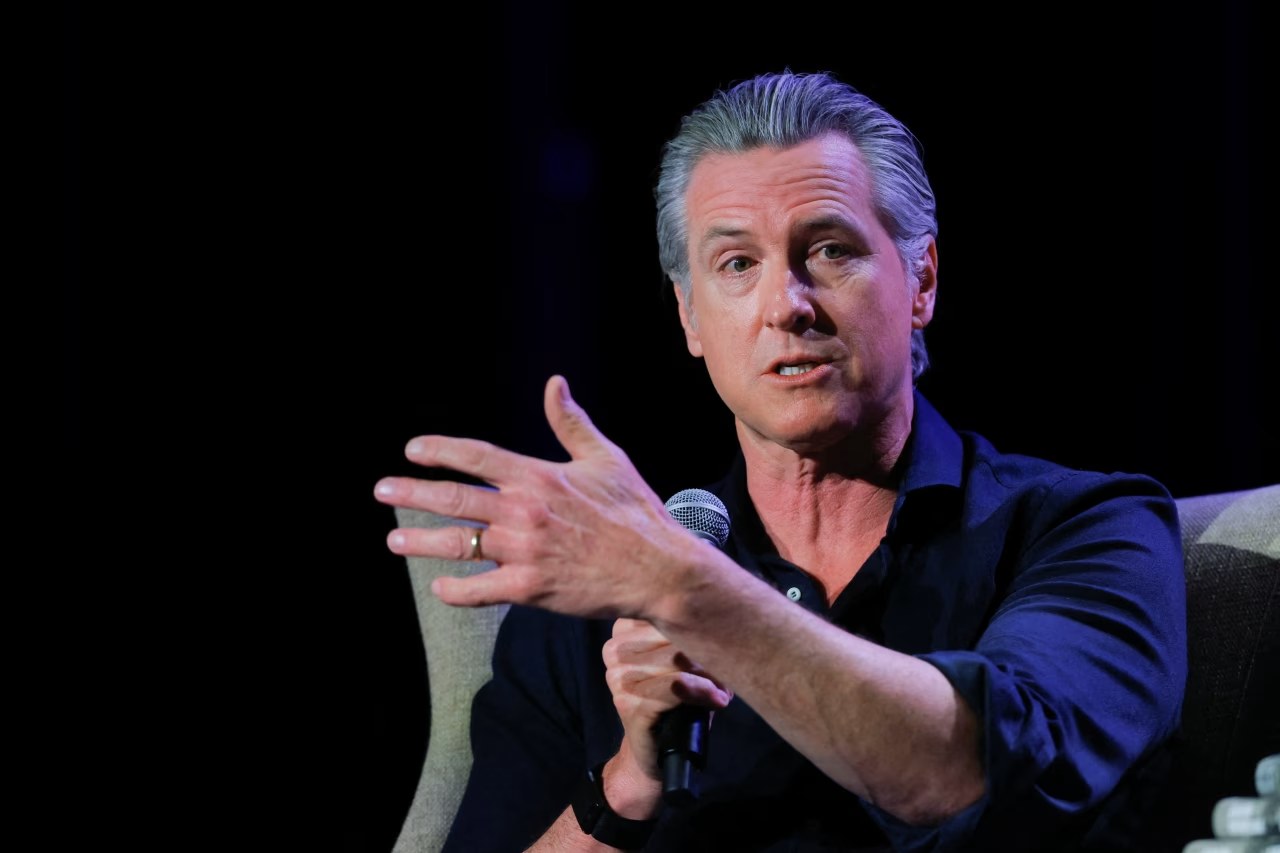
GAVIN NEWSOM—SACRAMENTO—California Governor Gavin Newsom on Friday signed an executive order that makes his state the first in the nation to explicitly bar gubernatorial appointees from using nonpublic information to trade on prediction markets, a fast-growing corner of online gambling where users wager on the outcome of elections, policy rulings, and even celebrity breakups.
The five-page directive, effective immediately, extends to roughly 3,000 individuals the governor can hire or fire—from cabinet secretaries and utility regulators to university trustees and licensing-board members. It forbids them from placing or profiting from trades on platforms such as Kalshi Inc. or Polymarket if the wager relies on material, nonpublic information they possess because of their role.
“Californians must have confidence that public decisions are made in the public interest, not to line the pockets of people who can move markets,” Newsom said in a statement released by his office. Violations can trigger civil fines of up to $5,000 per transaction, mandatory disclosure of trading records, and termination by the governor.
A Regulatory Void No One Expected to Fill This Fast
Until Friday, no state or federal statute squarely addressed whether a political appointee who knows, say, that a pipeline permit will be denied next week can legally buy “No” contracts on Polymarket wagering the project will be approved. Securities-law precedents do not apply because event contracts are classified as “gaming” or “wagering” instruments by the Commodity Futures Trading Commission, not as securities by the Securities and Exchange Commission.
That classification gap has become impossible to ignore as trading volumes explode. Polymarket processed more than $2.6 billion in notional bets in 2023, according to Dune Analytics, while New York-based Kalshi won CFTC approval to list event contracts on everything from Fed rate hikes to hurricane landfalls. Political contracts alone accounted for roughly 40 percent of Kalshi’s open interest this month, the firm disclosed in marketing materials.
“We’re watching the weaponization of asymmetric information in real time,” said Caitlin Mueller, a University of Virginia law professor who tracks prediction-market governance. “insider trading law was built around stocks; it never contemplated a world where regulators themselves could short an election outcome.”
The governor’s order piggybacks on California’s existing Political Reform Act, which already requires public officials to recuse themselves from decisions in which they have a financial interest. By explicitly adding “event-based derivative contracts” to the definition of a financial interest, the directive gives the state’s Fair Political Practices Commission (FPPC) clear jurisdiction to investigate and fine violators.
Enforcement will rely heavily on self-disclosure. Appointees must file annual reports listing any positions exceeding $500 in prediction markets tied to state or local events. Refusal to file or falsifying a filing is itself a violation punishable by removal. The FPPC can subpoena brokerage records from platforms that accept California customers, although offshore venues such as Polymarket—which is domiciled in the Caribbean—present a practical hurdle.
From Blind Spot to Flashpoint
The urgency intensified last fall when a University of California regent, who sits on a committee overseeing the UC endowment, was spotted on social media bragging about a four-figure return from correctly betting that the Board of Regents would divest from fossil-fuel companies before year-end. The regent denied using confidential information, but the episode rattled Sacramento. Newsom’s legal team began drafting language that became Friday’s order.
“We realized we had no mechanism to even ask the question,” said a senior administration official who requested anonymity to discuss internal deliberations. “This order gives us that mechanism.”
The next frontier, experts warn, is the Legislature. Staffers who draft bills often know weeks in advance which measures will die in appropriations or be gutted in committee—intelligence that could move prediction-market prices. Newsom’s order does not cover legislative employees; that would require a statute passed by lawmakers themselves, a prospect that could divide the Democratic super-majority.
How Big Is the Prediction-Market Economy?
To grasp why California acted, consider the raw numbers. Polymarket’s monthly trading volume vaulted from $48 million in January 2023 to a peak of $573 million in October, driven by wagers on the U.S. House speaker fight and the Israel-Hamas war. Kalshi, the only CFTC-regulated exchange in the space, lists 1,400 active contracts and cleared $350 million in notional volume last quarter.
Those figures are modest compared with the New York Stock Exchange, but they dwarf the size of the underlying events. A single Polymarket contract on whether Congress would pass a continuing-resolution bill before a shutdown deadline attracted $12 million in trades—more than 10 times the combined campaign contributions to the members of the House Rules Committee that scheduled the vote.
“When the betting pool is larger than the lobbying pool, you’ve inverted democratic incentives,” said Lee Drutman, a senior fellow at the centrist think-tank New America. California’s order, he argues, is a first step toward restoring parity.
Still, the platforms themselves insist transparency is their best defense. Polymarket’s order book is visible on-chain, and Kalshi supplies daily open-interest reports to the CFTC. “We welcome rules that preserve market integrity,” Kalshi co-founder Tarek Mansour said in an e-mailed statement. “Bad actors hurt everyone.”
Whether transparency is enough remains an open question. Academic studies of Intrade, a precursor site that shuttered in 2013, found evidence of abnormal trading patterns ahead of 11 out of 15 major Supreme Court decisions—suggesting at least some participants had advance knowledge. No prosecutions ever materialized.
What Counts as ‘Nonpublic’ When Everything Is Tweeted?
The order’s linchpin is the phrase “nonpublic information,” yet in the TikTok era that concept is increasingly elastic. Aides routinely leak draft budgets to reporters; lobbyists live-tweet committee votes seconds after they happen. Drawing a bright line between what is public and what is material will test investigators.
California borrows language from federal securities law: information is nonpublic if “it has not been disseminated in a manner making it available to investors generally.” That standard works for quarterly earnings, but prediction markets often turn on fuzzy political signals—whip counts, scheduling decisions, even body language at press conferences.
“We’ll need a common-sense hierarchy,” said Ann Ravel, a former FPPC chair now teaching at UC Berkeley. “A rumor on Twitter isn’t public, but a press release posted to the governor’s website is.” The FPPC is expected to release interpretive guidelines within 60 days.
One litmus test could be whether the information moves the market. Researchers at MIT are piloting a volatility index for political event contracts; a 5 percent price swing within two hours of a tweet or blog post could be deemed sufficient disclosure. Critics counter that such a rule would encourage information dumps designed to mask insider trades.
Absent case law, the first contested enforcement will set precedent. Legal observers predict an early test involving the State Water Resources Control Board, which issues drought restrictions that ripple through billions of dollars in agricultural futures and related prediction contracts on rainfall levels.
Extraterritorial Headaches
Another gray zone is offshore platforms. Polymarket operates from St. Kitts & Nevis and geoblocks U.S. IP addresses, yet Californians routinely skirt the ban with VPNs. Proving both jurisdiction and identity will require blockchain analytics firms such as Chainalysis, raising privacy concerns.
The order attempts to sidestep that problem by focusing on the appointee, not the venue. “If you trade from a Cayman Islands account on a Caribbean exchange, you still owe a fiduciary duty to Californians,” explained Jason Lynch, a former FPPC enforcement attorney. The practical hurdle is detection; the commission lacks subpoena power outside U.S. borders unless platforms maintain domestic bank accounts.
Could Other States—or Congress—Follow?
California’s move inserts a new variable into a fragmented regulatory landscape. The CFTC has federal authority over event contracts but has largely deferred to self-regulation. Meanwhile, 19 states from Alabama to Washington have ambiguous gaming statutes that could be stretched to cover prediction markets, yet none has attempted enforcement against political insiders.
Congressional Democrats have floated bills requiring disclosure of trades by members and senior staff, but the measures stalled amid First-Amendment objections. A bipartisan letter last month urged the CFTC to impose position limits on election contracts, mirroring rules for grains or oil. The agency has opened a comment period but taken no action.
“States are the laboratories here,” said Columbia Law School professor Joshua Mitts, who has advised senators on market-structure reform. “If California’s experiment deters bad behavior without chilling legitimate price discovery, expect New York, Illinois, and Texas to copy-paste within a year.”
Industry lobbyists counter that a patchwork of state rules could fragment liquidity and push traders to decentralized, unregulated venues. Kalshi is pushing for a federal safe-harbor that would pre-empt stricter state standards, a proposal likely to face resistance from consumer-protection advocates.
The stakes are global. London-based Betfair already restricts U.S. customers, while Asian giants such as OKX list U.S. election contracts with minimal oversight. If American regulators clamp down too tightly, liquidity—and the price signals that journalists and academics increasingly cite—could migrate offshore.
The First Test Case
Within hours of Newsom’s signing, a small sell-off hit Kalshi’s contract on whether California will ban new gasoline cars by 2035, pushing the implied probability down 3 percentage points to 61 percent. No evidence of insider activity has surfaced, but the speed of the move underscores how closely traders now watch state-level politics.
Will the Ban Actually Change Behavior—or Just Push It Underground?
The ultimate question is efficacy. California’s ethics filings are public, but prediction-market trades can be masked with nested wallets, coin-mixing services, or simply cash wagers placed through proxies. A determined appointee willing to risk termination could still profit.
“No rule eliminates crime; it raises the cost,” said Michael Klausner, a Stanford law professor who helped draft the order. “If the expected penalty—probability of detection times the sanction—exceeds the expected gain, rational actors comply.” Early signals suggest the calculus is shifting: Kalshi’s internal survey of 200 active California users found 18 percent reduced position sizes after the order, though causation is murky.
Transparency advocates want more. They propose real-time disclosure of trades above a de minimis threshold, similar to the STOCK Act that requires members of Congress to report stock transactions within 45 days. Extending that standard to state-level prediction markets would require legislation, not merely an executive order.
Until then, the deterrent effect rests on enforcement credibility. The FPPC’s annual budget is $18 million—roughly half what Polymarket users traded on the 2024 presidential race in a single day. Without additional funding, investigators must triage tips, focusing on high-impact events such as utility-rate decisions or environmental permits.
Newsom hinted he will request $2.3 million in next year’s budget to hire five forensic accountants and a data scientist. Whether lawmakers approve the outlay will signal how seriously Sacramento views the threat of politically flavored insider trading—and whether California’s experiment becomes a durable model or a symbolic one-off.
“We’re not trying to stop speculation,” the governor said at a press conference. “We’re stopping self-dealing.” If the order survives its first scandal, expect copycats from coast to coast.
Frequently Asked Questions
Q: What exactly did Governor Newsom’s order prohibit?
The order bans any gubernatorial appointee from using nonpublic information to place or profit from bets on prediction-market platforms such as Kalshi or Polymarket. It applies to both direct trades and tipping others, and violations can trigger fines, removal, or referral to prosecutors.
Q: Why are prediction markets considered an ethics risk?
Unlike stocks, these contracts settle on real-world events—elections, policy decisions, even weather—that public officials can influence. A regulator with advance knowledge of a pending ruling could buy contracts whose payoff depends on that ruling, creating a powerful financial incentive to sway outcomes.
Q: Does California law already ban insider trading?
State law criminalizes securities fraud, but prediction-market contracts fall outside the statutory definition of a ‘security.’ The executive order fills that gap by extending the same spirit—trading on material, nonpublic information—to gubernatorial appointees across all event-based betting platforms.
Q: Who enforces the new rule?
The California Fair Political Practices Commission (FPPC) can levy fines up to $5,000 per violation, while the governor’s office retains authority to remove appointees. Criminal referral is possible if prosecutors find evidence of bribery or fraud under existing penal codes.
📰 Related Articles
- Democrats Push 50% Windfall Tax on Oil as Iran Conflict Fuels Prices
- Trump-Linked PAC Unveils $100 Million Plan to Promote Federal AI Rules in Midterms
- ICE Turns Vacant Warehouses Into Detention Hubs, Launching a $38.3 Billion Real‑Estate Drive
- Newsom Bars California Officials From Insider Betting on Prediction Markets
