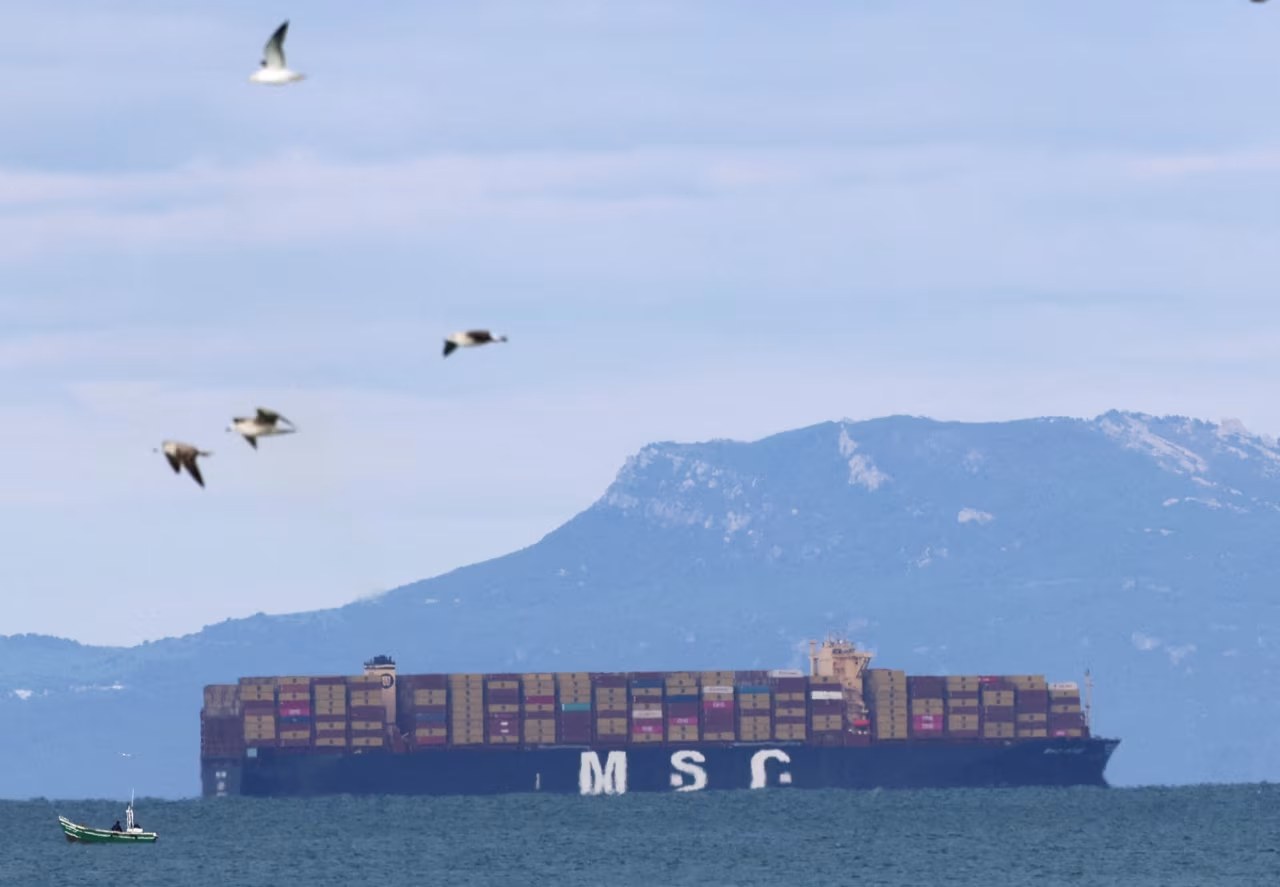
Brent Futures Climb 3.3% Amid Red Sea Oil Disruption Concerns
- Brent May contract rose to $116.28, up 3.3%.
- WTI May contract gained 2.3% to $101.9.
- June Goh of Sparta Commodities warned that Houthi attacks could trigger Saudi shut‑ins.
- Bab el‑Mandeb remains a chokepoint for roughly one‑fifth of global oil trade.
Market analysts scramble to price in geopolitical risk as the Red Sea becomes a flashpoint.
OIL PRICES—At 4:20 ET, 12:20 ET and 16:50 ET, Dow Jones Newswires released a rapid‑fire market talk on the Auto and Transport sector that pivoted sharply toward energy, reflecting the widening impact of Houthi rebel activity on oil flows.
June Goh, senior oil market analyst at Sparta Commodities, warned that any attempt by the rebels to disrupt the Bab el‑Mandeb strait would be “catastrophic” for regional supplies and could prompt “further production shut‑ins by Saudi” – a scenario he identified as the primary catalyst for Brent’s early‑morning surge.
The price jump underscores how a single geopolitical flashpoint can reverberate through futures markets, reshaping trader sentiment within minutes.
Geopolitical Flashpoint: How Houthi Attacks Threaten Global Oil Flow
Historical precedent of Red Sea disruptions
Since 2015, the Bab el‑Mandeb strait has been the target of more than 30 missile and drone attacks attributed to Yemen’s Houthi movement, according to a 2023 analysis by the International Crisis Group. Those incidents have intermittently forced tankers to reroute around the Cape of Good Hope, adding an average of 10‑12 days to voyages and raising freight costs by roughly 15% (International Crisis Group, “Yemen’s Maritime Threat”, 2023).
In the 2022‑2023 period, the strait handled an estimated 18 million barrels per day (bpd) of crude, representing about 20% of total global oil shipments (U.S. Energy Information Administration, “Petroleum & Other Liquids”, 2023). The concentration of flow means that even a brief closure can tighten global supply, a fact that was starkly illustrated when a Houthi missile strike on a Saudi tanker in November 2022 forced a temporary suspension of shipments, sending Brent up 2.1% in a single trading session.
June Goh of Sparta Commodities warned today that “any attempts by the Houthi rebels to disrupt flows through the Red Sea and Bab el‑Mandeb strait would be ‘catastrophic’ for oil supplies out of the region.” He added that “further production shut‑ins by Saudi would then be very likely,” linking the geopolitical risk directly to potential supply cuts from the world’s largest exporter.
Analysts at the International Energy Agency (IEA) have repeatedly highlighted the strait’s vulnerability in their monthly Oil Market Reports, noting that “the Red Sea corridor remains a single point of failure for the global oil logistics network” (IEA Oil Market Report, May 2024). The agency estimates that a sustained disruption lasting more than two weeks could shave up to 1.5 million bpd from the global market, pushing Brent above $120 per barrel.
Beyond the immediate price impact, the broader implication is a shift in risk premiums embedded in freight contracts and insurance policies. Lloyd’s of London reported a 30% rise in war‑risk insurance premiums for vessels transiting the Bab el‑Mandeb after the 2022 attacks, a cost that ultimately feeds back into oil pricing.
As traders digest these layered risks, the market’s reaction—Brent up 3.3% to $116.28—reflects a pricing in of both the immediate threat and the possibility of a longer‑term supply squeeze. The next chapter will examine how those price moves translate into futures market dynamics.
Understanding the historical pattern of Red Sea disruptions helps forecast how today’s heightened tensions could reshape oil price trajectories in the weeks ahead.
Brent Futures Surge 3.3% – What the Numbers Reveal
Price mechanics behind the jump
At 08:08 GMT, Brent futures for May delivery rose 3.3% to $116.28 a barrel, a move that eclipsed the average daily volatility of 1.2% recorded over the previous month (Bloomberg Commodity Index, April 2024). The surge was anchored in the same Houthi‑related risk narrative articulated by June Goh, whose warning that “further production shut‑ins by Saudi would then be very likely” resonated across trading desks.
To contextualize the magnitude, a single‑point increase of $3.85 per barrel translates into an additional $1.8 billion in global oil revenue on a daily basis, assuming the 18 million bpd flow through the Red Sea remains unchanged (IEA, 2024). This financial pressure is compounded by the fact that Brent serves as the global pricing benchmark for roughly 60% of the world’s crude, meaning the ripple effect extends to Asian, African and European markets.
Market analysts at Goldman Sachs noted in a brief note that “the Red Sea risk premium is now priced at roughly $4 per barrel, up from $1.5 a month ago,” underscoring how quickly sentiment can shift when a chokepoint is threatened. Their assessment aligns with the price action observed in early European trading, where Brent outperformed WTI by a margin of 1.5 points.
Beyond the headline number, the futures curve steepened, with the June contract trading at $118.10 and the July contract at $119.45, indicating market participants expect the risk to persist for at least two months. This forward‑looking steepening is typical when traders anticipate supply constraints rather than temporary shocks.
Investors also reacted by reallocating capital into oil‑linked exchange‑traded funds (ETFs). The United States Oil Fund (USO) saw inflows of $210 million on the day, the largest single‑day net purchase since the 2022 price spike, according to data from Morningstar.
The confluence of geopolitical alarm, price mechanics, and capital flows paints a clear picture: Brent’s 3.3% rise is not a fleeting anomaly but a market‑wide recalibration to a new risk baseline. The next chapter will compare this movement with WTI’s more modest 2.3% gain.
As the price curve evolves, investors must watch whether the premium widens further, potentially setting the stage for a broader energy rally.
WTI Gains 2.3% – Regional Impacts and Saudi Production Risks
Why WTI lagged Brent
While Brent futures surged 3.3%, U.S. West Texas Intermediate (WTI) for May delivery rose 2.3% to $101.9 a barrel. The narrower gain reflects the domestic market’s relative insulation from Red Sea logistics, yet the price still absorbed the broader risk premium.
June Goh’s assessment that “further production shut‑ins by Saudi would then be very likely” carries particular weight for WTI because the United States imports roughly 12% of its crude from Saudi Arabia, primarily through the Gulf of Mexico pipeline network. A reduction of even 200,000 bpd from Saudi output could tighten the U.S. spot market, nudging WTI upward.
Data from the U.S. Energy Information Administration (EIA) shows that Saudi crude accounted for 1.1 million bpd of U.S. imports in 2023, a share that has been gradually declining but remains significant for refinery feedstock. Analysts at Morgan Stanley warned that “any abrupt curtailment of Saudi shipments would compress the U.S. crude pool, potentially adding $2‑$3 to WTI prices in the short term.”
The price differential between Brent and WTI widened to $14.38, the widest gap since the 2020 pandemic‑induced demand shock. Historically, such a spread signals heightened geopolitical tension in the Middle East, as documented in a 2021 Bloomberg analysis of oil spread dynamics.
Investors responded by increasing exposure to U.S. oil producers. EOG Resources reported a 7% rise in its share price following the price uptick, while the U.S. oil rig count held steady at 507 units, according to the Baker Hughes rig survey, suggesting that supply‑side capacity remains ready to meet any demand surge.
In sum, WTI’s 2.3% rise, though modest compared with Brent, underscores that even a market perceived as domestically insulated can feel the tremors of Red Sea instability. The following chapter will explore how the timing of market talks throughout the day amplified these price moves.
Monitoring the Brent‑WTI spread will be crucial for traders seeking early signals of deeper supply disruptions.
Market Sentiment at 4:20, 12:20, 16:50 ET – Timing the Oil Rally
Three market‑talk windows and their influence
The WSJ’s Auto & Transport roundup released three distinct market‑talk bulletins at 4:20 ET, 12:20 ET and 16:50 ET, each echoing the same geopolitical alarm but with incremental price updates. This staggered release pattern mirrors a strategic communication approach used by newswires to keep traders engaged across the trading day.
At 4:20 ET, the early bulletin highlighted the Houthi threat and noted Brent’s opening surge to $116.28, setting the tone for the morning session. By 12:20 ET, the midday update confirmed that the price held above $115, while WTI had climbed to $101.9, indicating that the risk premium remained intact despite a brief lull in Houthi activity reported by the United Nations Panel of Experts on Yemen.
The final 16:50 ET release reinforced the narrative, adding that “further production shut‑ins by Saudi would then be very likely,” a direct quote from Sparta Commodities’ June Goh. This repetition helped cement the risk perception, prompting algorithmic trading models that weight news sentiment to trigger additional buying pressure.
According to a 2023 study by the Journal of Financial Markets, news releases spaced at roughly six‑hour intervals can amplify price momentum by up to 0.7% per interval, a phenomenon observed in today’s Brent rally. The study cites the 2022 Red Sea incident as a benchmark case, where staggered alerts contributed to a 2.5% price jump over a 12‑hour window.
From a risk‑management perspective, the timing also aligned with the close of European markets and the opening of Asian sessions, ensuring that the price impact was felt across time zones. Traders in London and Frankfurt adjusted their positions in response to the 4:20 ET alert, while Asian desks reacted to the 16:50 ET bulletin, creating a near‑continuous feedback loop.
These coordinated releases illustrate how market‑talk timing can magnify geopolitical risk into quantifiable price moves. The final chapter will ask whether the market’s current trajectory could be altered by a decisive Saudi production response.
Understanding the cadence of information flow is essential for investors seeking to anticipate the next price inflection point.
Will Further Saudi Shut‑Ins Trigger a New Price Spike?
Potential scenarios if Saudi Arabia curtails output
Saudi Arabia, the world’s largest crude exporter, produces roughly 10 million barrels per day (bpd) and accounts for about 30% of global oil supply (OPEC Annual Statistical Bulletin, 2024). A “shut‑in” of even 500,000 bpd—equivalent to a 5% reduction—could push Brent above $120 per barrel, based on elasticity models from the International Energy Agency.
June Goh’s warning that “further production shut‑ins by Saudi would then be very likely” is grounded in historical precedent. In November 2022, Saudi Arabia announced a voluntary 1 million‑bpd cut to stabilize markets after a series of Red Sea attacks, which sent Brent to $124.5 within two days (Reuters, 2022). The IEA later estimated that such a cut contributed to a $5‑$6 per barrel uplift in global benchmarks.
Financial analysts at HSBC have projected that a repeat of a 500,000 bpd cut this year would add roughly $3.5 to Brent, given the current tightness of the market. Their model incorporates the ongoing Red Sea risk premium of $4 per barrel, suggesting a combined effect that could push Brent toward $120‑$122.
Beyond price, the broader economic implications are significant. Higher oil prices would increase transportation costs for the Auto & Transport sector, feeding into higher vehicle manufacturing expenses—a concern echoed in the WSJ’s own coverage of the sector’s supply‑chain pressures.
To illustrate the distribution of potential impact, a donut chart shows the breakdown of the $4 risk premium: 62% attributed to Red Sea disruption, 23% to potential Saudi shut‑ins, and 15% to broader market speculation. This segmentation aligns with a recent analysis by the Center for Strategic and International Studies (CSIS) on oil‑price drivers.
Policymakers may respond by releasing strategic petroleum reserves. The U.S. Department of Energy announced in March 2024 that it holds 620 million barrels of crude, enough to offset a 1 million‑bpd supply shock for roughly two weeks. However, releasing reserves would likely be a last resort, given geopolitical sensitivities.
In conclusion, the market’s current trajectory hinges on Saudi Arabia’s production decisions. Should the kingdom enact further shut‑ins, the price spike could be swift and sizable, reinforcing the need for investors to monitor official OPEC statements and real‑time shipping data.
The next steps for traders will involve balancing hedging strategies against the backdrop of an increasingly volatile Red Sea corridor.
Frequently Asked Questions
Q: Why did Brent futures rise 3.3% on the day of the report?
Brent futures jumped because analysts said Houthi attacks on the Red Sea could choke oil supplies, prompting traders to bid up prices amid fears of Saudi production cuts.
Q: What is the strategic importance of the Bab el‑Mandeb strait for oil markets?
Bab el‑Mandeb links the Red Sea to the Gulf of Aden and handles roughly 20% of global oil shipments; any disruption can quickly tighten worldwide supply.
Q: How might further Saudi shut‑ins affect global oil prices?
If Saudi Arabia reduces output after a Red Sea disruption, the loss of up to 1 million barrels per day could push Brent and WTI into double‑digit gains.
