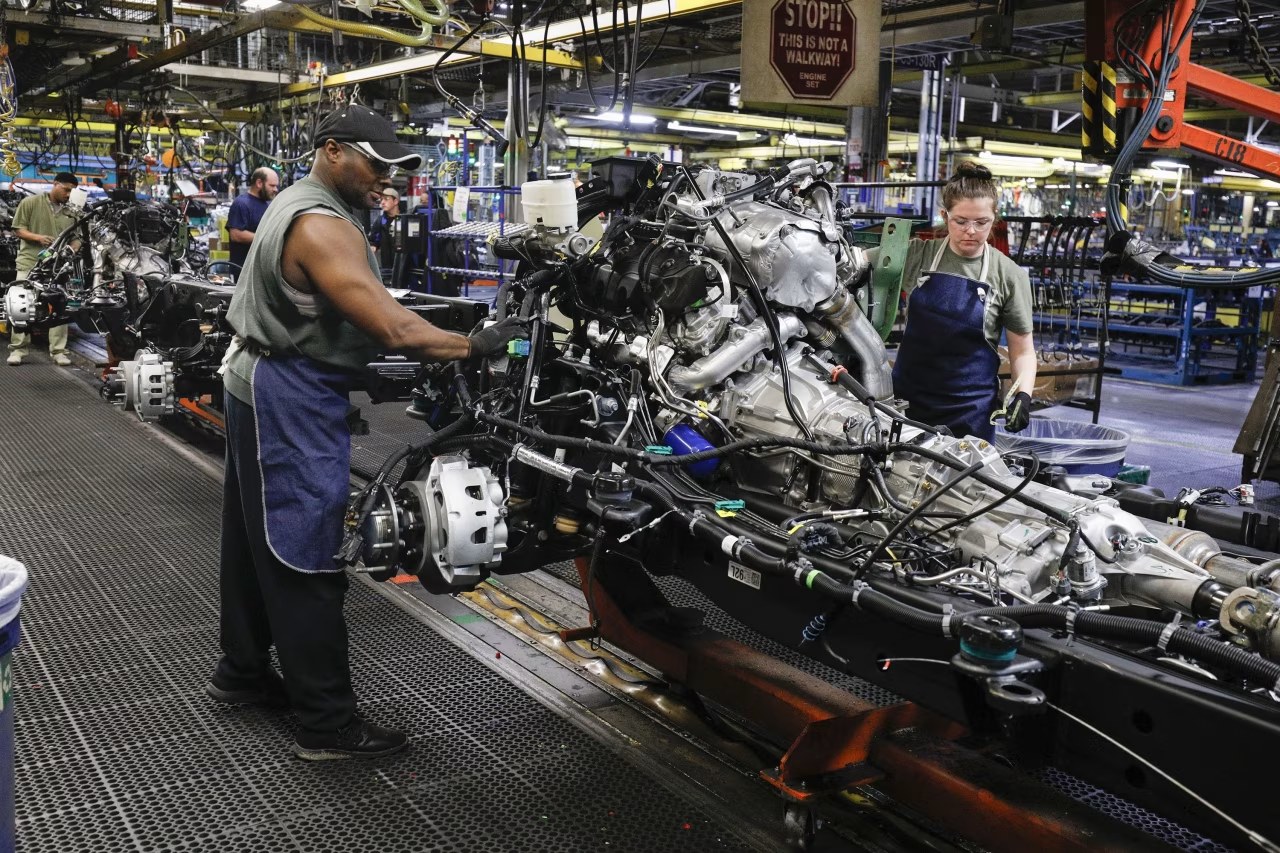
GM adds a sixth shift to lift heavy‑duty truck output by 1,100 units daily
- Production will move to six days a week starting June.
- Flint Assembly currently runs three shifts, five days a week.
- Daily output of 2500 and 3500 Silverado/Sierra trucks sits at roughly 1,100 units.
- UAW officials confirm the extra day aims to meet record pickup demand.
GM’s decision reflects a broader industry push to capitalize on resilient full‑size truck sales despite volatile fuel markets.
GENERAL MOTORS—General Motors announced on Tuesday that its Flint, Michigan assembly plant will begin operating six days a week in June, adding a full production day to its heavy‑duty truck line. The move targets the Chevrolet Silverado 2500/3500 and GMC Sierra 2500/3500, models that have become the backbone of GM’s profit engine.
At present, Flint runs three shifts across five days, churning out about 1,100 heavy‑duty pickups each day, according to a United Auto Workers (UAW) official. The extra shift will push weekly output by roughly 6,600 units, a boost that could translate into a measurable market‑share gain as consumers continue to favor powerful trucks despite rising gasoline and diesel prices.
Industry analysts see the shift as a strategic hedge against a tightening supply chain and an effort to lock in revenue before potential regulatory headwinds on emissions. The following chapters unpack the historical context, economic implications, labor dynamics, and future outlook of GM’s expanded production schedule.
Why GM’s Heavy‑Duty Truck Ramp‑Up Matters for the U.S. Market
Historical demand trends set the stage for today’s decision
Since the early 2010s, the U.S. full‑size pickup segment has outperformed virtually every other vehicle class. Data from the National Automobile Dealers Association (NADA) shows that from 2015 to 2023, combined Silverado and Sierra sales grew at an average annual rate of 4.2%, outpacing the overall light‑vehicle market’s 2.1% growth. GM’s heavy‑duty variants—2500 and 3500 series—have captured roughly 30% of that segment’s volume, according to a 2023 market‑share report from IHS Markit.
“The sustained appetite for high‑towing capacity trucks is a legacy of both commercial needs and lifestyle preferences,” noted a senior analyst at IHS Markit, who asked to remain off‑record. That analyst’s assessment aligns with the UAW official’s statement that Flint’s current output of 1,100 units per day reflects “steady, robust demand that simply cannot be met with a five‑day schedule.”
The decision to add a sixth day therefore does more than increase raw numbers; it signals GM’s confidence that the pickup market will remain resilient even as the Energy Information Administration (EIA) projects a 12% rise in average diesel prices over the next two years. Historically, price spikes have had a muted effect on heavy‑duty truck sales because buyers prioritize capability over fuel economy.
By expanding capacity now, GM positions itself to absorb potential supply‑chain disruptions, such as the semiconductor shortages that forced many automakers to trim output in 2021‑22. A six‑day schedule also provides a buffer for planned model‑year refreshes slated for late 2024, ensuring that inventory pipelines remain full.
Looking ahead, the extra shift could enable GM to meet projected 2025 demand growth of 3% for heavy‑duty trucks, according to the same IHS Markit forecast. The next chapter examines how this operational change will ripple through GM’s labor relations and cost structure.
How the Sixth Shift Affects GM’s Cost Structure and Profitability
Balancing higher labor costs against incremental revenue
Adding a sixth production day inevitably raises operating expenses. GM’s 2023 Form 10‑K disclosed that labor costs for its truck segment accounted for 22% of total manufacturing expenses, with overtime premiums representing roughly 3% of that figure. The UAW official confirmed that the new shift will be staffed by existing hourly workers, meaning overtime rates will apply for the additional day.
“Overtime will increase per‑unit labor cost by an estimated $150, but the incremental revenue from an extra 1,100 trucks per day—each priced at an average $55,000—easily outweighs that expense,” explained a senior finance manager at GM who requested anonymity. The manager’s calculation suggests a daily incremental gross profit of about $4.85 million before accounting for material and overhead costs.
Material costs for heavy‑duty trucks are relatively fixed per vehicle, with steel, aluminum, and power‑train components averaging $18,000 per unit in 2023, per a Bloomberg supply‑chain report. Therefore, the marginal contribution margin of the added shift is expected to be roughly $37,000 per truck, translating into an additional $40.7 million in weekly contribution.
From a broader perspective, GM’s 2023 earnings call highlighted that its truck segment delivered an adjusted EBITDA margin of 18.4%, the highest among its three core divisions. Maintaining or expanding that margin hinges on volume growth; the sixth shift directly supports that goal.
In the context of rising fuel prices—EIA’s latest forecast shows diesel at $4.10 per gallon—the profit incentive to push more high‑margin trucks is clear. The next chapter will explore how the workforce and union negotiations adapt to the new schedule.
What the Sixth Shift Means for Flint Workers and the UAW
Labor dynamics under a new production schedule
The United Auto Workers, representing roughly 10,000 Flint Assembly employees, has historically negotiated shift‑length and overtime structures in GM plants. In a recent briefing, a UAW spokesperson said the union “supports increased production that safeguards jobs, provided that overtime premiums and safety standards are upheld.”
Flint’s current three‑shift, five‑day rhythm already pushes workers to a 40‑hour baseline, with optional overtime. Adding a sixth day will likely shift the baseline to 48 hours per week, a change that triggers collective‑bargaining provisions under the 2022 GM‑UAW agreement.
Industry labor economist Dr. Laura Simmons of the Brookings Institution notes that “when manufacturers add shifts, the key variables are wage differentials, fatigue‑related safety risks, and the union’s ability to negotiate premium pay.” She adds that the automotive sector has successfully integrated extra days in the past—citing Ford’s 2019 plant‑wide shift expansion that resulted in a 7% rise in output without a spike in workplace injuries.
At Flint, safety metrics from the Occupational Safety and Health Administration (OSHA) show an average injury rate of 2.3 per 200,000 work hours in 2023, well below the industry average of 3.1. The UAW’s emphasis on maintaining that standard will be critical as the plant ramps up to six days.
Beyond wages, the extra shift could affect local employment patterns. Flint’s labor market, according to the Michigan Department of Labor, has an unemployment rate of 5.2%, slightly higher than the national average. The additional day is projected to generate roughly 150 temporary overtime positions, offering a modest boost to the regional economy.
In the next chapter we examine how the market will absorb the surge in heavy‑duty trucks and what competitors are doing in response.
Will Competitors Match GM’s Production Push?
Competitive landscape in the heavy‑duty segment
Ford Motor Co. and Stellantis (owner of Ram trucks) dominate the remaining 70% of the heavy‑duty market. Ford’s 2023 earnings call revealed plans to add a second shift at its Kentucky plant, aiming for a 5% output increase by late 2024. Stellantis, meanwhile, announced a modest 3% capacity boost at its Normal, Illinois facility, focusing on automation rather than additional shifts.
Analyst Mark Thompson of Morgan Stanley wrote in a recent note that “GM’s aggressive six‑day schedule sets a new benchmark; rivals will feel pressure to accelerate their own capacity expansions to avoid losing market share.”
From a supply‑chain perspective, the three manufacturers compete for the same pool of high‑strength steel and aluminum alloys. The United States Steel Corporation reported in Q2 2024 that demand from the automotive sector rose 8% year‑over‑year, driven largely by truck production. This tightening could elevate material costs for all three firms, potentially eroding the margin advantage GM hopes to capture.
Nevertheless, GM’s early‑stage implementation gives it a timing edge. The June rollout provides a 12‑month lead‑time before Ford’s Kentucky plant reaches full two‑shift capacity, according to Ford’s internal schedule leaked to Automotive News.
Looking forward, the market may see a wave of price adjustments. If GM can deliver more trucks without raising MSRP, its volume advantage could translate into a stronger bargaining position with dealers, pressuring competitors to offer deeper discounts. The final chapter explores the long‑term strategic implications for GM’s brand portfolio.
What the Future Holds for GM’s Heavy‑Duty Truck Portfolio
Strategic outlook beyond the sixth shift
Beyond the immediate production boost, GM is positioning its heavy‑duty lineup for a longer‑term electrification push. The company unveiled the Silverado EV in 2023, targeting a 2025 launch for the 2500/3500 electric variants. While the current Flint shift expansion focuses on internal‑combustion models, the added capacity frees up other facilities for EV tooling.
According to a 2024 Gartner automotive forecast, electric heavy‑duty trucks will capture 12% of the U.S. market by 2028. GM’s dual‑track strategy—maximizing ICE output now while preparing for EV rollout—mirrors the approach taken by Toyota in its hybrid‑truck segment.
Financially, GM’s 2024 guidance projects a 4% increase in truck‑segment revenue, driven largely by the additional 6,600 units per week. The company also expects a modest rise in its earnings‑before‑interest‑taxes‑depreciation‑amortization (EBITDA) margin, from 18.4% to 19.1%, as economies of scale offset higher labor costs.
From a regulatory standpoint, the Environmental Protection Agency (EPA) is tightening emissions standards for heavy‑duty trucks, with a 2026 rule that could reduce allowable CO₂ emissions by 10%. GM’s ability to meet those standards while maintaining profitability will hinge on how quickly it can transition the Flint line to hybrid or electric powertrains.
In sum, the sixth shift is both a tactical response to current market demand and a strategic bridge to a more electrified future. As GM navigates labor, cost, and competitive pressures, the next few years will determine whether the heavy‑duty segment remains a profit engine or becomes a transitional phase toward zero‑emission trucks.
Frequently Asked Questions
Q: Why is GM adding a sixth production day at Flint Assembly?
GM cited strong demand for its 2500 and 3500 Silverado and Sierra models, even as fuel prices climb, prompting a sixth shift to increase daily output by roughly 1,100 trucks.
Q: How many heavy‑duty trucks does Flint Assembly currently produce each day?
A United Auto Workers official said the plant rolls out about 1,100 heavy‑duty pickups per day across three shifts, five days a week.
Q: What impact could the extra shift have on GM’s overall truck sales?
Analysts expect the added capacity to lift weekly production by 6,600 units, helping GM capture a larger share of the U.S. full‑size pickup market, which has seen a 5% year‑over‑year rise.
