Gasoline Prices Jump as Persian Gulf War Sidelines 20% of Global Oil Output
- Persian Gulf war shutters Kuwaiti production, removing roughly one-fifth of world oil supply.
- U.S. drivers see immediate pump-price surge as refiners scramble for replacement barrels.
- Oil markets price in heightened risk premium; gasoline futures extend rally.
- Energy analysts warn further escalation could push retail gasoline past last year’s peak.
From Kuwaiti oilfields to American gas stations, a supply shock is hitting wallets in real time.
PERSIAN GULF WAR—The outbreak of war in the Persian Gulf has triggered the fastest climb in U.S. gasoline prices since the last major regional conflict, with Kuwaiti output going offline and tanker rates spiking almost overnight. Commodity traders say the market is pricing in the possibility that roughly 20% of global crude supply could remain at risk for weeks.
American motorists are already feeling the sting: national average retail gasoline has surged more than 7% in five trading sessions, according to AAA data, while wholesale RBOB futures on the Nymex have vaulted above $2.70 per gallon for the first time since last summer’s demand peak.
Energy economists warn the speed of the move is a textbook example of how tightly balanced the oil market has become after years of under-investment in spare capacity. With Kuwaiti fields shut and no immediate diplomatic off-ramp in sight, the stage is set for a sustained run-up unless alternative barrels—from Strategic Petroleum Reserve releases, OPEC+ ramp-ups or U.S. shale—arrive quickly.
Kuwaiti Shutdown Erases Buffer in Global Supply Chain
Kuwait’s decision to halt crude exports after military strikes near its coastal terminals has erased the world’s last readily available safety cushion, analysts at Goldman Sachs Energy Research told clients. The emirate normally ships about 1.7 million barrels per day (bpd), almost all of which is now offline, according to tanker-tracking firm Kpler.
Strategic stocks offer only short-term relief
Washington is weighing a release from the 371-million-barrel U.S. Strategic Petroleum Reserve, but Energy Department models show a 30-million-barrel sale would lower gasoline prices by just 10–15 cents per gallon for roughly two months. “Strategic stocks are designed for short disruptions, not a prolonged Gulf war,” said Bob McNally, president of Rapidan Energy Group and a former White House adviser.
Global commercial inventories already sit at five-year lows after OPEC+ supply cuts and stronger-than-expected post-pandemic demand. The International Energy Agency’s latest monthly report put OECD stock cover at 57 days of forward demand, down from 70 days a decade ago.
For U.S. refiners, the timing is particularly painful. Plants along the Gulf Coast are running at 93% of capacity to meet summer driving season, leaving little slack to replace lost Kuwaiti medium-heavy sour barrels that are ideal for making gasoline. Spot differentials for similar grades from Saudi Arabia and Iraq have jumped $4–5 per barrel in three sessions, traders say.
Forward curves now imply gasoline prices could rise another 15–20 cents unless Gulf hostilities cease. “The market is trading first and asking questions later,” said Helima Croft, head of commodity strategy at RBC Capital Markets, noting that similar supply losses in 1990 doubled retail prices within six weeks.
How Fast Are Pump Prices Actually Moving?
AAA’s daily survey shows the national average for regular grade leapt from $3.41 to $3.65 per gallon in the five sessions since hostilities escalated—an increase of 24 cents or 7%. That velocity is the steepest since Russia’s invasion of Ukraine, when prices rose 40 cents in seven days.
Futures market signals more upside
Nymex RBOB gasoline futures settled at $2.73 per gallon, up 28 cents week-over-week, implying a retail ceiling near $4 if the rally persists. Each 10-cent rise in wholesale futures historically translates into roughly 8 cents at the pump within two weeks, according to the Energy Information Administration’s pass-through model.
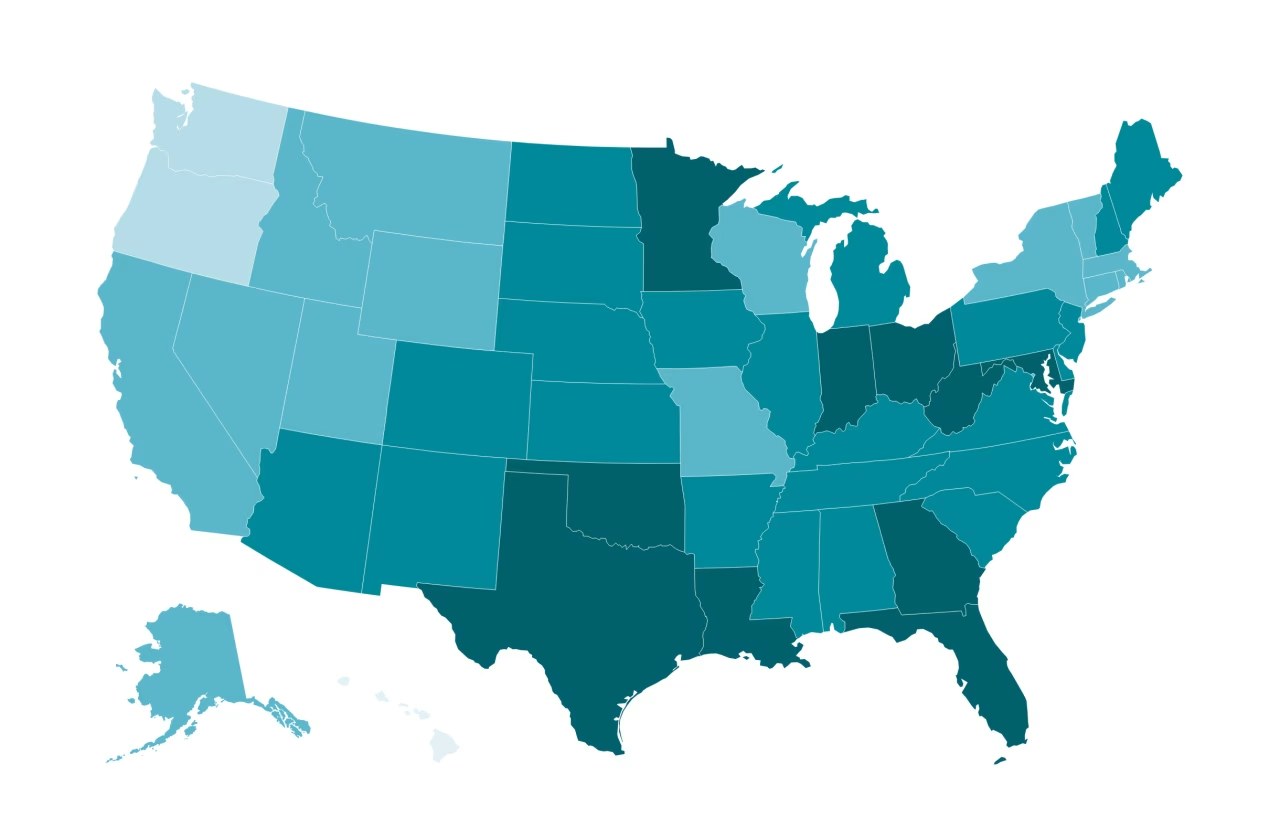
State-level data reveal even sharper spikes. California—already burdened by low inventory of its bespoke cleaner blend—saw average prices surge 32 cents to $5.12 per gallon. Texas, cushioned by proximity to refineries, still jumped 19 cents to $3.28.
Tom Kloza, global head of energy analysis at OPIS, warns that if Gulf exports remain constrained for a month, a national average above $4 becomes “almost unavoidable.” He notes that every $1 increase in crude oil lifts gasoline by about 2.4 cents per gallon, meaning Brent at $100 implies retail north of $4.10.
The speed matters for consumer psychology. A 2019 Federal Reserve study found that gasoline price velocity—not just level—has an outsized impact on inflation expectations, which in turn can influence Fed rate policy. With headline CPI already running above 3%, another gasoline shock complicates the central bank’s next move.
Can U.S. Shale or OPEC+ Fill the Gap Quickly?
U.S. shale producers, burned by investor demands for capital discipline, are unlikely to ride to the rescue. The rig count has fallen by 12% since autumn, and frack crews remain scarce. Even if every DUC (drilled but uncompleted) well in the Permian were finished overnight, analysts at Wood Mackenzie estimate only 400,000 bpd of new supply within six months—far short of the 3–4 million bpd now at risk.
OPEC+ spare capacity is mostly in the Gulf
Saudi Arabia claims 3 million bpd of idle capacity, but energy diplomats note that restarting fields takes 30–60 days and requires calm shipping lanes through the Strait of Hormuz. “You can’t just turn a tap when missiles are flying,” said one Gulf OPEC delegate, speaking on condition of anonymity.
Elsewhere, UAE’s Adnoc could add 300,000 bpd within weeks, while Russia—already pumping above quota—offered an extra 200,000 bpd that Western refiners are reluctant to buy under sanctions. Nigeria and Angola, plagued by pipeline outages, are actually producing 150,000 bpd below their already-reduced targets.
The math is stark. Even if Saudi Arabia fully opened the taps, the market would still face a 1-million-bpd deficit if Kuwaiti and Iraqi exports stay offline, according to Citigroup’s commodity team. That gap equates to a further $10–15 per barrel upside for Brent crude, which settled near $96 on the day.
Refiners are responding by lifting utilization to 94% and drawing down U.S. crude stocks for a seventh consecutive week. But gasoline yield is seasonally capped; every extra barrel of crude processed yields only 0.53 barrels of gasoline, the EIA says, limiting the ability to blunt the price spike.
What Happens to Inflation and Interest Rates?
Gasoline carries a 3.9% weight in the U.S. consumer-price index, but its psychological footprint is larger. A 30-cent rise adds roughly 8 basis points to headline CPI and 5 basis points to core CPI once second-round effects on transportation services are included, according to Goldman’s U.S. economics team. With markets already pricing only one Fed cut this year, a sustained energy shock could push the first rate reduction into 2025.
Real wages take another hit
Average hourly earnings growth has cooled to 3.9% annually; if headline inflation re-accelerates toward 4%, real pay growth would again turn negative, denting consumption. A University of Michigan survey found that every 10-cent rise in gasoline lowers consumer sentiment by 1.2 points—enough to trim GDP growth by 0.1 percentage points via lower discretionary spending.
Airlines and ride-share firms are already passing through fuel surcharges. Delta said this week it would raise domestic base fares $6–8 per segment, while Uber instituted a temporary 50-cent per trip fee in high-cost states. Logistics giant FedEx announced a 5.5% increase in its fuel index for ground parcels, effective next month.
The bond market is sniffing out stagflation risk. The 10-year breakeven inflation rate widened 12 basis points in two days, while the two-year yield rose 8 basis points as traders pared bets on Fed easing. “Energy shocks are the fastest way to flip the narrative from disinflation to stagflation,” said Neil Dutta, head of economics at Renaissance Macro.
History offers a cautionary tale: the 1990 Gulf War gasoline spike preceded a mild recession, while the 2003 Iraq invasion coincided with a Fed pause that ultimately lasted 13 months. Traders are now pricing a 60% probability that the Fed holds rates through year-end, up from 35% before the Gulf hostilities began.
Will Relief Come—and From Where?
For weary drivers, the quickest relief would be a cease-fire that allows Kuwaiti and Iraqi technicians to restart fields. Industry veterans recall that after the 1990–91 conflict, it took roughly six months to restore Kuwait’s pre-war output of 2 million bpd, but today’s fields are more modern and could rebound in 60–90 days if infrastructure is intact.
Diplomatic channels remain open
U.N. envoy talks are scheduled in Geneva next week, and the White House has floated the idea of a temporary sanctions waiver for Iranian crude if Tehran refrains from military escalation. Analysts at ClearView Energy Partners assign a 30% probability to a limited export increase of 500,000 bpd within 90 days under such a deal.
On the demand side, high prices are already rationing consumption. Mastercard SpendingPulse data show gasoline purchases down 2.4% week-over-week, the steepest drop since Labor Day. If retail prices reach $4 nationally, EIA models predict demand destruction of 300,000 bpd—enough to offset about one-third of the lost Gulf supply.
Meanwhile, the Biden administration is accelerating regulatory approvals for summer-grade gasoline blends, effectively waiving some boutique fuel rules that constrain supply. The EPA estimates the move could shave 3–5 cents per gallon in Midwest and Atlantic Coast markets within four weeks.
Yet the safest bet for consumers may be behavioral: telecommuting, car-pooling and EV adoption all accelerate when gasoline stays above $3.50 for more than a month. Google Trends data show searches for “electric car incentives” spiked 70% since the Gulf conflict began—an early sign that the latest price shock could reinforce long-term demand destruction for fossil fuels.
Frequently Asked Questions
Q: Why are gasoline prices rising so fast?
Gasoline prices are climbing because war in the Persian Gulf has shut Kuwaiti production and threatens roughly 20% of global oil supply, forcing refiners to pay more for crude and passing the cost to drivers.
Q: How much of the world’s oil comes from the Persian Gulf?
About one-fifth of global oil supply originates in the Persian Gulf, so any disruption—like the current war—quickly ripples through world markets and lifts U.S. gasoline prices.
Q: Will gasoline prices keep going up?
If Gulf hostilities persist and Kuwaiti fields stay offline, supplies will tighten further; analysts say the next move in U.S. pump prices depends on how fast alternative barrels reach refiners.
