Middle East War-Risk Premiums Jump 50% as Insurers Exclude Missile Damage
- Standard property, cyber and business-interruption policies in the Gulf now exclude war-related losses.
- Brokers report 30-50% spike in war-risk rates after Iran-linked strikes on UAE and Saudi sites.
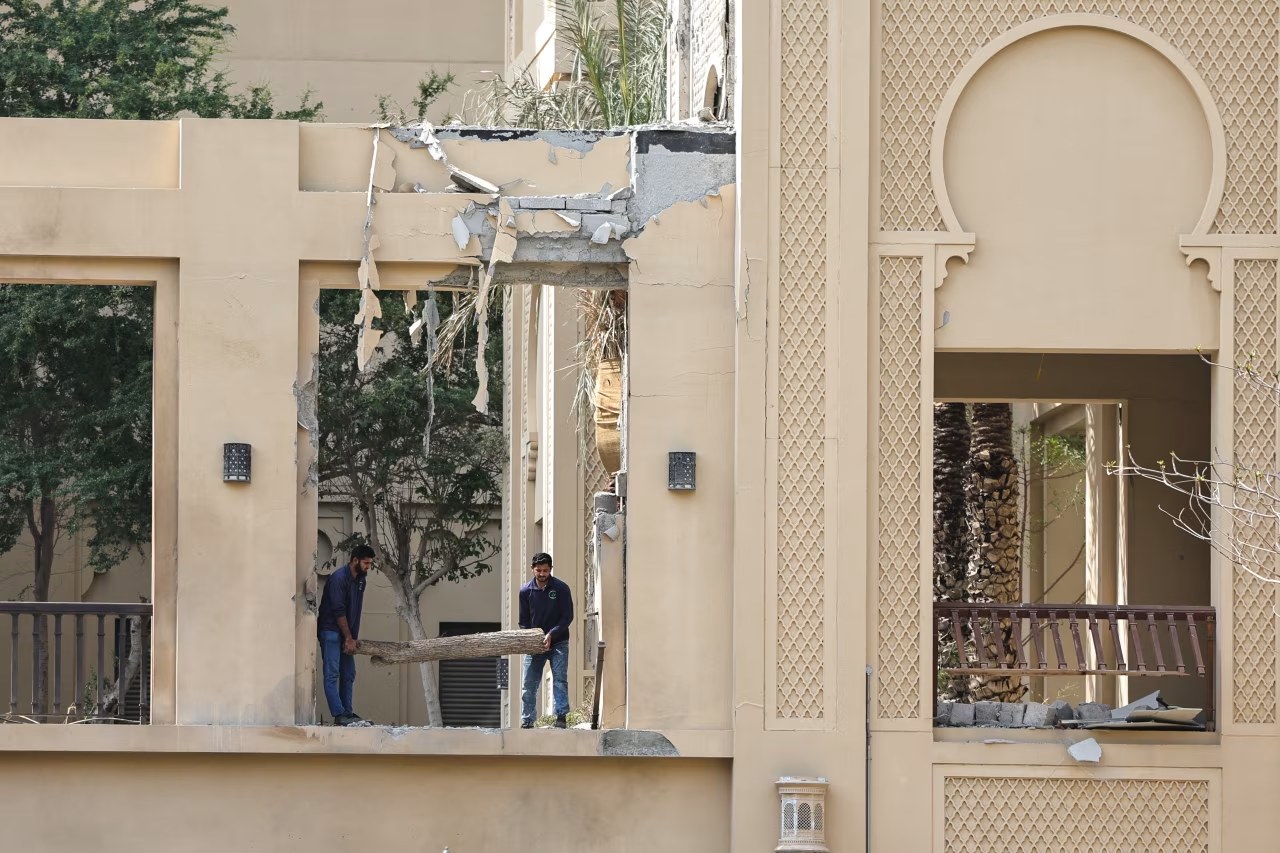
- Fairmont Dubai damage highlights gap between terror-only coverage and uncovered war perils.
- Capacity crunch looms with Lloyd’s syndicates cutting Middle East war lines by 20%.
Escalating hostilities expose a lethal flaw in corporate insurance programmes across the region.
MIDDLE EAST—DUBAI—When a missile fragment tore through the façade of the Fairmont hotel on Palm Jumeirah, the blast shattered more than glass. It blew open a billion-dollar gap between what Middle East companies thought their insurance covered and what it actually does. Standard commercial policies across the Gulf now routinely exclude war damage, leaving firms scrambling to buy costly war-risk protection as Iran-linked tensions intensify.
Brokers in Dubai and Riyadh told lenders that every major property, cyber and business-interruption programme renewed since cross-border strikes resumed has carried new war exclusions. The result is a seller’s market: premiums for standalone war cover have jumped as much as 50% in six months, according to regional pricing sheets circulated by Marsh McLennan and Willis Towers Watson.
“Clients are shocked to learn a $500 million hotel portfolio needs a separate $2 million war premium just to cover missile strikes,” said one underwriter at a London-market syndicate. The scramble for protection is rippling through aviation, energy and hospitality balance sheets, pushing insurers to ration capacity and raising the prospect that some assets will remain effectively uninsurable against war perils.
The Fairmont Strike That Exposed the Coverage Void
A single explosion forced risk managers across the Gulf to re-examine their fine print.
Photographs of twisted metal outside the Fairmont the Palm in the early days of the conflict became a case study for brokers. Although the hotel carried a comprehensive terror policy underwritten by regional insurers, adjusters quickly classified the damage as “warlike action” because the projectile originated from a state military source. That distinction triggered the war exclusion clause, nullifying the claim.
“We initially filed under the terror wording,” said a claims executive familiar with the file. “But reinsurers cited the war exclusion and pushed it back to the captive market.” The property ultimately absorbed several million dollars in unreimbursed repair costs, according to two people with knowledge of the settlement. The episode now appears in broker slide decks across the Gulf as proof that terror-only programmes are inadequate for state-linked hostilities.
Industry data illustrate how widespread the exposure has become. Roughly 80% of property schedules placed in the UAE and Saudi Arabia during 2023 contained war exclusions, up from 45% three years earlier, according to a survey by the Dubai Insurance Institute. Cyber and business-interruption lines show the same trajectory, leaving companies effectively self-insuring against missile, drone or sabotage events tied to geopolitical conflict.
“The Fairmont incident created an inflection point,” said Michael Hayes, head of placement for the Middle East at Gallagher. “Boards that once accepted war exclusions as boilerplate are now demanding affirmative cover, even at triple the premium.” The shift has underwriters weighing sovereign-risk models they rarely used outside hull-war markets.
Capacity is tightening just as demand spikes. Lloyd’s syndicates including Beazley, Hiscox and Atrium have trimmed Middle East war lines by 15-20% since January, citing accumulation fears around critical infrastructure. With fewer reinsurers willing to back the risk, primary insurers have little choice but to shrink limits or raise rates, a dynamic that brokers expect will persist at least through renewal season this autumn.
Why Insurers Won’t Blink First on Pricing
Underwriters remember previous losses and price for the worst-case scenario.
War underwriters say the Middle East market is caught in a classic supply squeeze. On one side, accumulated losses from Yemen’s drone campaign on Saudi Aramco facilities, the 2019 Abqaiq attack and the 2021 Mercer Street incident have eroded dedicated war pools. On the other, the number of insurable assets keeps rising as Dubai and Riyadh add hotels, data centres and logistics hubs.
The arithmetic is brutal: total war-risk capacity available to Gulf risks is estimated at $1.2 billion, according to broker submissions seen by this publication. Yet the insured values of just the top 15 hotel portfolios in the UAE exceed $15 billion. “It’s a capacity-to-exposure mismatch you rarely see outside natural-catastrophe lines,” said a senior war-underwriter at an Asian reinsurer.
That mismatch feeds pricing leverage. A midsize business park near Dubai International Airport that paid 0.08% of insured value for war cover last year now faces quotes of 0.12-0.15%, brokers say. For a $400 million asset, the premium jumped from $320,000 to $600,000. Airlines face even steeper hikes; hull-war premiums for wide-body fleets have doubled since January, according to Ascend by Cirium data.
Buyers have little negotiating room. “We shopped a Saudi petrochemical plant to 12 underwriters,” said one London broker. “Ten declined outright; two offered 50% higher pricing with sub-limits on drone strikes.” The takeaway, underwriters argue, is that state-linked violence is no longer an edge case but a base scenario.
Reinsurers insist the increases are actuarially sound. “We model peak losses of $2 billion if a coordinated strike hits critical nodes like Ras Tanura or Jebel Ali,” said Karen Ng, head of political violence at a Bermudian reinsurer. “Pricing must reflect that tail risk or we’ll see capital exit the class entirely.” Until new capacity enters the market—possibly via regional sovereign funds—rates are expected to climb further.
How Broader Sanctions Complicate Claims
Geopolitical labels can decide whether a loss is paid or denied.
War exclusions contain a thicket of definitional clauses that determine coverage. Many London-market wordings exclude “war, civil war, revolution, rebellion, insurrection or hostile action by or against a belligerent power.” Insurers increasingly interpret “belligerent power” to include states designated as sponsors of terrorism, a category that now envelops Iran.
The classification carries real consequences. When a drone widely attributed to Iran hit Saudi Aramco’s Abqaiq facility in 2019, energy companies discovered their political-violence policies contained sanctions clauses barring any payment that might benefit black-listed entities. Even if physical damage was payable, business-interruption losses tied to sovereign retaliation could be excluded.
Lawyers say the ambiguity invites litigation. “We’re seeing cases where insurers argue the proximate cause is geopolitical warfare, not physical damage,” said Hanaa Balaa, a Beirut-based insurance litigator. Courts in the DIFC have so far upheld war exclusions if the underlying act involved military hardware, but no final precedent exists for cyber-attacks or sabotage with plausible deniability.
Meanwhile, U.S. and EU sanctions complicate loss settlements. Reinsurers with American licences cannot remit payments that flow, even indirectly, to the Islamic Revolutionary Guard Corps. That constraint forces primary insurers to ring-fence claims handling, adding cost and delay. “A straightforward $5 million glass claim can take nine months if sanctions screening flags a contractor,” said a Dubai-based loss adjuster.
The net effect is that companies must price not only higher premiums but also the risk of unpaid losses. Risk managers now ask brokers to secure sanctions-compliant wording, a request that shrinks the already narrow panel of willing insurers.
Could Regional Sovereign Funds Fill the Capacity Gap?
Local capital sees opportunity where global reinsurers see retreat.
With Lloyd’s and European reinsurers pulling back, attention is turning to sovereign wealth vehicles such as Abu Dhabi’s ADQ, Saudi Arabia’s PIF and Qatar Investment Authority. Each fund has deployable capital exceeding $100 billion and a vested interest in keeping strategic assets insurable.
Early signs of involvement are visible. ADQ and ADCB this year seeded a $300 million political-violence sidecar managed by Abu Dhabi National Insurance, earmarked for domestic war risks. The facility offers limits up to $150 million per risk, pricing aggressively against London to keep business onshore. Brokers say similar initiatives are under discussion in Riyadh and Manama.
Yet scale matters. Regional funds can absorb midsize risks but cannot replicate global diversification. “A $1 billion refinery loss would wipe out the local sidecar,” said one underwriter. To attract additional capacity, Gulf regulators are quietly exploring a mutual-war pool modelled on the U.S. terrorism backstop TRIA. Under the proposal, member states would collectively guarantee a layer of losses above privately insured retentions.
Actuaries caution that pricing must remain disciplined. “If the pool underprices to appease industry, it will simply crowd out what little private capital remains,” said Dr. Monica Verity, director of insurance research at the University of Dubai. She argues for risk-based premiums tied to vulnerability ratings, with mandatory participation for critical infrastructure.
Even partial state backing could stabilise the market. Analysts at S&P Global estimate a regional war pool with $5 billion of committed capital could cut premiums by 25-30% while still delivering long-term returns to sovereign investors. The bigger question is political will: governments must decide whether subsidising corporate insurance is the best use of petrodollars in a volatile oil market.
What Companies Can Do Before Renewal Season
Early engagement, data and diversification are key, brokers say.
With renewal season three months away, risk managers are under pressure to present robust submissions. Underwriters warn that incomplete data will be declined outright. “We need ballistic profiles, stand-off distances to military bases and redundancy plans for critical suppliers,” said the head of political violence at a Bermudian reinsurer.
Loss-mitigation measures can trim pricing by 10-15%. Installing blast-resistant film on glass façades, creating redundant data pathways and contracting pre-approved repair vendors all reduce expected loss severity. Hotels that upgraded perimeter security after the 2022 Jeddah attacks saw war-premium quotes fall by an average of seven basis points, according to broker records.
Alternative structures also help. Some energy firms are placing property and war cover on different towers to tap competing capacity. Others opt for parametric triggers that pay a fixed sum if a missile lands within a defined radius, speeding claims and avoiding causation disputes.
Buyers with regional footprints should diversify retentions. Underwriters apply country-wide limits; splitting assets across UAE, Saudi and Qatar can effectively double capacity. Finally, engaging early is crucial. Markets begin allocating capacity 90 days before renewal; late submissions receive whatever is left, usually at top pricing.
“The days of rolling over programmes are gone,” said Gaurav Malik, head of risk engineering at a Dubai conglomerate. “We start renewal planning six months out, treat war like CAT, and budget for double-digit premium growth.” That mindset, brokers argue, is the new baseline for operating in the Gulf.
Frequently Asked Questions
Q: What is the difference between terror and war exclusions in insurance?
Terror exclusions apply to politically motivated violence by non-state actors, while war exclusions bar losses from state-on-state hostilities. Most Middle East property policies now exclude both, forcing firms to buy separate war-risk cover priced at up to 0.5% of insured value.
Q: How much have war-risk premiums risen since the Iran conflict escalated?
Brokers say war-risk rates on key Gulf assets have jumped 30-50% since cross-border missile strikes began, with retrocession capacity down 20%. A $500M property programme now costs roughly $2.5M in war premium versus $1.6M six months ago.
Q: Which industries are most affected by the coverage gap?
Hospitality, aviation and energy firms face the biggest exposure because standard property, cyber and business-interruption policies exclude war damage. Hotels near strategic ports and airports must now buy standalone war policies to cover missile strikes.
