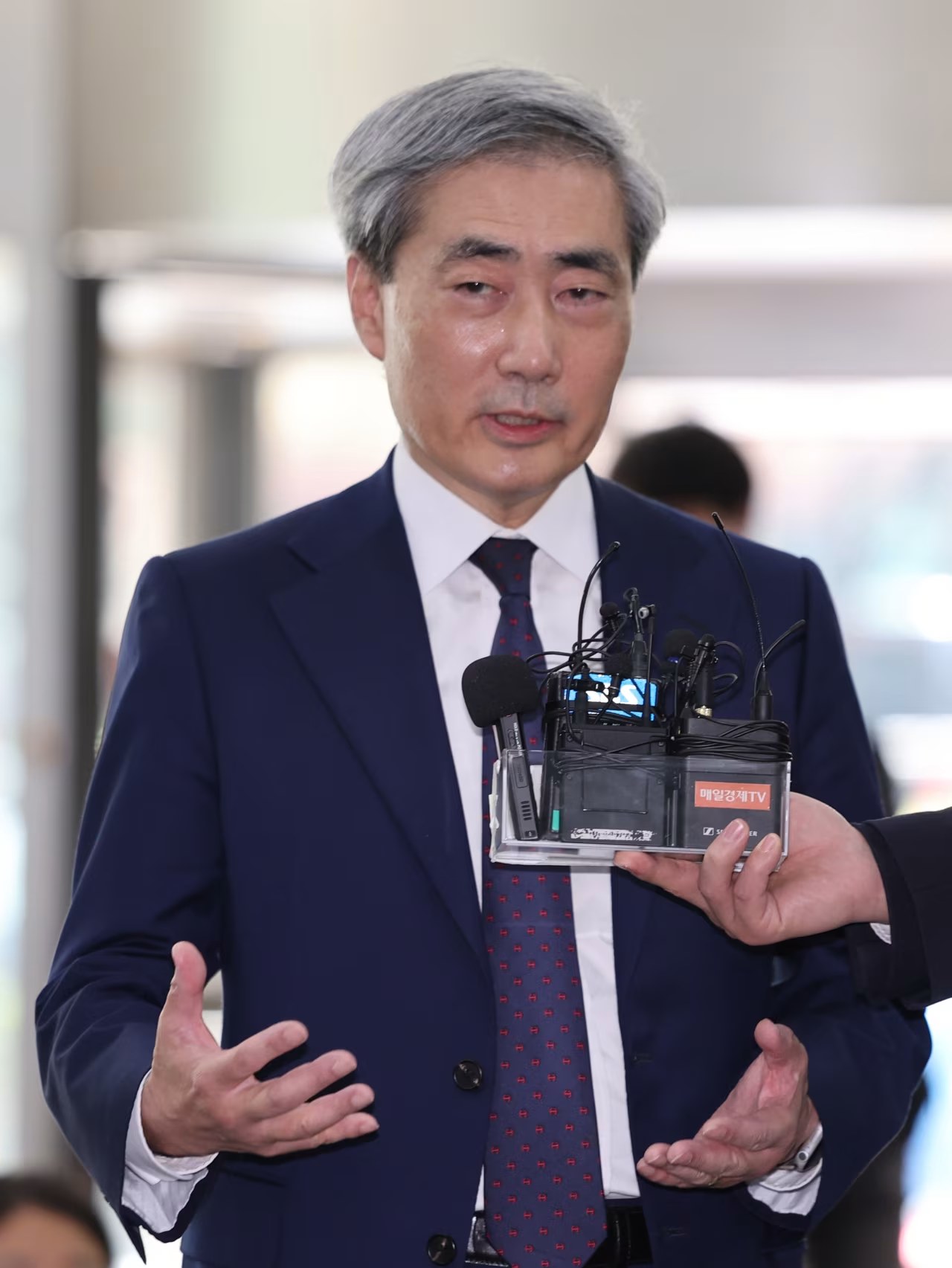
Incoming BOK Chief Signals $120 Billion FX Swap Cushion Holds
- Shin Hyun-song, poised to take office mid-April, says dollar liquidity is ample despite won volatility.
- Foreign investors have poured a net $18.7 billion into Korean bonds year-to-date, mostly via FX swaps.
- Outstanding foreign-held won bonds hit an all-time high of $205 billion in March.
- Nominee sees external risks contained as onshore dollar funding costs hover near 18-month lows.
Seoul’s next central-bank governor bets that record foreign bond inflows, not the Fed, will keep dollar funding calm.
BANK OF KOREA—SEOUL—Shin Hyun-song, the academic nominated to run the Bank of Korea, walked into parliament on Tuesday with a single message for markets: Asia’s fourth-largest economy has enough dollars to breathe. Speaking ahead of his confirmation hearing, Shin pointed to robust foreign buying of Korean government debt through foreign-exchange swaps as the quiet engine that keeps Seoul’s dollar plumbing pressurised.
The remark, easy to overlook in a 509-word dispatch, landed just as the won gyrated within 2% of its 2026 trading band. Traders had been questioning whether Korea—heavily reliant on external funding—could face a repeat of 2008-style dollar shortages if U.S. rates stay higher for longer. Shin’s assurances, backed by central-bank data showing $120 billion in outstanding FX-swap lines, pushed three-year currency basis swaps 3 basis points tighter that afternoon.
“External risks are contained,” Shin told reporters, a phrase that will likely become his early policy mantra if parliament approves his appointment next month. For a country that remembers the 1997 IMF bailout, the governor-designate’s confidence carries political weight beyond markets.
Why Korea’s Dollar Market Is Calm When the Won Isn’t
Despite the Korean won’s 4.8% slide against the dollar this quarter, onshore dollar funding costs—measured by the three-month FX-implied yield—have fallen to 3.92%, their lowest since September 2024. The disconnect puzzles traders who equate currency weakness with funding stress. Shin argues the explanation lies in bond-market mechanics rather than spot FX positioning.
Foreign asset managers, hunting yield after the U.S. Treasury curve flattened, have snapped up $18.7 billion of Korean government bonds so far in 2026, according to Korea Exchange data. Because these investors hedge won exposure through FX-swap contracts, they simultaneously deliver dollars to Korean banks that need greenback liquidity. The result: a private-sector dollar inflow that offsets any corporate demand for hard currency.
“The FX-swap book acts as an automatic stabiliser,” says Park So-yeon, fixed-income strategist at NH Investment & Securities in Seoul. Park estimates that every $1 billion of foreign bond purchases injects roughly $800 million into the domestic dollar money market via swaps, creating a self-reinforcing loop that keeps cross-currency basis narrow.
Shin endorsed this view in his remarks, noting that outstanding foreign holdings of Korean Treasury and quasi-sovereign paper reached $205 billion in March, a record 12.4% of total issuance. The holdings are concentrated in 3- and 10-year benchmarks, the most liquid tenors for FX-hedged accounts.
Market internals back the narrative. The one-year dollar-won cross-currency basis—an indicator of funding scarcity—trades at minus 18 basis points, well inside the minus 55 bps level that triggered Bank of Korea intervention in October. Implied dollar funding premiums for Korean banks have fallen below those of regional peers such as Indonesia and India, reversing last year’s hierarchy.
Still, Shin cautioned that the buffer is market-driven, not official. Korea’s foreign-exchange reserves stand at $414 billion, down $9 billion from a year ago, but only $28 billion is immediately deployable in the form of dollar deposits. If global risk aversion spikes, foreign investors could unwind hedges quickly, draining dollars from the swap market within days.
For now, traders price in only a 12% probability of a 25-basis-point emergency rate hike to defend the won, compared with 38% in January. Shin’s testimony helped push that implied risk lower, a signal that communication alone can substitute for intervention—at least until the Fed’s next dot plot.
Can FX Swaps Replace the Fed’s Dollar Swap Line?
During the 2008 crisis and again in March 2020, Korean banks faced a dollar funding squeeze so severe that the Bank of Korea tapped the Federal Reserve’s dollar swap line for $60 billion. Shin’s confidence today rests on the belief that private FX-swap flows have grown large enough to reduce reliance on this backstop.
Official data show outstanding FX-swap contracts linked to Korean government bonds total $120 billion, quadruple the size in 2015. The outstanding notional exceeds the Fed swap line ceiling available to Korea ($30 billion) by a factor of four, giving policymakers comfort that market mechanisms can handle routine shocks.
Yet the comparison is not apples-to-apples. Fed swaps provide uncollateralised central-bank dollars, whereas FX swaps are collateralised by bonds and subject to margin calls. During the 2020 dash-for-cash, hedge funds dumped Korean bonds, forcing FX-swap counterparties to post extra collateral and tightening onshore dollar liquidity precisely when it was needed most.
Shin, a Princeton-trained economist who once advised the Fed, knows the difference. In his 2022 academic paper he argued that emerging markets should build ‘market-based swap ecosystems’ rather than depend on Fed benevolence. His remarks Tuesday echoed that theme, suggesting Korea has reached an inflection point where private depth can substitute for official facilities.
Not everyone is convinced. “FX swaps work until they don’t,” says Steve Cochrane, chief Asia economist at Moody’s Analytics. Cochrane points out that 62% of Korean banks’ dollar liabilities mature within six months, creating a structural mismatch if offshore investors withdraw. A disorderly unwind could still force Seoul back to the Fed, political optics notwithstanding.
The Bank of Korea has responded by lengthening the duration of its own FX hedges and encouraging banks to issue longer-dated dollar bonds. Korean lenders sold $7.3 billion of five- and 10-year dollar notes this year, the fastest start since 2017, reducing rollover risk into the second half.
Shin’s nomination hearing will therefore hinge on whether lawmakers believe Korea has outgrown the Fed umbrella, or merely enjoys a temporary lull before the next dollar drought. His answer could determine how much foreign-exchange reserves the BOK is willing to burn defending the won—and how quickly Korea renegotiates its Fed swap quota before the next global seizure.
Parliament’s Confirmation Hurdle: Politics Versus Markets
Shin’s parliamentary hearing, scheduled for the first week of April, is technically a formality—Korea’s president holds appointment power—but lawmakers have used the forum to extract policy promises. With general elections looming, opposition party MPs are expected to press Shin on whether ‘ample’ dollar liquidity also means the BOK will resist won-supporting rate hikes that hurt indebted households.
The political calculus is delicate. Korean household debt reached 104% of GDP in 2025, the highest in Asia, and every 25-basis-point rate rise adds roughly 2.4 trillion won ($1.8 billion) in annual interest costs. Shin must convince legislators that defending financial stability via dollar liquidity does not pre-empt rate cuts if inflation undershoots the 2% target.
Market participants watching the hearing will parse Shin’s language on two fronts: the level of the won that triggers BOK intervention, and the scale of FX reserves he deems expendable. Current governor Rhee Chang-yong sold $8.1 billion in spot markets during January’s rout, only to see the won weaken another 1.2% within weeks. Critics called the intervention costly and ineffective.
Shin, who served as Rhee’s senior deputy, is expected to endorse a more rules-based approach: relying on FX-swap tightening first, spot intervention second. Such a hierarchy would preserve reserves and avoid the political backlash that accompanies visible dollar sales. It also aligns with IMF guidance that reserves should be used sparingly, and only when disorderly market conditions threaten broader stability.
Confirmation odds lean in Shin’s favor. The ruling party holds 168 of 300 parliamentary seats, and Shin’s academic pedigree—tenured at Princeton and Seoul National University—insulates him from credential attacks. Still, lawmakers may demand written pledges to cap household debt growth and to submit quarterly liquidity reports, constraints that could limit his operational flexibility once in office.
Analysts at Goldman Sachs assign an 85% probability to Shin’s confirmation by mid-April, but note that any surprise dissent would roil Korean asset markets already trading at 5.2% implied volatility. Traders have priced a 0.6% swing in USD/KRW on the day of the confirmation vote, underscoring how personnel politics now moves the currency as much as macro data.
What Happens to the Won If Foreigners Stop Buying?
Shin’s sanguine view hinges on continued foreign demand for Korean bonds. Yet global fund flows are fickle. A 100-basis-point rise in U.S. Treasury yields would erase the carry advantage that Korean 10-year KTBs currently offer over Treasuries, potentially triggering outflows. Model estimates from BNP Paribas suggest a net $12 billion monthly outflow could push the won past 1,350 per dollar, a level last seen during the 2022 energy shock.
Such a scenario would test Shin’s assertion that dollar liquidity remains ample. Korean banks’ loan-to-deposit ratio in foreign currency is 127%, above the 100% threshold that triggered Fed swap line requests in prior cycles. If foreign investors liquidate bonds and unwind FX hedges, the swap market could flip from dollar surplus to deficit within weeks.
Shin hinted that the BOK could counteract by easing regulations on foreign-repo access, allowing overseas investors to source onshore dollars without selling bonds. A pilot programme launched in 2025 lets foreign central banks and sovereign funds borrow won-denominated government securities in exchange for dollar collateral, effectively a reverse repo that injects dollars into Seoul’s money market.
Usage has been modest—only $4.3 billion tapped so far—but Shin suggested expanding eligible collateral to include quasi-sovereign and AAA corporate notes, a tweak that could raise capacity to $30 billion. The reform requires approval from the finance ministry, which has historically resisted liberalisation that cedes control over onshore collateral.
Market reaction to the proposal is lukewarm. “Foreigners want liquidity, not collateral flexibility,” says Khoon Goh, head of Asia research at ANZ. Goh notes that true safety comes from scale, not eligibility rules. Until the BOK offers repo lines comparable to the Fed’s FIMA facility—$60 billion overnight—foreign investors will still treat Korean markets as price-takers rather than safe havens.
Shin’s challenge is therefore bigger than messaging: he must institutionalise dollar liquidity buffers that survive his five-year term. That means deepening the FX-swap book, broadening the repo base, and negotiating a standing Fed swap line that Korea has so far politely declined. Whether he can deliver will determine if today’s calm is durable—or merely the quiet before the next dollar storm.
Frequently Asked Questions
Q: What did Shin Hyun-song say about dollar liquidity?
The BOK governor nominee told reporters that dollar liquidity remains ample, citing sustained foreign buying of Korean bonds via FX swaps as the key stabiliser.
Q: Why does dollar liquidity matter for Korea?
Korea’s banks and exporters rely on wholesale dollar funding; ample liquidity prevents credit crunches and sharp won depreciation during global shocks.
Q: How do FX swaps bolster Korea’s dollar buffers?
Foreign investors buy Korean bonds and hedge won exposure with FX-swap contracts, injecting dollars into the onshore market and easing funding stress.
