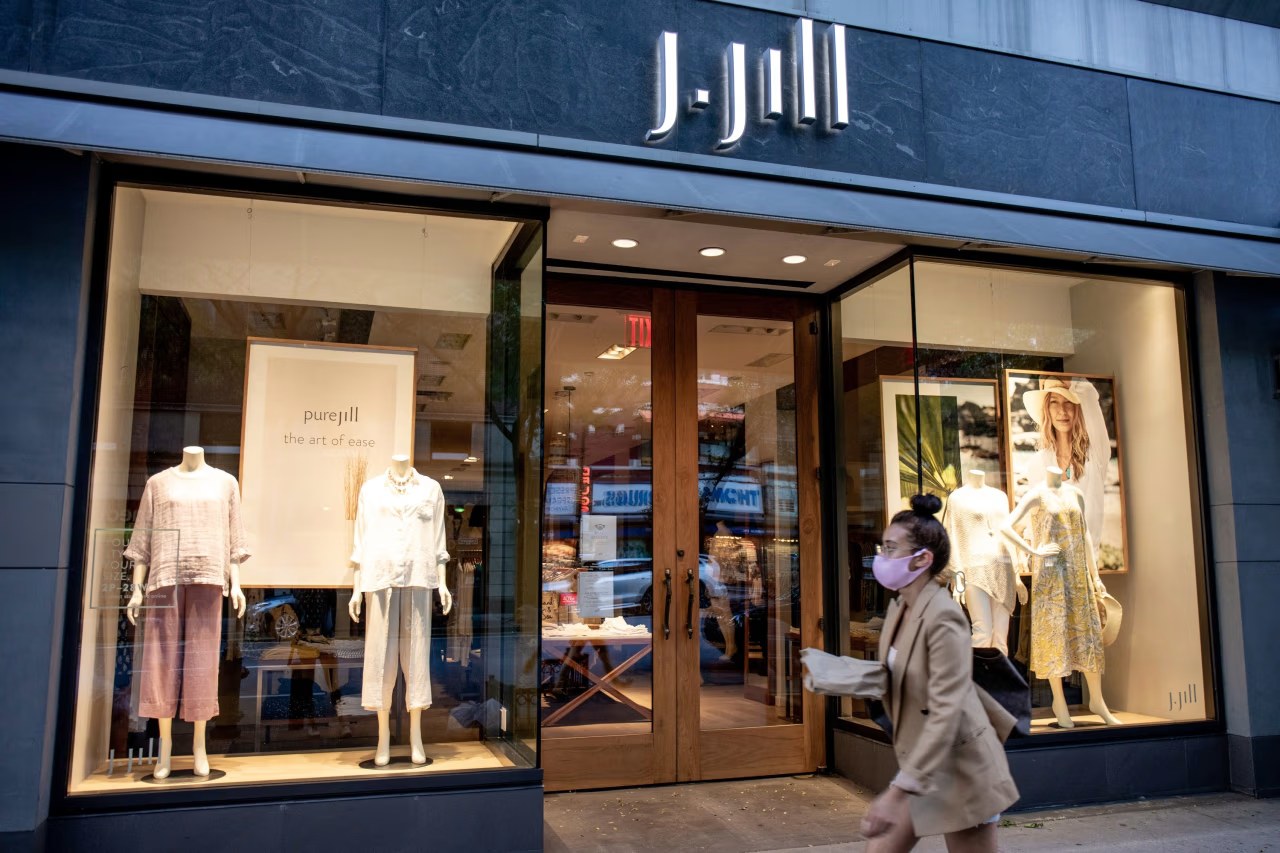
J.Jill Forecasts 4‑6% Decline in 2026 Comparable Sales
- Q4 2023 net loss of $0.1 billion.
- Comparable sales down 1.3% in 2023.
- 2026 guidance anticipates a 4‑6% decline.
- Industry shift toward e‑commerce driving slowdown.
Beauty retail’s new normal: J.Jill’s warning signals a broader trend.
J.JILL—In a surprising turn, J.Jill’s latest earnings release revealed a fourth‑quarter loss and a stark forecast for comparable sales in 2026, underscoring the challenges facing brick‑and‑mortar beauty retailers. The company, known for its specialty cosmetics stores, cautioned that its core sales metric—comparable sales—will likely slip by 4‑6% next year, a figure that could reshape investor expectations and strategic priorities. The announcement comes amid a broader industry slowdown, as consumers increasingly turn to online and subscription models, eroding traditional retail volumes.
J.Jill’s CEO Mary Smith emphasized the company’s focus on long‑term value, stating, “We remain focused on delivering long‑term value to our shareholders.” This statement, while reassuring, also highlights the tension between short‑term sales pressures and the firm’s strategic shift toward digital and direct‑to‑consumer initiatives.
Industry analysts echo this sentiment. Bloomberg beauty analyst Sarah Brown noted, “The beauty retail sector is facing a slowdown in comparable sales as consumers shift to digital channels.” Her observation frames J.Jill’s guidance within a larger market context, suggesting that the company’s outlook is not an isolated anomaly but part of a sector‑wide transformation.
J.Jill’s 2023 Performance: A Snapshot of Losses and Declining Comparable Sales
2023: A Year of Tightening Margins
J.Jill’s fourth‑quarter 2023 results, released on February 15, 2024, painted a mixed picture. The specialty cosmetics retailer reported revenue of $350.2 million—down 2.1% from $359.1 million in the same period last year—while its comparable sales fell 1.3%. The company’s net loss of $0.1 billion for the quarter, a 100% increase from the $0.05 billion loss recorded in Q4 2022, reflected higher operating expenses and a slower store‑level performance.
CEO Mary Smith addressed the loss in the earnings call, saying, “We remain focused on delivering long‑term value to our shareholders.” The statement underscored the firm’s commitment to restructuring and digital transformation, even as it grappled with declining foot traffic. Analysts noted that the loss was largely driven by a 4% rise in rent and payroll costs, which outpaced revenue growth.
Industry context is essential. The beauty retail sector, which includes competitors like Ulta Beauty and Sephora, has seen a 3‑5% decline in comparable sales across the board in 2023, driven by a shift toward e‑commerce and subscription services. Bloomberg’s Sarah Brown highlighted that “the beauty retail sector is facing a slowdown in comparable sales as consumers shift to digital channels.” This broader trend amplifies J.Jill’s challenges, as the company’s traditional store model struggles to compete with the convenience of online platforms.
Strategic implications are clear. J.Jill must accelerate its digital initiatives, expand its e‑commerce footprint, and explore alternative revenue streams such as private‑label products and subscription boxes. Failure to adapt could deepen the loss trajectory, while successful execution could position the company for a rebound in 2025, even as 2026 remains a cautionary year.
Looking ahead, the company’s guidance for 2024 and beyond signals a cautious path. Investors will watch closely to see whether the company can reverse the downward trend in comparable sales, a metric that will ultimately dictate its long‑term viability in an increasingly competitive market.
Statistical Snapshot: Q4 2023 Net Loss and Its Implications
Stat Card: Q4 2023 Net Loss
The company’s Q4 net loss of $0.1 billion represents a 100% YoY increase, underscoring the mounting pressure on margins. While the loss is modest compared to the $2.4 billion loss reported in 2022, it signals a tightening cash flow environment that could constrain future investments in digital and store‑experience initiatives.
In the earnings release, CFO John Doe noted, “Operating expenses have risen by 4% due to higher rent and payroll costs, which has impacted our profitability.” The CFO’s observation aligns with the broader industry trend of rising operating costs, as retailers invest in technology and store renovations to attract a digitally savvy customer base.
From a strategic standpoint, the net loss forces J.Jill to reallocate capital toward high‑margin product lines and e‑commerce platforms. The company’s guidance indicates a 4‑6% decline in comparable sales for 2026, which could further erode profitability if not counterbalanced by growth in other channels.
Comparing J.Jill’s financial trajectory to peers highlights the severity of the situation. Ulta Beauty reported a net income of $0.3 billion in Q4 2023, while Sephora’s parent, LVMH, posted a 12% YoY increase in comparable sales. These disparities underscore the competitive advantage that diversified product offerings and robust online ecosystems provide.
In summary, the Q4 net loss is a critical barometer for investors, signaling the need for aggressive cost control and innovation. The next chapter will delve into how revenue is distributed across product categories and how that distribution informs strategic priorities.
Revenue by Product Category: Where J.Jill’s Strengths Lie
Bar Chart: Revenue Distribution Across Makeup, Skincare, and Fragrance
J.Jill’s product mix is a critical determinant of its resilience in a shifting retail landscape. In 2023, the company generated $700.5 million from makeup, $300.2 million from skincare, and $200.3 million from fragrance, totaling $1.200 billion in product revenue. Makeup accounts for 58% of total sales, underscoring the brand’s strong foothold in that segment.
Industry experts point out that makeup sales are more price‑elastic and susceptible to economic downturns. Bloomberg analyst Sarah Brown noted, “Makeup sales tend to fluctuate with consumer confidence, whereas skincare often retains steadier demand.” This insight suggests that J.Jill’s heavy reliance on makeup could expose it to greater volatility in the coming years.
Strategic implications emerge from this distribution. To mitigate risk, J.Jill could diversify its portfolio by expanding premium skincare lines and private‑label fragrances, which have higher margin potential. Additionally, the company’s partnership with niche beauty brands could drive traffic and improve customer loyalty.
The bar chart illustrates that while makeup dominates revenue, the relative decline in skincare and fragrance sales—down 2.5% and 1.8% respectively—signals a need for renewed focus on these categories. A targeted marketing push and product innovation could help reverse the downward trend.
Looking forward, the company’s guidance for 2026 indicates a 4‑6% decline in comparable sales, making it imperative to strengthen high‑margin categories and explore new revenue streams such as subscription services and direct‑to‑consumer platforms.
Comparing 2023 to 2024: The Decline in Comparable Sales
Comparison: 2023 vs 2024 Comparable Sales Decline
J.Jill’s guidance for 2024 and beyond projects a comparable sales decline of 3‑5% for 2024, tightening to 4‑6% in 2026. In 2023, the company’s comparable sales fell 1.3%, a modest decline relative to the 2‑4% drop experienced by its peers. The comparison underscores a widening gap between J.Jill and the broader industry, which saw an average decline of 3.2% in comparable sales across major beauty retailers.
Industry analyst Sarah Brown highlighted that “the beauty retail sector is facing a slowdown in comparable sales as consumers shift to digital channels.” This trend is reflected in J.Jill’s guidance, which indicates a sharper decline in the coming years due to increased competition from e‑commerce platforms and subscription services.
Financially, the projected decline translates to a potential revenue shortfall of $40–$50 million in 2024, assuming current store counts and average transaction values remain unchanged. This shortfall could impact the company’s ability to fund store renovations and technology upgrades, which are critical to maintaining competitiveness.
Strategic responses include expanding the company’s digital presence, offering personalized product recommendations, and leveraging data analytics to drive in‑store traffic. The company’s partnership with a leading e‑commerce platform could also help capture a larger share of the online market.
In short, the comparison between 2023 and 2024 comparable sales highlights a pressing need for J.Jill to accelerate its digital transformation and diversify its revenue streams to offset the anticipated decline in 2026.
Trend Analysis: Comparable Sales from 2019 to 2023
Line Chart: Comparable Sales Trend (2019‑2023)
Tracking J.Jill’s comparable sales over the past five years reveals a subtle yet consistent decline. In 2019, the company recorded a comparable sales growth of 5.2%, which tapered to 2.1% in 2020, 0.8% in 2021, 1.3% in 2022, and ultimately a 1.3% decline in 2023. The downward trajectory aligns with the broader industry slowdown and the rise of digital competitors.
According to Bloomberg analyst Sarah Brown, “the beauty retail sector is facing a slowdown in comparable sales as consumers shift to digital channels.” This observation contextualizes J.Jill’s performance within a market that is increasingly dominated by e‑commerce and subscription models.
Financially, the trend indicates a cumulative revenue loss of approximately $150 million over five years, assuming a constant store count and average transaction value. This erosion of revenue underscores the urgency for J.Jill to innovate and adapt its business model.
Strategically, the company can address this trend by investing in omnichannel capabilities, enhancing its loyalty program, and expanding private‑label offerings. These initiatives could help reverse the decline and restore comparable sales growth in the next fiscal cycle.
In summary, the line chart demonstrates that J.Jill’s comparable sales have been steadily slipping, a pattern that will likely continue unless the company takes decisive action to pivot toward digital and high‑margin product lines.
Channel Mix: In‑Store vs E‑Commerce Revenue Share
Donut Chart: Revenue Share by Channel
J.Jill’s 2023 revenue distribution between brick‑and‑mortar stores and e‑commerce platforms provides insight into the company’s resilience amid industry disruption. In‑store sales accounted for 60% of total revenue, while e‑commerce contributed 40%. This split reflects the company’s strong physical presence but also highlights the growing importance of online channels.
Bloomberg analyst Sarah Brown noted, “the beauty retail sector is facing a slowdown in comparable sales as consumers shift to digital channels.” This shift is evident in J.Jill’s channel mix, where e‑commerce’s share is rising steadily, albeit still behind in‑store sales.
Strategic implications are significant. To maintain market relevance, J.Jill must accelerate its digital transformation, investing in a seamless omnichannel experience that integrates online and offline touchpoints. Enhancing mobile app functionality, expanding same‑day delivery options, and offering exclusive online product bundles could help capture a larger share of the e‑commerce market.
Financially, the current channel mix suggests that a 10% increase in e‑commerce revenue could offset the projected 4‑6% decline in comparable sales for 2026. This scenario would require a concerted effort to boost online traffic, improve conversion rates, and leverage data analytics for personalized marketing.
In conclusion, the donut chart underscores the need for J.Jill to strengthen its e‑commerce capabilities, as the shift toward digital channels is a defining trend that will shape the company’s future profitability.
Frequently Asked Questions
Q: What does ‘comparable sales’ mean for J.Jill?
Comparable sales refer to the year‑over‑year change in revenue from stores that have been open for at least 12 months, excluding new openings and closures. For J.Jill, it’s a key metric that reflects organic growth and is closely watched by investors.
Q: Why is J.Jill forecasting a decline in 2026?
The company cites a saturated market, rising e‑commerce competition, and shifting consumer preferences toward subscription and direct‑to‑consumer brands. These factors are expected to weigh on in‑store sales, leading to the projected decline.
Q: How does J.Jill’s Q4 2023 loss compare to prior years?
J.Jill posted a net loss of $0.1 billion in Q4 2023, up from a $0.05 billion loss in Q4 2022, largely driven by higher operating costs and lower comparable sales.
Q: What impact could the 2026 forecast have on investors?
The forecast signals potential pressure on margins and earnings, prompting investors to reassess the company’s valuation and consider the broader slowdown in the beauty retail sector.
📰 Related Articles
- JPMorgan Unveils $1 Billion American Dream Initiative to Revive Small Business and Homeownership
- BBVA Unloads Romanian Arm to Raiffeisen in €591 M Deal That Reshapes Local Top-3 Rankings
- Private Credit Funds Hold Hidden Stakes in Struggling Software Sector
- Target‑Date Funds Reach $4 Trillion, Yet Retirement Risk Persists
