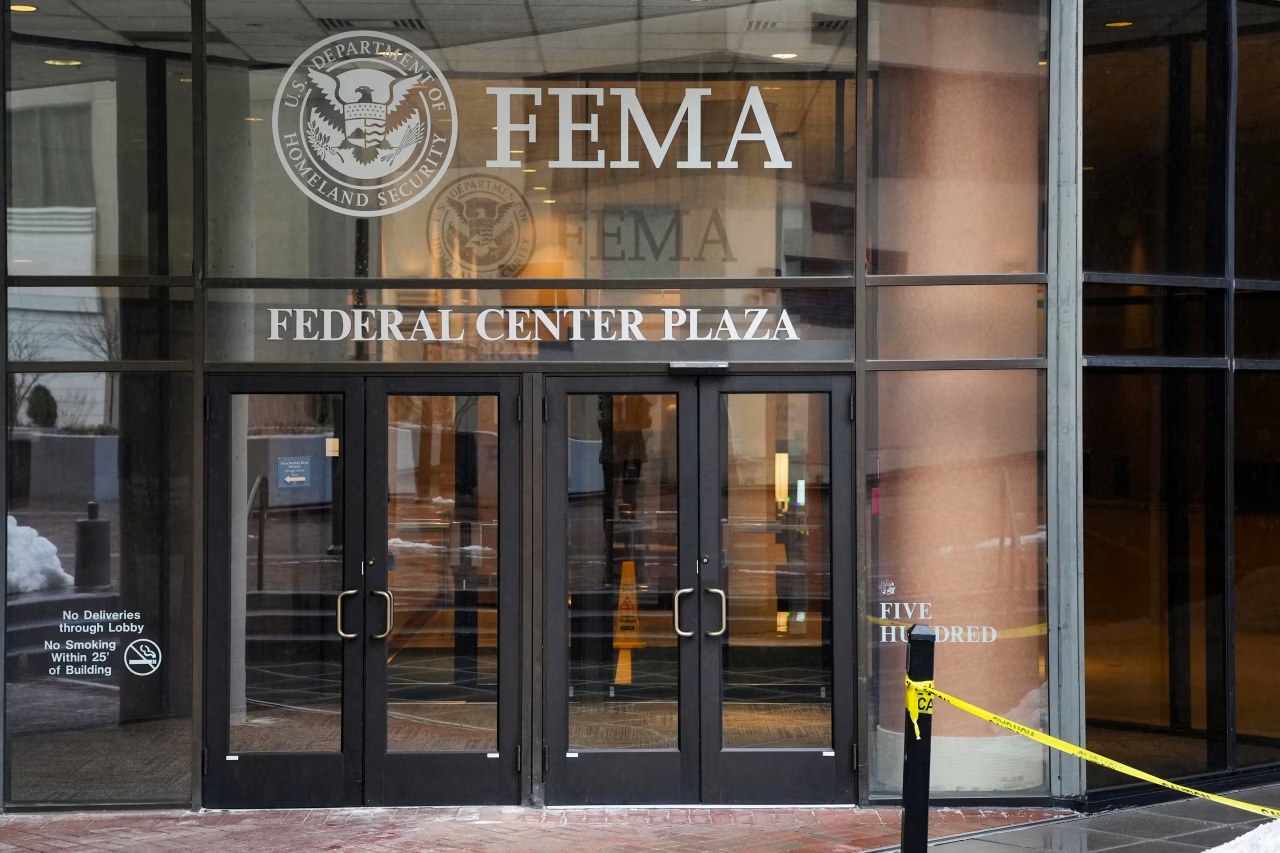
Federal Watchdog Seizes Records in Sweeping FEMA Contractor Investigation
- The Department of Homeland Security’s Inspector General searched the office of FEMA contractor Kara Voorhies.
- Investigators seized records and a computer as part of a broader probe into federal contracting.
- The investigation scrutinizes a network of aides placed throughout the DHS by former Secretary Kristi Noem and adviser Corey Lewandowski.
- The inquiry specifically examines Voorhies’s role in the FEMA contracting process, highlighting concerns over influence.
A Federal Inquiry Unravels: Political Influence, Contracting, and the Public Trust
FEMA CONTRACTOR INVESTIGATION—In a significant development echoing long-standing concerns about political appointments and federal procurement, investigators with the Department of Homeland Security’s (DHS) inspector general recently executed a search at the office of a Federal Emergency Management Agency (FEMA) contractor. This highly unusual step signals an intensified phase in a broader, sensitive inquiry targeting a network of aides allegedly embedded throughout the DHS by former Secretary Kristi Noem and her adviser, Corey Lewandowski, during their tenure. The operation, which involved seizing records and a computer from the office of contractor Kara Voorhies, thrusts the opaque world of government contracting and political influence into the spotlight.
The internal watchdog’s decisive action underscores the gravity with which federal authorities are approaching allegations of impropriety within one of the nation’s most critical agencies. The focus on Voorhies’s involvement in the FEMA contracting process is particularly salient, given FEMA’s pivotal role in disaster response and recovery. Any perception of undue influence or favoritism in securing contracts could erode public trust and compromise the effectiveness of emergency services, which often involve billions of taxpayer dollars and immediate, life-saving impact. The initial reports suggest a determined effort to trace the contours of political connections intersecting with substantial government procurement.
This FEMA contractor investigation is not merely about a single individual or contract; it represents a deep dive into the mechanisms through which political allies gain access and exert influence within the federal bureaucracy. The phrase “turbulent tenure” used to describe the period under Noem and Lewandowski hints at underlying issues that may have permeated various departments. As the DHS Inspector General’s office sifts through the seized materials, the broader implications for accountability, transparency, and the integrity of federal operations begin to emerge, promising further revelations about the intricate interplay of power and procurement.
The Inspector General’s Mandate: Unpacking a Federal Watchdog’s Authority
The search of a FEMA contractor’s office, leading to the seizure of records and a computer from Kara Voorhies, highlights the formidable powers and critical mandate of a federal Inspector General. The Department of Homeland Security’s Inspector General (DHS IG) serves as the agency’s internal watchdog, possessing a broad statutory authority to investigate waste, fraud, abuse, and mismanagement. This specific action, targeting a contractor amidst an inquiry into politically appointed aides, illustrates the IG’s role in ensuring the integrity of government operations, often operating with a degree of independence from the agency they oversee. Such an operation is not undertaken lightly, typically requiring substantial preliminary evidence to justify the formal execution of a search and seizure, reflecting a significant escalation in the ongoing investigation.
The Broad Scope of IG Investigations
Experts in government ethics, such as Professor Michael Lewis of the National Accountability Project, consistently emphasize that Inspector General offices are cornerstones of federal oversight. “An IG’s ability to conduct unannounced searches and seize materials is crucial for uncovering malfeasance that might otherwise remain hidden,” Lewis noted in a recent symposium on federal transparency. This incident, involving a FEMA contractor investigation, underscores the IG’s dual role: not only rooting out individual wrongdoing but also identifying systemic vulnerabilities within federal agencies. The probe into a ‘network of aides’ placed by former DHS Secretary Kristi Noem and adviser Corey Lewandowski suggests that the IG is looking beyond isolated incidents to a pattern of appointments that could have facilitated irregular contracting processes or exerted undue influence.
Historically, IG investigations have brought down high-profile officials and exposed significant corruption, reinforcing their importance in maintaining public trust. For instance, the General Accounting Office’s 1989 report on ‘Inspector General Act: A Review of Agency Implementation’ highlighted the consistent need for IGs to maintain independence and robust investigative tools. The current scrutiny of Kara Voorhies’s role in the FEMA contracting process, within the context of a ‘turbulent tenure’ at DHS, serves as a modern testament to these enduring principles. It implies a detailed examination of how contracts were awarded, who benefited, and whether proper protocols designed to prevent conflicts of interest and ensure fair competition were circumvented. The seizure of electronic devices, in particular, often points to a pursuit of communications that could reveal the true nature of interactions and decision-making processes.
The implications for both the individuals involved and the broader DHS structure are substantial. An IG investigation can lead to criminal charges, administrative penalties, and significant reputational damage. For contractors like Voorhies, the mere fact of a search can severely impact their business and professional standing. For the agency, it can trigger internal reviews, policy changes, and, crucially, a renewed focus on ethical conduct and adherence to procurement regulations. As the DHS IG continues to piece together evidence, the spotlight will inevitably expand, potentially revealing further links between political influence and the allocation of significant federal resources, setting the stage for deeper revelations about the ‘network’ in question.
The ‘Turbulent Tenure’: Unpacking Political Influence at the DHS
The source text’s description of Kristi Noem and Corey Lewandowski’s time at the Department of Homeland Security as a “turbulent tenure” provides a crucial backdrop to the unfolding FEMA contractor investigation. This phrase suggests a period marked by instability, contention, or significant policy shifts, often accompanied by heightened scrutiny over personnel decisions. The allegation that they “seeded” a network of aides throughout the DHS implies a concerted effort to populate the agency with individuals aligned with their political agenda, potentially bypassing traditional merit-based hiring processes. Such actions, while not always illegal, frequently raise red flags regarding undue influence and the politicization of career federal service.
Navigating the Line Between Loyalty and Legality
Political appointments are a standard feature of any administration, but the extent and nature of influence-peddling become problematic when they cross into areas like federal contracting. Dr. Evelyn Stone, a political science professor specializing in bureaucratic integrity, asserts that “the seeding of a ‘network of aides’ can create an echo chamber, where dissenting voices are suppressed and decisions, including those on high-value contracts, can be swayed by loyalty rather than objective criteria.” This particular concern resonates deeply within an agency as vital as the DHS, which oversees national security, border protection, and emergency management. Any erosion of professional impartiality due to political loyalties could have severe operational consequences, especially when it touches sensitive areas like disaster preparedness and response.
Historical precedents underscore the continuous tension between political prerogatives and ethical governance. From the spoils system of the 19th century to more recent controversies surrounding ‘burrowing in’ political appointees into career positions, the federal government has grappled with maintaining a neutral civil service. The investigation into Kara Voorhies’s role in FEMA contracting, therefore, is not an isolated incident but rather a potential symptom of a broader culture that may have been fostered during Noem and Lewandowski’s time. The records and computer seized from Voorhies’s office could hold the key to understanding the interplay between these politically appointed individuals and the critical functions of federal procurement, particularly within the high-stakes environment of FEMA.
The scope of the investigation extends beyond mere political appointments to the tangible impact these networks might have had on the allocation of taxpayer funds. For example, if specific aides were instrumental in directing contracts to favored entities or individuals, it could expose systemic vulnerabilities that need urgent remediation. The scrutiny facing Noem and Lewandowski, therefore, is less about their political affiliations and more about the adherence to ethical standards and federal regulations governing appointments and contracting. The ultimate findings from the DHS Inspector General will undoubtedly shape perceptions of their legacy and potentially lead to calls for stricter oversight of political influence within federal agencies in the years to come.
Kara Voorhies and the FEMA Pipeline: Scrutiny on Disaster Relief Contracts
At the heart of the direct investigative action lies Kara Voorhies, a FEMA contractor whose office was searched and from whom records and a computer were seized. The specific focus on “her role in the FEMA contracting process” elevates the inquiry from a general probe into political influence to a targeted examination of how disaster relief funds are managed and distributed. FEMA contracting is a notoriously complex and high-stakes arena, often characterized by urgent needs, massive budgets, and expedited procedures in the wake of catastrophic events. These conditions, while necessary for rapid response, can also create fertile ground for irregularities if oversight is insufficient.
The Unique Vulnerabilities of Emergency Procurement
The sensitivity surrounding FEMA contracts is amplified by the agency’s critical mandate to save lives and rebuild communities. As former FEMA Administrator Brock Long once stated, “Every dollar spent on disaster relief must be accounted for and spent wisely, as lives literally depend on it.” This sentiment underscores why any hint of impropriety in the FEMA contractor investigation is met with intense public and governmental concern. The seizure of Voorhies’s materials suggests investigators are particularly keen to understand the chain of decisions, communications, and approvals that shaped her involvement and any contracts she may have secured or influenced. This includes scrutinizing whether her appointments or roles were facilitated by the network of aides reportedly installed by Noem and Lewandowski, and if so, what impact that had on fair and open competition.
The scale of FEMA’s operations in recent years, responding to an increasing number of natural disasters, has led to a dramatic increase in contracting out services, from logistics and housing to debris removal and infrastructure repair. Billions of dollars flow through these contracts annually. For example, the Government Accountability Office (GAO) has, in numerous reports over the past two decades, highlighted persistent challenges in federal disaster contracting, citing issues ranging from inflated costs to inadequate oversight. The current probe into Voorhies’s activities could be seen as a direct response to these long-standing systemic vulnerabilities, seeking to identify concrete instances where political connections might have overridden established procurement safeguards or ethical considerations.
The implications of this investigation could be far-reaching for future FEMA operations. If allegations of undue influence or corrupt practices are substantiated, it could lead to significant reforms in how disaster contracts are awarded and managed. It might also prompt a re-evaluation of personnel within FEMA and the broader DHS to ensure that political appointees do not unduly sway critical operational decisions or financial allocations. For Kara Voorhies, the immediate consequence is severe legal and professional scrutiny, while for FEMA, it is a renewed challenge to uphold its integrity in the face of political pressures, ensuring that its mission remains untainted by allegations of impropriety and that public funds are used for their intended purpose: aiding communities in distress.
What are the Broader Implications for DHS Integrity and Public Trust?
The deepening FEMA contractor investigation, originating from a broader probe into political appointments at the DHS, carries significant implications for the integrity of the entire Department of Homeland Security and, by extension, public trust in federal governance. When allegations of politically motivated appointments intertwine with federal contracting, particularly within an agency responsible for national security and emergency response, the ripple effects can be profound. The public relies on government agencies to operate with unimpeachable ethics and efficiency, free from partisan interference that could compromise their mission. This probe, therefore, tests the resilience of the DHS’s internal safeguards and its commitment to accountability.
Eroding Confidence in Federal Operations
According to Dr. Robert Jenkins, a sociologist specializing in public policy and trust, “Incidents like these, even before formal charges are laid, can significantly erode public confidence in federal institutions. When people perceive that contracts are awarded based on connections rather than competence, it undermines the very foundation of fair governance.” The idea that a “network of aides” was ‘seeded’ throughout the DHS during a “turbulent tenure” suggests a potential systemic issue rather than an isolated lapse. This can lead to questions about decision-making processes across various departmental functions, not just contracting, thereby creating a perception of politicization that can be difficult to reverse.
For the career professionals within DHS, such investigations can be deeply demoralizing. They can foster an environment of suspicion, disrupt workflow, and divert critical resources toward internal inquiries rather than mission-critical tasks. Moreover, if the investigation reveals that political considerations led to suboptimal choices in FEMA contracting, the consequences could extend to actual failures in disaster response, potentially jeopardizing lives and livelihoods. The historical record is replete with examples where political appointees, tasked with managing complex federal operations, faced scrutiny over their competence or impartiality, demonstrating a consistent vulnerability in the interface between politics and bureaucracy.
Ultimately, the outcome of this DHS Inspector General investigation will serve as a crucial barometer for the agency’s commitment to internal accountability. It could either reaffirm the robustness of its oversight mechanisms or expose critical weaknesses that demand immediate structural and ethical reforms. The future trajectory of this probe will be closely watched not only by political observers and ethics watchdogs but also by the American public, who expect and deserve a government that operates with the utmost integrity, especially in moments of national crisis and vulnerability. The need for clear, decisive action and transparent communication from the DHS will be paramount in rebuilding any trust that may have been compromised.
Charting the Course: Future of Federal Oversight and Accountability
As the FEMA contractor investigation progresses, it invariably prompts a forward-looking assessment of federal oversight mechanisms and the broader landscape of accountability in government. The meticulous work of the DHS Inspector General, characterized by actions such as seizing records and computers, is a critical component of ensuring that federal agencies operate within legal and ethical boundaries. However, such probes also frequently highlight systemic weaknesses that may require legislative or administrative reforms. The allegations surrounding Kristi Noem, Corey Lewandowski, and their “network of aides” could serve as a catalyst for renewed discussions on how to better insulate federal agencies from undue political influence and ensure that contracting processes remain merit-based and transparent.
Strengthening the Watchdogs: Calls for Enhanced Oversight
Government accountability advocates and legal scholars frequently call for strengthening the independence and resources of Inspector General offices. Professor Jonathan Miller, an expert in administrative law at Georgetown University, emphasized in a recent white paper on federal ethics that, “The capacity of IGs to conduct thorough, unhindered investigations is directly proportional to the public’s confidence in governmental integrity. Adequate funding, staffing, and protection from political interference are non-negotiable for effective oversight.” This statement resonates with the current inquiry, where the IG’s robust action indicates a commitment to fully investigate, regardless of the political stature of those potentially involved.
Beyond the immediate investigative outcomes, this situation may ignite a broader debate about the rules governing political appointments, particularly how deeply politically aligned individuals can be embedded within agencies and their roles in sensitive areas like procurement. Questions might arise about the necessity of clearer ethical guidelines for advisers who operate outside traditional governmental structures, as well as enhanced vetting processes for contractors working on critical federal projects. Historically, major government scandals have often led to significant legislative changes, such as the Inspector General Act of 1978 itself, or the Whistleblower Protection Act, both designed to bolster accountability. The full scope of the investigation into Voorhies’s role and the broader network could therefore pave the way for similar reforms aimed at preventing future abuses of power or influence.
The journey from initial investigation to comprehensive reform is often long and arduous, but the public expectation for transparent and ethical governance remains constant. The ultimate goal is not merely to punish wrongdoing but to fortify the institutions against future vulnerabilities. As the DHS IG continues its work, the lessons learned from this probe will be invaluable in shaping the future of federal oversight, ensuring that public resources are managed with integrity, and that critical agencies like FEMA can fulfill their missions without the shadow of political impropriety. The next phase will involve careful deliberation on policy responses that can prevent a repeat of the ‘turbulent tenure’ described in the initial reports.
Frequently Asked Questions
Q: What is the primary focus of the FEMA contractor investigation?
The primary focus of the ongoing FEMA contractor investigation by the Department of Homeland Security’s Inspector General is the role of Kara Voorhies in the FEMA contracting process. This scrutiny comes as part of a larger inquiry into a network of aides reportedly placed throughout the DHS during the ‘turbulent tenure’ of former Secretary Kristi Noem and adviser Corey Lewandowski, raising questions about influence and proper procedure within federal procurement.
Q: Who are Kristi Noem and Corey Lewandowski in relation to this probe?
Kristi Noem, identified as a former Department of Homeland Security Secretary, and Corey Lewandowski, an adviser, are central figures in the broader investigation. They are implicated in having ‘seeded’ a network of aides across the DHS during their time, prompting the current inquiry into potential irregularities related to political appointments and, subsequently, the specific FEMA contractor investigation involving Kara Voorhies.
Q: Why is the Department of Homeland Security’s Inspector General involved?
The Department of Homeland Security’s Inspector General (DHS IG) is the agency’s internal watchdog, tasked with investigating waste, fraud, and abuse. Their involvement in this FEMA contractor investigation signifies a serious internal review of departmental operations and personnel. The IG’s seizure of records and a computer from Kara Voorhies’s office underscores a commitment to scrutinize the integrity of the FEMA contracting process and the broader implications of political influence within the DHS.
