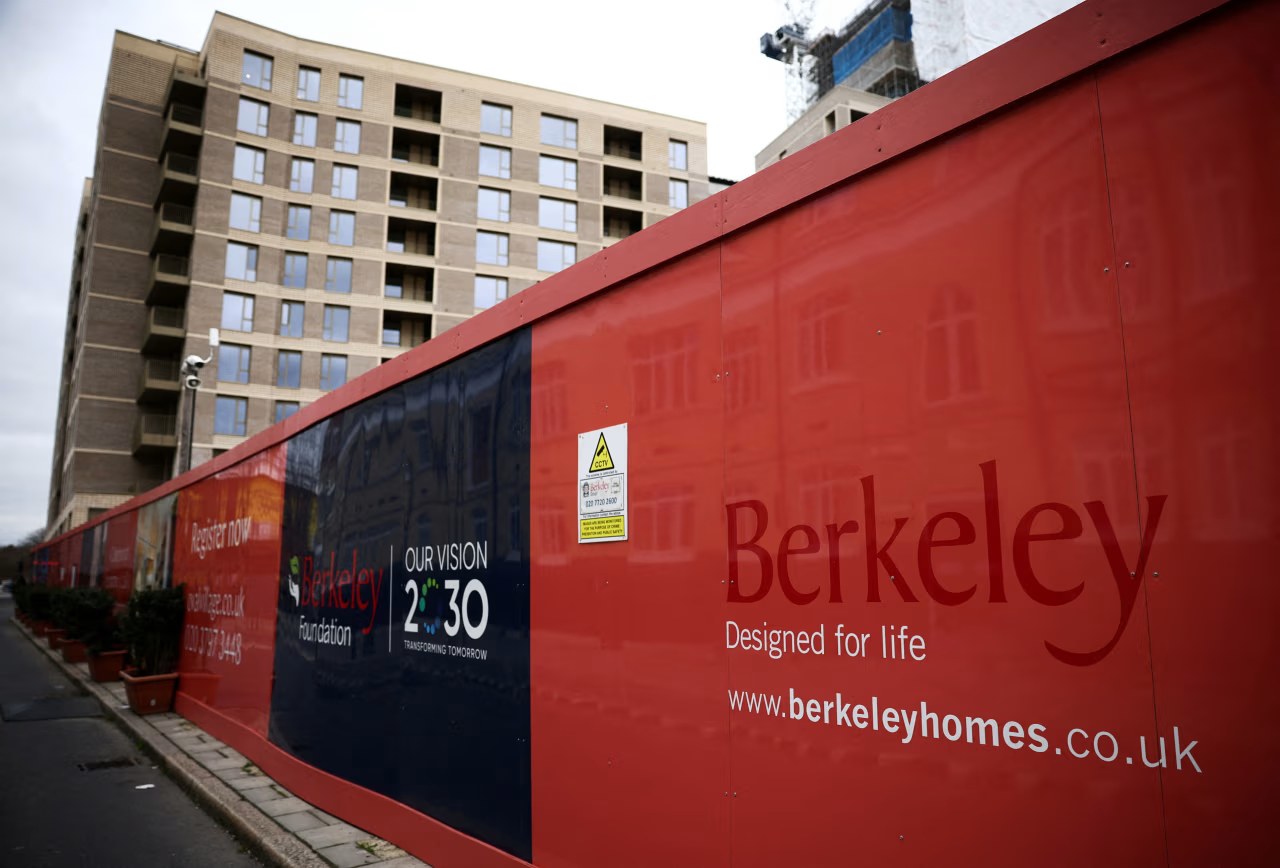
Berkeley Group’s Shares Dip 1.15% Amid Land Acquisition Freeze
- Berkeley Group has paused making any new land acquisitions.
- The decision stems from a challenging market backdrop and geopolitical volatility.
- Confidence in a near-term market recovery has been significantly reduced.
- Despite uncertainties, the company observed a modest recovery in sales volumes.
- Berkeley Group’s shares experienced a 1.15% decrease following the announcement.
A Leading Housebuilder Navigates Economic Crosscurrents and Global Unrest
BERKELEY GROUP—In a significant strategic shift, Berkeley Group, one of London’s prominent housebuilders, has announced an immediate halt to all new land acquisition activity. This decisive move, communicated on Wednesday, underscores deep-seated concerns within the company regarding the current economic climate and the pervasive influence of global instability. The firm explicitly cited a ‘challenging market backdrop’ alongside ‘geopolitical volatility’ as the primary drivers behind its decision, which has notably reduced confidence in any swift market recovery.
The announcement from the London-listed developer paints a clear picture of an industry grappling with unprecedented pressures. While acknowledging a ‘modest recovery in sales volumes,’ Berkeley Group’s leadership appears to be prioritizing caution and capital preservation over expansion in an environment fraught with unpredictable variables. This balancing act—recognizing a glimmer of improvement in sales while simultaneously freezing long-term investment—highlights the complex and often contradictory signals currently defining the UK’s property sector.
For investors, the news was met with a degree of apprehension, as indicated by a 1.15% decrease in Berkeley Group’s share value following the statement. This immediate market reaction reflects broader anxieties about the future trajectory of housing demand, construction costs, and the overall resilience of the UK economy in the face of ongoing global turbulence. The decision to pause new Berkeley Group land acquisition signifies more than just a corporate policy; it’s a bellwether for how even established players are recalibrating their strategies amidst an era of profound uncertainty, setting the stage for a deeper exploration of these interconnected challenges.
The Strategic Pause: Navigating Unprecedented Headwinds
Berkeley Group’s decision to halt new land acquisitions represents a critical inflection point for the London-listed housebuilder. This strategic pause is not merely a tactical adjustment but a profound re-evaluation of its long-term growth trajectory in the face of what the company describes as a ‘challenging market backdrop’ and pervasive ‘geopolitical volatility.’ For a developer like Berkeley Group, whose business model relies heavily on a robust pipeline of future projects, freezing new land purchases signals a deep concern about the viability of upcoming developments and the returns on capital invested.
The company’s statement on Wednesday specifically highlighted that recent macroeconomic events have ‘reduced confidence in near-term market recovery.’ This sentiment, according to Dr. Eleanor Vance, a senior economist specializing in real estate trends at the Institute for Economic Foresight, is indicative of a broader industry apprehension. “When a major player like Berkeley Group makes such a move, it’s a powerful signal,” Dr. Vance commented in a recent industry briefing. “It suggests that while there might be underlying demand, the cost of capital, regulatory hurdles, and future sales price uncertainty have created a risk profile that outweighs immediate growth imperatives.” The implication is clear: the cost of acquiring and holding land, coupled with the potential for diminished returns, has become too high given the current climate.
Unpacking the Investment Climate
Historically, housebuilders often engage in land banking, acquiring plots in anticipation of future demand and price appreciation. This strategy, however, becomes inherently riskier when market visibility is obscured by both domestic and international instability. The 1.15% decrease in Berkeley Group’s share price immediately following the announcement underscores investor unease about this shift. This figure, though seemingly modest, reflects the market’s instantaneous repricing of the company’s future growth potential and its sensitivity to the broader economic narrative. The confidence in a swift rebound of the housing sector has eroded, forcing even resilient firms to adapt their core operating principles.
The London housing market, in particular, often serves as a bellwether for the wider UK economy, attracting significant domestic and international investment. Berkeley Group’s focus on high-quality, often large-scale urban regeneration projects means its exposure to market sentiment, planning policies, and investor confidence is particularly acute. The pause in Berkeley Group land acquisition, therefore, resonates beyond the company itself, hinting at a period of consolidation and reassessment across the entire sector. As the industry grapples with these complex dynamics, understanding the precise nature of the market challenges becomes paramount to forecasting future developments.
What Defines the Challenging Market Backdrop for UK Housebuilders?
The ‘challenging market backdrop’ cited by Berkeley Group is a multifaceted phenomenon, encompassing a range of economic pressures that have steadily eroded confidence across the UK housing sector. While the company’s statement offers a concise diagnosis, a deeper dive reveals the complex interplay of factors contributing to this difficult environment. At its core, the backdrop is defined by persistent inflation, elevated interest rates, and a resultant squeeze on consumer purchasing power, all of which directly impact the affordability and desirability of new homes.
For housebuilders like Berkeley Group, these conditions translate into a double-edged sword. On one side, rising construction material costs—driven by supply chain disruptions and inflationary pressures—inflate project expenses. On the other, higher mortgage rates reduce buyer affordability and dampen demand, particularly in the crucial first-time buyer and mid-market segments. Dr. Anya Sharma, a senior analyst at Property Insights UK, recently highlighted this conundrum: “Developers are caught between escalating input costs and softening demand. The market is increasingly sensitive to price, meaning margins are under immense pressure, making any new Berkeley Group land acquisition a much riskier proposition than in previous years.” This economic tightrope makes long-term investment decisions, such as securing new land, fraught with peril.
Economic Headwinds and Construction Costs
Beyond headline inflation, specific elements contribute to the challenging cost environment. Labor shortages, particularly for skilled trades, continue to drive up wage costs. Regulatory changes, including increasingly stringent energy efficiency and environmental standards, also add to development expenses, requiring significant upfront investment in design and materials. Historically, periods of high inflation coupled with rising interest rates have consistently led to a contraction in the housing market, as evidenced during the early 1990s and following the 2008 financial crisis, when development activity significantly slowed down. This historical context provides a stark warning for current market participants.
The confluence of these factors reduces the commercial viability of many potential projects. Even if a desirable plot of land becomes available, the financial models for development often no longer yield attractive returns after accounting for higher borrowing costs, increased build costs, and potentially stagnant or declining sales prices. This forces a developer like Berkeley Group to exercise extreme prudence. The strategic pause in new Berkeley Group land acquisition signals that the perceived risks and costs associated with future projects currently outweigh the potential rewards, suggesting a longer period of recalibration may be necessary before substantial new investments are made across the sector.
The Shadow of Geopolitical Volatility on Development
Beyond the domestic economic headwinds, Berkeley Group explicitly highlighted ‘geopolitical volatility’ as a significant contributor to its decision to freeze new land purchases. This broader, more unpredictable element introduces a layer of complexity that transcends traditional market analysis. Geopolitical events—ranging from international conflicts and trade disputes to energy crises and shifts in global alliances—have far-reaching consequences that ripple through national economies and directly impact sectors like real estate and construction.
For a housebuilder operating in a global hub like London, geopolitical instability can manifest in several critical ways. It can drive up the cost of essential raw materials, as supply chains become fractured or energy prices soar. For instance, the escalating conflict in Eastern Europe has demonstrated how quickly global energy markets can react, subsequently increasing manufacturing and transport costs for building materials. Professor Mark Jenkins, a specialist in global economics at the London School of Economics, notes that “Geopolitical risks are no longer abstract; they translate directly into tangible costs and investor apprehension. Firms like Berkeley Group, with substantial long-term capital commitments, must now factor in scenarios that were once considered peripheral.” This sentiment underscores a new era of risk management for property developers, where global events hold local sway.
Global Events, Local Consequences
Moreover, geopolitical tensions can deter international investment, a vital component of London’s high-end property market. Wealthy overseas buyers, who historically fuel demand for premium properties, often retreat during periods of heightened global uncertainty, preferring to hold liquid assets or invest in perceived safe havens. This reduction in foreign capital inflows can depress demand at the upper end of the market, impacting Berkeley Group’s particular focus on high-value developments. The exodus or hesitation of such investors creates a vacuum that local demand may not always fill, particularly if domestic economic conditions are also challenging.
The long-term nature of property development projects means that housebuilders must make investment decisions years in advance of completion. A parcel of land acquired today might not see homes completed for five or more years. Over such an extended horizon, geopolitical shifts can drastically alter the economic landscape, rendering initial project assumptions obsolete or significantly less profitable. The pause in Berkeley Group land acquisition is thus a testament to the heightened risk associated with these long development cycles in an increasingly turbulent world. The firm is clearly signaling a need for greater clarity and stability before committing to future substantial capital outlays, awaiting a clearer global outlook to emerge.
The Paradox of ‘Modest Recovery in Sales Volumes’
One of the more intriguing aspects of Berkeley Group’s announcement is the juxtaposition of its decision to pause new land acquisitions with the observation of a ‘modest recovery in sales volumes.’ This apparent paradox speaks to the complex and segmented nature of the current housing market. While the company is clearly cautious about future long-term investments, the uptick in sales suggests that present demand, or at least a specific segment of it, remains robust enough to generate transactions.
This ‘modest recovery’ could be driven by several factors. It might reflect a degree of pent-up demand from buyers who delayed purchases during the peak of economic uncertainty, now re-entering the market as some stability, however fragile, returns. Alternatively, it could be highly localized, perhaps concentrated in specific areas or price points where Berkeley Group has existing inventory. Mark Thompson, a seasoned property market commentator and former director at a leading real estate consultancy, suggests, “The current sales environment is very much a ‘two-speed’ market. Premium properties in desirable locations, or those with strong investment appeal, might still be attracting buyers, even as the broader market struggles. Developers are selling what they have, but are rightly hesitant to commit to future projects without clear visibility on profit margins for new Berkeley Group land acquisition.”
Short-Term Sales vs. Long-Term Investment
The distinction between current sales performance and future investment strategy is crucial. Sales volumes typically reflect activity over a relatively short period, driven by immediate buyer needs or market conditions that might differ significantly from the long-term outlook required for land acquisition and development. Land acquisition is a commitment stretching many years, encompassing significant capital outlay, planning risks, and exposure to future market fluctuations. A ‘modest recovery’ in sales might be insufficient to offset the perceived risks associated with these extended timelines and escalating development costs.
Furthermore, the recovery in sales volumes might also be influenced by the types of properties Berkeley Group is currently bringing to market. If these are in advanced stages of construction or already completed, they are less susceptible to the volatile input costs that would affect a newly planned project. The pause in Berkeley Group land acquisition, therefore, highlights a strategic focus on monetizing existing assets efficiently while mitigating exposure to new, uncertain ventures. This pragmatic approach suggests that while the immediate market has shown some resilience, the underlying structural challenges and geopolitical risks are still potent enough to warrant extreme caution regarding the pipeline for new residential developments.
Long-Term Implications of Berkeley Group’s Land Strategy
Berkeley Group’s unprecedented decision to halt new land acquisitions carries significant long-term implications, not only for the company itself but also for the broader UK housing market. For Berkeley Group, this strategic pause directly impacts its future development pipeline. Land is the lifeblood of any housebuilder, and a sustained freeze on new acquisitions will inevitably lead to a depletion of its future project inventory. This could, over time, affect its market share, revenue generation, and ultimately, its position as a leading developer in the competitive London and South East markets.
From a financial perspective, while the pause might preserve capital in the short term by avoiding risky investments, it simultaneously sacrifices future growth potential. Industry observers, including Ms. Clara Jensen, an equity analyst covering European real estate for a global investment bank, noted in a recent client brief that “Berkeley Group is effectively signaling a period of consolidation. While prudent in a volatile market, it could mean a flatter growth profile in the coming years as competitors with more aggressive land strategies or diversified portfolios potentially gain ground. The long-term impact on their land bank value will be critical to monitor.” The company’s immediate focus will likely shift to optimizing its existing land holdings, accelerating sales of current projects, and carefully managing cash flow.
Impact on the UK Property Landscape
The ramifications extend beyond Berkeley Group. As a bellwether for the premium end of the UK housing market, its actions could influence other major developers. If other housebuilders adopt similar conservative strategies, a collective slowdown in new land acquisition and development across the industry could exacerbate existing housing supply issues. The UK already faces a chronic housing shortage, particularly in urban centers like London. A prolonged reduction in new housing starts from major players could further constrain supply, potentially pushing up prices for existing homes, even as affordability remains a challenge for many.
Furthermore, the pause in Berkeley Group land acquisition might signal a broader shift in investment sentiment towards the UK property sector. If a company known for its strategic foresight and resilience chooses to retrench, it could deter both domestic and international investors from committing capital to new housing projects. This could impact not just residential development, but also the ancillary industries that rely on a vibrant construction sector, from material suppliers to skilled trades. The coming years will be crucial in observing whether this pause is a temporary, prudent maneuver, or the harbinger of a more fundamental recalibration of growth expectations within the UK’s crucial housing market.
Frequently Asked Questions
Q: Why did Berkeley Group pause new land acquisitions?
Berkeley Group paused new land acquisitions primarily due to a challenging market backdrop and pervasive geopolitical volatility. These factors have significantly reduced confidence in a near-term market recovery for the housebuilder, impacting their strategy for future growth and pipeline development. This strategic move aims to mitigate risks associated with the uncertain economic climate for Berkeley Group.
Q: What is the ‘challenging market backdrop’ affecting Berkeley Group?
The ‘challenging market backdrop’ for Berkeley Group likely encompasses a range of macroeconomic pressures affecting the UK property sector. These typically include elevated interest rates impacting mortgage affordability, persistent inflation driving up construction costs, and a general tightening of consumer spending. This environment directly influences demand and profitability in new residential developments, making new Berkeley Group land acquisition riskier.
Q: How does geopolitical volatility impact the housing market?
Geopolitical volatility introduces significant uncertainty into the housing market by disrupting global supply chains, affecting material costs, and influencing investor and consumer confidence. Events like international conflicts or energy crises can lead to inflationary pressures, higher borrowing costs, and decreased buyer sentiment, all of which directly impact the viability and profitability of new developments, like those undertaken by Berkeley Group.
