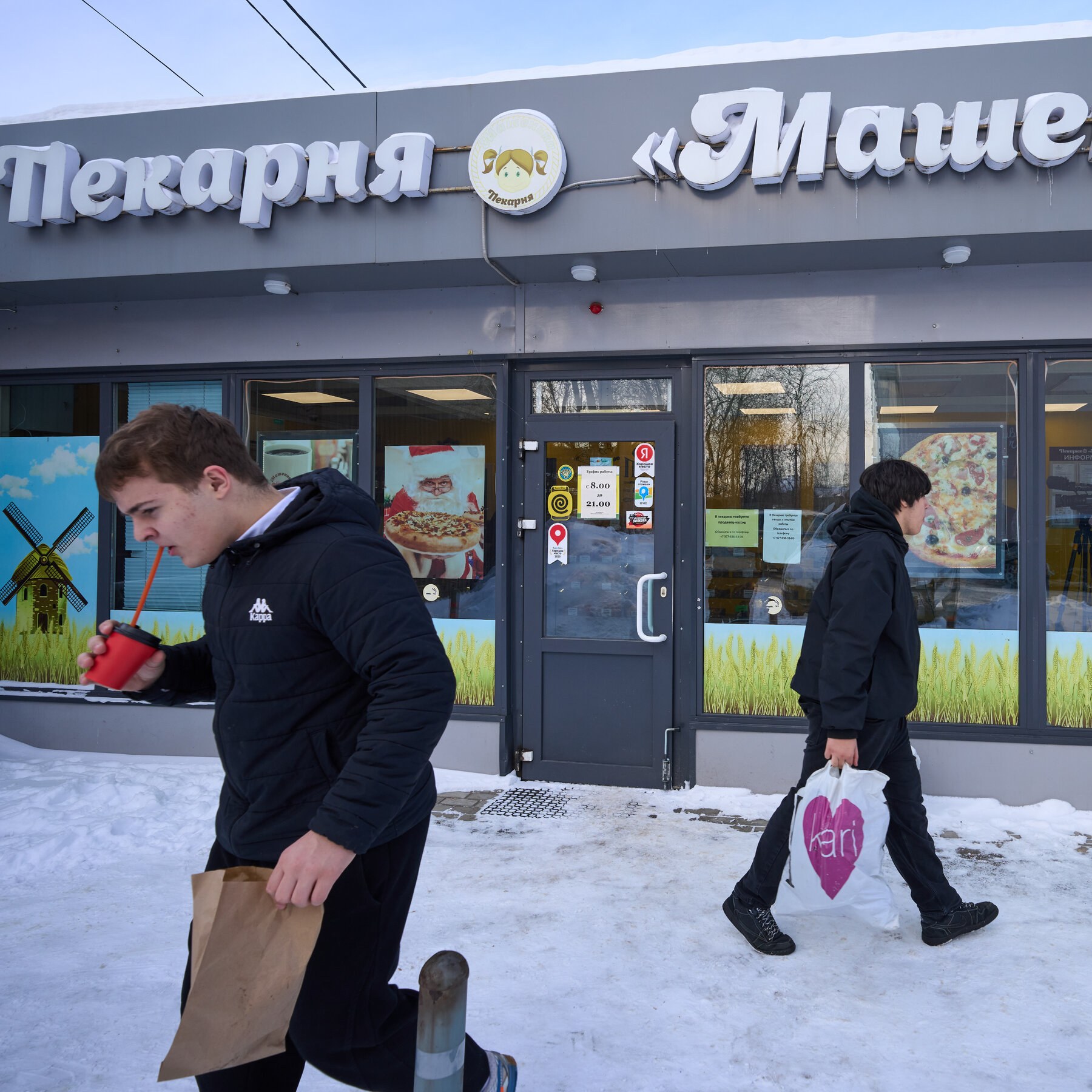
Russian Bakery Confronts Devastating 3,500% Tax Hike, Facing Economic Crisis
- A small bakery owner near Moscow is battling an unprecedented 3,500% surge in taxes.
- This dramatic increase highlights the severe strain on Russia’s war-drained economy.
- The situation signals a potentially larger crisis for small businesses across the nation.
- The bakery’s struggle underscores the widespread economic challenges stemming from ongoing military expenditures.
A Staggering Financial Burden Threatens a Local Staple
NEW YORK—In a quiet district on the outskirts of Moscow, a small bakery owner finds their livelihood hanging precariously in the balance. A recent, almost unimaginable tax increase of 3,500% has descended upon the business, transforming its operational landscape overnight. This extraordinary financial burden, a stark illustration of the pressures bearing down on Russia’s economy, threatens to shutter an establishment that has likely served as a community fixture.
The plight of this unnamed bakery is not an isolated incident but a potent symbol of the wider economic repercussions rippling through Russia. As the nation continues to sustain its military operations, the reverberations are increasingly felt by its smallest enterprises, those vital engines of local commerce and employment. The sheer magnitude of the tax hike suggests a critical juncture, where the economic policies enacted to support prolonged conflict are beginning to exact a significant toll on the domestic front.
This escalating crisis for small businesses, epitomized by the bakery’s desperate situation, points towards a potential broader economic downturn. The resilience of such enterprises is often a barometer for the health of the overall economy, and this severe tax escalation indicates a deepening fragility. The challenges faced by this single bakery near Moscow serve as a critical, albeit stark, warning sign for the nation’s economic future under the weight of its wartime commitments.
The Unprecedented Scale of the Tax Increase
A Shockwave for Local Commerce
The tax increase facing the bakery near Moscow is not a minor adjustment; it represents a seismic fiscal shock. A 3,500% leap in taxation means that for every ruble previously paid in taxes, the business must now somehow find 35 additional rubles. This dramatic escalation is virtually unsupportable for most small businesses, particularly those operating on thin margins common in the food service industry. For a bakery, where ingredient costs, labor, and energy expenses are already significant factors, absorbing such a colossal increase could render the business economically unviable. The owner’s struggle is a microcosm of the immense pressure the war economy is placing on everyday commerce, forcing agonizing choices between survival and closure.
Economic Strain Beyond the Battlefield
Russia’s economy has been increasingly shaped by the demands of its protracted military campaign, leading to what is described as a ‘war-drained’ state. This term suggests that substantial national resources, both financial and material, are being diverted away from civilian sectors and towards sustaining military objectives. The consequence is a growing strain on all facets of the economy, from large state-owned enterprises to the smallest private ventures. The unprecedented tax hike on the bakery likely stems from these broader economic pressures, possibly as a measure to bolster state revenues or to reallocate resources more aggressively. Experts following the Russian economy have long warned that the costs of prolonged conflict would inevitably spill over into domestic economic stability, impacting employment and business survival rates.
Historical Context of Tax Policies
While specific details of this bakery’s tax situation are limited, historical economic patterns in nations engaged in prolonged conflicts offer context. Governments often resort to significant fiscal measures, including tax increases and budget reallocations, to fund extensive military efforts. In periods of intense wartime expenditure, civilian industries may find themselves subject to higher tax burdens to compensate for reduced overall revenue streams or to prioritize defense spending. This can lead to a ripple effect, where increased operating costs for businesses are passed on to consumers through higher prices, or, if unmanageable, lead to business failures. The severity of the 3,500% figure suggests a departure from incremental adjustments, pointing instead to a drastic policy shift or a specific, punitive measure affecting this particular business or sector. The lack of supplemental information on the specific tax laws or the business’s prior tax status means the precise rationale remains speculative, but the economic climate provides a clear backdrop.
The Immediate Future: A Grim Outlook
The owner’s immediate challenge is to find a way to cover these vastly increased tax obligations. This could involve significant price hikes for bread and pastries, potentially alienating customers who are also likely feeling the pinch of a strained economy. Alternatively, the owner might be forced to reduce staff, cut back on product offerings, or even cease operations altogether. The survival of this bakery hinges on its ability to adapt to this sudden and immense financial onslaught, a task that appears extraordinarily difficult given the scale of the increase. The path forward for this small business owner is fraught with uncertainty, a grim testament to the economic realities of a nation at war.
How War Economy Pressures Affect Small Businesses
The ‘War-Drained’ Economy Explained
The descriptor ‘war-drained economy’ is critical to understanding the pressures facing Russian small businesses. It implies that the nation’s financial and productive capacities are being heavily siphoned off to support military endeavors. This diversion of resources can manifest in several ways: reduced investment in non-military infrastructure and innovation, increased inflation due to wartime spending, and a potential decline in consumer purchasing power as national economic priorities shift. For a small bakery, this translates into a more challenging operating environment where costs for raw materials, energy, and logistics might increase, while the customer base may have less disposable income. This dual pressure from rising costs and potentially shrinking demand creates a precarious situation, further exacerbated by sudden fiscal demands like extreme tax increases.
The Global Context of Wartime Economic Strain
Historically, prolonged conflicts place immense strain on national economies, often leading to austerity measures and increased burdens on the private sector. Nations at war frequently implement policies to channel resources towards the war effort, which can include higher corporate taxes, price controls, or, as potentially seen here, significant hikes for specific sectors deemed non-essential or capable of bearing more cost. For instance, during World War II, many countries saw increased taxation and rationing to fund the war. While the geopolitical context is different today, the economic principle remains: sustaining a large-scale military operation requires immense financial input, and that cost is often distributed across the economy. Dr. Maria Petrova, an economist specializing in post-Soviet economies, has noted that “resource reallocation for military purposes inevitably creates deficits and pressures in civilian sectors, which can disproportionately affect small and medium-sized enterprises that lack the scale to absorb shocks.”
The Bakery’s Limited Options
Faced with a 3,500% tax increase, the bakery owner’s options are severely limited. The most immediate response would be to raise prices for their products. However, in a war-drained economy, consumers are likely experiencing their own financial hardships, making them highly sensitive to price increases. A significant jump in the cost of bread and pastries could drive customers to seek cheaper alternatives or reduce their consumption of such goods, potentially leading to a decrease in sales volume that negates the revenue gained from higher prices. Another option is to cut costs, which might involve reducing staff hours or laying off employees, impacting local employment. The most drastic measure would be to cease operations, a fate that seems increasingly plausible if alternative solutions cannot be found. The economic realities suggest a bleak outlook without external intervention or a significant shift in government policy.
Government Revenue and Economic Stability
The Russian government faces a delicate balancing act: funding its military operations while attempting to maintain a semblance of economic stability. In such circumstances, tax increases are a common, albeit often unpopular, tool. However, an increase of this magnitude on a small business suggests a more targeted or perhaps desperate measure to generate revenue. It raises questions about the sustainability of Russia’s economic model under prolonged conflict. If small businesses, which form the backbone of many local economies, are pushed to the brink by fiscal policies, it could lead to widespread economic distress, reduced domestic production, and social unrest. The long-term consequences of such policies, beyond the immediate revenue generation, could be detrimental to the overall health of the Russian economy, impacting its ability to recover even after the cessation of hostilities.
Is This Bakery’s Plight a Sign of Broader Economic Crisis?
The Unfolding Economic Narrative
The situation of the small bakery near Moscow, facing a staggering 3,500% tax increase, is presented as more than just an individual business’s misfortune; it’s a flashing signal of a deeper economic malaise gripping Russia. The phrase ‘war-drained economy’ has been central to analyses of Russia’s current financial state, indicating that the sustained demands of military conflict are significantly depleting national resources and resilience. This phenomenon typically leads to inflation, reduced investment in productive sectors, and a general tightening of financial conditions for both consumers and businesses. The bakery’s predicament is a stark manifestation of these broader pressures, suggesting that the economic toll of the conflict is beginning to be felt acutely at the grassroots level, threatening the viability of small enterprises that are crucial for local employment and community well-being.
Expert Concerns Over Economic Sustainability
Economists and analysts have expressed growing concerns about the long-term sustainability of Russia’s wartime economy. The continued diversion of significant financial and human capital towards military objectives, coupled with international sanctions, places immense strain on non-military sectors. Dr. Anya Volkova, a senior fellow at the Institute for International Finance, commented in a recent analysis that “while the Russian government has demonstrated resilience in managing the economy under sanctions and wartime expenditure, the pressure on the small and medium-sized enterprise sector is a critical vulnerability. These businesses are often the least equipped to absorb sudden cost shocks, and their failure can have cascading effects on local employment and consumer markets.” The extreme tax hike faced by the bakery serves as a potent, albeit anecdotal, piece of evidence supporting these broader concerns about economic fragility.
The Potential for a Domino Effect
If this bakery, and potentially many others like it, are forced to close due to unsustainable tax burdens, the ripple effects could be substantial. Beyond the immediate loss of jobs and services, there is the potential for a domino effect. For example, a closed bakery might impact local suppliers of flour, yeast, and dairy products. A significant increase in business failures could also lead to reduced tax revenue for local governments in the long run, creating further fiscal challenges. Furthermore, a struggling economy with failing small businesses can contribute to a decline in consumer confidence, leading people to save more and spend less, which further dampens economic activity. The situation underscores the interconnectedness of a national economy and the critical role small businesses play in its overall health.
A Glimpse into the Future of Russian Commerce
The challenges confronting this small bakery near Moscow may offer a prescient glimpse into the future of commerce in Russia under the current economic conditions. The government’s focus on military expenditure necessitates difficult trade-offs, and it appears that the burden is increasingly falling upon the engines of domestic economic activity. For business owners, this might mean navigating an environment of unpredictable policy shifts, rising operational costs, and potentially shrinking consumer markets. The resilience required to operate a small business in such a climate is immense, and the current trajectory suggests that survival will demand extraordinary adaptability, innovation, or perhaps reliance on government support, if any is forthcoming for sectors struggling under such fiscal pressure. The ultimate outcome for this bakery, and countless others, will be a significant indicator of the economy’s ability to withstand the ongoing strain.
Frequently Asked Questions
Q: Why did the tax increase so dramatically for the Russian bakery?
The exact reasons for the dramatic tax hike remain unclear from the provided text. However, it is presented as a symptom of Russia’s war-drained economy, suggesting potential government revenue-raising measures or shifts in tax policy to fund ongoing military operations.
Q: What does a 3,500% tax increase mean for a small business?
A 3,500% tax increase represents an astronomical jump in operational costs for a small business like a bakery. It could lead to unsustainable pricing, reduced profit margins, potential closure, or a significant scaling back of operations, forcing difficult decisions about survival.
Q: How is Russia’s economy being impacted by the war?
Russia’s economy is described as ‘war-drained,’ indicating that significant resources are being diverted to military expenditures. This can lead to inflation, reduced investment in non-military sectors, and increased pressure on small businesses, as exemplified by the bakery’s situation.
