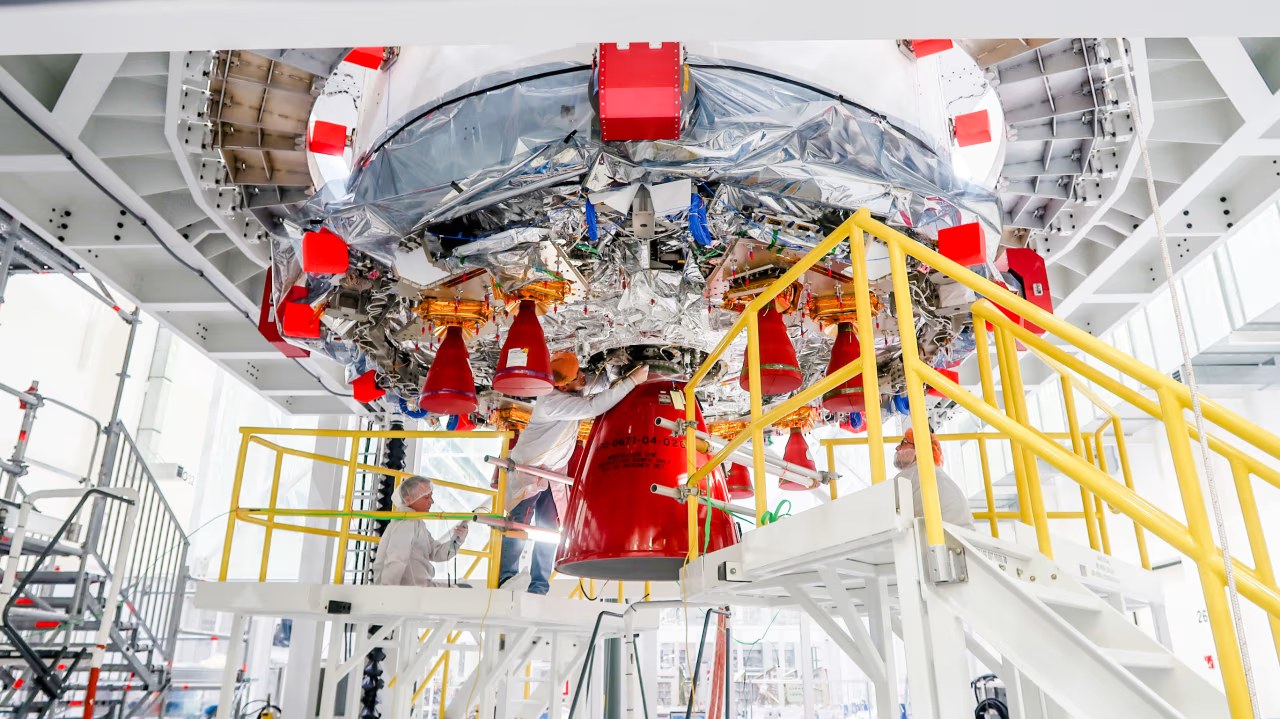
Artemis II Mission Set for Crucial 322-Foot Rocket Test
- NASA’s Artemis II mission aims to transport four astronauts around the moon and back to Earth.
- The mission is a significant test for the National Aeronautics and Space Administration and its network of contractors.
- Boeing developed the core stage of the 322-foot Space Launch System rocket for Artemis II.
- Lockheed Martin is responsible for the Orion crew capsule, a critical component of the mission.
A New Era of Lunar Exploration Hinges on Collaborative Engineering
ARTEMIS II MISSION—The ambition of the National Aeronautics and Space Administration (NASA) culminates in the Artemis II mission, a pivotal endeavor designed to propel a crew of four astronauts on an unprecedented journey. This mission will carry its human cargo out to the moon, execute a meticulous flyby around its celestial body, and ultimately, bring them safely back to Earth. It stands as a monumental ‘big test’ for NASA and the extensive ecosystem of contractors supporting this complex undertaking.
Central to this daring venture is the towering Space Launch System (SLS) rocket, a marvel of modern engineering developed with the expertise of key industry players. The success of Artemis II hinges on the flawless integration of advanced technologies and the seamless collaboration between governmental agencies and private sector innovators.
This groundbreaking mission represents not just a technical challenge but a defining moment for human spaceflight, setting the stage for future lunar exploration and beyond. The intricate dance of propulsion, navigation, and crew survival underscores the critical importance of every component and every partner involved in the Artemis II mission.
The Artemis II Mission: A Pivotal Lunar Endeavor
The Artemis II mission is meticulously designed to achieve a monumental feat in space exploration: transporting a crew of four astronauts on a comprehensive journey to the moon. This ambitious plan encompasses several critical phases, beginning with launching the crew beyond Earth’s gravitational pull, guiding them to orbit and circumnavigate the moon, and concluding with their safe return to our home planet. This entire sequence represents a ‘big test’ for the National Aeronautics and Space Administration (NASA), pushing the boundaries of current spaceflight capabilities and validating the systems required for sustained human presence in lunar orbit and beyond.
Defining the ‘Big Test’ for Lunar Exploration
The designation of Artemis II as a ‘big test’ underscores the inherent complexities and high stakes involved in deep-space human missions. It serves as a crucial proving ground for the myriad technologies, operational procedures, and human endurance capabilities that will be essential for future lunar landings and missions to Mars. The successful execution of this lunar flyby, involving four astronauts, will provide invaluable data and experience, affirming the robustness of the entire Artemis program architecture. Each phase, from launch to trans-lunar injection, lunar flyby mechanics, and ultimately, atmospheric re-entry and splashdown, must perform flawlessly to ensure the safety of the crew and the mission’s overall success.
This mission’s success will pave the way for subsequent lunar expeditions, expanding humanity’s footprint in the solar system, and establishing a foundation for long-duration space habitation. The focus now turns to the powerful vehicle that will make this journey possible, the Space Launch System rocket, and its incredible capabilities.
The Space Launch System: NASA’s Towering 322-Foot Rocket
At the heart of the Artemis II mission’s capability to send four astronauts to the moon and back is the formidable Space Launch System (SLS) rocket. This engineering marvel stands at an impressive 322 feet tall, making it a towering presence on the launchpad. The sheer scale of the rocket is a testament to the immense power required to break free from Earth’s gravity and propel the Orion crew capsule toward lunar orbit. The development of the core stage for this monumental rocket was a critical undertaking, spearheaded by Boeing, one of NASA’s principal contractors for the Artemis program.
Boeing’s Crucial Role in SLS Core Stage Development
Boeing’s contribution to the Space Launch System is fundamental, specifically in the development of its core stage. This section of the rocket is responsible for generating the majority of the thrust during liftoff and ascent, acting as the backbone of the entire launch vehicle. The engineering challenges involved in designing and constructing a 322-foot tall rocket, capable of launching a crew of four astronauts on a lunar trajectory, are immense. Boeing’s expertise in aerospace engineering has been pivotal in bringing this vision to fruition, ensuring that the Artemis II mission has the necessary power to achieve its ambitious goals.
The towering height and power of the SLS rocket symbolize the ambition of the Artemis II mission, signifying a new chapter in space exploration that relies on the precision of its propulsion systems. Next, we will explore the critical element designed to house the human component of this extraordinary journey: the Orion crew capsule.
Orion Crew Capsule: Home for Four on the Lunar Journey
The journey to the moon and back aboard the Artemis II mission places an immense responsibility on the Orion crew capsule. This sophisticated spacecraft is specifically designed to accommodate a crew of four astronauts, providing a safe and habitable environment for their multi-day voyage. Lockheed Martin stands as the company behind the development of this critical component, ensuring its capabilities meet the rigorous demands of deep-space travel, including life support, navigation, and re-entry systems.
Lockheed Martin’s Engineering for Astronaut Safety
Lockheed Martin’s role in the Artemis II mission centers on its creation of the Orion crew capsule. This capsule is more than just a vessel; it is a complex, meticulously engineered habitat for the four astronauts, protecting them from the harsh environment of space and ensuring their well-being throughout the lunar flyby. The design priorities focus on robust safety features, advanced communication systems, and the ability to withstand the extreme temperatures and forces encountered during launch, orbit, and atmospheric re-entry. The successful operation of the Orion crew capsule is paramount for the mission’s ultimate goal: safely bringing the crew back to Earth.
As the primary living and working space for the astronauts, the Orion crew capsule represents the pinnacle of human-rated spacecraft design, a testament to Lockheed Martin’s expertise. The success of this capsule is intricately linked to the overall mission’s ability to safely return its precious cargo, highlighting the importance of the team guiding this monumental effort: NASA itself, and its comprehensive oversight.
What is NASA’s Role in Guiding the Artemis II ‘Big Test’?
As the National Aeronautics and Space Administration, NASA serves as the overarching entity responsible for orchestrating the entirety of the Artemis II mission. This mission, explicitly referred to as a ‘big test,’ falls under NASA’s purview, encompassing everything from conceptualization and design to execution and post-mission analysis. NASA’s role is to ensure that the mission’s objectives—to power a crew of four astronauts to the moon, complete a flyby, and ensure their safe return—are met with the highest standards of safety and technical excellence. The agency coordinates the extensive network of contractors and scientific efforts, consolidating them into a singular, cohesive push towards lunar exploration.
Orchestrating a Complex Human Spaceflight Mission
NASA’s leadership is indispensable for a mission as complex as Artemis II. The agency’s expertise in spaceflight management, risk assessment, and mission control provides the critical framework within which all other components operate. Every stage, from the integration of the towering Space Launch System rocket to the readiness of the Orion crew capsule, is meticulously overseen by NASA. The agency’s commitment to pushing the boundaries of human presence in space is embodied in this mission, serving as a proving ground for technologies and procedures vital for sustained lunar and eventually Martian expeditions. Without NASA’s centralized direction, the intricate web of development, testing, and operations would lack the necessary coordination to succeed.
The success of Artemis II will validate NASA’s comprehensive strategy for lunar return and deep-space exploration, a testament to its long-standing legacy in human spaceflight. This ambitious undertaking, however, is not a solitary effort but a product of extensive collaboration, bringing us to the crucial role of its key partners in the private sector.
The Collaborative Ecosystem: Boeing, Lockheed Martin, and Beyond
The Artemis II mission, a monumental endeavor to send four astronauts around the moon and back, is a testament to the power of collaboration between governmental agencies and private industry. NASA openly acknowledges the involvement of a ‘swarm of contractors’ in making this mission a reality. Among these, two key players stand out: Boeing and Lockheed Martin, each contributing specialized expertise to critical components of the Space Launch System rocket and the Orion crew capsule, respectively. This collaborative model is fundamental to managing the scale and complexity of modern human spaceflight, leveraging the strengths of diverse engineering and manufacturing capabilities.
Integral Contributions from Leading Aerospace Firms
Boeing’s involvement specifically focuses on the development of the core stage of Artemis’s towering Space Launch System rocket. This role is crucial, as the core stage provides the primary thrust for liftoff and the initial ascent into space, a fundamental step in propelling the mission towards the moon. Meanwhile, Lockheed Martin is identified as the company behind the Orion crew capsule, the vital spacecraft that will house the four astronauts and ensure their safety throughout the lunar flyby and return to Earth. These specific contributions highlight how the ‘big test’ of Artemis II is a mosaic of advanced engineering, precision manufacturing, and strategic partnership. The intricate design and construction of both the 322-foot tall rocket and the sophisticated crew capsule exemplify the high level of trust and integration required among NASA and its industrial partners.
The combined might of NASA, Boeing, Lockheed Martin, and countless other unmentioned entities, underscores the multifaceted nature of space exploration. This distributed expertise is the bedrock upon which humanity’s ambitions for returning to the moon and venturing further into the cosmos are built.
Frequently Asked Questions
Q: What is the primary goal of the Artemis II mission?
The primary goal of the Artemis II mission is to power a crew of four astronauts out to the moon, complete a flyby around it, and then safely return them back to Earth. It represents a significant step for human deep-space exploration.
Q: Which major contractors are involved in the Artemis II mission?
Two key contractors for the Artemis II mission are Boeing, which developed the core stage of the Space Launch System rocket, and Lockheed Martin, responsible for the Orion crew capsule. These companies are critical partners to NASA.
Q: How tall is the Space Launch System rocket for Artemis II?
The Space Launch System rocket, a central component of the Artemis II mission, stands at an impressive 322 feet tall. This towering rocket is designed to provide the thrust necessary for lunar orbit and return.
Q: How many astronauts will fly on Artemis II?
The Artemis II mission is designed to carry a crew of four astronauts. This crew will undertake the critical journey around the moon, marking a significant milestone in NASA’s plans for lunar presence.
