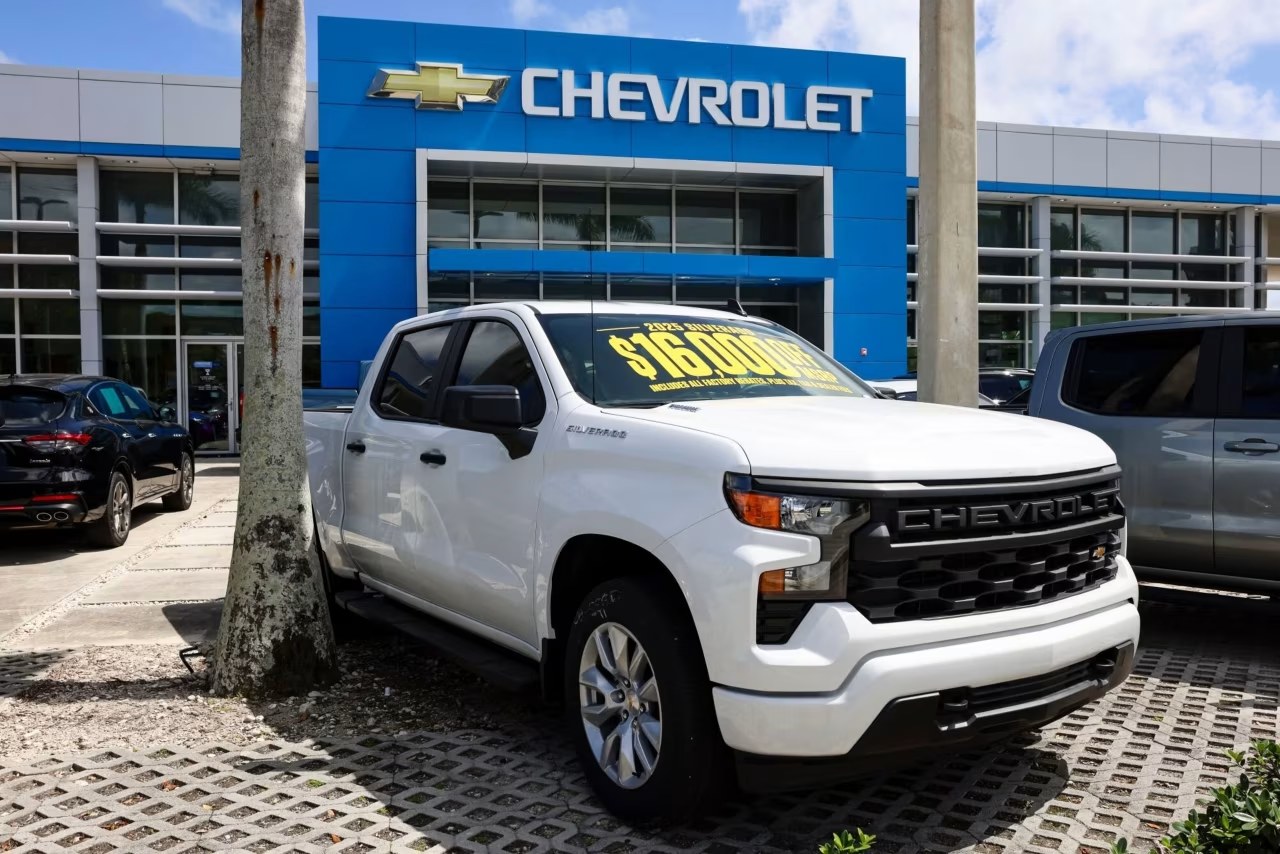
General Motors Faces 9.7% Sales Decline Amid Challenging Economic Environment
- General Motors’ sales plummeted 9.7% in the first quarter, marking its most significant drop in almost four years.
- High interest rates and elevated vehicle prices are identified as primary deterrents for prospective buyers across the auto industry.
- The impact of rising gas prices is anticipated to further exacerbate market challenges, compounding the GM sales decline.
- GM North American chief Duncan Aldred characterized the current market as “abnormal is now normal,” reflecting persistent economic volatility.
Navigating the New Normal: Why Auto Consumers Are Hitting the Brakes
GM SALES DECLINE—The automotive industry finds itself at a critical juncture, as evidenced by the recent performance of General Motors. The Detroit behemoth reported a substantial 9.7% decline in its first-quarter sales, a downturn not seen with such magnitude in nearly four years. This significant contraction in consumer demand for new vehicles signals a deepening challenge across the sector, with broad implications extending from assembly lines to dealership lots.
This steep decline in GM sales is not an isolated incident but rather a symptom of pervasive economic pressures that are reshaping consumer purchasing patterns. For months, prospective car buyers have grappled with the dual burden of elevated interest rates on auto loans and persistently high vehicle prices, making the dream of a new car increasingly out of reach for many. These factors have collectively created a formidable barrier, pushing consumers to defer purchases or explore alternatives in a tightening market.
As the industry navigates these headwinds, the sentiment within executive suites reflects a stark acknowledgment of the changing landscape. Duncan Aldred, the influential chief of GM North America, candidly articulated this shift at an industry event ahead of the New York Auto Show, stating that “Abnormal is now normal.” This concise yet potent observation encapsulates the prevailing uncertainty and the structural shifts now defining the automotive retail environment, setting the stage for a period of continued adjustment and strategic re-evaluation.
The Scale of GM’s Sales Contraction: A Four-Year Low
General Motors faced a formidable challenge in the first quarter of the year, reporting a 9.7% plunge in sales. This significant contraction marks the steepest decline the automaker has experienced in almost four years, a period that encompasses considerable shifts in both economic conditions and consumer behavior. Such a substantial downturn for a major player like GM sends ripples throughout the entire automotive supply chain, from component manufacturers to dealership networks across North America.
Unpacking the 9.7% Drop: More Than Just a Number
The 9.7% drop for General Motors is not merely a statistical anomaly; it represents a tangible reduction in vehicle deliveries and a direct hit to potential revenue streams. When viewed against the backdrop of the past four years, this decline suggests a market environment far more adverse than what the industry has grown accustomed to. The sheer magnitude of this GM sales decline highlights a fundamental shift in buyer confidence and affordability, compelling automakers to reassess their production forecasts and marketing strategies in real time.
This quarterly performance underscores the vulnerability of even the largest automotive companies to macroeconomic forces. As consumers face tighter budgets and increased financial scrutiny, the decision to purchase a new vehicle becomes increasingly complex, directly impacting the sales volumes reported by manufacturers like General Motors. The gravity of this sales performance sets a challenging precedent for the remainder of the fiscal year, signaling that sustained recovery may prove elusive without significant market adjustments.
Economic Headwinds: Interest Rates and Vehicle Prices Hinder GM Sales
The primary culprits behind General Motors’ substantial first-quarter sales decline are clearly identified as high interest rates and elevated vehicle prices. These two intertwined economic factors have collectively erected significant barriers for prospective car buyers, dampening demand across the entire auto industry, not just for GM. As borrowing costs continue to climb, the total cost of vehicle ownership increases dramatically, stretching household budgets and forcing many consumers to delay or forego new car purchases.
The Dual Burden on Consumers
For many Americans, financing is an integral part of acquiring a new vehicle. High interest rates directly translate to larger monthly loan payments, making even competitively priced vehicles less accessible. Simultaneously, average vehicle prices have remained stubbornly high, a consequence of past supply chain disruptions and sustained demand for more feature-rich models. This creates a challenging paradox: consumers face expensive vehicles coupled with expensive loans, severely limiting their purchasing power and contributing directly to the observed GM sales decline.
This dual burden has created an environment where the economic reality for the average consumer clashes with the cost of entering the new car market. Automakers like General Motors must contend with a customer base that is increasingly price-sensitive and debt-averse, necessitating strategic responses that address both the sticker price and the financing terms. Understanding these entrenched economic headwinds is crucial for predicting the near-term trajectory of auto sales and for shaping effective industry strategies moving forward.
Is ‘Abnormal the New Normal’? Decoding GM’s Market Outlook
In a profound statement encapsulating the current state of the automotive market, Duncan Aldred, the chief of GM North America, declared that “Abnormal is now normal.” This observation, delivered ahead of the New York Auto Show, goes beyond a simple acknowledgment of current challenges; it signals a fundamental paradigm shift where economic volatility and consumer hesitation are no longer temporary aberrations but rather enduring features of the market landscape. For General Motors and its peers, this means adapting to a persistent environment of unpredictability.
Aldred’s Insight on Market Volatility
Aldred’s remark reflects an understanding that the conditions driving the 9.7% GM sales decline—namely high interest rates and vehicle prices—are not expected to dissipate quickly. Instead, these factors are becoming the baseline against which all future strategies must be developed. This ‘new normal’ implies that traditional market cycles and recovery patterns may no longer apply, demanding greater agility and resilience from automakers. It’s a candid assessment of a market where consumers are continually re-evaluating their major purchase decisions amidst ongoing economic pressures.
The implication of Aldred’s statement is significant for long-term planning within General Motors. It suggests that sustained growth will require navigating a complex web of consumer affordability issues, evolving preferences, and external economic shocks as standard operating procedure. This shift in mindset from expecting a return to ‘normal’ to embracing ‘abnormal’ as the status quo will undoubtedly shape GM’s product development, pricing strategies, and engagement with a cautious consumer base in the coming quarters.
The Looming Shadow of Fuel Costs: What Rising Gas Prices Mean for GM
While high interest rates and vehicle prices have been the immediate drivers of General Motors’ recent sales slump, the source text cautions that “the impact of rising gas prices is [not] fully felt.” This forewarning points to another significant economic variable poised to further exacerbate the challenges facing the auto industry and potentially deepen the GM sales decline. Historically, fluctuations in fuel costs have a direct and often immediate effect on consumer purchasing decisions, particularly concerning vehicle type and size.
Anticipating a Shift in Consumer Preferences
As gas prices climb, consumers typically become more conscious of fuel efficiency, often shifting their preference away from larger, less economical vehicles towards smaller cars, hybrids, or electric vehicles. This potential pivot in demand could pose an additional strategic hurdle for General Motors, which maintains a diverse portfolio including many larger SUVs and trucks that are popular but less fuel-efficient. The looming impact of higher fuel costs could force GM to accelerate its transition to more fuel-efficient or electric models, or risk alienating a significant segment of the market.
The interplay of persistently high vehicle prices, restrictive interest rates, and now the anticipated full force of rising gas prices creates a multi-layered challenge for GM. Managing this trifecta of economic pressures will require a nuanced approach, balancing production, pricing, and marketing to align with evolving consumer priorities. The full measure of these combined pressures on the GM sales decline remains a critical concern for investors and industry observers as the year progresses.
GM’s Daily Stock Performance: A Glimmer of Green Amidst Sales Red
Amidst the sobering news of a 9.7% sales plunge in the first quarter, General Motors’ stock recorded a 1.46% increase on the day the sales figures were reported. This apparent discrepancy between a significant GM sales decline and a positive stock market reaction highlights the complex interplay of factors influencing investor sentiment, which often looks beyond immediate sales performance to future outlooks, market expectations, or broader economic indicators.
Interpreting Market Reactions Beyond Sales Figures
A stock increase, even a modest 1.46%, following a substantial sales drop suggests that investors may have either anticipated worse results, or are focusing on other aspects of the company’s performance or strategic initiatives. For instance, sometimes a company’s stock might rise if the sales decline is in line with or better than analysts’ expectations, or if the company offers an optimistic future forecast. While the sales figures directly reflect consumer purchasing behavior, the stock market’s reaction can be a more speculative barometer of confidence in management’s ability to navigate the challenges, including the “abnormal is now normal” market conditions described by Duncan Aldred.
This dynamic illustrates that while the GM sales decline is a critical indicator of market demand, it does not exclusively dictate the company’s financial standing in the eyes of investors. The market’s response underscores the need for a holistic view when assessing an automotive giant’s health, considering not only its immediate sales performance but also its long-term strategic positioning, cost management, and future product pipeline in a continuously evolving economic environment.
Frequently Asked Questions
Q: Why did General Motors’ sales decline in the first quarter?
General Motors’ sales declined 9.7% in the first quarter due to a confluence of economic factors, including stubbornly high interest rates and elevated vehicle prices. These conditions significantly dampened consumer purchasing power, contributing to the substantial GM sales decline.
Q: How significant was GM’s first-quarter sales drop?
General Motors experienced a 9.7% sales drop in the first quarter, representing its most substantial decline in almost four years. This sharp GM sales decline signals a challenging environment for the automotive giant amid broader industry pressures and shifting consumer behaviors.
Q: What is ‘abnormal is now normal’ in the auto industry context?
Duncan Aldred, GM North American chief, stated ‘abnormal is now normal’ to describe the current volatile market. This phrase reflects a new reality where factors like high interest rates, elevated vehicle prices, and rising fuel costs are becoming standard challenges, significantly impacting GM sales decline and broader industry trends.
📰 Related Articles
- Detroit’s Electric Vehicle Ambitions Slow as Major Automakers Reverse Course
- GM Adds Sixth Shift at Flint Plant to Meet Surge in Heavy‑Duty Truck Demand
- Rivian Forces Washington Dealers to Relent, Sparks Nationwide Direct‑Sale Debate
- Ohio Glass Factory Fire Sparks Supply‑Chain Concerns for GM and Stellantis
