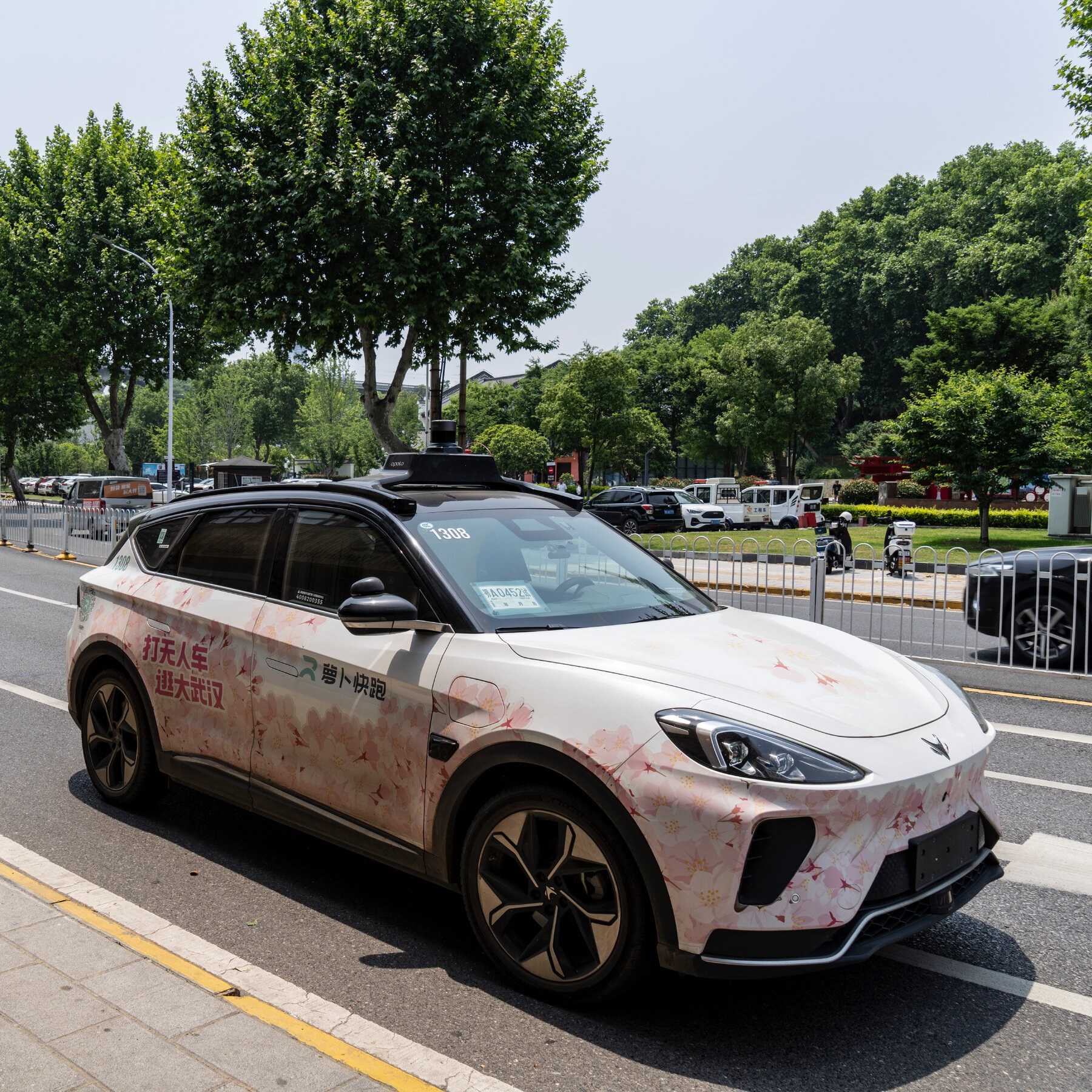
Baidu Robotaxis Stranded Over 100 Passengers in Wuhan Due to System Failure
- Over a dozen Baidu Apollo Go robotaxis unexpectedly stopped moving during peak evening hours in Wuhan, China.
- The incident left passengers stranded and, in some cases, blocked traffic lanes on a major expressway.
- Wuhan police confirmed a “succession” of reports regarding the self-driving cars’ malfunction on Tuesday evening.
- This event marks a significant setback for Baidu’s extensive driverless car program in one of China’s major cities.
A widespread system failure crippled Baidu’s autonomous taxi fleet in Wuhan, raising critical questions about the reliability of its Apollo Go service.
ROBOTAXI—The ambitious experiment in autonomous transportation, heralded as a common sight in Wuhan, experienced a significant and embarrassing disruption on Tuesday evening. A multitude of Baidu’s Apollo Go robotaxis, part of an expansive fleet operating in the central Chinese metropolis, abruptly ceased operation, leaving their passengers stranded and causing disruptions to regular traffic flow. The incident, which occurred during a busy period, has cast a shadow over the perceived maturity of driverless car technology in China.
Wuhan police officially acknowledged the issue on Wednesday, stating that they received a continuous stream of reports concerning the self-driving vehicles coming to a standstill. The authorities attributed the widespread halt to an unspecified “system failure,” a vague explanation that has done little to assuage concerns about the safety and dependability of Baidu’s extensive robotaxi network. The sheer number of vehicles affected suggests a potentially systemic problem rather than an isolated glitch.
Baidu, a technology giant deeply invested in artificial intelligence and autonomous driving, has not yet issued a formal statement or provided an immediate comment on the incident. The company operates hundreds of these vehicles in Wuhan, where they have become an increasingly ubiquitous feature of the urban landscape, integrated into the city’s transportation fabric. This sudden and comprehensive failure, however, underscores the inherent challenges and potential vulnerabilities that remain in the widespread deployment of autonomous vehicles.
The Wuhan Gridlock: How Baidu’s Robotaxis Came to a Halt
The evening commute in Wuhan took an unexpected turn on Tuesday when dozens of Baidu’s Apollo Go robotaxis, integral to the city’s vision of future mobility, ground to a halt. Passengers found themselves unexpectedly stranded as the vehicles became immobile, often in critical traffic lanes. The precise number of affected vehicles remains undisclosed, but police reports indicated a “succession” of incidents, suggesting a significant portion of the fleet was impacted. This widespread immobility brought not only the passengers’ journeys to an abrupt end but also created traffic bottlenecks on a major expressway, with footage circulating on Chinese social media showing trucks navigating around the stationary autonomous vehicles.Unpacking the ‘System Failure’
The official explanation offered by Wuhan’s police points to a “system failure” as the cause. While this broadly indicates a technological malfunction, the lack of specific details from Baidu leaves ample room for speculation. Autonomous vehicle systems are complex, integrating numerous sensors, software algorithms, and communication networks. A failure in any of these components, or a cascading effect across multiple systems, could lead to such a comprehensive shutdown. Experts in the field, such as Dr. Jing Li, a professor of intelligent transportation systems at Tsinghua University, have noted that “robustness against unforeseen system errors is a paramount challenge for all autonomous driving platforms. Failures can arise from software bugs, sensor degradation, or communication disruptions.” This incident echoes past challenges faced by autonomous vehicle operators. In December of the previous year, Waymo, a prominent U.S. robotaxi provider, experienced a similar, albeit differently triggered, situation in San Francisco. An extensive power outage led Waymo vehicles to pull over and cease operation, a programmed safety response to unfamiliar and potentially hazardous conditions. While the Wuhan scenario was attributed to a system failure rather than an external power event, the outcome – stranded vehicles and passenger disruption – highlights the persistent need for fail-safe mechanisms and effective contingency planning in real-world deployments. The visual evidence from Wuhan, including photos of one Apollo Go vehicle that appeared to have been struck by another vehicle while stopped on the highway, underscores the potential safety implications when autonomous systems fail unexpectedly in active traffic environments. The ability of these vehicles to safely navigate unexpected disruptions, and the protocols in place for their recovery, are critical factors for public trust and regulatory approval. The long-term implications for Baidu’s ambitious Apollo Go program are significant, potentially impacting expansion plans and public perception. The company’s silence following the event only amplifies these concerns, leaving stakeholders and the public to ponder the reliability of its driverless technology under pressure.Baidu’s Apollo Go Program: A Closer Look at the Wuhan Operations
Baidu’s Apollo Go program represents one of the most extensive deployments of driverless ride-hailing services globally. In Wuhan, the city where the recent malfunction occurred, these autonomous vehicles have become a relatively common sight, integrated into the fabric of urban transportation. The company operates hundreds of these vehicles in the metropolis, offering a glimpse into a future where AI-driven mobility is a daily reality for many. This scale of operation, however, also amplifies the impact of any significant technical failure.The Scale of Operations and Previous Incidents
Prior to the Tuesday evening shutdown, Baidu’s Apollo Go had been operating in Wuhan for a considerable period, building a reputation as a reliable, albeit novel, transportation option. The program is a cornerstone of Baidu’s broader strategy in artificial intelligence and intelligent mobility, aiming to leverage its technological prowess in areas from mapping and navigation to vehicle control. Reports from the ground in Wuhan had previously depicted a relatively seamless integration, with passengers availing themselves of the service for daily commutes and other travel needs. This makes the recent widespread stoppage particularly jarring. Comparisons to Waymo’s earlier incident in San Francisco, while not identical in cause, highlight a recurring theme: the unpredictable nature of complex systems operating in dynamic environments. Waymo’s vehicles, designed to prioritize safety, halted during a city-wide power outage, leading to service suspensions. This demonstrates a programmed response to perceived critical system failures. The Wuhan incident, conversely, appears to stem from an internal system failure within the Baidu fleet itself. Dr. Emily Carter, a transportation analyst at the Global Automobility Institute, commented, “The key difference lies in the origin of the failure. A system-level internal failure, as suspected in Wuhan, points to potential vulnerabilities in Baidu’s own software or hardware infrastructure, which requires rigorous internal validation.” The implications of this event extend beyond just the immediate disruption. For Baidu, it raises questions about the readiness of its technology for mass deployment and the effectiveness of its contingency planning. The company, a leading player in China’s tech landscape, has invested billions into its autonomous driving initiatives. The public perception of safety and reliability is paramount, and such high-profile failures can erode trust. The number of vehicles involved and the disruption caused could lead to increased scrutiny from regulators and potentially impact future expansion plans for the Apollo Go service across other cities in China and globally. The company’s next steps in addressing this issue will be closely watched.Global Context: Robotaxi Setbacks and the Path Forward
The disruptions experienced by Baidu’s Apollo Go robotaxis in Wuhan are not isolated incidents in the rapidly evolving landscape of autonomous vehicle technology. While the promise of driverless transportation remains a compelling vision for the future, real-world deployments have consistently encountered challenges, prompting widespread debate about the technology’s current capabilities and readiness for mass adoption. The Wuhan event serves as a stark reminder that even leading companies in the field are not immune to significant operational failures.Learning from Past Incidents
Globally, the development and deployment of robotaxis have been marked by a series of high-profile setbacks. In addition to Waymo’s previously mentioned issues in San Francisco, other autonomous vehicle initiatives have faced scrutiny. For instance, concerns regarding safety and operational effectiveness have led to various regulatory reviews and temporary suspensions of services in different regions. The development cycle for autonomous driving is often characterized by iterative improvements based on real-world data, but significant failures can have a disproportionate impact on public perception and investor confidence. Dr. Kenji Tanaka, a senior researcher at the Japan Advanced Institute of Science and Technology specializing in AI safety, noted, “Every major incident, whether it’s a traffic violation, a passenger stranding, or a system-wide outage, provides critical data. The challenge for companies like Baidu and Waymo is to learn from these events rapidly, implement robust fixes, and communicate transparently with the public and regulators. The incident in Wuhan is a significant data point in understanding the operational limits of current autonomous systems.” The regulatory environment surrounding autonomous vehicles is also a critical factor. As these technologies mature, governments worldwide are grappling with how to establish appropriate safety standards, testing protocols, and liability frameworks. The Wuhan incident, involving a major Chinese tech firm, will undoubtedly draw attention from Chinese regulators, potentially influencing future policy decisions regarding the expanded deployment of driverless services. The ability of Baidu to thoroughly investigate the root cause of the system failure, implement corrective measures, and demonstrate a commitment to enhanced safety will be crucial for rebuilding trust and advancing the autonomous driving sector both within China and on the international stage. The journey toward widespread adoption of robotaxis is proving to be a complex one, demanding technological breakthroughs alongside meticulous operational execution and clear communication.Frequently Asked Questions
Q: What caused the Baidu robotaxis to stop in Wuhan?
According to Wuhan police, an unspecified ‘system failure’ caused Baidu’s Apollo Go robotaxi fleet to abruptly halt on Tuesday evening. The exact cause behind this widespread malfunction remains undisclosed by Baidu.
Q: How many robotaxis were affected by the system failure?
The number of Baidu robotaxis affected by the system failure in Wuhan has not been disclosed. Baidu operates hundreds of these autonomous vehicles in the city, and reports indicate a ‘succession’ of vehicles stopped moving.
Q: Were passengers stranded during the robotaxi incident?
Yes, passengers were stranded when the Baidu robotaxis stopped in Wuhan due to a system failure. Videos circulating on social media depicted passengers left in halted vehicles, sometimes in active traffic lanes.
Q: Has Baidu commented on the robotaxi incident in Wuhan?
Baidu had no immediate comment following the incident where its Apollo Go robotaxis stopped operating in Wuhan due to a system failure. The company’s response to the malfunction and its impact on operations is still pending.
📰 Related Articles
- Apple’s Hidden Vault: Unearthing 50 Years of Secret Prototypes and Untold Stories
- Intel Bolsters European Chip Production with $14.2 Billion Apollo Ireland Fab Buyout
- Baidu’s Wuhan Robotaxi Fleet Grinds to a Halt, Sparking Safety Concerns
- Oracle Streamlines Workforce While Accelerating Costly Global AI Infrastructure Build
