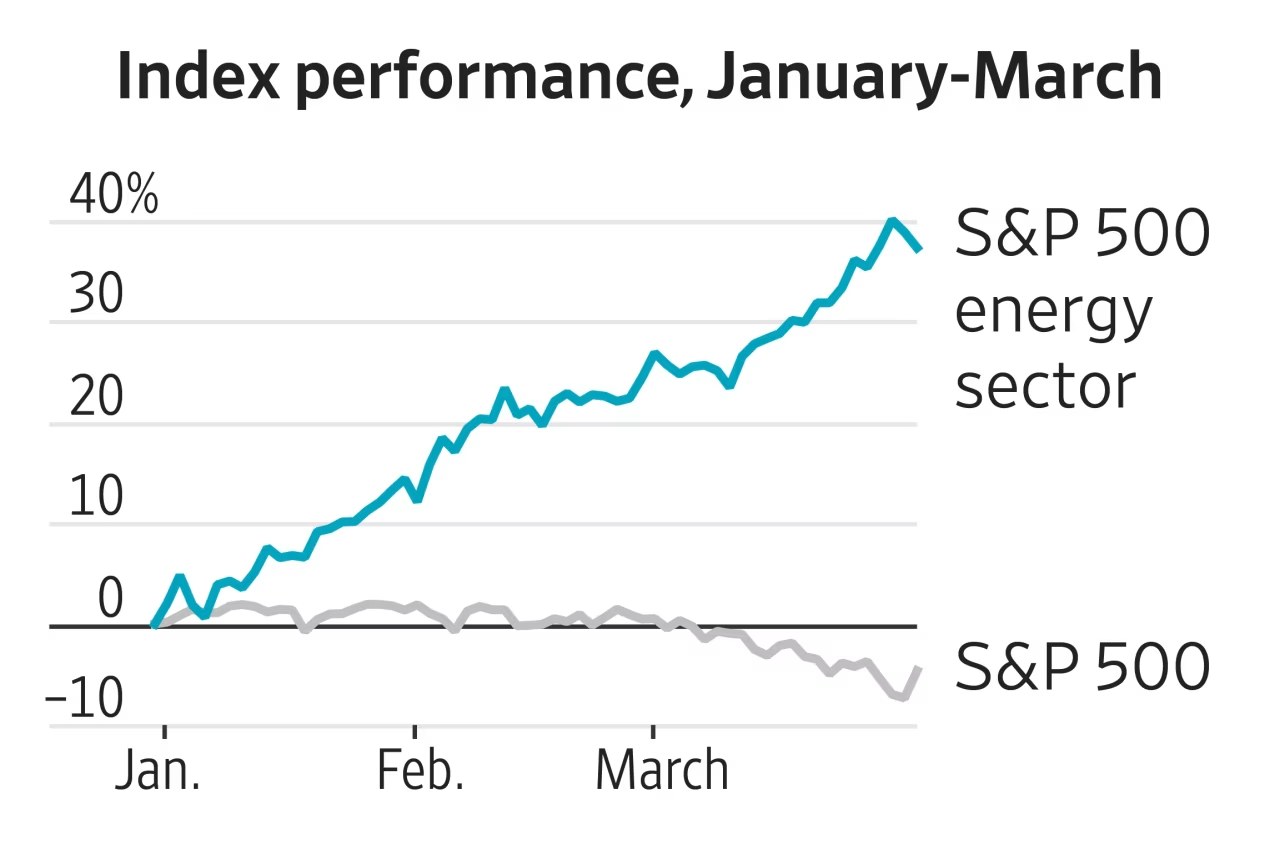
Four Key Sectors Outperformed Broad Market Declines in Early 2026, Reshaping First Quarter Market Performance Narratives
- The first quarter of 2026 was broadly challenging for global markets.
- Geopolitical tensions in the Middle East and rising oil prices were significant market disruptors.
- Energy stocks, including giants like Exxon Mobil and ConocoPhillips, were identified as the strongest performers.
- Farming and defense stocks also experienced robust growth during this period.
- The U.S. dollar demonstrated notable strength, acting as a crucial safe haven asset.
Navigating Volatility: Unpacking the Unexpected Winners of a Tumultuous Period
INVESTING TRENDS—The dawn of 2026 brought with it a tempestuous financial landscape, as global markets navigated what was widely considered a ‘rough’ and ‘largely forgettable’ first quarter. Characterized by escalating geopolitical tensions stemming from a persistent Middle East conflict and the consequent surge in global oil prices, investors faced a period of profound uncertainty. Yet, amidst this broad downturn, a select few sectors and assets not only weathered the storm but emerged as significant outperformers, challenging conventional investment wisdom and setting new precedents for first quarter market performance.
This period underscored a fundamental truth of market dynamics: even in adversity, pockets of opportunity can thrive, often driven by the very forces causing broader disruption. While many indices struggled, the strength exhibited by energy, farming, and defense stocks, alongside the steadfast U.S. dollar, provided a counter-narrative, illustrating how capital strategically redeploys towards perceived safety and necessity during times of crisis. These standout performances offer critical insights into investor psychology and the inherent resilience of certain economic segments when global stability wavers.
Understanding the confluence of factors that propelled these assets requires a deeper dive into the specific catalysts and underlying economic principles. From the unwavering demand for essential commodities to the strategic importance of national security, the narrative of early 2026 is one of focused strength in the face of widespread apprehension. This comprehensive analysis will explore the drivers behind these exceptional returns, examining how each winning category carved out its success amidst a challenging global economic backdrop, and what these trends imply for future market resilience.
Energy Sector’s Unrivaled Ascent Amidst Geopolitical Volatility
The first quarter of 2026 witnessed the energy sector emerge as the undisputed leader among market outperformers, a direct consequence of the turbulent global environment. As geopolitical tensions intensified, particularly with the ongoing conflict in the Middle East, the ripple effects quickly translated into the oil markets. The source text explicitly highlights the ‘surging oil prices’ as a defining characteristic of this ‘rough quarter,’ a phenomenon historically linked to instability in major oil-producing regions. This direct correlation provided a significant tailwind for energy stocks, marking them as the ‘biggest winners’ of the period and fundamentally shaping first quarter market performance for these companies.
Major players in the American oil-and-gas industry, such as Exxon Mobil and ConocoPhillips, were specifically cited as beneficiaries of this trend. These integrated energy giants, with their extensive exploration, production, and refining capabilities, are uniquely positioned to capitalize on higher crude prices. When the cost of oil rises, their revenue streams often expand disproportionately, leading to increased profitability and investor confidence. Market analysts frequently observe that during periods of geopolitical uncertainty, investors tend to rotate into tangible assets and sectors perceived as resilient, such as energy, which offer a hedge against inflation and broader economic downturns.
Historical Parallels and Investor Sentiment in Energy
The phenomenon of energy stocks outperforming during times of global strife is not new; it reflects a long-standing pattern in financial markets. Historically, conflicts involving key oil-producing nations or shipping lanes tend to disrupt supply chains and create speculative upward pressure on crude benchmarks. For instance, past crises have consistently demonstrated that energy commodities act as a bellwether for geopolitical risk, with their prices often spiking in response to perceived threats to global supply. This dynamic was clearly at play in early 2026, as the Middle East conflict dominated headlines and investor concerns.
Investment strategists often advise that such environments lead to a flight to quality within the commodities complex, and oil, as a fundamental input for the global economy, is a primary recipient of this capital flow. The strong start for companies like Exxon Mobil and ConocoPhillips signifies not just a reaction to immediate price spikes but also an anticipation among investors that these elevated prices, or at least the underlying demand for secure energy supplies, could persist as long as geopolitical instability endures. This confluence of factors underscored the energy sector’s robust contribution to first quarter market performance.
The continued vigilance around global energy supply and demand, particularly against the backdrop of ongoing regional conflicts, suggests that the sector’s trajectory remains closely tied to international diplomacy and stability. As the year progresses, how these geopolitical forces evolve will be crucial in determining whether the energy sector can maintain its impressive early 2026 momentum.
The Enduring Appeal of Defense and Agricultural Investments
Beyond the formidable performance of energy giants, the first quarter of 2026 also highlighted the inherent resilience and strategic importance of two other distinct sectors: defense and farming. Both categories, though disparate in their core operations, shared a common thread in early 2026: they benefited significantly from the prevailing global uncertainties and essential human needs. The source text notes that both ‘Farming and defense stocks also had a strong start,’ underscoring their critical role as safe havens or beneficiaries in a challenging market environment, thereby influencing overall first quarter market performance.
Defense stocks, by their very nature, tend to gain traction during periods of heightened geopolitical risk. The ongoing Middle East conflict, specifically mentioned as a primary market disruptor, inevitably fuels concerns over national security and prompts nations to reassess and often increase their defense expenditures. This translates into increased demand for military hardware, advanced technologies, and related services, directly benefiting defense contractors and aerospace companies. Industry experts often point out that such sustained demand provides a stable revenue outlook for these firms, making them attractive to investors seeking defensive plays when broader economic sentiment is cautious.
Agricultural Resilience in a Volatile Global Economy
Farming stocks, similarly, demonstrated robust performance for a different yet equally fundamental reason: the unwavering global demand for food. Regardless of economic downturns or geopolitical conflicts, the necessity for agricultural products remains constant. Periods of instability can even heighten concerns over food security, leading to commodity price appreciation and increased investment in the agricultural supply chain. Market analysts commonly explain that disruptions to trade routes or regional harvests, which can be exacerbated by global conflicts, place a premium on stable and efficient food production systems, benefiting farming enterprises from seed manufacturers to equipment providers. This fundamental demand contributes significantly to the steady first quarter market performance of agricultural firms.
The ‘strong start’ for both these sectors in early 2026 reflects investor recognition of their non-discretionary nature. Defense spending, while politically charged, becomes a priority during security crises, and food production is an absolute necessity. Investment strategists frequently highlight that portfolios diversified with exposure to these essential sectors tend to exhibit greater stability during volatile periods. This strategy provides a counterbalance to the more cyclical segments of the market, reinforcing the wisdom of holding assets tied to fundamental societal needs.
As global dynamics continue to unfold, the foundational importance of both defense and agriculture suggests they will remain key areas of interest for investors seeking both stability and growth, shaping their contributions to future market resilience beyond the first quarter.
Why Did the U.S. Dollar Assert Its Strength in Early 2026?
In a period marked by significant market volatility and a generally ‘rough quarter’ for global investments, the U.S. dollar stood out with a ‘strong start’ in early 2026. This performance is particularly noteworthy because, unlike the sector-specific gains seen in energy, farming, and defense, the dollar’s appreciation reflects a broader macro-economic trend driven by its role as the world’s primary reserve currency. Its strength served as a critical indicator of shifting capital flows and investor sentiment, profoundly influencing the broader first quarter market performance.
The U.S. dollar’s status as a safe haven asset is well-established in international finance. During times of heightened global uncertainty, such as the Middle East conflict explicitly mentioned in the source text, investors and central banks worldwide tend to flock to the perceived safety and liquidity of dollar-denominated assets. This flight to quality increases demand for the dollar, driving up its value relative to other major currencies. The dollar’s strength in early 2026 therefore acts as a barometer for global risk aversion, signaling that market participants were seeking security amidst the turbulence.
Global Economic Stability and Currency Dynamics
Economists and financial institutions often explain that several factors contribute to the dollar’s enduring appeal as a safe haven. These include the sheer size and stability of the U.S. economy, the depth and liquidity of its financial markets, and the credibility of the Federal Reserve as a central bank. In an environment where the ‘Middle East conflict’ introduced considerable geopolitical risk, these attributes made the U.S. dollar an indispensable component of risk management strategies for global investors. Its performance was not merely incidental but a deliberate outcome of capital allocation decisions in response to an unstable world.
The ‘strong start’ for the U.S. dollar in early 2026 also had implications for international trade and investment. A stronger dollar makes U.S. exports more expensive, potentially impacting American companies that rely heavily on overseas sales. Conversely, it makes imports cheaper, which can help mitigate inflationary pressures domestically. Investment strategists commonly analyze how a robust dollar influences the earnings of multinational corporations and the attractiveness of foreign investments for U.S.-based entities. Its sustained strength during the first quarter of 2026 highlights its pivotal role in global financial architecture and its sensitivity to geopolitical tremors, deeply impacting first quarter market performance across various asset classes.
As global economic and geopolitical landscapes continue to evolve, the U.S. dollar’s role as a safe haven will likely remain under scrutiny, with its value often reflecting the prevailing sentiment regarding worldwide stability and risk appetite in subsequent quarters.
Geopolitical Undercurrents Shaping Investment Strategy in a Volatile Quarter
The overarching narrative of the first quarter of 2026 was undeniably shaped by significant geopolitical undercurrents, particularly the intensifying Middle East conflict. This conflict was not merely a regional issue but a powerful force that reverberated through global financial markets, contributing directly to a ‘rough quarter’ overall. The interplay between international instability and investment behavior is a consistent theme in financial history, and early 2026 provided yet another compelling illustration of its impact on first quarter market performance.
Geopolitical events, by their very nature, introduce uncertainty into economic forecasts and corporate outlooks. The direct mention of ‘Middle East conflict’ in the source text immediately signals an elevated risk premium across various asset classes. This uncertainty prompts investors to reassess risk exposures, often leading to a reallocation of capital from growth-oriented or riskier assets towards those perceived as more stable or essential. This flight-to-safety dynamic directly explains the strong performance of the U.S. dollar and the increased appeal of defense and energy stocks during this period.
The Ripple Effect of Surging Oil Prices
A critical consequence of the Middle East conflict, as highlighted, was ‘surging oil prices.’ Oil is a foundational commodity whose price fluctuations have widespread economic implications. Higher oil prices can act as a tax on consumers and businesses, increasing transportation costs, energy bills, and manufacturing expenses. This can lead to inflationary pressures and potentially dampen economic growth, contributing to the ‘largely forgettable’ nature of the broader market’s first quarter market performance.
Financial analysts often explain that sustained high oil prices can squeeze corporate profit margins for non-energy sectors and reduce disposable income for households, thereby cooling consumer spending—a major driver of economic activity. For investors, this environment necessitates a careful re-evaluation of portfolios, favoring companies and sectors that can either pass on higher costs, benefit directly from commodity price increases, or operate within essential services that are less sensitive to economic downturns. The strategic shift towards energy, defense, and agricultural stocks in early 2026 was a clear manifestation of this adaptive investment strategy.
The events of the first quarter of 2026 serve as a stark reminder that investment strategies cannot operate in a vacuum, isolated from global political and social developments. Geopolitical factors, particularly those with a direct impact on critical commodities like oil, possess the power to rapidly reshape market leadership and dictate investor sentiment, guiding portfolio adjustments and influencing first quarter market performance for months to come.
Looking Ahead: Sustaining Momentum in an Evolving Market Landscape
The lessons gleaned from the first quarter of 2026 — a period defined by a ‘rough quarter’ for broad markets but notable outperformance from specific sectors — offer critical insights for investors navigating the evolving global landscape. The strength of energy, farming, defense stocks, and the U.S. dollar was not merely a fluke but a direct response to tangible geopolitical and economic forces. As the year progresses beyond the first quarter, the sustainability of these trends will hinge on the persistence and evolution of the very factors that propelled them to success, continually shaping first quarter market performance narratives.
For the energy sector, the outlook remains inextricably linked to global stability, particularly in the Middle East. While ‘surging oil prices’ provided a significant boost, a de-escalation of conflict could potentially ease supply concerns and temper price growth. Conversely, any further exacerbation of tensions could reinforce the sector’s strong performance. Investment strategists frequently advise monitoring geopolitical developments closely, as these will likely remain the primary drivers for companies like Exxon Mobil and ConocoPhillips.
Future Trajectories for Defensive and Essential Sectors
Defense and farming stocks, positioned as essential sectors, may enjoy more sustained demand regardless of broad market sentiment. Defense spending tends to have a longer lead time, and once commitments are made, they often translate into multi-year contracts, offering a degree of predictability. For agriculture, the fundamental need for food security provides a constant floor for demand, though commodity prices can still be volatile due to weather patterns and global trade policies. Analysts commonly suggest that these sectors will continue to appeal to investors seeking stability and dividend income in an uncertain world.
The U.S. dollar’s trajectory will largely depend on its continued role as a global safe haven and the comparative economic performance of the U.S. relative to other major economies. If global uncertainties persist, or if U.S. interest rates remain attractive, the dollar could retain its strength. However, a significant shift towards global stability or a change in monetary policy differentials could alter its appreciation path. The dollar’s performance will remain a crucial barometer for overall risk appetite and global first quarter market performance.
In conclusion, the ‘largely forgettable’ first quarter of 2026 for general markets was anything but for the select few that thrived. These standout performers, fueled by geopolitical realities and fundamental demand, have set a precedent for how capital may be allocated in an increasingly interconnected and volatile world. Investors will need to remain agile, recognizing that the drivers of outperformance can shift rapidly, underscoring the dynamic nature of first quarter market performance and investment opportunities.
Frequently Asked Questions
Q: What were the top performing sectors in the first quarter of 2026?
In the first quarter of 2026, energy stocks were identified as the biggest winners. Additionally, farming stocks, defense stocks, and the U.S. dollar all experienced a strong start to the year, demonstrating resilience and growth amidst broader market turbulence. These sectors provided critical insights into first quarter market performance.
Q: How did geopolitical events influence first quarter market performance?
Geopolitical events, particularly an intensifying Middle East conflict, significantly impacted first quarter market performance in early 2026. This instability contributed to a broader ‘rough quarter’ for markets, while simultaneously driving up oil prices and bolstering sectors like energy and defense, which often benefit from such global uncertainties.
Q: Why did the U.S. dollar strengthen in early 2026?
The U.S. dollar strengthened significantly in early 2026, acting as a pivotal safe haven asset. During periods of heightened global uncertainty, such as the Middle East conflict observed in the first quarter, investors typically flock to assets perceived as stable, driving demand for the dollar and positively influencing first quarter market performance.
Q: What factors contributed to a rough market quarter in early 2026?
The first quarter of 2026 was characterized as a ‘rough’ and ‘largely forgettable’ period for general markets. This downturn was primarily driven by two major factors: escalating conflict in the Middle East and a subsequent surge in global oil prices, which together created significant headwinds for overall first quarter market performance.
