Donald Trump’s Firm Stance on Iran Signals Intent to Finish the Job on Nuclear Threat
- President Trump explicitly stated his intention to “finish the job” regarding Iran, signaling an unwavering approach to the nation’s nuclear ambitions.
- A central justification for a hardened stance on Iran, as articulated by Trump, is the imperative to deny the radical regime nuclear weapons capabilities.
- Trump asserted that he acted decisively where “other Presidents and world leaders would not,” highlighting a perceived unique approach to Tehran.
- The former President contended that only a “naif” would doubt the Ayatollahs’ determination to acquire both nuclear weapons and long-range missiles.
Unpacking the Rhetoric: A Commitment to Confrontation or Strategic Deterrence?
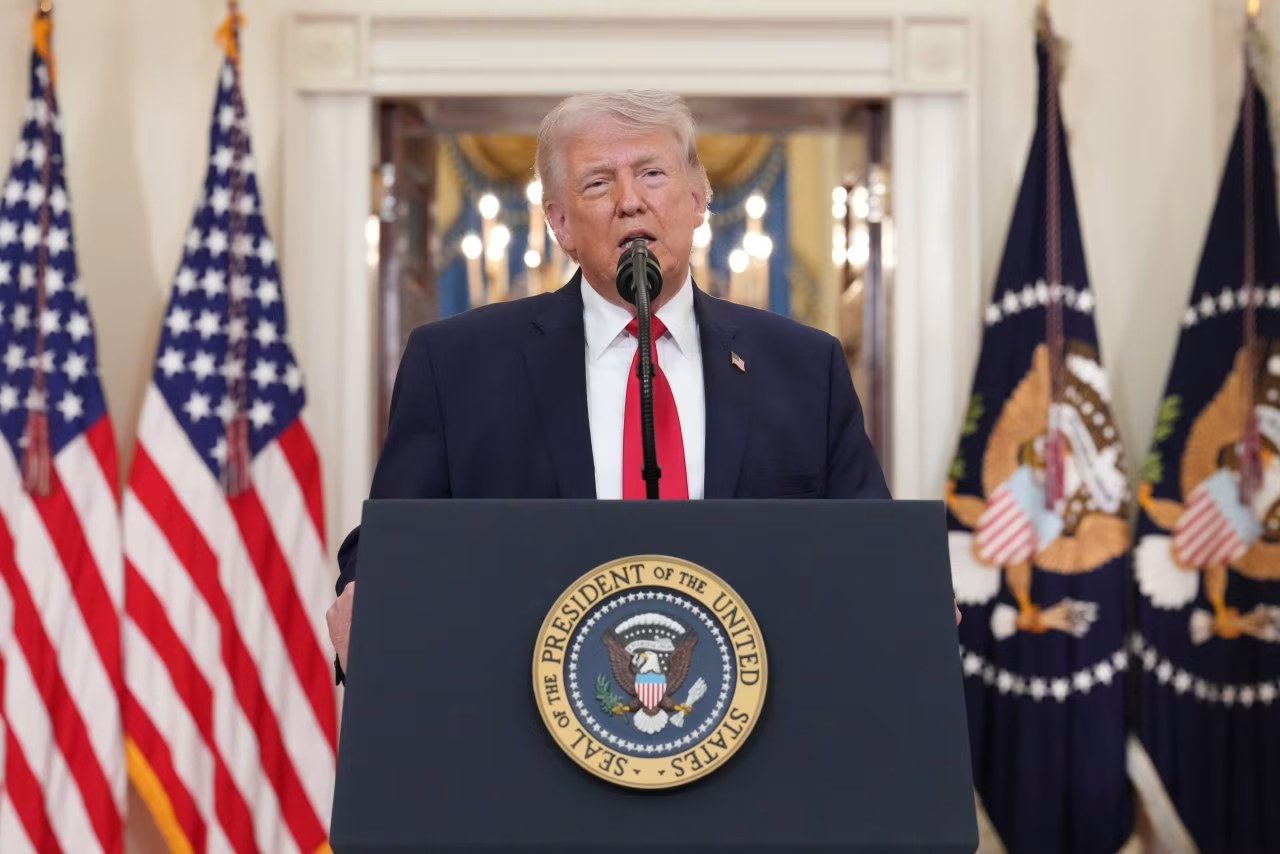
TRUMP IRAN POLICY—In a significant address, former President Donald Trump unequivocally laid out a case for a decisive posture towards Iran, framing his intent as a commitment to “finish the job.” This pronouncement, delivered in a manner that advocates suggest should have been made earlier, underscores a deeply held conviction within certain political circles regarding the imperative of confronting Tehran’s ambitions. The message is clear: the era of perceived indecision or incremental responses, from this perspective, is over. For American audiences, and indeed for global observers, this declaration sets a tone of resolve, suggesting a potential shift towards a more assertive phase in the ongoing geopolitical dynamics of the Middle East.
The core of Trump’s argument, as interpreted by this publication, centers on the unyielding necessity of preventing the Iranian regime from acquiring nuclear weapons. This objective, long a cornerstone of international non-proliferation efforts, was articulated with characteristic vigor. While some analyses might “nitpick” the immediacy of Iran’s nuclear capabilities or its missile development programs, the underlying premise from this viewpoint is that the ayatollahs harbor an inherent and undeniable drive towards both. This perspective posits that such an ambition, if unchecked, represents an existential threat, not only to regional stability but potentially to broader global security. Trump’s rhetoric, therefore, is not merely about policy; it is about perceived historical failure and the assertion of a new, uncompromising direction.
The implications of such a resolute declaration ripple across diplomatic and strategic landscapes. For Iran’s leaders, the message is intended as a stark warning: their actions will be met with commensurate responses, and any perception of strategic ambiguity is being deliberately dismantled. The former President’s claim that he acted decisively when previous administrations hesitated serves to reinforce an image of strong leadership and a willingness to break from established norms. This framing suggests that the current geopolitical moment demands a particular brand of leadership, one that is prepared to take actions that others have historically shied away from. As the international community grapples with persistent proliferation concerns, understanding the nuances of this Trump Iran policy becomes paramount for anticipating future regional developments.
The Assertive Stance: Decoding Trump’s “Finish the Job” Mandate on Iran
Donald Trump’s declaration of intent to “finish the job” in Iran marks a pivotal moment in his articulated foreign policy vision for the Middle East. This phrase, deeply embedded in the lexicon of decisive action, goes beyond mere diplomatic posturing; it signals a fundamental commitment to achieving clear, non-negotiable outcomes. According to the analysis in The Wall Street Journal, this was the argument that should have been presented at the outset of his engagement with Iran, highlighting a belief that clarity of purpose is essential for effective deterrence. The implications of such a mandate are far-reaching, suggesting that any future administration under Trump would pursue a strategy aimed at definitive resolution rather than prolonged containment or incremental negotiation.
Rhetoric and Strategic Implication
The choice of words, “finish the job,” carries significant weight in geopolitical discourse. It implies a recognition of a task left undone by previous efforts and a determination to see it through to completion, whatever the necessary means. Geopolitical strategists, often analyzing presidential rhetoric, understand that such statements are not merely for domestic consumption; they serve as direct communications to adversarial regimes and international allies alike. The phrase suggests an endgame, a specific set of objectives that, once met, would constitute the ‘job’ being finished. This contrasts sharply with approaches that might prioritize ongoing dialogue or phased diplomatic resolutions, implying a lower tolerance for ambiguity or protracted standoffs regarding the Trump Iran policy.
For Iran’s leadership, the imperative to “act accordingly” attached to this statement is a direct challenge to their strategic calculations. It implies that continued pursuit of nuclear capabilities or regional destabilization efforts would invite a response designed to halt these ambitions definitively. This editorial viewpoint suggests that a failure to heed this warning would be a strategic miscalculation on Tehran’s part. The historical context of U.S.-Iran relations, though not detailed here, is rife with periods of tension and confrontation, making any declaration of ‘finishing the job’ a powerful signal that could recalibrate regional power dynamics. The depth of this commitment, as underscored by the former President, aims to leave no doubt about his administration’s future trajectory.
This assertive posture, as framed by the publication, intends to dismantle any lingering perceptions of hesitation that might have characterized prior U.S. foreign policy engagements with Iran. By emphasizing a willingness to act decisively, Trump aims to reassert American leadership and resolve on a critical international security front. The strategic clarity offered by such an uncompromising statement is intended to shape expectations and influence behavior across the Middle East. The question then becomes not merely how Iran will react, but how regional allies and international bodies will adapt to this declared unwavering approach, setting the stage for subsequent strategic maneuvers.
Nuclear Deterrence: The Unwavering Imperative of Trump’s Iran Policy
At the core of Donald Trump’s reinvigorated argument concerning Iran lies the unambiguous objective: to “deny the radical regime a nuclear weapon.” This goal is not merely a policy preference but is presented as the “strongest argument for bombing Iran,” indicating the severity with which this threat is perceived. The Wall Street Journal analysis underscores the existential weight of this particular concern, arguing that the pursuit of nuclear capabilities by a regime deemed radical represents an unacceptable risk to global security. This singular focus on nuclear non-proliferation anchors the entirety of the former President’s more assertive posture, elevating it above other considerations of regional influence or diplomatic engagement in his stated Trump Iran policy.
The Stakes of Proliferation
Security analysts and international non-proliferation experts frequently highlight the profound destabilizing effects of nuclear weapons acquisition by states with records of antagonism. The editorial perspective suggests that only a “naif would believe the ayatollahs weren’t set on both” developing a nuclear weapon and missiles capable of delivery. This assertion dismisses any alternative interpretations of Iran’s long-term strategic intentions, cementing the view that Tehran’s nuclear program is inherently militaristic in its ultimate aim. The emphasis on missiles capable of reaching America further amplifies the perceived direct threat, broadening the scope of concern beyond regional powers to encompass the U.S. homeland, thus justifying a highly proactive stance.
This framing of Iran’s nuclear ambitions leaves little room for doubt regarding the perceived intentions of the Iranian leadership. It posits that their strategic calculus is unequivocally geared towards achieving weapons capability, regardless of stated peaceful purposes or compliance with international accords. The implication is that conventional diplomatic pathways, if they exist, must be viewed with extreme skepticism. The argument for military intervention, therefore, becomes a preventative measure against a predetermined outcome rather than a punitive response to an action already taken. This proactive stance reflects a conviction that the cost of inaction or delayed response far outweighs the risks associated with decisive engagement.
The imperative to deny nuclear weapons to Iran forms the bedrock of a strategic philosophy that prioritizes security and deterrence above all else. This viewpoint suggests that the window for preventing proliferation is finite and that historical precedents demonstrate the dangers of underestimating adversarial ambitions. The perceived failure of “other Presidents and world leaders” to decisively address this threat reinforces the narrative that a unique resolve is now required. As this critical objective drives the Trump Iran policy, its implications for international relations, regional alliances, and the global non-proliferation regime continue to be subjects of intense scrutiny and debate, charting a course that could redefine global security frameworks.
A New Chapter? Trump’s Claim of Decisive Action in Iran Policy
A defining characteristic of Donald Trump’s articulated Iran policy is the assertion that “Someone had to stop them, and Mr. Trump acted when other Presidents and world leaders would not.” This statement positions his approach as singularly decisive, drawing a sharp contrast with the perceived hesitations or ineffectiveness of previous international efforts. The editorial stance highlights this as a key element of Trump’s argument, suggesting that the former President filled a leadership void, demonstrating a unique willingness to confront the Iranian challenge directly. This claim is not merely retrospective; it sets a precedent for how a future Trump administration would frame its engagement with complex global adversaries, particularly within the sensitive context of the Trump Iran policy.
Presidential Leadership and Precedent
The narrative of singular decisiveness resonates deeply within a particular segment of political analysis. Many political scientists and historians observe that leaders often seek to differentiate their actions by portraying previous approaches as insufficient or flawed. In the context of Iran, the reference to “other Presidents and world leaders” suggests a long-standing pattern of diplomatic caution or strategic reticence that, from this viewpoint, failed to curb Iran’s ambitions effectively. By presenting himself as the one who broke this cycle, Trump reinforces a perception of robust, uncompromising leadership, willing to take bold steps where others preferred more measured responses. This perspective argues that only such a forceful approach could adequately address the scale of the Iranian nuclear threat.
The implication of this claim extends beyond mere historical critique; it shapes expectations for future policy. If previous approaches were indeed characterized by a lack of will or strategic myopia, then Trump’s actions are presented as a necessary corrective, designed to restore credibility and resolve to American foreign policy. This editorial line of reasoning implies that the perceived hesitancy of the past allowed Iran’s nuclear program to advance or its regional influence to grow, making a more aggressive intervention inevitable. Thus, the argument for taking action, including potentially military action, is not just about current threats but about redressing perceived historical shortcomings in international leadership.
Such a strong differentiation of presidential action has significant consequences for international alliances and the global perception of U.S. foreign policy. It suggests a potential shift away from multilateral consensus-building towards more unilateral or explicitly confrontational strategies. The insistence on having acted when others would not frames future international cooperation on Iran through a lens of American leadership and determination, rather than shared responsibility. As the complex web of Middle Eastern geopolitics continues to evolve, this assertion of unique decisiveness by Trump remains a critical factor in understanding the potential contours of future international engagement and the enduring impact of a defined Trump Iran policy.
The Debate Over Immediacy: How Soon Could Iran Pose a Nuclear Threat?
The Wall Street Journal’s analysis of Donald Trump’s speech acknowledges a potential point of contention: whether he “exaggerated the immediacy of when Iran would have a bomb or have missiles capable of hitting America.” This “nitpick,” as the editorial terms it, highlights a persistent debate among intelligence communities and foreign policy analysts regarding the timeline of Iran’s nuclear and missile programs. While Trump’s rhetoric implies an imminent danger, the recognition of this “nitpick” suggests that the precise timeframe remains a subject of considerable discussion and varying expert assessment. However, the editorial swiftly counters this by stating that “only a naif would believe the ayatollahs weren’t set on both,” reasserting the fundamental conviction that Iran’s long-term intentions are undeniably hostile.
Intelligence and Threat Assessment
Discussions around the “immediacy” of a nuclear threat are central to national security decision-making. Intelligence agencies globally continuously monitor proliferation activities, providing assessments that often carry caveats about capabilities versus intent, and short-term versus long-term projections. The “nitpick” points to the inherent difficulty in forecasting the exact moment a nation might achieve nuclear breakout capability or develop a fully operational intercontinental ballistic missile. Factors such as technological hurdles, sanctions effectiveness, and political will can all influence such timelines. Despite these complexities, the core argument remains that the intent of the Iranian leadership is clear, irrespective of the precise technical timeline for a Trump Iran policy.
The dismissal of the “nitpick” with the strong phrase, “only a naif would believe the ayatollahs weren’t set on both,” serves to underscore a deeply ingrained belief about the Iranian regime’s strategic objectives. This perspective minimizes the importance of granular technical timelines, instead focusing on the overarching ambition. It suggests that questioning the immediacy is a distraction from the fundamental and undeniable goal of Iran’s leadership. From this viewpoint, a more robust response is warranted precisely because the intent to acquire such capabilities is considered absolute and non-negotiable, making preventative measures a strategic imperative rather than a reactive option.
This debate over immediacy highlights a critical divergence in how threats are perceived and ultimately addressed. For some, precise intelligence on current capabilities dictates the appropriate response; for others, the proven long-term intentions of an adversary are sufficient justification for pre-emptive action. The editorial’s framing clearly leans towards the latter, emphasizing the enduring strategic threat posed by Iran’s leadership rather than getting bogged down in temporal details. This philosophical divide shapes the contours of the Trump Iran policy, influencing the perceived urgency of action and the acceptable range of responses in the face of perceived nuclear ambitions, ensuring the discussion continues to be highly charged.
The Unfinished Business: Long-Term Implications for Regional Stability
The former President’s resolve to “finish the job” carries profound long-term implications for the stability of the Middle East and beyond. While specific details of what ‘finishing the job’ entails remain subject to interpretation, the underlying message suggests a strategy aimed at permanently altering Iran’s strategic capabilities and, by extension, its regional influence. This vision for a comprehensive resolution positions the Trump Iran policy as a potentially transformative force in a region long characterized by intricate geopolitical rivalries and enduring conflicts. The warning that “Iran’s leaders would be wise to act accordingly” is not merely a threat; it’s an articulation of expected behavioral change, signaling that the rules of engagement are being fundamentally rewritten.
Strategic Considerations for Tehran
International relations scholars often analyze such presidential pronouncements for their signalling value to adversary states. The instruction to “act accordingly” places the onus squarely on Tehran to reassess its strategic choices in light of a newly declared, uncompromising U.S. posture. This could imply a range of responses from the Iranian regime, from strategic retreat and de-escalation to an intensification of defiant actions, potentially increasing regional tensions. The long-term stability of the region hinges significantly on this interplay between perceived resolve and reactive calculation, underscoring the delicate balance inherent in such assertive foreign policy statements. The editorial suggests a direct challenge to Iran’s leadership, demanding a recalibration of their ambitions.
The broader context of non-proliferation and international security casts a long shadow over this declared policy. Should Iran pursue its nuclear ambitions despite these warnings, the region could face unprecedented levels of instability, potentially drawing in other global powers. Conversely, if the policy of decisive action were to succeed in compelling a verifiable halt to Iran’s nuclear program and a reduction in its regional proxy activities, it could usher in a new, albeit fragile, era of stability. The editorial implies that the stakes could not be higher, with the outcome of this particular Trump Iran policy influencing not just the Middle East but the global security architecture for decades to come.
Ultimately, the rhetoric of “finishing the job” points to a desired future state where the Iranian threat, particularly its nuclear dimension, is neutralized. This vision shapes prospective diplomatic endeavors, military preparedness, and international alliances. The challenge lies in translating such a firm declaration into a concrete, achievable strategy that avoids unintended consequences while securing stated objectives. As the international community observes these developments, the long-term effectiveness and ethical implications of such a deeply entrenched and assertive Trump Iran policy will undoubtedly remain a subject of intense scrutiny, shaping the geopolitical landscape for the foreseeable future.
Global Repercussions: How Trump’s Stance Reshapes International Diplomacy on Iran
The assertive tone adopted by Donald Trump regarding his Iran policy is poised to significantly reshape the landscape of international diplomacy surrounding the Islamic Republic. By advocating a strategy to “finish the job” and emphasizing the unique decisiveness of his past actions, the former President signals a potential recalibration of global efforts to contain or confront Tehran. This shift, as suggested by the editorial, positions the United States at the forefront of a more confrontational approach, potentially influencing how allied nations and international organizations engage with Iran’s nuclear program and regional activities. The implications extend to the very architecture of international consensus-building and collective security, particularly for a defined Trump Iran policy.
Alliances and International Pressure
The assertion that Trump “acted when other Presidents and world leaders would not” carries a subtle but potent message to international partners. It implies a perceived failure of collective action in the past, suggesting that a more singular, American-led resolve is now necessary. This can either galvanize allies who share similar concerns about Iran’s trajectory or create divisions among those who favor a more multilateral, diplomatic path. Diplomatic observers note that such strong rhetoric often forces allies to publicly align or diverge, thereby altering the dynamics of international pressure campaigns. The effectiveness of any future Trump Iran policy will heavily depend on its ability to either secure robust international buy-in or operate effectively in a more unilateral context.
Moreover, the emphasis on denying Iran a nuclear weapon, even through military means, puts the issue squarely at the top of the global security agenda with renewed urgency. This focus, coupled with the skepticism about the immediacy of Iran’s nuclear capabilities, underscores the tension between preventative action and evidentiary thresholds in international law and diplomacy. The editorial’s position that “only a naif would believe the ayatollahs weren’t set on both” developing a bomb and missiles pushes the international community to confront a perceived undeniable intent, rather than just current capabilities. This aggressive framing demands a clear stance from global actors on how to interpret and respond to such a fundamental threat, further impacting the discussions around the Trump Iran policy.
The long-term repercussions of such a firm and unequivocal posture extend to global non-proliferation efforts and the future of regional stability in the Middle East. Should a future Trump administration implement this “finish the job” mandate, it would test the resilience of existing international agreements and diplomatic frameworks. The international community will be closely watching whether this assertive stance leads to a definitive resolution of the Iranian nuclear issue or, conversely, exacerbates geopolitical tensions and opens new avenues for conflict. The trajectory of this Trump Iran policy, therefore, represents a critical determinant for the future of multilateral engagement on one of the world’s most intractable security challenges.
Frequently Asked Questions
Q: What is the core of Donald Trump’s stated Iran policy?
The core of Donald Trump’s stated Iran policy, as articulated in a recent address, is a commitment to ‘finish the job’ regarding the nation’s nuclear ambitions. This involves denying the radical Iranian regime a nuclear weapon and holding its leaders accountable, representing a decisive shift from previous approaches to Iran policy.
Q: Why does Trump emphasize denying Iran nuclear weapons?
Trump emphasizes denying Iran nuclear weapons because, as stated in the analysis, it is considered the strongest argument for a more assertive posture. The belief is that the ayatollahs are determined to acquire both nuclear weapons and capable missiles, posing a significant threat that necessitates a firm Trump Iran policy.
Q: How does Trump’s approach to Iran compare to previous administrations?
Trump’s approach to Iran is framed as a departure from previous administrations, with the former President asserting that he acted when ‘other Presidents and world leaders would not.’ This highlights a perceived unique decisiveness in addressing the challenge of Iran’s nuclear program and regional influence, central to his Trump Iran policy.
📰 Related Articles
- First Gulf Nation Signals Readiness to Force Open Strategic Strait of Hormuz
- Trump Threatens to Bomb Iran’s Oil Fields If Strait of Hormuz Talks Collapse
- Iran Threatens U.S. Marines After Deployment to Middle East as Markets Hold Ground
- Iran’s Hormuz Gambit Turns Energy, Chips and Rare Earths Into 21st-Century Arsenal
