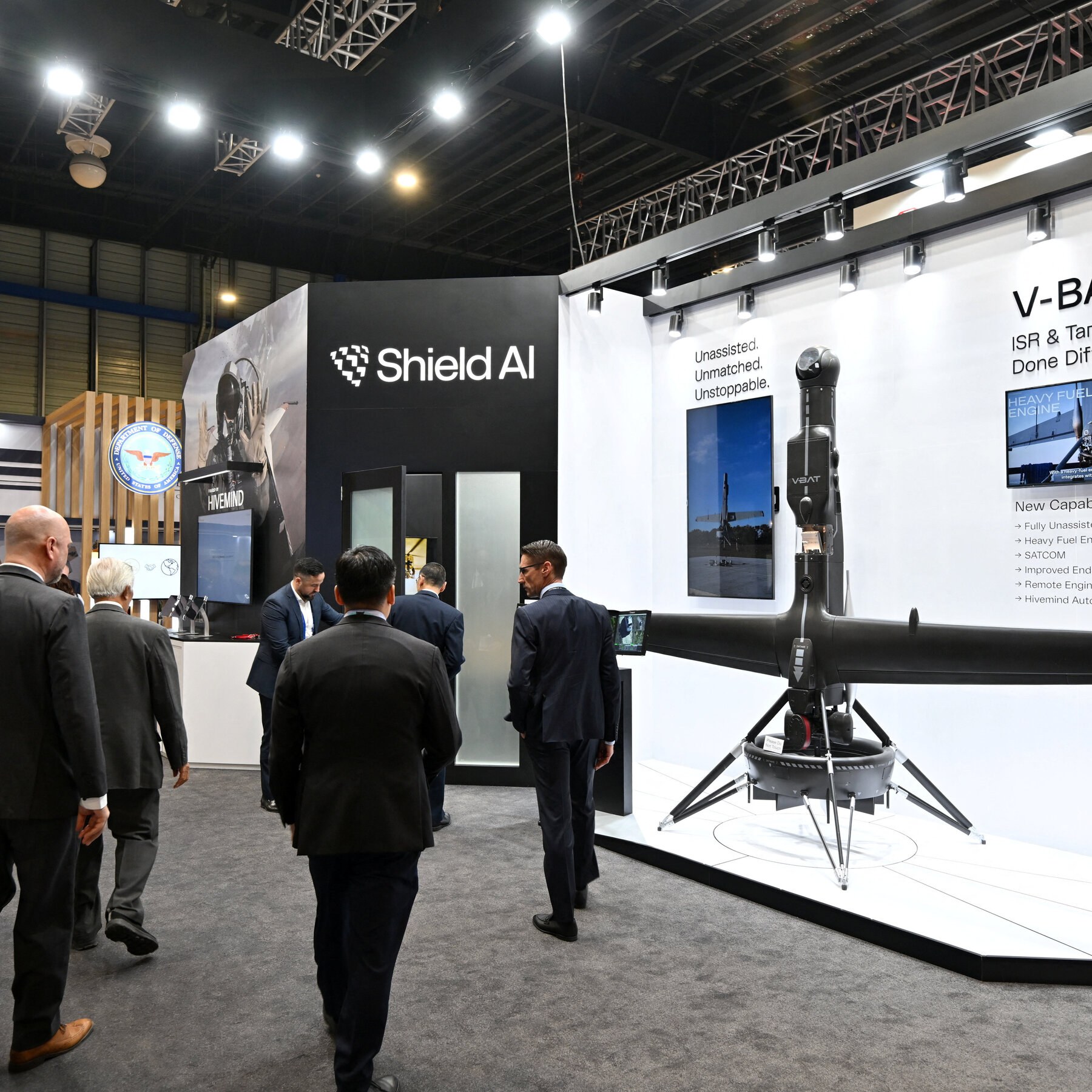
Shield AI Secures $2 Billion, Signaling Major Leap in Autonomous Military Technology
- Shield AI, a prominent start-up in the defense sector, has successfully raised $2 billion in its latest funding round.
- The company specializes in developing advanced autonomous military technology, primarily focusing on cutting-edge military drones.
- A significant portion of the newly secured capital is earmarked for the acquisition of a simulation software maker.
- This strategic move comes amidst a rapidly accelerating interest in next-generation defense capabilities globally.
A Transformative Infusion Propels Defense Autonomy Forward
SHIELD AI—In a powerful statement to the global defense industry, Shield AI, an innovative start-up dedicated to pushing the boundaries of autonomous military technology, has announced a colossal $2 billion funding round. This significant capital infusion not only validates the burgeoning market for advanced defense solutions but also positions Shield AI at the forefront of a technological revolution in warfare. The investment highlights a critical shift towards systems that can operate with increasing independence, promising to redefine strategic capabilities for allied forces worldwide.
The announcement extends beyond mere fundraising, revealing Shield AI’s ambitious plan to acquire a prominent maker of simulation software. This strategic integration is poised to create a synergistic ecosystem, enhancing the development, testing, and deployment of its autonomous military drones and other advanced systems. Experts view such vertical integration as crucial for maintaining a competitive edge in a sector where technological superiority is paramount, especially as global interest in next-generation defense solutions continues to soar.
This substantial investment and strategic acquisition underscore the accelerating pace of innovation within the defense technology landscape. As nations increasingly prioritize the adoption of AI-powered and autonomous systems, companies like Shield AI are becoming pivotal players. The $2 billion funding provides Shield AI with considerable resources to scale its research and development efforts, expand its operational footprint, and further solidify its leadership in the specialized field of autonomous military technology.
The Strategic Ascent of Autonomous Military Technology Investment
The landscape of global defense is undergoing a profound transformation, marked by an unprecedented surge in investment into autonomous military technology. Shield AI, a cutting-edge start-up, recently captured headlines with its monumental $2 billion fundraising announcement, a clear indicator of this escalating interest. This capital influx not only empowers Shield AI to accelerate its pioneering work in military drones but also reflects a broader industry trend towards self-operating systems designed to enhance mission effectiveness and reduce human risk in conflict zones. The scale of this investment, particularly for a start-up, underscores the perceived strategic value of achieving technological superiority in autonomous capabilities.Fueling the Future of Defense Autonomy
This substantial financial backing for Shield AI is set against a backdrop of rapidly soaring interest in next-generation defense solutions. Governments and defense contractors worldwide are increasingly looking to artificial intelligence and autonomy to provide a decisive edge in complex operational environments. The $2 billion raised by Shield AI is not merely an investment in a company; it is an investment in the future paradigm of warfare, where machines augment human decision-making and execute tasks with precision and speed unmatched by traditional methods. As experts in defense innovation frequently highlight, such funding is critical for pushing the boundaries of what autonomous systems can achieve, from advanced surveillance to sophisticated combat roles. The development of robust autonomous military technology requires significant capital for R&D, talent acquisition, and scaling production, making Shield AI’s recent success a critical benchmark. The implications of such large-scale investment ripple across the entire defense ecosystem. It signals to other innovators and established players alike that the race for autonomous military technology leadership is intensifying. For Shield AI, this capital provides the runway needed to not only refine its existing military drones but also to explore entirely new applications of autonomous systems, including potential breakthroughs in collaborative robotics and advanced sensor integration. This financial milestone sets the stage for Shield AI to become a dominant force in shaping how defense strategies are formulated and executed in the coming decades.Synergies: Military Drones and Simulation Software Integration
Shield AI’s strategic vision extends beyond the development of advanced military drones, encompassing a critical understanding of the ecosystem required to bring these autonomous systems to operational readiness. The company’s announced intention to acquire a maker of simulation software highlights a sophisticated approach to defense innovation. This planned acquisition is not merely an expansion but a calculated move to integrate crucial development and testing capabilities directly into Shield AI’s core operations. Simulation software provides the essential virtual proving ground for autonomous military technology, allowing for rigorous testing, refinement, and validation of complex algorithms and operational protocols before deployment in real-world scenarios.Enhancing Development Through Virtual Environments
The synergy between military drones and high-fidelity simulation environments is undeniable. Modern autonomous systems are complex, operating in unpredictable conditions and requiring extensive training for their AI models. By acquiring a simulation software maker, Shield AI gains tighter control over the development lifecycle of its military drones, enabling faster iteration, more comprehensive testing of new features, and the ability to simulate diverse and challenging mission parameters. This vertical integration is a recognized best practice in high-tech industries, allowing companies to accelerate innovation and reduce time-to-market for critical technologies. Defense analysts often point to the importance of realistic simulation for ensuring the trustworthiness and reliability of autonomous military technology, a paramount concern for military applications. The implications of this integration are far-reaching. It suggests that Shield AI is building a robust internal capability to not only design and manufacture military drones but also to continuously evolve their intelligence and operational effectiveness through sophisticated virtual training. This strategic foresight ensures that their autonomous military technology remains at the cutting edge, capable of adapting to emerging threats and operational demands. This integrated approach is set to define the next generation of autonomous system development.Why is Interest in Next-Generation Defense Technology Soaring?
The global defense industry is experiencing a profound shift, driven by geopolitical complexities and the rapid evolution of technology. The source text notes that ‘interest in next-generation defense soars,’ a trend vividly illustrated by the $2 billion investment in Shield AI and its focus on autonomous military technology. This soaring interest is not merely a passing fad; it reflects a deep understanding among defense strategists that future conflicts will be defined by technological superiority, particularly in areas like artificial intelligence, robotics, and autonomous systems. Nations are actively seeking capabilities that offer decisive advantages, enabling smarter, safer, and more effective operations across various domains.Drivers of Defense Innovation
Several factors contribute to this intensified focus on next-generation defense. Geopolitical tensions compel countries to modernize their arsenals, while the proliferation of sophisticated, yet accessible, technologies necessitates a proactive approach to maintaining a technological edge. Autonomous military technology, such as advanced military drones, promises to address critical operational challenges, from enhanced reconnaissance and surveillance to precision strike capabilities and logistical support. The ability for systems to operate in contested environments with minimal human intervention, or to manage vast amounts of data more efficiently than human operators, is becoming an undeniable strategic imperative. As defense budgets allocate more towards R&D, the ‘soaring interest’ translates directly into substantial investments in companies pushing these technological frontiers. The implications of this trend are significant for both national security and the global economy. It drives innovation not only in defense but also in related civilian applications, fostering breakthroughs in AI, advanced materials, and data analytics. For companies like Shield AI, this environment provides fertile ground for growth and market leadership, as their specialized expertise in autonomous military technology aligns perfectly with evolving defense priorities. The continuous demand for more sophisticated and reliable autonomous solutions ensures that investment in this sector will remain robust, pushing the boundaries of what is technologically possible in defense applications for years to come.Shield AI’s Strategic Edge in a Shifting Geopolitical Landscape
The substantial $2 billion investment into Shield AI underscores a crucial recognition within the defense investment community: autonomous military technology is not merely an enhancement but a foundational element of future global power dynamics. In an increasingly complex geopolitical landscape, characterized by evolving threats and the need for agility, companies like Shield AI that develop advanced military drones and related autonomous systems gain a significant strategic edge. Their innovations offer nations capabilities that can deter aggression, protect assets, and execute missions with unparalleled precision, all while potentially reducing the exposure of human personnel to extreme danger.Innovation as a National Security Imperative
The strategic importance of autonomous military technology cannot be overstated. As global powers vie for technological supremacy, investment in areas such as artificial intelligence, robotics, and advanced sensor systems becomes a national security imperative. Shield AI’s focus on military drones, combined with its plan to acquire a simulation software maker, demonstrates a comprehensive approach to mastering the full lifecycle of autonomous systems – from conceptual design and rigorous testing to operational deployment. This holistic strategy positions the start-up as a key enabler for defense forces seeking to modernize and maintain an advantage in an unpredictable world. Experts in military strategy often emphasize that the integration of such advanced technologies is no longer optional but essential for maintaining operational relevance. The implications for national defense and international relations are profound. Countries equipped with superior autonomous military technology can project power more effectively, respond to crises more rapidly, and potentially achieve strategic objectives with fewer resources. Shield AI’s remarkable funding round suggests a strong market belief in its capacity to deliver these critical capabilities. This infusion of capital will allow the company to accelerate its development roadmap, ensuring its offerings remain at the vanguard of defense innovation and play a pivotal role in shaping the security apparatus of allied nations for decades to come, especially as the demand for sophisticated autonomous solutions continues to grow globally.The Future Trajectory of Autonomous Military Technology and Market Impact
The infusion of $2 billion into Shield AI represents more than just a financial milestone; it serves as a powerful indicator of the future trajectory for autonomous military technology. As interest in next-generation defense solutions continues to soar, the market impact of innovative start-ups like Shield AI is set to broaden significantly. Their work in developing advanced military drones and integrating crucial simulation software capabilities positions them to redefine how defense operations are conceptualized, planned, and executed. The long-term vision extends to creating fully networked, AI-powered systems that can operate collaboratively, making defense forces more resilient and adaptive.Shaping Tomorrow’s Defense Landscape
The successful fundraising by Shield AI provides a clear signal to both competitors and potential partners about the increasing valuation and strategic importance of companies specializing in autonomous military technology. This substantial capital will enable Shield AI to accelerate its research and development, potentially leading to breakthroughs in areas such as swarm intelligence, human-machine teaming, and ethical AI in warfare. The acquisition of a simulation software maker is a proactive step to ensure rapid, secure, and cost-effective development cycles, fostering continuous innovation. Defense industry analysts frequently cite the critical role of such investments in driving the technological advancements that will shape future defense landscapes. The broader market implications include increased competition, further consolidation, and a heightened focus on talent acquisition within the defense tech sector. Companies that can demonstrate proven capabilities in autonomous military technology, especially those with scalable and reliable military drones, will attract significant attention and investment. Shield AI’s recent success positions it as a key player in this evolving ecosystem, with the resources to not only grow its product portfolio but also to influence industry standards and best practices. The journey ahead for autonomous military technology is one of continuous innovation and strategic expansion, driven by significant capital and a clear vision for the future of defense.Frequently Asked Questions
Q: What is Shield AI’s primary focus in autonomous military technology?
Shield AI primarily focuses on developing advanced autonomous military technology, specifically military drones. This technology aims to enhance defense capabilities through self-governing systems, reducing human risk and increasing operational efficiency in critical situations. The company’s recent $2 billion funding round underscores significant investment in this evolving sector.
Q: How will Shield AI use its recent $2 billion funding?
Shield AI has raised $2 billion to advance its autonomous military technology offerings. A key strategic use of this capital involves acquiring a maker of simulation software, which will likely integrate with their existing military drones and autonomous systems. This investment reflects a surging interest in next-generation defense capabilities and aims to solidify the company’s position.
Q: Why is simulation software important for autonomous military technology?
Simulation software is crucial for developing and testing autonomous military technology, including military drones, by providing safe, virtual environments for system development and training. It allows for rigorous testing of algorithms and operational scenarios without the high costs or risks associated with real-world trials. Shield AI’s plan to acquire such a maker indicates a strategic move to bolster its development cycle and innovation.
