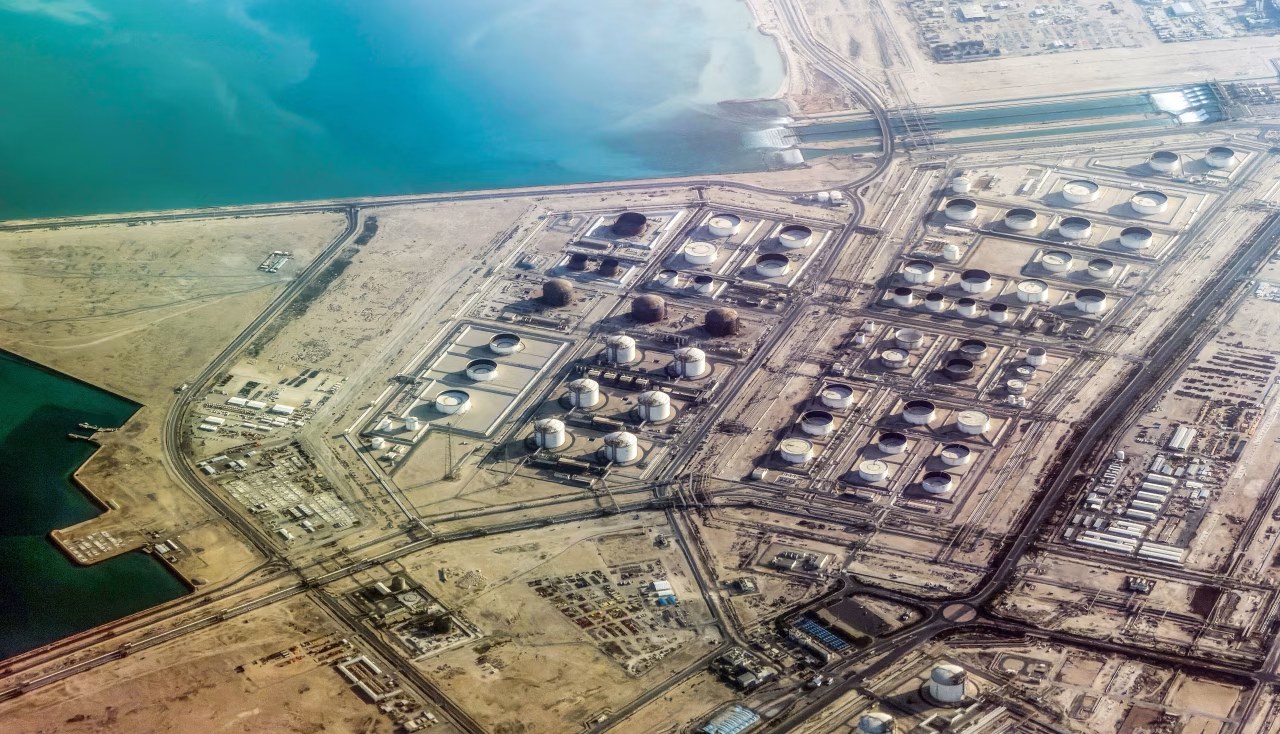
Geopolitical Tensions Around Strait of Hormuz Threaten One-Fifth of Global LNG Supply
- U.S. liquefied natural gas (LNG) producers are experiencing a significant surge in stock performance and profits due to heightened global gas prices.
- The Strait of Hormuz, a critical maritime chokepoint, controls approximately one-fifth of the world’s LNG supply, making it highly vulnerable to geopolitical disruptions.
- An alleged strike by Iranian missiles on Qatar’s vital Ras Laffan facility could lead to repairs lasting up to five years, significantly impacting global energy flows.
- Sustained high natural gas prices are expected to ‘rewire demand,’ potentially stifling the long-term expansion plans of the global LNG market.
An Unprecedented Confluence of Geopolitics and Commodity Markets Reshapes Global Energy Dynamics
LNG MARKET—The global energy landscape is currently a crucible of geopolitical tension and unprecedented market volatility, particularly within the liquefied natural gas (LNG) sector. While the immediate aftermath of recent crises has ushered in a period of remarkable profitability for U.S. LNG companies, this short-term windfall belies a more complex and potentially detrimental long-term outlook for the industry. A critical confluence of factors, anchored by the strategic vulnerability of the Strait of Hormuz and the repercussions of an alleged missile strike on Qatar’s pivotal Ras Laffan facility, is forcing a re-evaluation of global energy security and supply chain resilience.
For investors, the present moment has been characterized by an enthusiastic embrace of U.S. LNG stocks, a direct reflection of surging natural gas prices on the international market. However, the narrative extends far beyond quarterly earnings reports. Industry analysts and energy economists are increasingly pointing to the inherent paradox: the very conditions driving current profits are simultaneously sowing the seeds of future challenges. The sustained elevation of gas prices, a direct consequence of geopolitical disruptions, is projected to fundamentally alter global energy consumption patterns, potentially ‘rewiring demand’ in ways that could severely impede the industry’s ambitious expansion plans.
This dynamic tension between immediate gain and impending structural shift underscores a period of profound uncertainty for the global LNG market. The incident at the Ras Laffan site, a cornerstone of Qatar’s immense export capacity, alongside the broader implications of regional instability, casts a long shadow over the future of liquefied natural gas as a reliable, affordable transition fuel. Understanding these intricate forces is crucial for comprehending the trajectory of global energy in the coming decade, as nations grapple with security, sustainability, and economic viability.
The Immediate Windfall: U.S. LNG Producers Eye Soaring Profits Amid Crisis
The geopolitical tremors emanating from key energy-producing regions have sent reverberations through global commodity markets, resulting in a pronounced surge in natural gas prices. For U.S. liquefied natural gas (LNG) companies, this volatile environment has translated directly into a period of significant financial buoyancy, with their stock valuations experiencing a notable ascent. The Wall Street Journal noted that stocks of U.S. LNG companies have been ‘on a tear,’ reflecting a market expectation that higher gas prices will ‘juice profits’ considerably. This optimistic investor sentiment is rooted in the fundamental economics of supply and demand, where disruptions to global supply, particularly from major exporters, create premium pricing opportunities for alternative sources.
Drivers of the Profit Surge in the LNG Market
The core mechanism driving this profit surge is the widening arbitrage opportunity between domestic U.S. natural gas prices, which benefit from abundant shale production, and the significantly higher prices commanded in European and Asian markets. With European nations actively seeking to diversify away from pipeline gas, especially in the wake of recent geopolitical conflicts, demand for seaborne LNG has skyrocketed. U.S. export terminals have become critical conduits in this global energy recalibration, dispatching increasing volumes to high-paying buyers. The ability of these U.S. producers to leverage their expansive domestic resource base against a backdrop of constrained international supply has created an unparalleled window for profitability. Energy market analysts frequently highlight how such market dislocations, while challenging for consumers, represent a golden era for producers capable of nimble market response.
This situation is further exacerbated by unexpected supply shocks, such as the reported missile strike on Qatar’s Ras Laffan facility, which directly reduces the available global LNG supply from a major player. When a substantial portion of the world’s liquefied natural gas capacity is suddenly curtailed or faces an uncertain future, the remaining supply, particularly from resilient producers like the U.S., gains immense pricing power. This dynamic is not merely speculative; it is reflected in the tangible upwards movement of share prices for companies heavily invested in LNG export infrastructure. Experts in commodity trading underscore that market participants often price in geopolitical risk premiums, and the current landscape is a textbook example of this principle in action. While the immediate focus is on capitalizing on these elevated prices, the long-term sustainability of this model remains a critical subject for the future of the global LNG market.
The Strait of Hormuz: A Geopolitical Chokepoint Threatening Global Energy Supply
The vulnerability of global energy supply chains has been starkly illuminated by recent events, none more so than the inherent risks associated with the Strait of Hormuz. This narrow waterway, nestled between the Persian Gulf and the Gulf of Oman, stands as one of the world’s most critical maritime chokepoints. The source text explicitly states that ‘LNG has the same chokepoint as oil,’ with ‘around a fifth of global supply’ being ‘trapped behind the Strait of Hormuz.’ This geographical reality means that any significant disruption in this region can have immediate and far-reaching consequences for the entire global energy economy, particularly impacting the liquefied natural gas market.
Historical Context of a Vital Maritime Artery
Historically, the Strait of Hormuz has been a flashpoint for geopolitical tensions, a critical artery through which a substantial portion of the world’s crude oil passes. Its strategic importance, however, extends equally to the LNG market. Nations like Qatar, a behemoth in global liquefied natural gas exports, rely almost exclusively on this strait to dispatch their vast energy resources to consuming markets in Asia and Europe. Geopolitical strategists and maritime security experts consistently highlight the Strait’s precarious position, where a relatively small geographical area bears an outsized responsibility for global energy security. Any perceived or actual threat to navigation within these waters can trigger a rapid escalation in commodity prices and prompt immediate concerns about supply reliability.
The implications of such a chokepoint extend beyond mere price fluctuations; they touch upon the core tenets of national energy security. For importing nations, the reliance on a single, vulnerable maritime passage for such a significant portion of their liquefied natural gas needs necessitates strategic hedging and diversification efforts. However, the sheer volume of LNG transiting the Strait daily makes complete insulation from its risks virtually impossible in the short to medium term. The recent increase in tensions, particularly those linked to the Iran crisis, underscores how rapidly abstract geopolitical risks can materialize into tangible threats to global energy trade. Understanding the dynamics of this vital passage is paramount for assessing the long-term resilience of the global LNG market.
The Ras Laffan Attack: Qatar’s LNG Supply Under Threat and Repair Timelines
The precariousness of the Strait of Hormuz as a global energy chokepoint was dramatically underscored by the reported incident at Qatar’s Ras Laffan facility. The source text states unequivocally that ‘most of this LNG comes from a single Qatari facility that has been struck by Iranian missiles.’ This alleged attack on one of the world’s most critical liquefied natural gas production sites represents a tangible manifestation of geopolitical risk, transforming theoretical vulnerabilities into stark realities for the global LNG market. The damage incurred at Ras Laffan, a cornerstone of Qatar’s immense export capacity, carries significant implications for sustained global supply.
The Scale of Disruption: Five Years to Restore Normalcy?
The severity of the incident is highlighted by Qatar’s own assessment: it ‘says it will take up to five years to repair damage to the Ras Laffan site.’ This projected timeline of half a decade is not merely an operational inconvenience; it is a profound disruption to global energy flows. Ras Laffan is not just any facility; it is a gargantuan complex that forms the backbone of Qatar’s position as a leading global LNG exporter. The extensive period required for repairs suggests substantial damage, likely impacting highly specialized liquefaction trains and associated infrastructure that demand lengthy procurement and construction processes. Energy infrastructure experts emphasize that such facilities are incredibly complex, and repairs involving critical components can indeed stretch over years, not months.
The consequence of this prolonged repair schedule is twofold: it will ‘delay how soon flows go back to normal’ and, crucially, it will ‘keep global prices high.’ For consuming nations, this means a sustained period of elevated energy costs and heightened concerns about the reliability of liquefied natural gas supply. For the global LNG market, it forces a rapid re-evaluation of long-term supply contracts and investment in alternative sources. Qatar, long regarded as a highly reliable supplier, now faces the challenge of managing this unprecedented disruption. This event will undoubtedly prompt further discussions among international energy bodies about diversifying supply chains and building greater redundancy to mitigate the impact of such singular, high-impact incidents on vital energy infrastructure.
Rewiring Demand: How Sustained High Prices Threaten Long-Term LNG Expansion
While the immediate financial gains for U.S. liquefied natural gas (LNG) producers appear substantial, the source text highlights a critical, often overlooked downside: ‘High prices are likely to rewire demand in ways that hurt the industry’s expansion plans.’ This phenomenon of ‘rewiring demand’ represents a fundamental shift in energy consumption patterns driven by sustained economic pressures. When natural gas, particularly LNG, becomes consistently expensive over an extended period, it compels industrial, commercial, and residential consumers to actively seek out cheaper and more stable energy alternatives. This is not merely a short-term substitution; it can lead to permanent changes in energy infrastructure and consumption habits, posing a significant challenge to the long-term viability and growth trajectory of the global LNG market.
The Acceleration of Energy Transition and Alternatives
Energy economists routinely analyze the elasticity of demand, noting that for essential commodities, consumers will eventually adapt to price signals. In the context of the global LNG market, persistently high prices accelerate the transition away from fossil fuels, particularly in regions committed to decarbonization targets. This means renewed investment in renewable energy sources like solar and wind, an increased focus on energy efficiency measures, and a potential reconsideration of nuclear power. For instance, European nations, facing exorbitant gas prices, are aggressively pushing forward with their green energy agendas, viewing current LNG prices as a stark reminder of fossil fuel volatility. This long-term pivot directly impacts the business case for new LNG liquefaction and regasification terminals, as developers must forecast demand many years into the future.
Furthermore, the ‘delayed how soon flows go back to normal and keep global prices high’ aspect of the Ras Laffan incident amplifies this concern. A five-year repair timeline for a major facility means five years of potentially elevated prices, which is more than enough time for significant demand destruction and structural shifts in energy portfolios to occur. Industry analysts suggest that current high prices might inadvertently act as a catalyst for a faster energy transition, reducing the market share for liquefied natural gas in the long run. The strategic dilemma for the LNG market is clear: the short-term profits are undeniable, but the underlying market signals are increasingly pointing towards a future where high prices fundamentally reshape the energy landscape, potentially leaving ambitious expansion projects struggling to find sufficient demand.
The Strategic Dilemma: Balancing Immediate Gains Against Future Market Uncertainties
The dynamic unfolding within the global liquefied natural gas (LNG) market presents a profound strategic dilemma for producers and policymakers alike. The immediate opportunity to capitalize on ‘juiced profits’ from elevated natural gas prices contrasts sharply with the long-term threat that these very prices ‘rewire demand in ways that hurt the industry’s expansion plans.’ This inherent tension forces stakeholders to navigate a complex environment where short-term financial incentives clash with long-term market stability and investment foresight. The central question for the LNG market becomes: how to leverage current opportunities without undermining future growth?
Investment Hesitancy and Market Evolution
Major LNG producers, particularly those in the U.S., find themselves at a critical juncture. On one hand, the strong demand and high prices justify accelerated investment in new liquefaction capacity and export infrastructure. Yet, the specter of ‘rewired demand’ and accelerated energy transition casts a shadow over these long-term projects. Energy investment strategists often warn against the risks of overbuilding capacity based on temporary price spikes, particularly in an industry with multi-decade investment horizons. Projects initiated today might come online into a vastly different market reality five to ten years down the line, potentially facing diminished demand or increased competition from cheaper, greener alternatives. This cautious approach could explain why ‘investors are ignoring the flip side’ of the current crisis, focusing instead on immediate returns.
The geopolitical dimension, epitomized by the Strait of Hormuz chokepoint and the Ras Laffan incident, further complicates this strategic calculus. The notion that ‘Qatar says it will take up to five years to repair damage’ means that market uncertainty is not a fleeting concern but a prolonged condition. This extended timeline affects not only supply but also the perception of liquefied natural gas as a reliable and secure energy source in a volatile world. For importing nations, diversifying away from single-source reliance or vulnerable transit routes becomes an even greater priority. The challenge for the global LNG market is therefore not just about production capacity, but about proving its resilience, reliability, and cost-competitiveness against a rapidly evolving global energy mix. The decisions made by major players in this period will irrevocably shape the future trajectory of the global LNG market.
Is the Global LNG Market Sustainable in an Era of Persistent Geopolitical Risk?
The confluence of geopolitical volatility and commodity price spikes has ignited a critical debate regarding the long-term sustainability of the global liquefied natural gas (LNG) market. While immediate profits offer a reprieve to U.S. producers, the foundational challenges highlighted by the Iran crisis and the Ras Laffan incident suggest a future fraught with uncertainty. The core issue remains how an industry, intrinsically linked to global trade and stability, can thrive when approximately one-fifth of its supply is vulnerable to chokepoints like the Strait of Hormuz, and key infrastructure faces direct threats. This isn’t merely a cyclical downturn; it’s a structural challenge demanding strategic re-evaluation.
Building Resilience in the Face of Uncertainty
For the global LNG market to maintain its role as a crucial energy source, particularly for nations transitioning away from coal, it must demonstrate enhanced resilience. This involves more than just diversifying import sources; it requires a global commitment to de-risking critical supply chains and investing in infrastructure that is less susceptible to regional conflicts. Energy security experts advocate for a multi-pronged approach: bolstering strategic reserves, fostering diverse supply agreements with geographically dispersed producers, and accelerating investment in flexible, modular LNG solutions that can be deployed rapidly. The five-year repair estimate for the Qatari facility serves as a stark reminder that disruptions can be prolonged, necessitating comprehensive contingency planning that goes beyond short-term market reactions.
Ultimately, the future of the LNG market hinges on its ability to evolve beyond its current vulnerabilities. The ‘rewiring demand’ phenomenon, driven by high prices, indicates a natural market response to perceived instability and cost. To counteract this, the industry must innovate towards more cost-effective production methods, cleaner emissions profiles, and more robust logistical networks. The ongoing geopolitical crises are not just external shocks; they are forcing a fundamental reassessment of LNG’s value proposition in a rapidly changing global energy landscape. The path forward for liquefied natural gas will require a delicate balance of capitalizing on current opportunities while proactively mitigating the profound long-term challenges that now define its operational environment.
Frequently Asked Questions
Q: How has the Iran crisis impacted the global LNG market?
The Iran crisis has significantly impacted the global LNG market by creating geopolitical instability around the Strait of Hormuz, a critical chokepoint. This vulnerability, highlighted by an attack on Qatar’s Ras Laffan facility, has disrupted a substantial portion of global liquefied natural gas supply, leading to elevated natural gas prices and a short-term profit surge for U.S. LNG producers.
Q: What is the significance of the Strait of Hormuz for LNG supply?
The Strait of Hormuz serves as a critical chokepoint for global energy flows, including LNG. Approximately one-fifth of the world’s liquefied natural gas supply must pass through this narrow waterway. Disruptions, such as those stemming from the Iran crisis, can severely impact the global LNG market by restricting supply from major producers like Qatar, thereby escalating prices and raising concerns about energy security worldwide.
Q: How long might repairs at Qatar’s Ras Laffan facility affect LNG supplies?
Repairs at Qatar’s Ras Laffan facility, which was reportedly struck by Iranian missiles, are estimated to take up to five years. This extended timeline implies a prolonged period before liquefied natural gas flows from this vital site can return to normal levels. Such a significant disruption is expected to sustain high global natural gas prices and exert continuous pressure on the stability of the global LNG market.
Q: Why are high LNG prices a long-term challenge for producers?
While high prices initially boost profits for LNG producers, they pose a significant long-term challenge by ‘rewiring demand.’ Sustained elevated natural gas prices incentivize consumers and industries to seek cheaper, alternative energy sources or invest in energy efficiency. This shift can ultimately reduce future demand for liquefied natural gas, undermining expansion plans and potentially leading to oversupply or stranded assets for the LNG market in the years to come.
📰 Related Articles
- SpaceX Confidentially Files IPO Paperwork, Targeting Billions in Potential Public Offering
- Baidu Robotaxis Halt En Masse in Wuhan, Stranding Passengers
- Apple’s Hidden Vault: Unearthing 50 Years of Secret Prototypes and Untold Stories
- Intel Bolsters European Chip Production with $14.2 Billion Apollo Ireland Fab Buyout
