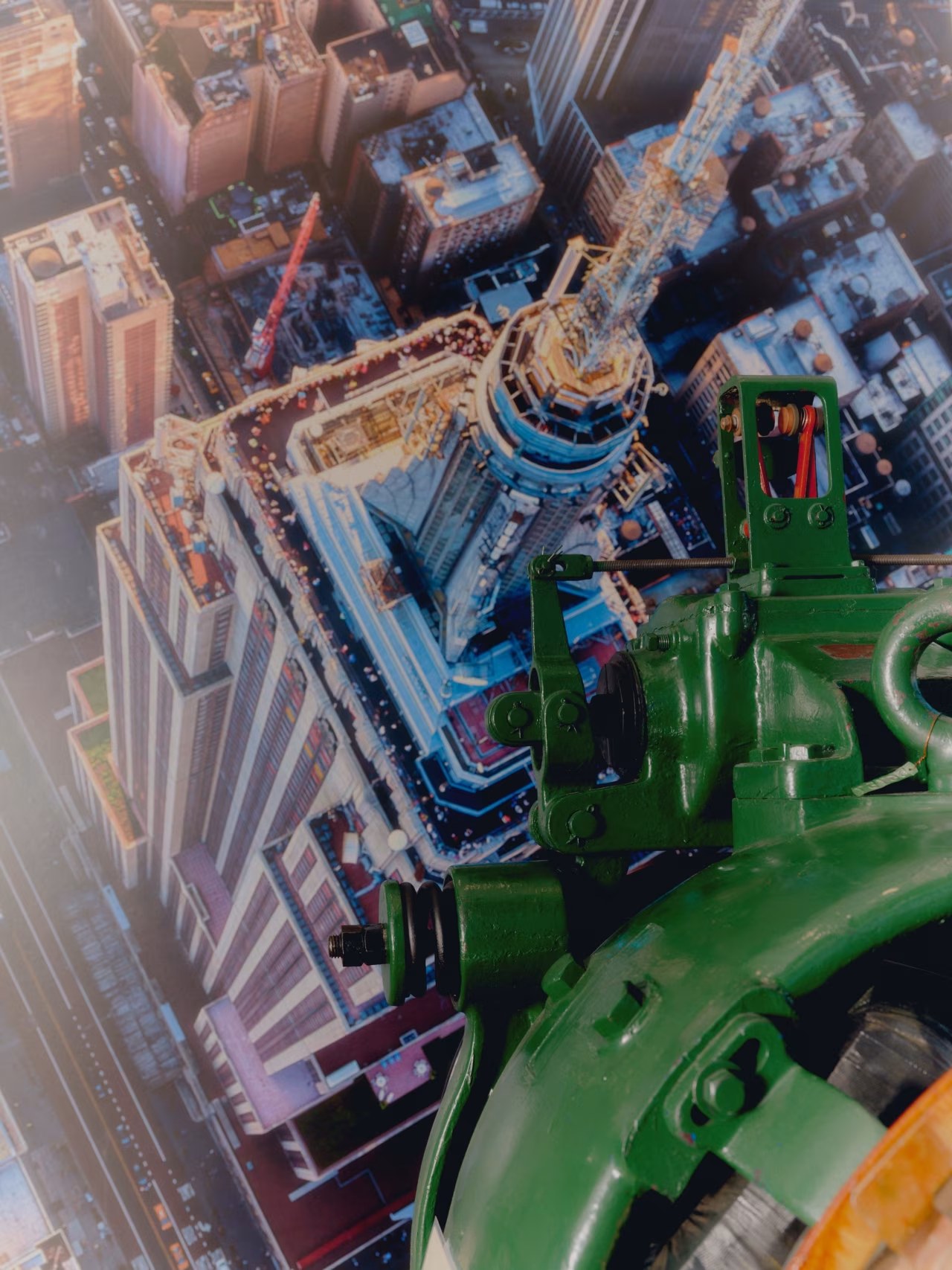
Elisha Otis’s 1853 Safety Brake Revolutionized Vertical Transport, Enabling Skyscraper Growth
- Elisha Otis demonstrated a crucial safety brake for elevators in 1853, a stunt that alleviated public fears about vertical travel.
- This innovation transformed height from a risk into a deliberate design element, paving the way for skyscrapers.
- Over 175 years, elevators and cities have grown in tandem, concentrating millions in dense urban cores.
- The elevator’s impact extends beyond buildings, fundamentally reshaping how millions live and conduct business.
A single dramatic demonstration in 1853 fundamentally altered the trajectory of urban development, enabling the very concept of the modern skyscraper.
NEW YORK—The elevator, a technology now so ubiquitous that its absence is jarring, owes its widespread adoption to a daring display of mechanical ingenuity. In the mid-19th century, the idea of ascending great heights in a suspended platform was fraught with peril and public anxiety. This fear, however, was about to be dramatically confronted and ultimately conquered.
The pivotal moment arrived during the 1853-54 World’s Fair in New York. Showman P.T. Barnum partnered with inventor Elisha Otis to devise a spectacle that would capture the public imagination and, more importantly, showcase the safety of vertical transportation. This event was not merely an exhibition; it was a calculated risk that would redefine urban landscapes.
The demonstration involved hoisting an elevator platform high above a gathered crowd. With the audience watching, Otis himself ordered the hoisting cable to be cut. The collective gasp from the onlookers turned to applause and relief as Otis’s innovative safety brake engaged instantly, arresting the platform’s fall. This single act solved the most significant barrier to vertical travel: safety.
The Birth of Verticality: From Stunt to Symbol
A Public Spectacle That Changed Everything
The genesis of the modern elevator can be traced not to a boardroom or an engineering lab, but to a theatrical stage. Elisha Otis, seeking to commercialize his invention, understood the power of visual demonstration. His collaboration with P.T. Barnum, a master of public relations and spectacle, was instrumental in 1853. Barnum, who had previously popularized the American Museum and the famously fake Feejee mermaid, recognized the potential of Otis’s safety device as a crowd-pleaser. The World’s Fair provided the perfect, albeit high-stakes, platform.
Otis’s design was deceptively simple yet revolutionary. It consisted of a simple but robust spring mechanism. When the hoisting rope went slack, either due to intentional cutting or a malfunction, the spring would release and engage a ratcheting system, locking the platform securely to the guide rails. This mechanism was the antithesis of the terrifying free-fall scenario that had plagued the imagination of potential elevator users. The successful demonstration at the Crystal Palace in New York not only proved the device’s efficacy but also created a powerful narrative of human ingenuity overcoming natural limitations.
The immediate impact was a surge in confidence. Before Otis’s brake, elevators were largely freight devices or cautious experiments in limited height applications. The widespread adoption of passenger elevators was hindered by the very real fear of catastrophic failure. Imagine the psychological barrier: trusting your life to a mechanism suspended by a single cable, thousands of pounds of metal and people hanging precariously above the ground. Otis’s stunt shattered this fear, converting skepticism into excitement. As architectural historian Carol Willis, founder of the Skyscraper Museum, has noted, “The invention of the safety elevator was the critical factor that made the skyscraper possible.” Her work consistently highlights how technological advancements are deeply intertwined with urban form.
Reshaping Urban Landscapes
The implications of this newfound safety were profound and far-reaching. Architects and developers, previously constrained by the physical limitations of human-powered stairs or unreliable early hoisting mechanisms, now had the green light to build upwards. The concept of the skyscraper, once a theoretical possibility, rapidly transitioned into an architectural reality. Steel-frame construction, a concurrent innovation, provided the structural backbone, but it was the elevator that provided the vital circulatory system, allowing people to inhabit these towering structures.
This vertical expansion had a cascading effect on urban economies and social structures. Land, always a scarce commodity in desirable city centers, became exponentially more valuable as buildings could ascend hundreds of feet. This density drove unprecedented concentrations of businesses, services, and residents into compact downtown districts. The economic advantages were clear: businesses could co-locate, fostering collaboration and efficiency, while developers could maximize profits on limited ground footprints. The elevator, therefore, became a powerful engine for economic growth and urban intensification. It was no longer just a convenience; it was a fundamental enabler of modern commerce and living.
The Skyscraper’s Ascent: Urban Density and Economic Concentration
From Humble Beginnings to Iconic Skylines
Following Elisha Otis’s pivotal 1853 demonstration, the elevator transitioned from a niche safety feature to a fundamental component of urban architecture. The late 19th century witnessed the birth of the skyscraper, a typology of building previously unimaginable. Structures like the Home Insurance Building in Chicago, completed in 1885 and often cited as the first skyscraper, utilized steel-frame construction coupled with Otis elevators to reach unprecedented heights of ten stories. This marked a significant departure from load-bearing masonry structures that could not safely support such vertical expansion.
The economic logic driving the skyscraper was compelling. As cities grew, the cost of land in central business districts skyrocketed. Building upwards allowed businesses to consolidate operations in prime locations, reducing the need for sprawling campuses and facilitating face-to-face interactions crucial for commerce. As historian Kenneth T. Jackson notes in his seminal work “Crabgrass Frontier: The Suburbanization of the United States,” the elevator was a key technology that countered earlier centrifugal forces, encouraging density in urban cores rather than immediate outward migration.
This concentration of economic activity created vibrant, albeit often crowded, urban centers. Millions of jobs became accessible within walking distance of major transit hubs, fueling further growth and innovation. The verticality enabled by elevators reshaped the very fabric of city life, transforming skylines and creating new archetypes of urban living and working. The density also had social implications, fostering diverse communities and a dynamic street-level culture, while the upper floors offered prestigious addresses for burgeoning corporations.
Reshaping Daily Life and Work
The profound impact of the elevator extended beyond the economic and architectural spheres, fundamentally altering the daily routines and lifestyles of millions. What was once a journey measured in countless flights of stairs became a swift ascent or descent. This saved time and energy, transforming the experience of commuting and working within tall buildings. For office workers, the elevator made jobs on higher floors as accessible as those on lower floors, equalizing opportunity and access within the vertical plane.
For residents, the elevator opened up higher floors in apartment buildings, which were often more desirable due to better light, air, and views, without the arduous climb. This facilitated the development of denser residential buildings and changed residential preferences. Furthermore, the elevator’s reliability and safety, cemented by advancements pioneered by companies like Otis Elevator Company (now Otis Worldwide), fostered a sense of security that encouraged the embrace of vertical living. Experts in urban planning, such as Jan Gehl, frequently emphasize how architectural and technological elements like elevators shape public life and movement within cities, demonstrating that even seemingly simple machines have complex societal consequences.
The synergy between elevator technology and urban development is a testament to human innovation’s power to reshape our environment. As cities continue to grow and densify, the principles first established by Elisha Otis’s safety brake in 1853 remain critically relevant, underscoring the elevator’s enduring role in defining the modern metropolis. The future of urban living will undoubtedly continue to be shaped by advancements in vertical transportation, building upon the foundation laid over 170 years ago.
How Elevators Transformed Housing and Business Operations
The Vertical Home: New Possibilities in Residential Living
The elevator’s influence on housing cannot be overstated. Before its widespread adoption, upper floors of multi-story buildings were often considered less desirable due to the strenuous effort required to reach them. Apartments or offices on the fifth or tenth floor were accessible only via long, tiring stair climbs. Elisha Otis’s safety brake innovation, however, democratized height, making every floor equally accessible. This shift enabled architects and developers to envision and construct taller residential buildings, maximizing land use in increasingly crowded cities.
The rise of apartment living, a cornerstone of modern urban existence, is inextricably linked to elevator technology. Buildings could now ascend dozens of stories, offering apartments with ample natural light and expansive views that were previously unattainable. This was particularly important in dense urban environments where horizontal expansion was limited. Real estate developers and urban planners, like those associated with the Regional Plan Association, recognized that elevators were key to accommodating growing populations within existing city footprints. They facilitated a vertical density that made urban living more practical and appealing, contributing to the diversification of housing options beyond single-family homes.
The implications extended to accessibility for individuals with mobility challenges. While early elevators were rudimentary, they represented a significant improvement over the physical barriers posed by stairs. Over time, advancements in elevator design and technology have continued to enhance accessibility, making multi-story living a viable option for a broader range of the population. This democratizing effect of vertical transportation has been a silent but powerful force in shaping residential patterns and expectations in cities worldwide.
Elevators as Catalysts for Business Efficiency
In the commercial realm, the elevator revolutionized how businesses operated and organized themselves. The ability to efficiently move people and goods between floors in tall buildings led to the concept of the central business district reaching skyward. Companies could house thousands of employees within a single building, fostering a concentrated corporate presence that defined the modern cityscape. This vertical clustering of businesses spurred economic activity and created dynamic hubs of commerce and innovation.
The impact on workflow and operational efficiency was substantial. Meetings could be held between departments located on different floors without significant time loss. Access to services and amenities on various levels became seamless. Furthermore, the elevator facilitated the development of specialized building functions. For example, hospitals could dedicate specific floors to surgery, patient wards, and diagnostic services, with elevators ensuring efficient movement of staff, patients, and equipment. Historians of technology, such as Melvin Kranzberg, have often pointed to such inventions as elevators as critical “enabling technologies” that unlock new possibilities across multiple sectors.
The integration of elevators into the fabric of urban life, from residential towers to bustling commercial centers, underscores their transformative power. More than just a means of transport, the elevator fundamentally reshaped our relationship with vertical space, enabling the dense, dynamic, and interconnected cities we inhabit today. As urban populations continue to grow, the principles of efficient vertical mobility pioneered by Elisha Otis will remain central to the future of urban development and the quality of life within them.
What Was the Significance of Elisha Otis’s Elevator Demonstration?
A Calculated Risk That Changed Urban Trajectories
The significance of Elisha Otis’s 1853 elevator demonstration at the World’s Fair cannot be overstated. It served as a dramatic and public validation of the safety brake, an invention that directly addressed the paramount fear of vertical transportation: a catastrophic fall. Prior to this, elevators were viewed with extreme caution, primarily relegated to moving goods or used in very limited, low-height applications where the risks seemed more manageable. Otis’s public display, orchestrated with showman P.T. Barnum, transformed this perception.
By cutting the cable and having his invention halt the platform’s descent, Otis didn’t just prove his mechanism worked; he instilled public confidence. This single event acted as a powerful catalyst, signaling that safe, reliable vertical travel was achievable. As noted by architectural historians, this psychological barrier removal was as crucial as the technological breakthrough itself. It opened the door for architects and developers to seriously consider building structures far taller than previously feasible, laying the groundwork for the skyscraper era.
The Foundation for Modern Vertical Cities
The confidence generated by Otis’s demonstration directly paved the way for the development and widespread adoption of elevators in buildings. Without this assurance of safety, the ambitious vertical expansion that characterizes modern cities would have been impossible. Developers could invest in taller buildings, knowing that people would be willing to ascend to higher floors. This led to the concentration of businesses and residents in urban centers, increasing land values and driving economic growth. The elevator became the engine powering the vertical city.
The legacy of that 1853 stunt is evident in the very structure of our metropolises today. From the steel-and-glass supertalls dominating skylines to the accessible upper floors of residential buildings, the impact of Otis’s innovation is pervasive. It fundamentally altered how humans interact with their built environment, making dense urban living a practical and desirable reality for millions across the globe. The ongoing evolution of elevator technology, from basic safety brakes to sophisticated multi-car systems and high-speed lifts, continues to build upon the foundation of trust established over 170 years ago.
Frequently Asked Questions
Q: Who invented the safety brake for elevators?
Elisha Otis is credited with inventing the safety brake for elevators. His groundbreaking demonstration in 1853 showcased how the elevator platform would stop safely even if the hoisting cable broke, addressing the primary fear of vertical travel.
Q: When did elevators become common in buildings?
Following Elisha Otis’s safety brake demonstration in 1853, elevators gradually became more feasible and accepted for passenger use. By the late 19th and early 20th centuries, they were instrumental in enabling the construction of taller buildings, becoming a standard feature.
Q: How did elevators change city development?
Elevators enabled vertical expansion, leading to the development of skyscrapers. This concentrated jobs and populations in urban centers, increasing land values and changing the density and design of modern cities worldwide.
