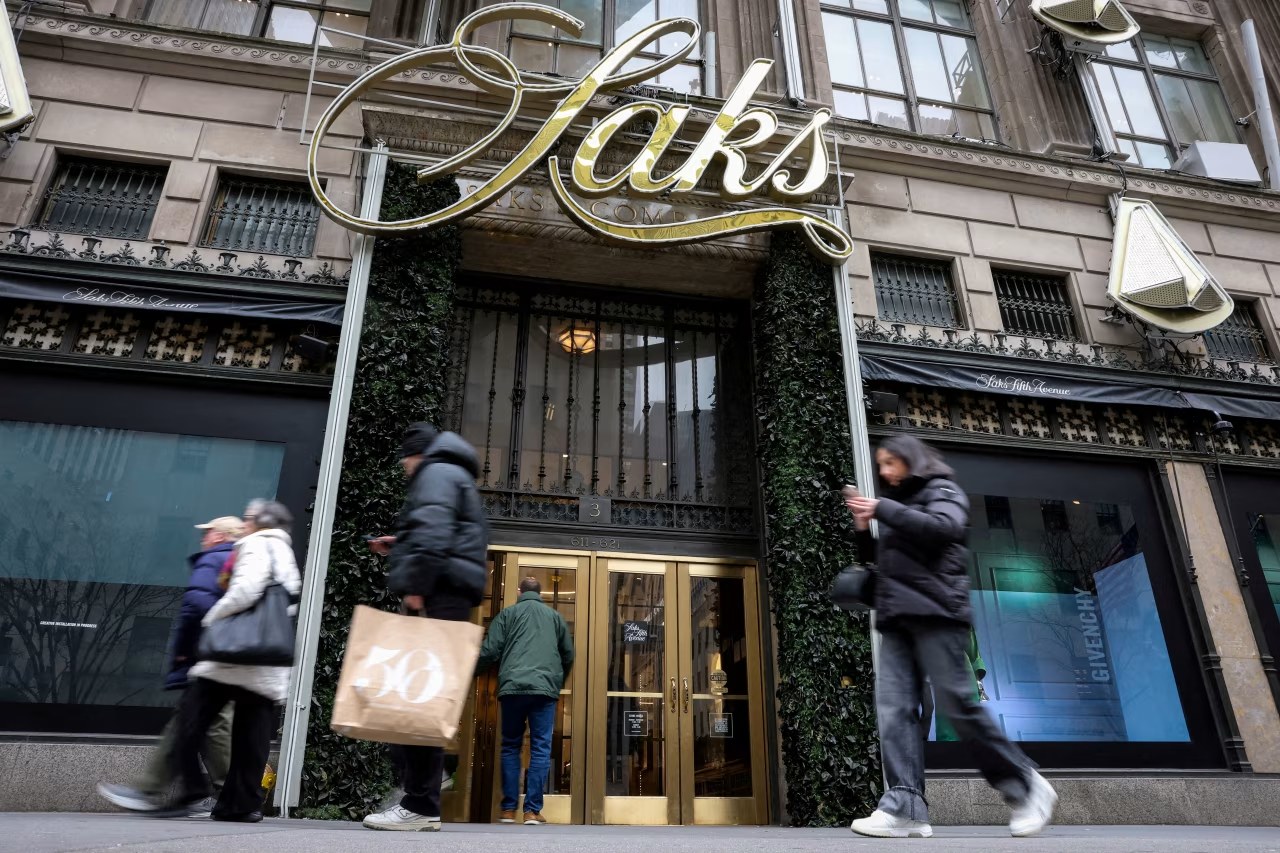
Saks Global Secures $500 Million to Catalyze Bankruptcy Exit This Summer
- Saks Global Enterprises has successfully secured $500 million in financing from an ad hoc group of its senior secured bondholders.
- This substantial financial injection is specifically designed to support the luxury retailer’s strategic plan to emerge from bankruptcy.
- The restructuring support agreement represents a critical milestone, signaling creditor confidence in the company’s future viability.
- Saks Global, the entity behind iconic Saks Fifth Avenue, anticipates completing its bankruptcy exit by this summer.
- The deal highlights the complex interplay between distressed companies and their bondholders in navigating financial restructuring.
A Pivotal Juncture for a Luxury Icon
SAKS GLOBAL—The landscape of high-end retail is unforgiving, and for Saks Global Enterprises, the journey through bankruptcy has been a testament to its resilience and the intricate dance between corporate strategy and creditor demands. On a recent Thursday, the company, renowned for operating the venerable Saks Fifth Avenue, announced a pivotal development: a secured financing package totaling $500 million. This infusion, painstakingly negotiated with an ad hoc group of its senior secured bondholders, is not merely a capital injection; it represents a decisive step towards untangling the complex web of debt that has encumbered the luxury giant. It signals a potential turning point, not only for Saks Global but also for how established retail brands can orchestrate a comeback in an increasingly volatile market.
This strategic move is designed to underpin the luxury retailer’s overarching plan to exit bankruptcy protection, a process it aims to complete by this summer. The agreement, formally known as a restructuring support agreement, is a pact of mutual understanding and commitment, offering a clear framework for the company’s financial reorganization. For an entity like Saks Global, which embodies a significant segment of the luxury shopping experience through its Saks Fifth Avenue operations, securing such a deal is more than a procedural formality; it is a vote of confidence from those who hold its most senior debt, indicating a belief in the company’s long-term prospects. The ramifications of this deal extend beyond the balance sheet, touching upon brand perception, market positioning, and the broader health of the luxury retail sector as it grapples with evolving consumer behaviors and economic pressures. The challenge now lies in transforming this financial blueprint into a tangible, revitalized business model.
The successful negotiation of this $500 million package underscores the critical importance of strong stakeholder alignment during periods of financial distress. The involvement of an “ad hoc group” of senior secured bondholders implies a coordinated effort among significant creditors who possess the most protected claims on the company’s assets. Their willingness to provide new financing or roll over existing debt on new terms is often contingent on a clear, credible path to recovery. For Saks Global, this agreement provides not just capital, but also a degree of certainty for its operational planning and its public image. As the company moves towards its anticipated emergence, the details of how this financing will be deployed will become central to its narrative of resurgence and sustained profitability, ultimately defining its future within the competitive luxury market.
The Lifeline: Saks Global Secures $500 Million for Rebirth
The announcement from Saks Global Enterprises on a recent Thursday marked a critical juncture in the luxury retailer’s arduous journey through bankruptcy. The company, which proudly oversees the operations of the iconic Saks Fifth Avenue, revealed it had secured a substantial $500 million in financing. This isn’t merely a cash infusion; it represents a carefully structured lifeline extended by an ad hoc group of its senior secured bondholders, pivotal for the company’s strategic goal of emerging from bankruptcy protection by this summer. This development underscores the intricate financial maneuvering required to steer a major retail entity back to solvency, especially one embedded in the high-stakes world of luxury.Understanding the Significance of Senior Secured Financing
In the complex realm of corporate restructuring, the commitment from senior secured bondholders carries immense weight. These creditors typically hold claims that are backed by specific assets of the company, placing them at the front of the line for repayment in the event of liquidation. Their willingness to inject new capital or agree to a restructuring support agreement (RSA) often signals a collective belief in the company’s underlying value and its potential for a successful turnaround. As financial experts at Fitch Ratings often observe in their analyses of distressed debt, securing financing from this class of creditors is frequently a prerequisite for a viable bankruptcy exit plan, as it demonstrates a foundational level of confidence and cooperation essential for reorganizing a company’s liabilities and operations. The $500 million package is earmarked specifically to facilitate Saks Global’s “planned emergence from bankruptcy.” This means the funds are designed to cover various expenses associated with the restructuring process, provide working capital for ongoing operations, and potentially satisfy certain pre-petition claims or fund new investments critical for post-bankruptcy growth. For a luxury retailer like Saks Fifth Avenue, maintaining liquidity and operational stability throughout a Chapter 11 process is paramount to protecting its brand equity and customer base. Disruption in inventory, staffing, or customer service can quickly erode the very elements that define a luxury experience. This financing helps mitigate such risks, providing a cushion that allows management to focus on long-term strategic adjustments rather than day-to-day cash flow crises. The “ad hoc group” designation is particularly insightful. It indicates that a specific, influential subset of senior secured bondholders has coalesced to negotiate directly with Saks Global. This is often seen when certain bondholders hold substantial portions of the debt and have a shared interest in shaping the restructuring outcome. Such agreements are not easily forged; they require extensive due diligence, financial modeling, and a shared vision for the restructured entity. The fact that a deal was reached signifies a crucial consensus, an endorsement of the company’s proposed future state, moving the Saks Global bankruptcy exit closer to reality. The announcement on Thursday, therefore, isn’t just about a sum of money; it’s about the culmination of intense negotiations and the forging of a path forward. It provides a formal framework, an RSA, which legally binds these key creditors to support the company’s reorganization plan, assuming certain conditions are met. This contractual commitment is vital because it minimizes the risk of last-minute objections or challenges that could derail the entire bankruptcy exit process. For Saks Global, this agreement represents more than just financial relief; it is a strategic repositioning that could redefine its competitive edge in the luxury retail landscape for years to come. The next critical phase will involve translating this financial agreement into operational excellence, setting the stage for a revitalized presence in the market.Why is Secured Financing Crucial for Bankruptcy Exits?
The $500 million financing package secured by Saks Global Enterprises from its senior secured bondholders is a textbook example of a debtor-in-possession (DIP) financing or an exit financing package, both of which are cornerstone elements in many complex corporate bankruptcies. Without access to such capital, companies often struggle to maintain operations, fund their reorganization efforts, or even pay the professionals overseeing the bankruptcy process. Financial professionals widely acknowledge that robust funding is not merely beneficial but often indispensable for a successful Saks Global bankruptcy exit.The Role of Debtor-in-Possession (DIP) Financing
While the source text describes the financing as supporting “planned emergence,” it aligns with the principles of DIP financing, which provides capital to a company while it is still operating under bankruptcy protection. This type of financing is typically granted by existing secured creditors, as is the case with Saks Global, or by new lenders. As highlighted by legal scholars like Professor Elizabeth Warren in her extensive work on bankruptcy law, DIP financing is often given priority status over pre-petition debts, offering lenders a strong incentive to provide capital to a struggling company. This super-priority status ensures that the new loans are among the first to be repaid, making them attractive to creditors willing to take a calculated risk on a company’s recovery. For a luxury retailer like Saks Fifth Avenue, maintaining ongoing operations, including purchasing new inventory and paying employees, is critical to preserving its brand and customer loyalty. This $500 million could serve this purpose, bridging the gap to its formal emergence. The negotiation of such a significant sum underscores the bondholders’ belief that Saks Global possesses an inherent value worth preserving and rebuilding. By agreeing to provide this $500 million, the senior secured bondholders are not just lending money; they are essentially investing in the restructuring plan itself. Their commitment often provides a stamp of credibility that encourages other stakeholders, such as suppliers and customers, to continue engaging with the company. Without this financial vote of confidence, a bankrupt entity can face a rapid decline in its ability to function, spiraling into liquidation rather than rehabilitation. The funds act as both a practical necessity and a powerful psychological signal to the market, indicating that key creditors believe in the management’s ability to execute a turnaround. Furthermore, secured financing often facilitates the final steps of a bankruptcy exit by providing the capital necessary to pay off certain creditors, fund a new business plan, or simply provide a healthy cash reserve as the company re-enters the market as a reorganized entity. The announcement specifies the money is to “support the luxury retailer’s planned emergence from bankruptcy this summer,” which strongly suggests its role as exit financing. This type of financing is crucial for a smooth transition, allowing the company to shed burdensome legacy debts and emerge with a healthier balance sheet and sufficient capital to pursue its strategic objectives. Corporate finance practitioners, as noted in analyses by institutions like Deloitte, routinely emphasize that adequate exit financing is paramount to ensure a company doesn’t simply trade one financial crisis for another upon leaving bankruptcy. For Saks Global, this $500 million is not just about survival; it’s about providing a solid foundation for its future growth trajectory in the competitive luxury retail sector. The next chapter will delve into the intricacies of the restructuring support agreement itself and its implications for both the company and its creditors.Navigating the Restructuring Support Agreement: A Creditor’s View
The announcement from Saks Global Enterprises explicitly states the company has “entered into a restructuring support agreement with an an ad hoc group of its senior secured bondholders.” This legal instrument, commonly referred to as an RSA, is the bedrock of many successful corporate reorganizations, particularly those involving a complex web of creditors and significant debt. For the senior secured bondholders, this agreement represents a strategic commitment, formalizing their support for Saks Global’s proposed plan to resolve its financial distress and achieve a Saks Global bankruptcy exit.The Mechanics of a Restructuring Support Agreement
An RSA is essentially a contract between a company and a critical mass of its creditors — in this instance, a powerful “ad hoc group” of senior secured bondholders — outlining the key terms of a proposed reorganization plan. As corporate restructuring attorneys often explain, these agreements are designed to reduce the uncertainty and litigation risks inherent in bankruptcy proceedings. By agreeing to an RSA, bondholders typically commit to supporting the company’s specific bankruptcy plan, including voting for it and refraining from actions that could impede its confirmation. This consensus-building is invaluable for the company, as it streamlines the often contentious and time-consuming bankruptcy court process. For Saks Global, securing such an agreement signifies a crucial alignment of interests with those who hold its most protected debt. The agreement details how the $500 million in financing will integrate into the broader restructuring plan. It would specify conditions under which the funds are provided, the interest rates, repayment schedules, and any equity stakes or new securities that the bondholders might receive in the reorganized entity. While the source text doesn’t provide these specifics, a typical RSA would meticulously lay out such terms. For the senior secured bondholders, agreeing to this financing package and the broader RSA implies a calculated decision. They are likely trading immediate, potentially higher recovery in a liquidation scenario for a more certain and perhaps ultimately more valuable recovery in a reorganized, going-concern business. This is a common strategy when creditors believe the company’s brand, assets, and operational capabilities have significant long-term value, as is undoubtedly the case for Saks Fifth Avenue. The “ad hoc group” aspect is key here. Such groups form when a sufficient number of creditors, often large institutional investors, band together to negotiate with the debtor as a single, powerful bloc. This collective bargaining power allows them to influence the terms of the restructuring more effectively than individual bondholders could. Industry observers, such as those at the American Bankruptcy Institute, frequently note that RSAs negotiated with ad hoc groups often serve as a template for the broader creditor body, making the eventual plan confirmation process smoother. This implies that the $500 million financing is not just an isolated deal, but an integral part of a larger, carefully orchestrated strategy designed to secure broad creditor support for the entire plan of reorganization. The next phase will focus on how this financial stability will translate into a revitalized operating model for the esteemed luxury retailer.Saks Fifth Avenue’s Future: Charting a Path Post-Bankruptcy
With a $500 million financing deal secured and a restructuring support agreement in place, Saks Global Enterprises is now firmly setting its sights on a planned emergence from bankruptcy “this summer.” This pivotal moment will mark a new chapter for Saks Fifth Avenue, the luxury retailer’s flagship operation, allowing it to shed the constraints of its previous debt structure and refocus on its core mission: delivering an unparalleled luxury shopping experience. The success of this Saks Global bankruptcy exit will hinge not just on financial reorganization, but on a strategic revitalization of its market position and operational effectiveness.Reimagining the Luxury Retail Experience
The luxury retail sector has undergone significant transformations in recent years, accelerated by digital shifts and changing consumer preferences. For Saks Fifth Avenue, emerging from bankruptcy offers a unique opportunity to reassess and reimagine its physical and digital footprints without the immediate burden of overwhelming debt. Retail analysts, like those at Kearney’s consumer practice, often emphasize that successful luxury brands in the post-pandemic era must master omnichannel integration, offering seamless experiences across high-end brick-and-mortar stores and sophisticated e-commerce platforms. The $500 million financing will provide the necessary capital to invest in these critical areas, from store modernizations and enhanced personalization services to advanced inventory management and supply chain optimization. The ability to invest in customer experience and digital innovation is crucial for a luxury brand to remain competitive. Saks Fifth Avenue’s reputation is built on exclusivity, curated selections, and exceptional service. With a healthier balance sheet post-bankruptcy, the company can potentially allocate resources to elevate these aspects, whether through loyalty programs, personalized shopping advisories, or exclusive events that reinforce its high-end positioning. This fresh start allows management to implement strategic initiatives that may have been postponed due to financial constraints, ensuring that the brand can continue to attract and retain its affluent customer base. Moreover, the exit from bankruptcy protection will instill renewed confidence among stakeholders, including suppliers, landlords, and employees. Suppliers of luxury goods, who often operate on extended payment terms and rely on the financial stability of their retail partners, will likely view a financially stronger Saks Global more favorably. This can lead to better terms, access to more exclusive merchandise, and improved inventory flow, all of which are vital for a high-end department store. For its dedicated workforce, the clarity and stability offered by a successful bankruptcy exit can boost morale and foster a renewed sense of purpose. As the company looks towards “this summer” for its emergence, the focus will undoubtedly shift to executing a precise, forward-looking business plan that capitalizes on its brand heritage while embracing the demands of the modern luxury consumer. This strategic pivot will be critical in defining Saks Fifth Avenue’s role in the evolving retail landscape.The Broader Implications for Luxury Retail and Financial Health
The announcement of Saks Global Enterprises securing $500 million in financing and a restructuring support agreement to facilitate its Saks Global bankruptcy exit by “this summer” resonates beyond the confines of the company itself. This development offers a pertinent case study in the resilience of established luxury brands, the complexities of corporate restructuring, and the evolving dynamics of the high-end retail sector. Its implications can inform how other retailers, particularly those facing financial headwinds, might navigate similar challenges in an unpredictable economic climate.Lessons from a Luxury Retailer’s Turnaround
The ability of Saks Global to secure such significant backing from its senior secured bondholders highlights the enduring value placed on iconic brands like Saks Fifth Avenue, even in distress. Financial economists specializing in distressed assets often point out that luxury brands, with their strong brand equity, loyal customer bases, and unique market positioning, can often command more favorable restructuring terms than general retailers. The intrinsic value of the Saks Fifth Avenue name, its established infrastructure, and its perceived market niche likely played a crucial role in persuading bondholders to provide new capital rather than pursuing a more aggressive, potentially value-destructive, liquidation. This situation provides a blueprint for how brands with strong legacies can leverage their intangible assets during periods of financial vulnerability. Furthermore, this restructuring underscores a broader trend in the retail industry: the necessity for legacy brands to adapt rapidly to changing consumer behaviors, especially the accelerating shift towards e-commerce and experiential shopping. While the $500 million financing addresses the immediate financial distress, the long-term success of Saks Global and Saks Fifth Avenue will depend on its capacity to innovate and redefine its value proposition in a hyper-competitive market. The “planned emergence” isn’t merely a legal formality; it’s a strategic mandate for transformation. Corporate strategists, particularly those advising large retail chains, frequently advise that post-bankruptcy, companies must demonstrate a clear, compelling vision for growth that extends beyond simply shedding debt. The role of an “ad hoc group of senior secured bondholders” in orchestrating this deal also provides valuable insight into creditor-debtor dynamics. Their coordinated action and willingness to provide exit financing reflect a sophisticated understanding that their best recovery often lies in the successful rehabilitation of the debtor rather than its piecemeal dismantling. This approach emphasizes collaborative restructuring, where creditors become active participants in shaping the company’s future rather than solely acting as adversaries. As market conditions continue to evolve and potential economic uncertainties loom, the Saks Global case will undoubtedly be studied as an example of how a major luxury retailer, with the crucial backing of its most senior creditors, can navigate the intricate path towards a renewed financial footing and a stabilized presence in the discerning world of high-end commerce.Frequently Asked Questions
Q: What is the significance of Saks Global securing $500 million in financing?
Saks Global secured a critical $500 million in financing from its senior secured bondholders to support its planned bankruptcy exit. This sum is vital for providing liquidity, funding ongoing operations, and facilitating the necessary steps for the luxury retailer, which operates Saks Fifth Avenue, to emerge from bankruptcy protection by this summer. It signals strong confidence from key creditors in the company’s future viability and successful restructuring.
Q: Who are the “senior secured bondholders” and what is an “ad hoc group”?
Senior secured bondholders are creditors whose loans are backed by specific assets, giving them priority in repayment during bankruptcy. An “ad hoc group” refers to a specific, influential subset of these bondholders who have formally united to negotiate collective terms with Saks Global. Their agreement to the financing and the restructuring support agreement is crucial for the company’s Saks Global bankruptcy exit.
Q: What is a “restructuring support agreement” in the context of Saks Global?
A restructuring support agreement (RSA) is a binding contract between Saks Global Enterprises and its key creditors, in this case, senior secured bondholders. It outlines the terms of the proposed reorganization plan, including the $500 million financing. The RSA ensures these creditors commit to supporting the company’s plan, minimizing legal challenges and streamlining the process toward a successful Saks Global bankruptcy exit.
Q: When does Saks Global expect to emerge from bankruptcy?
Saks Global Enterprises, the operator of Saks Fifth Avenue, has indicated that it plans to emerge from bankruptcy protection by “this summer.” The recently secured $500 million in financing from its senior secured bondholders and the signed restructuring support agreement are instrumental steps towards achieving this goal, providing the necessary financial and structural support for its exit.
Q: How does this financing impact Saks Fifth Avenue?
This $500 million financing is expected to provide Saks Fifth Avenue with the crucial capital needed to stabilize operations, invest in strategic initiatives, and enhance the luxury customer experience post-bankruptcy. By shedding its heavy debt burden, the company can refocus on innovation, omnichannel integration, and strengthening its brand, ensuring its long-term health after the Saks Global bankruptcy exit.
