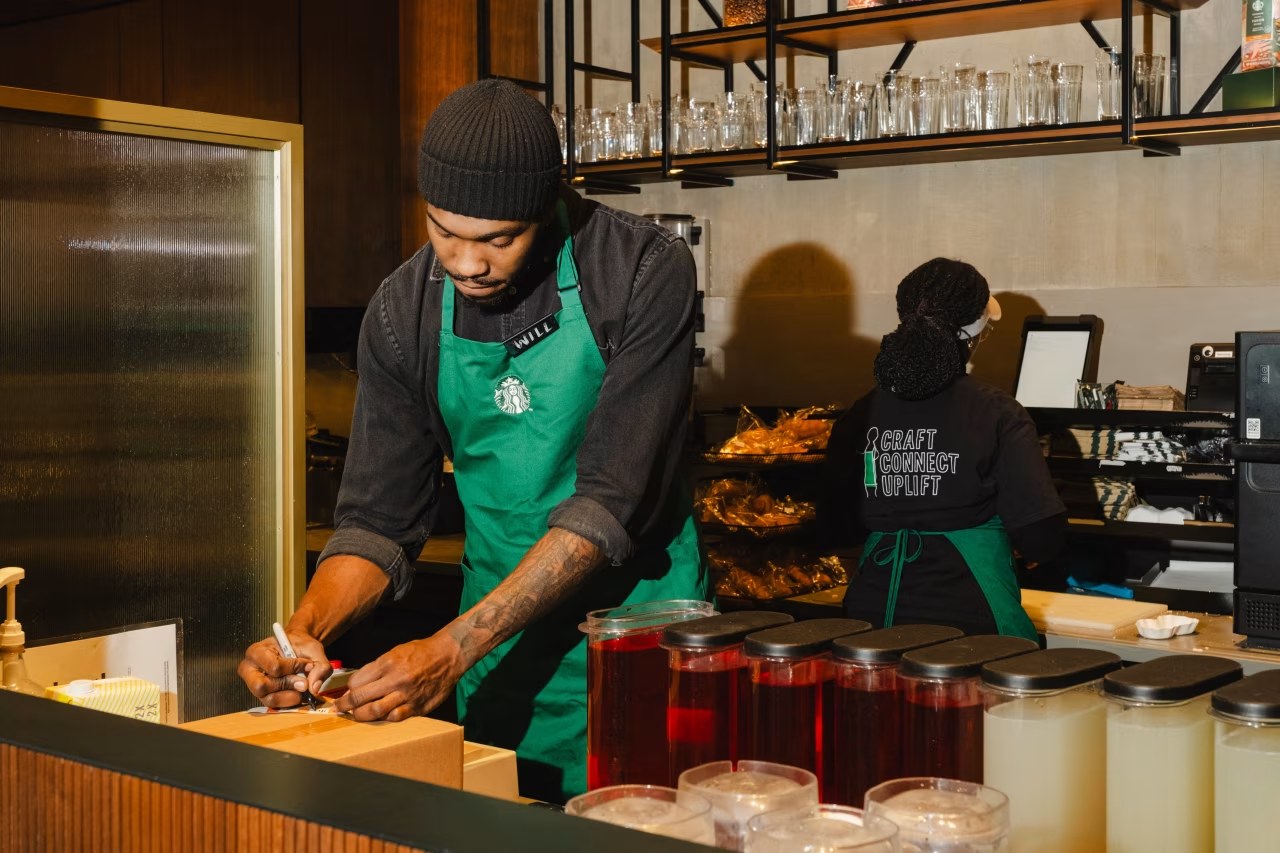
STARBUCKS—
Starbucks baristas could see their pay increase by an estimated 5% to 8% starting in July, as the coffee giant introduces expanded credit card tipping and new quarterly bonuses tied to store performance.Expanding the Tipping Jar: Digital Payments and Gratuities
A Shift in Mobile Transactions
Starbucks’ decision to expand credit card tipping for mobile orders marks a pivotal evolution in its approach to employee compensation and customer interaction. Previously, tipping via credit or debit cards was confined to in-store or drive-through purchases, or specific mobile transactions utilizing a Starbucks card. This limitation meant that a substantial portion of digital transactions, particularly those initiated through the popular mobile app for pickup, did not offer a seamless tipping option for customers paying with their cards. This change, slated for implementation in July, aims to rectify that by integrating tipping directly into the credit card payment flow for mobile orders where customers scan at the register.
The Financial Impact on Baristas
For baristas, this expansion holds the promise of a direct increase in their earnings. The average barista’s income is often supplemented significantly by customer tips, and by making credit card tipping more accessible for mobile orders, Starbucks anticipates a material rise in overall barista compensation. This move acknowledges the increasing reliance on digital payment methods and seeks to ensure that employees benefit from these transaction trends. While the exact increase is contingent on customer behavior, the company estimates a potential 5% to 8% boost to their overall pay, a figure that could translate to hundreds of extra dollars annually for dedicated staff.
Expert Take on Service Industry Incentives
Industry analysts like Dr. Anya Sharma, a labor economics professor at City University, note that such initiatives are becoming increasingly crucial for companies in the service sector. “The labor market for frontline service workers is incredibly competitive,” Dr. Sharma commented in a recent interview with The Wall Street Journal. “Companies like Starbucks are recognizing that attractive compensation packages, which include not just base wages but also opportunities for tips and performance-based incentives, are essential for attracting and retaining talent. Expanding digital tipping capabilities directly addresses consumer habits and employee desire for more predictable earnings.” This suggests a broader industry trend toward leveraging technology to improve worker compensation.
The company’s strategic inclusion of this feature is designed to capture more of the customer’s willingness to tip within the digital ecosystem, which has become the primary mode of interaction for many. This aligns with broader trends in the gig economy and service industries where variable compensation plays a significant role.
Performance Bonuses: Rewarding Excellence Beyond Sales
Incentivizing Top Store Performance
Starbucks’ introduction of performance-based bonuses represents a strategic effort to cultivate a high-performing culture across its company-owned stores. This program is not merely about driving sales; it encompasses a broader spectrum of operational excellence. Baristas and shift supervisors who consistently achieve top-tier ratings within Starbucks’ internal evaluation framework will be eligible for these financial awards. The criteria include not only sales targets but also crucial operational metrics such as efficiency and speed of service, alongside customer satisfaction scores derived from feedback and surveys.
Quantifying Success: Bonus Structure Details
The structure of these performance bonuses is designed to be both attainable and rewarding for diligent employees. Store-level teams, or individual employees, that meet the highest performance benchmarks can expect to receive a quarterly bonus of $300. For those who consistently maintain this level of performance throughout the year, this amounts to a substantial $1,200 in additional income. This incentive aims to motivate employees to uphold Starbucks’ renowned service standards and operational efficiency, directly linking their efforts to tangible financial rewards.
The Role of Store-Level Metrics
According to a report by the National Retail Federation on employee engagement, performance-based incentives can significantly boost morale and productivity when clearly communicated and fairly administered. “When employees understand what is expected of them and see a direct correlation between their efforts and rewards, they are more likely to be engaged and committed to the company’s goals,” stated Sarah Chen, a retail HR consultant. “Starbucks’ multi-faceted approach, looking at sales, operations, and customer satisfaction, provides a holistic view of store performance and rewards employees for contributing across all these critical areas.” This comprehensive approach suggests a mature understanding of what drives success in a demanding retail environment.
The emphasis on a holistic store performance evaluation underscores Starbucks’ commitment to maintaining its brand reputation for quality and customer experience, even as it seeks to enhance employee compensation. These bonuses are expected to be a key driver in achieving these dual objectives.
The Projected Pay Bump: A Closer Look at the 5%-8% Increase
Calculating the Compensation Boost
The combined effect of expanded tipping and performance bonuses is projected to elevate barista compensation by an estimated 5% to 8% above their current pay rates. This figure is not arbitrary; it represents Starbucks’ projection based on historical tipping data and the anticipated uptake of the new bonus program. For an employee earning, for example, $15 per hour, a 5% increase would amount to an additional $0.75 per hour, while an 8% increase would add $1.20 per hour. Over a full-time work year, this could translate into an additional $1,500 to $2,500 annually, significantly impacting disposable income.
Dependency on Customer Behavior and Store Performance
It is crucial to note that the realization of this projected pay increase is not guaranteed and is contingent on several factors. The expanded tipping option, while available, relies on customer generosity and their adoption of this new payment method. Similarly, the performance bonuses are directly tied to a store’s success in meeting specific sales, operational, and customer satisfaction targets. As Dr. James Peterson, an economist specializing in labor markets at Stanford University, points out, “Variable compensation models are effective but introduce an element of unpredictability. Employees must understand that their earnings can fluctuate based on external factors like customer behavior and internal performance metrics.” This emphasizes the shared responsibility between the company and its employees in achieving these compensation goals.
Starbucks’ Strategy: Retention and Recruitment
This comprehensive compensation enhancement strategy is deeply rooted in Starbucks’ efforts to improve employee retention and attract new talent. In the highly competitive fast-casual and coffee shop sector, attracting and keeping skilled baristas is paramount. By offering a more attractive and potentially higher earning potential, Starbucks aims to differentiate itself from competitors. A 2023 report by the U.S. Bureau of Labor Statistics indicated that wages in the food service industry have seen modest growth, but significant increases are often tied to roles with more variable compensation. The company’s move to offer a more robust earning potential, combining base pay with these new incentives, is a clear strategy to address this dynamic labor environment.
The impact of these changes will be closely watched, not only by Starbucks employees but also by industry observers assessing the effectiveness of such compensation strategies in the broader retail and hospitality sectors.
Why Is Starbucks Overhauling Barista Pay Now?
Addressing Labor Market Pressures
The timing of Starbucks’ announcement to enhance barista pay is no coincidence; it arrives amidst persistent labor market challenges and a growing emphasis on employee well-being within the retail and hospitality sectors. For years, companies have grappled with attracting and retaining frontline workers, a trend exacerbated by shifts in consumer expectations and economic conditions. Starbucks, like many major employers, faces the ongoing need to offer competitive compensation to ensure operational continuity and maintain its service standards. The barista role, often a starting point for many in the workforce, is critical to the customer experience, making investment in these employees a strategic imperative.
The Impact of Digital Transformation on Service Roles
The increasing dominance of digital ordering and payment systems has reshaped the landscape of service jobs. While technology streamlines operations, it also necessitates a recalibration of how employees are compensated, particularly those in customer-facing roles. Starbucks’ move to integrate credit card tipping into mobile orders directly reflects this digital transformation, ensuring that the benefits of increased digital transactions are shared with the staff facilitating them. As technology consultant Maria Rodriguez notes, “Companies that fail to adapt their compensation models to the digital age risk falling behind. Employees now expect seamless integration of payment and tipping across all channels.” This suggests that Starbucks’ actions are a forward-thinking response to evolving consumer and employee expectations.
Boosting Morale and Productivity
Ultimately, the overarching goal behind these new compensation initiatives is to foster a more motivated and productive workforce. Higher earning potential, whether through tips or bonuses, can directly translate into increased job satisfaction and a stronger sense of loyalty to the company. By tying a portion of the compensation to performance metrics, Starbucks also incentivizes employees to focus on key business objectives, such as sales growth and customer service excellence. This creates a win-win scenario where employees benefit from increased earnings, and the company reaps the rewards of a more engaged and high-achieving team, as documented in studies by organizations like the Society for Human Resource Management (SHRM).
The integration of these new pay structures is expected to set a benchmark for other large employers in the quick-service restaurant industry, highlighting the growing importance of comprehensive compensation strategies in today’s economy.
Frequently Asked Questions
Q: How will Starbucks baristas see increased pay?
Starbucks baristas will receive increased compensation through two main avenues: expanded credit card tipping options for mobile orders and new quarterly bonuses. These incentives aim to boost overall barista earnings by an estimated 5% to 8% on top of their current wages.
Q: When will these new barista pay initiatives be implemented?
Starbucks plans to roll out these new benefits, including the expanded tipping features and performance-based bonuses, in its company-owned stores starting in July. This aims to provide immediate financial uplift for baristas.
Q: What performance metrics will trigger barista bonuses at Starbucks?
The new quarterly bonuses for baristas and shift supervisors are tied to a store’s achievement of performance goals. These targets include metrics related to sales volume, operational efficiency, and overall customer satisfaction ratings within the Starbucks system.
Q: Can customers tip via credit card on all mobile orders at Starbucks?
Initially, Starbucks is expanding credit card tipping to mobile orders where customers scan at the register. Previously, tipping via credit card was limited to in-store and drive-through orders, or mobile transactions using a Starbucks card, making this a significant expansion.
