Oil Prices Surge Past $100 a Barrel Following Trump’s Iran Speech, Erasing Market Gains
- President Trump’s Wednesday speech on Iran aimed to garner support for potential military action.
- Markets reacted negatively, witnessing oil prices surge dramatically above $100 a barrel.
- The address promptly unwound a preceding “two-day ‘Hormuz Hope’ rally” in global stock markets.
- Trump’s contradictory rhetoric, combining assurances of peace with pledges of severe action, fueled investor uncertainty.
Wall Street’s Swift Verdict: Geopolitical Rhetoric Meets Market Reality
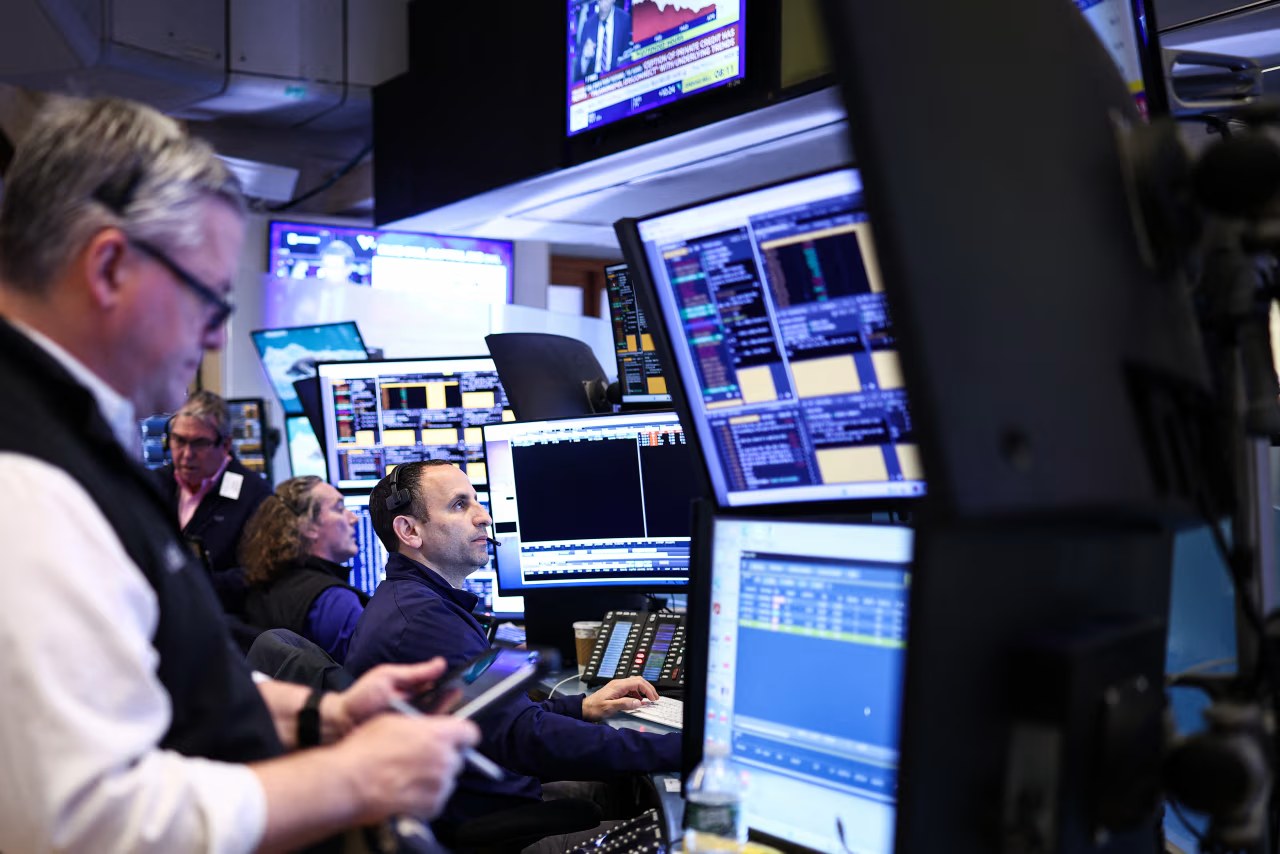
IRAN-US TENSIONS—In a rapid and decisive assessment, Wall Street delivered its unequivocal verdict on President Trump’s latest attempt to galvanize public support for a confrontation with Iran. Following a prime-time address on Wednesday evening, global markets, particularly commodities and equities, registered immediate and pronounced shifts. Traders, by all accounts, were far from enamored with the message, leading to a swift reversal of recent gains and a palpable increase in geopolitical risk. The immediate aftermath of Trump’s Iran speech saw a critical benchmark: oil prices breaching the psychologically significant threshold of $100 a barrel, a direct response to the escalating rhetoric and uncertainty.
This dramatic surge in crude oil futures was not an isolated event; it served as the pivotal factor in unwinding what had been a two-day “Hormuz Hope” rally. This period of investor optimism had seen stocks climb, presumably on hopes of de-escalation or stability surrounding the vital Strait of Hormuz. However, the president’s address introduced a potent cocktail of conflicting signals. While offering assurances that the U.S. would “eventually end the war with Iran” and that the Strait of Hormuz would “open up naturally,” he simultaneously pledged to hit Iran “extremely hard” in the coming weeks. This duality plunged markets back into a state of heightened apprehension, demonstrating the delicate balance between political pronouncements and their tangible economic repercussions.
The swift market repricing underscored a fundamental truth of international relations: words from a global power, especially concerning volatile regions like the Middle East, carry immense weight. Wall Street’s immediate reaction highlighted how even a two-day surge, built on the fragile foundation of geopolitical optimism, can be erased in a matter of hours when the underlying rhetoric shifts towards confrontation. This event served as a stark reminder of the global economy’s enduring vulnerability to tensions in key energy-producing regions, with the Strait of Hormuz remaining a critical choke point for international trade and stability.
The Strategic Imperative of the Strait of Hormuz in Global Markets
The abrupt market reversal triggered by President Trump’s Iran speech underscored the immense strategic importance of the Strait of Hormuz, a narrow waterway connecting the Persian Gulf to the open ocean. This vital maritime chokepoint is arguably the world’s most crucial oil transit point, with approximately 20% of the world’s petroleum and other liquids passing through it daily, according to general energy industry assessments. Any threat to its free passage sends immediate shockwaves through global energy markets, directly influencing the price of crude oil and, consequently, the broader economy. President Trump’s dual message – an assurance that the Strait would “open up naturally” contrasted sharply with a pledge to hit Iran “extremely hard” – created precisely the kind of ambiguity that market participants abhor.
Geopolitical Risk and Energy Security
Geopolitical analysts consistently highlight the Strait of Hormuz as a primary flashpoint, a critical artery whose constriction would have catastrophic global economic consequences. The “Hormuz Hope” rally, which preceded Trump’s Iran speech, was a testament to how quickly markets react to even fleeting signs of stability in the region. When those hopes were dashed by aggressive rhetoric, the market’s response was equally swift: a surge in oil prices above $100 a barrel. This immediate premium reflected the perceived increase in supply disruption risk, as traders priced in the possibility of conflict impacting shipping lanes. Experts in international relations, like those at the Council on Foreign Relations, often emphasize that even the *threat* of closure can be as disruptive as an actual event, driving up insurance costs for shipping and dampening investment.
The history of the region is replete with instances where tensions have directly impacted global energy flows. From the Iran-Iraq War in the 1980s, which saw significant attacks on shipping, to more recent confrontations and naval exercises, the volatility surrounding the Strait of Hormuz has repeatedly demonstrated its capacity to dictate global economic confidence. President Trump’s rhetoric, aiming to “sell Americans on the war with Iran,” invoked these deeply embedded historical fears, making the market’s reaction understandable. Investors, cognizant of past disruptions, moved to price in a higher risk premium for crude oil, reflecting concerns about the integrity of this irreplaceable maritime route.
The conflicting signals from President Trump’s Wednesday evening address painted a complex picture for those trying to assess the future. While the assurance of an “eventual end to the war” might have offered a glimmer of long-term hope, the immediate threat of being hit “extremely hard” dominated short-term trading decisions. This underscores the challenge policymakers face in managing expectations in a globalized economy where geopolitical statements have instant, tangible impacts. As the world watches for the “coming weeks” that President Trump alluded to, the Strait of Hormuz remains a focal point of global attention, its stability intricately linked to energy security and market calm.
Unpacking the ‘Hormuz Hope’: Investor Sentiment and Geopolitical Swings
The unraveling of the “two-day ‘Hormuz Hope’ rally” following President Trump’s Iran speech offers a stark illustration of the fragility of market sentiment in the face of geopolitical uncertainty. Before the Wednesday evening address, investors had seemingly embraced a period of cautious optimism, pushing stock prices higher. This ‘hope’ was likely rooted in an expectation, however tenuous, that tensions in the Persian Gulf might de-escalate, or at least not intensify, thus securing the flow of oil through the Strait of Hormuz. Such rallies, often driven by speculative capital and positive headlines, are inherently vulnerable to shifts in political winds, particularly when emanating from a major global power.
The Volatility of Risk Perception
Market observers frequently highlight that investor sentiment is a potent, if often irrational, force. The decision by Wall Street traders to immediately “unwind” the rally demonstrates a rapid repricing of risk. Where there was once hope, there was now a renewed calculation of potential conflict. Financial analysts commenting on such events often point out that markets do not merely react to events but also to the *perception* of future events. President Trump’s explicit pledge to hit Iran “extremely hard” in the coming weeks, despite his broader assurances, created a tangible threat that overshadowed any previous optimism. This perceived increase in geopolitical risk instantly translated into higher oil prices and a retreat from riskier assets like stocks, effectively canceling out the prior two days of gains.
The phenomenon of a market rally being extinguished by a single political statement is not new, yet it consistently serves as a reminder of the interconnectedness of geopolitics and finance. Experts in behavioral economics at institutions like the Yale School of Management frequently study how cognitive biases and herd mentality can amplify market reactions to news, especially high-stakes geopolitical announcements. The “Hormuz Hope” rally, by its very name, suggests a sentiment-driven ascent, making it particularly susceptible to a counter-narrative of escalating conflict. The price of crude oil, surging above $100 a barrel, became the most immediate and visceral indicator of this shifting sentiment, acting as a barometer for global anxiety. The primary keyword, Trump’s Iran speech, became synonymous with this abrupt shift in market mood.
This event underscores the enduring challenge for investors: navigating markets driven not just by economic fundamentals but by unpredictable geopolitical pronouncements. The contrast between the two days of hope and the subsequent reversal is a powerful lesson in risk management and the profound influence of political rhetoric on global capital flows. As the market digests the implications of President Trump’s statements, the focus remains keenly on the veracity and follow-through of the administration’s pledges, with future trading patterns hinging on every subsequent development in the Middle East.
What Are the Broader Economic Implications of Sustained Geopolitical Tensions?
The immediate market reaction to President Trump’s Iran speech, characterized by surging oil prices and an unwound stock rally, points to broader economic implications that extend far beyond immediate trading floors. Sustained geopolitical tensions, particularly those impacting crucial energy supplies via the Strait of Hormuz, can create a ripple effect throughout the global economy. An oil price above $100 a barrel, if maintained, acts as a significant tax on consumers and businesses, increasing transportation costs, raising manufacturing expenses, and ultimately dampening consumer spending and investment. This scenario can fuel inflationary pressures, complicating monetary policy for central banks already grappling with complex economic landscapes.
The Inflationary Pressure of Energy Costs
Economists at leading institutions, such as the International Monetary Fund, routinely model the impact of energy shocks on global growth. A sharp increase in crude oil prices directly impacts the cost of goods and services across virtually all sectors. From gasoline prices at the pump affecting household budgets to higher freight costs for logistics companies, the inflationary impulse is undeniable. This can lead to reduced disposable income for consumers, potentially slowing down retail sales and overall economic activity. For businesses, higher input costs can squeeze profit margins, leading to decisions on pricing, investment, or even employment. The fear is that the ‘hit Iran extremely hard’ rhetoric, combined with the assurance of the Strait of Hormuz opening ‘naturally,’ creates a dangerous cocktail of uncertainty that inhibits long-term economic planning.
Beyond inflation, prolonged geopolitical instability and the resulting market volatility can deter foreign direct investment and disrupt global supply chains. Companies become hesitant to commit capital to projects in regions perceived as high-risk, and the added cost of insuring goods transported through contested waterways can make international trade less attractive. The memory of past energy crises, though not explicitly dated here, serves as a powerful historical precedent for the far-reaching economic consequences of Middle Eastern instability. The market’s immediate verdict on Trump’s Iran speech was not just about day-to-day profits but about the foundational stability required for sustained global economic health.
Policymakers, therefore, face a precarious balancing act. While national security objectives are paramount, the economic fallout of escalating tensions can have severe domestic and international repercussions. The current situation demands a careful calibration of rhetoric and action to avoid inadvertently triggering a broader economic downturn. As the ‘coming weeks’ unfold, the global economy will be closely watching for signs of de-escalation or, conversely, a further hardening of positions that could solidify the current elevated risk premium on energy and capital markets.
The Dual Message: Parsing Trump’s Rhetoric and Its Global Reception
President Trump’s prime-time address on Wednesday was a masterclass in contradictory messaging, presenting a challenge for both domestic audiences and international observers. On one hand, he offered soothing assurances that the U.S. would “ eventually end the war with Iran” and that the critical Strait of Hormuz would “open up naturally.” These statements, designed to project control and a long-term vision for peace, could theoretically calm market fears and diffuse some geopolitical tension. Yet, almost in the same breath, the president pivoted sharply, pledging to hit Iran “extremely hard” in the coming weeks. This stark contrast immediately amplified uncertainty, demonstrating how easily a narrative of de-escalation can be undermined by threats of escalation.
The Credibility Gap in International Diplomacy
For international relations experts and diplomatic observers, such dual messaging raises questions about strategic coherence and credibility. When a leader offers both olive branches and threats, it can be difficult for adversaries, allies, and markets alike to discern the true intent or the likely course of action. Institutions focused on conflict resolution and international policy, such as Chatham House, often discuss how inconsistent rhetoric can inadvertently exacerbate tensions by creating miscalculation risks. The “Hormuz Hope” rally, a brief period of market optimism, was founded on the more conciliatory aspects of potential de-escalation. Its sudden unwinding after the hawkish turn in Trump’s Iran speech highlighted the market’s preference for clear, consistent policy signals over ambiguity.
The president’s speech, framed to “sell Americans on the war with Iran,” simultaneously attempted to reassure a global audience dependent on the free flow of oil. This balancing act proved ineffective for financial markets. Traders on Wall Street, accustomed to parsing complex political statements for economic implications, clearly weighed the threat of severe action more heavily than the promise of eventual peace. The immediate outcome – oil surging above $100 a barrel and the cessation of the two-day stock rally – underscored the global skepticism towards a strategy that simultaneously promises calm and warns of an impending storm. The phrase “hit Iran extremely hard” became the dominant takeaway, signaling an undeniable increase in risk premium across global asset classes.
The challenge for the administration, and indeed for global stability, lies in reconciling these seemingly opposed objectives. The coming weeks will likely reveal whether the dual message was a calculated strategy to maintain leverage or an indication of internal policy divisions. Regardless, the global reception, particularly from financial markets, has been unambiguous: ambiguity in geopolitical rhetoric regarding critical regions like the Middle East carries a heavy economic cost, demanding greater clarity and predictability from world leaders.
Navigating the ‘Coming Weeks’: Future Outlook for Investors and Global Stability
As President Trump concluded his prime-time address with a stern promise to hit Iran “extremely hard” in the coming weeks, a new chapter of uncertainty opened for global investors and policymakers. The immediate market response – the surge in oil prices above $100 a barrel and the unwinding of the “Hormuz Hope” rally – provided a clear indicator of the perceived increased risk. The critical question now facing Wall Street and capitals worldwide is how this pledge will manifest and what its implications will be for international stability and economic growth. Analysts and strategists are now actively modeling various scenarios, from diplomatic pressure to direct confrontation, each with its own set of potential market repercussions.
Strategic Responses to Heightened Geopolitical Risk
For investors, the immediate future calls for heightened vigilance and a re-evaluation of portfolios. Financial advisors, echoing sentiment from firms like BlackRock, often recommend that clients consider diversifying investments to mitigate exposure to regional conflicts. Assets traditionally viewed as safe havens, such as gold or certain government bonds, typically see increased demand during periods of elevated geopolitical risk, while riskier assets like equities in emerging markets may face headwinds. The volatility introduced by Trump’s Iran speech necessitates a proactive approach to risk management, as the “coming weeks” could bring further announcements or events that rapidly alter market conditions.
From a policy perspective, the challenge is multifaceted. The international community will be closely watching for any moves that could either de-escalate or further inflame the situation in the Persian Gulf. The delicate balance of international diplomacy, aimed at ensuring the continued stability of critical trade routes like the Strait of Hormuz, will be tested. Experts in national security, such as those associated with think tanks like the Carnegie Endowment for International Peace, often stress the importance of clear communication channels and predictable actions to prevent unintended escalation, especially in regions as volatile as the Middle East. President Trump’s earlier assurance that the U.S. would “eventually end the war with Iran” now stands in tension with his more recent, more confrontational rhetoric.
Ultimately, the global economy’s resilience will be measured by its ability to absorb these shocks without succumbing to a widespread downturn. The implications of sustained geopolitical tension and elevated oil prices could reverberate for months, impacting everything from consumer confidence to corporate earnings. As the world awaits the specific actions that will follow President Trump’s pronouncements, the next few weeks are poised to be a crucial period for both diplomacy and markets, shaping perceptions of risk and stability for the foreseeable future.
Frequently Asked Questions
Q: How did Wall Street react to Trump’s Iran speech?
Wall Street traders reacted negatively to Trump’s Iran speech, unwinding a two-day ‘Hormuz Hope’ rally and sending oil prices surging above $100 a barrel. The market verdict reflected concerns over escalating tensions and the mixed signals from the president’s address, impacting investor sentiment significantly.
Q: What was the ‘Hormuz Hope’ rally that ended after Trump’s speech?
The ‘Hormuz Hope’ rally was a two-day surge in stocks, driven by optimism regarding the Strait of Hormuz. This positive market momentum was abruptly halted and unwound following President Trump’s speech, which introduced new pledges of hardline action against Iran despite assurances of eventual peace, creating uncertainty.
Q: Why did oil prices surge above $100 a barrel after Trump’s speech on Iran?
Oil prices surged above $100 a barrel directly after Trump’s Iran speech due to his pledge to ‘hit Iran extremely hard’ in the coming weeks. This threat immediately raised concerns about potential disruptions to global oil supply, particularly from the strategically vital Strait of Hormuz, leading to an increased risk premium in crude oil futures.
Q: What conflicting messages were in President Trump’s Iran speech?
President Trump’s Iran speech contained conflicting messages for investors and the public. He assured that the U.S. would ‘eventually end the war with Iran’ and that the Strait of Hormuz would ‘open up naturally.’ However, he simultaneously pledged to ‘hit Iran extremely hard’ in the coming weeks, creating a significant level of market uncertainty and geopolitical unease.
