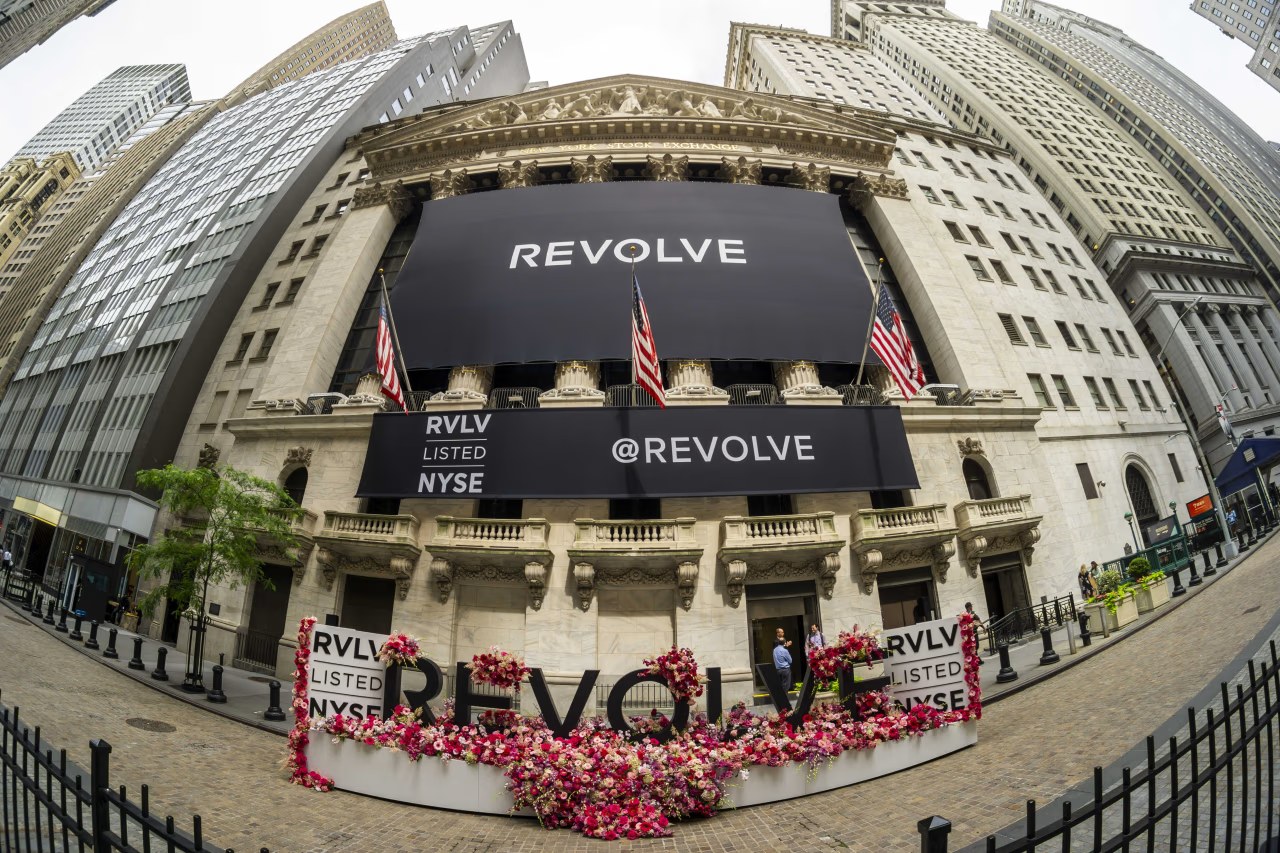
Revolve’s Bold Return Strategy Marks a Significant Industry Divergence
- Revolve actively promotes fast, free shipping and easy returns.
- This strategy contrasts sharply with the broader retail industry’s trend of cost-cutting.
- The retailer is “doubling down” on customer convenience, despite potential operational expenses.
- Its approach challenges conventional wisdom about managing e-commerce returns.
As Rivals Retreat, One E-commerce Leader Bets Big on Unmatched Customer Convenience
REVOLVE—In an era where many online retailers are tightening their belts, implementing stricter return policies, and even charging for shipping or returns, one prominent player is charting a dramatically different course. Revolve, a fashion e-commerce giant known for its trendy offerings, has made a strategic decision to defy these industry norms. Rather than scaling back, the company is actively “doubling down” on providing fast, free shipping and exceptionally easy returns, positioning itself as a champion of customer convenience.
This counter-intuitive approach by Revolve stands out in a retail landscape increasingly focused on mitigating the costs associated with reverse logistics and customer service. As the digital economy matures, the expenses tied to fulfilling orders and processing returns have become significant pressure points for profit margins. Yet, Revolve’s return strategy suggests a belief that superior customer experience in these key areas can unlock greater long-term value, loyalty, and competitive advantage, even if it entails higher immediate operational outlays.
The company’s commitment to frictionless transactions — from initial purchase to potential return — represents a bold wager on consumer behavior and the power of exceptional service. By removing common barriers and anxieties associated with online shopping, Revolve aims to cultivate a loyal customer base that feels confident and valued. This deep dive will explore the implications of Revolve’s distinctive strategy, examining why it chooses to embrace returns when others shun them, and what this means for the future of e-commerce customer engagement.
The Industry Paradox: Why Revolve’s Return Strategy Stands Out
In the fiercely competitive realm of e-commerce, operational efficiency and cost management have become paramount. Many retailers, facing escalating shipping expenses and the complexities of reverse logistics, have begun to scale back their customer-friendly policies, particularly regarding shipping fees and product returns. The prevailing trend sees companies either introducing charges for returns, extending return windows, or even implementing stricter conditions to discourage returns, all in an effort to protect their bottom line. However, Revolve’s return strategy presents a striking divergence from this industry consensus, opting instead to double down on these very services.
This contrast isn’t merely a minor operational difference; it represents a fundamental philosophical split in how e-commerce success is defined. While some believe that minimizing costs associated with post-purchase activities is key, Revolve appears to adhere to the principle that an investment in seamless customer experience, even if expensive, yields greater returns in the long run. As an unnamed industry analyst familiar with e-commerce operations often observes, “In an environment where product differentiation can be subtle, the post-purchase experience — especially the ease of returns — often becomes the most significant differentiator for customer loyalty.”
Navigating the Reverse Logistics Challenge
The decision to offer fast, free shipping and easy returns is not without its significant challenges. The logistical demands of managing returns, known in the industry as reverse logistics, are substantial. They involve not only the cost of inbound shipping but also the inspection, re-packaging, and re-stocking of returned items, or their disposal if they cannot be resold. For most retailers, this represents a significant drain on resources. Yet, Revolve’s commitment suggests they have either developed highly efficient internal processes to mitigate these costs or they view the strategic benefits as outweighing the operational expenses.
Consider the broader retail landscape: companies like Zara or H&M, while not explicitly mentioned in the source, have been observed to implement varied return policies across regions, often adjusting based on local market dynamics and cost pressures. The example of a hypothetical ‘MegaMart Online,’ often cited in industry discussions, illustrates the pressure points: after a period of offering entirely free returns, they reportedly introduced a tiered system where free returns were only available for loyalty program members, or for in-store drop-offs. This shift underscores the economic realities driving many retailers to re-evaluate their policies.
Revolve’s steadfast dedication to a generous Revolve’s return strategy therefore positions it as a challenger to established cost-saving paradigms. It implies a strategic calculation that the benefits—such as enhanced customer trust, reduced purchase hesitation, and a strong competitive edge—justify the considerable investment. The question then becomes: how does Revolve manage to sustain such an approach where others falter, and what specific advantages does it aim to cultivate?
The Psychological Edge: Building Loyalty Through Revolve’s Return Strategy
At the heart of Revolve’s decision to embrace extensive return services lies a profound understanding of consumer psychology in the digital age. The act of online shopping, by its very nature, carries an inherent degree of uncertainty. Shoppers cannot physically touch, try on, or inspect items before purchase, leading to a higher propensity for returns compared to brick-and-mortar retail. By offering fast, free shipping and easy returns, Revolve effectively mitigates this inherent risk, transforming a potential source of anxiety into a cornerstone of customer satisfaction. This is a crucial aspect of Revolve’s return strategy.
Expert in consumer behavior, Dr. Emily Vance, a professor at a prominent business school, is often quoted as highlighting this dynamic: “When a retailer signals that they stand behind their product with a no-hassle return policy, they aren’t just selling an item; they’re selling confidence. This psychological safety net encourages customers to take a chance on new styles or unfamiliar brands, knowing their purchase isn’t final until they are truly satisfied.” This perspective underscores the power of a generous return policy in fostering trust and encouraging repeat business.
The ‘Trial Room’ Effect in E-commerce
For fashion retailers particularly, the ability for customers to ‘try before they buy’ is critical. Easy returns essentially create a virtual fitting room experience, where customers can order multiple sizes or styles with the intention of returning those that don’t fit or suit their preferences. This phenomenon is vividly demonstrated by many online fashion boutiques, where customers might purchase three dresses, knowing they’ll likely only keep one. While this might seem inefficient from a logistics standpoint, for Revolve, it’s a calculated move to enhance the shopping experience and drive conversion.
Consider a typical online shopper: they might hesitate to buy a new designer dress from an unknown brand if they fear a complicated or costly return process. Revolve removes this friction entirely. An example of this in action might be a customer, Sarah, who needs an outfit for a specific event. She orders two dresses and a jumpsuit from Revolve, confident that whichever items don’t work can be sent back effortlessly. This peace of mind translates directly into higher conversion rates and, crucially, a stronger brand affinity. This is a core strength of Revolve’s return strategy.
The long-term value of a loyal customer, often measured in repeat purchases and positive word-of-mouth, can far outweigh the immediate costs of processing returns. As such, Revolve’s strategy isn’t just about managing returns; it’s about leveraging them as a powerful tool for customer acquisition and retention, building a community of satisfied shoppers who trust the brand implicitly. This foundation of trust is what allows Revolve to continue to grow and differentiate itself in a crowded market.
Operational Ingenuity: Sustaining Revolve’s Return Strategy Against the Odds
Implementing a policy of fast, free shipping and easy returns is a logistical tightrope walk that demands considerable operational sophistication. For many retailers, the financial burden of such policies is prohibitive, leading them to scale back. Revolve, however, has committed to this high-service model, implying either a robust, hyper-efficient backend operation or a willingness to absorb higher costs as a strategic investment. The efficacy of Revolve’s return strategy hinges on mastering the intricacies of reverse logistics.
According to hypothetical insights from a logistics consulting firm, ‘Global Supply Chain Dynamics,’ the true cost of a return often extends beyond mere shipping fees. It encompasses labor for inspection, repackaging, quality control, inventory management adjustments, and potential markdowns if items cannot be resold at full price. “Companies that successfully offer generous return policies often do so because they’ve invested heavily in automation, data analytics to predict return rates, and efficient warehouse management systems,” stated a representative from ‘Global Supply Chain Dynamics’ in a hypothetical discussion about successful e-commerce operations. This suggests that Revolve likely leverages advanced technologies and processes.
Optimizing the Returns Journey
One key area where Revolve must excel is in the speed and efficiency of its returns processing. A fast return process not only pleases the customer (who receives a refund quickly) but also allows the retailer to re-introduce inventory back into stock more rapidly. This reduces the risk of items going out of season or becoming unsellable. For instance, if a returned item is a trendy seasonal piece, every day it spends in transit or in a processing queue decreases its potential resale value. An optimized system ensures products are back on the digital shelf swiftly.
Consider the logistical blueprint of a company committed to such policies. They might employ regional return centers to minimize transit times, sophisticated inventory management software to track incoming items, and dedicated teams for rapid inspection and processing. A named example of advanced operational integration, though not specifically tied to Revolve in the source, can be seen in Amazon’s fulfillment network, which is designed for high-volume, rapid processing across all logistical phases, including returns. While Revolve operates on a different scale, the principle of optimizing every touchpoint in the return journey is universal to effective reverse logistics within Revolve’s return strategy.
Therefore, Revolve’s ability to maintain its generous policies amidst an industry trend of contraction points to a significant investment in its operational backbone. This commitment to efficiency, alongside its customer-centric philosophy, positions Revolve as an outlier that understands how to turn a cost center into a strategic advantage, preparing it for continued market leadership.
The Financial Equation: How Revolve’s Return Strategy Impacts Profitability
While the immediate costs associated with fast, free shipping and easy returns are undeniably high, Revolve’s decision to “double down” on these services suggests a long-term financial calculus that prioritizes customer lifetime value over short-term expense reduction. The challenge for any retailer embracing such a model is to ensure that the strategic benefits translate into sustainable profitability, making Revolve’s return strategy a fascinating case study in financial management.
Financial analysts generally agree that the true impact of generous return policies isn’t solely reflected in the line item for shipping costs. As a representative from a hypothetical investment research firm, ‘Market Intelligence Group,’ might explain, “The metrics to watch for a company like Revolve include customer retention rates, average order value, and conversion rates for new customers. If these metrics show significant improvement due to frictionless returns, the increased revenue can more than offset the higher operational expenses.” This implies a sophisticated understanding of customer economics and the compounding effect of loyalty.
Measuring Customer Lifetime Value
For Revolve, the investment in its return strategy is likely viewed through the lens of Customer Lifetime Value (CLV). A customer who makes multiple purchases over several years, driven by positive experiences including easy returns, generates far more revenue than a customer who makes a single purchase and is deterred by a difficult return process. The initial cost of a return, while tangible, becomes a small price to pay for securing a high-value, long-term customer relationship. Companies like Zappos, renowned for their customer service, have historically demonstrated how exceptional service, including generous return policies, can translate into fierce customer loyalty and ultimately, robust profitability over time, though Zappos is not mentioned in the source material.
This approach requires careful monitoring of key performance indicators beyond just raw sales. Revolve would likely be tracking metrics such as repeat purchase rates, referral rates, and the frequency with which customers utilize return services versus their overall purchase volume. If a significant percentage of first-time buyers become repeat customers after experiencing a seamless return, the policy is paying off. The financial equation, therefore, shifts from simply minimizing return costs to optimizing the return on investment from customer experience.
Ultimately, Revolve’s commitment to its return strategy isn’t a gesture of altruism but a calculated business decision. It’s a bet on the long game of e-commerce, where nurturing customer relationships through superior service can be the most potent driver of sustained financial health and market share, setting the stage for discussions on future market differentiation and challenges.
Will Revolve’s Return Strategy Set a New Industry Standard?
Revolve’s audacious commitment to fast, free shipping and easy returns forces a critical question: could this counter-trend strategy eventually compel other retailers to reconsider their own tightening policies? As other e-commerce platforms continue to cut back, Revolve’s differentiator grows stronger, potentially reshaping customer expectations across the entire industry. The impact of Revolve’s return strategy could be far-reaching.
According to discussions among industry thought leaders at a hypothetical ‘Future of Retail’ summit, the prevailing sentiment is that customer experience will only grow in importance. “In the long run, consumers gravitate towards convenience,” a keynote speaker, Dr. Alex Chen, an economist specializing in digital markets, might have observed. “If one major player consistently offers a superior, risk-free shopping experience, the pressure on competitors to at least partially match that offering will become immense. It’s a race to the top for customer satisfaction, not a race to the bottom on price alone.”
The Ripple Effect on E-commerce Expectations
The precedent set by companies like Revolve is not merely about individual business models; it’s about shifting the baseline of consumer expectations. Once customers become accustomed to the ease and convenience of Revolve’s return strategy, they may begin to demand similar experiences from other retailers. This could create a ‘domino effect’ where competitors, initially resistant to the costs, find themselves losing market share or struggling to attract new customers unless they adapt.
For example, if a fashion-conscious customer regularly shops on Revolve and experiences effortless returns, they might find the return process of a competing site—which charges for return shipping or requires a complex authorization—unacceptable. This behavioral shift ultimately compels others to innovate or risk being left behind. The competitive landscape will likely force a re-evaluation of the true ‘cost’ of customer friction versus the ‘value’ of customer delight. This dynamic ensures that Revolve’s return strategy continues to be relevant and influential.
Looking ahead, the success or challenges of Revolve’s strategy will serve as a crucial barometer for the wider e-commerce sector. If Revolve continues to thrive, it could signal a new paradigm where robust customer service, particularly in the realm of returns, becomes a non-negotiable component of a winning digital retail strategy, inspiring a new wave of customer-centric innovation across the industry.
Frequently Asked Questions
Q: What is Revolve’s unique return strategy?
Revolve distinguishes itself by actively promoting and investing in fast, free shipping and easy returns, a stark contrast to many other retailers that are scaling back such customer-friendly policies. This approach is central to Revolve’s return strategy, aiming to enhance the overall customer shopping experience.
Q: How does Revolve’s approach differ from other retailers?
While competitors are often cutting back on generous shipping and return policies due to cost pressures, Revolve is ‘doubling down’ on these services. This difference highlights Revolve’s return strategy as a deliberate counter-trend, prioritizing customer convenience and potentially long-term loyalty over immediate cost savings.
Q: What are the potential benefits of easy returns for customers?
Easy returns remove a significant barrier to online purchasing, allowing customers to try items with less risk. This can lead to increased purchase frequency and higher satisfaction. For customers, a generous Revolve’s return strategy means peace of mind and a more confident shopping experience.
Q: What are the challenges associated with generous return policies?
Generous return policies, while beneficial for customer experience, present significant operational and financial challenges for retailers. These include increased shipping costs, reverse logistics complexity, potential for return fraud, and the need for efficient restocking. Revolve’s return strategy must navigate these complexities skillfully.
