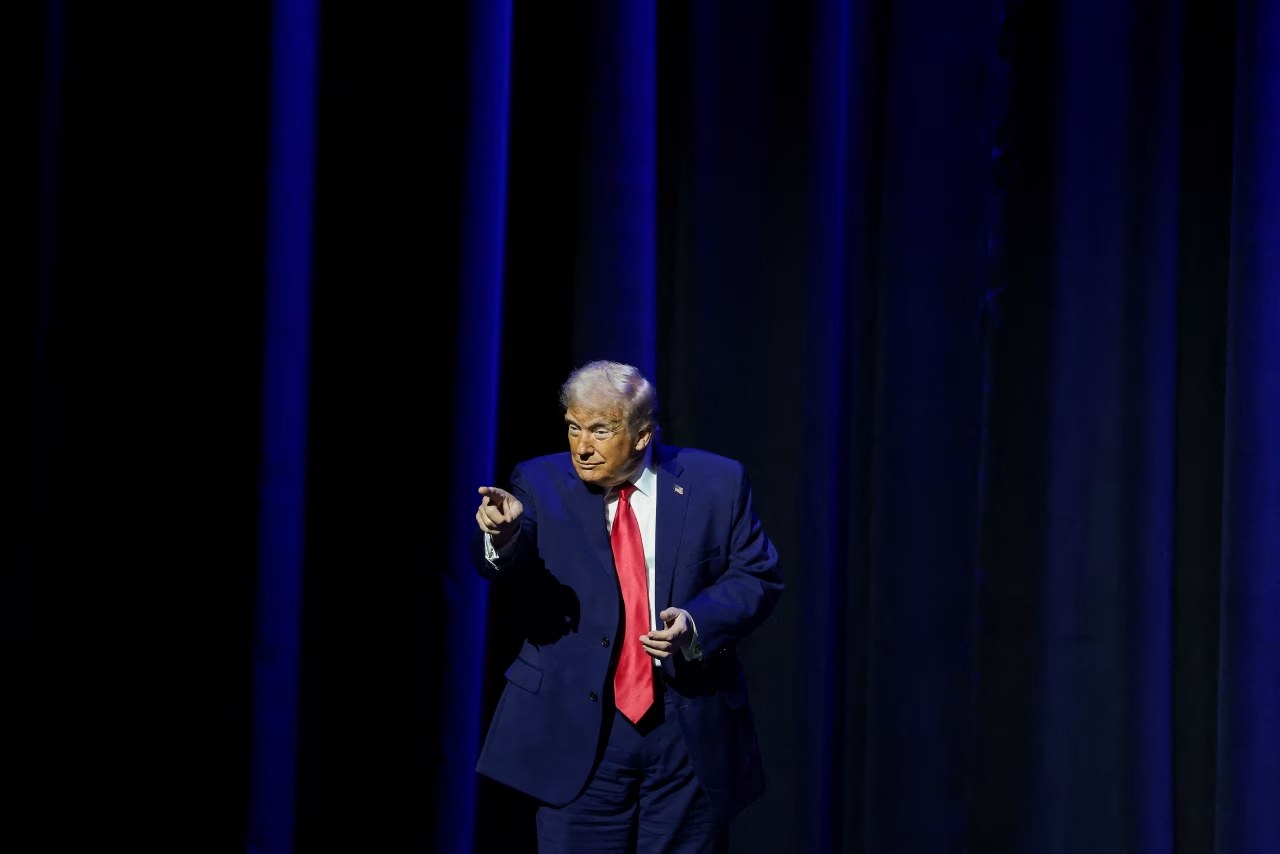
Democratic Senators Propose Trump Block Chinese Auto Manufacturing With 100% Tariffs
- Key Democratic senators have urged former President Donald Trump to implement a ban on Chinese automakers manufacturing vehicles in the U.S.
- The senators also want to prohibit Chinese-made vehicles assembled or titled in Canada and Mexico from entering the United States market.
- This bipartisan appeal, originating from Wisconsin, Michigan, and New York, targets a potential influx of foreign competition in the critical automotive sector.
- The senators aim to leverage Trump’s stated protectionist trade policies to achieve their objective of safeguarding American manufacturing jobs.
A Bold Appeal Across Party Lines on Trade Strategy
DONALD TRUMP—In a striking move that transcends typical partisan divides, three prominent Democratic senators have issued a direct appeal to former President Donald Trump, urging him to utilize his executive authority to erect significant barriers against Chinese automotive manufacturers. This unprecedented call to action, spearheaded by Senators Tammy Baldwin of Wisconsin and Elissa Slotkin of Michigan, alongside Senate Minority Leader Chuck Schumer of New York, centers on a multifaceted strategy to prevent Chinese automakers from establishing a manufacturing presence within the United States.
The senators’ letter, dispatched with an urgency that signals deep concern over the evolving global automotive landscape, specifically calls for a comprehensive crackdown not only on vehicles produced on American soil but also on those manufactured or even titled in neighboring Canada and Mexico and subsequently imported into the U.S. This demand underscores a shared apprehension regarding the potential economic and national security implications of unchecked Chinese automotive expansion into the vital North American market.
The appeal to Trump is a calculated gamble, predicated on the belief that his well-documented “America First” trade agenda and his history of imposing tariffs on Chinese goods could align with their protectionist goals. By engaging a former president known for his assertive trade stances, these senators are seeking to apply maximum pressure and explore all avenues to preemptively shield the domestic auto industry from what they perceive as a looming threat.
Leveraging Trump’s Trade Stance to Block Competition
An Unconventional Alliance on Trade Policy
The decision by Senators Tammy Baldwin, Elissa Slotkin, and Chuck Schumer to directly petition former President Donald Trump on matters of trade policy highlights a strategic convergence of interests, albeit from different political platforms. Trump’s presidency was marked by a series of confrontational trade actions against China, including the imposition of significant tariffs on billions of dollars worth of Chinese goods. This history has led the Democratic senators to believe that Trump might be receptive to implementing similar stringent measures against Chinese automakers, potentially through executive orders or trade negotiations.
The senators’ letter explicitly requests that Trump “crack down” on the manufacturing and sales of Chinese vehicles in the U.S. This is not merely a suggestion for future policy but a demand for immediate and decisive action. Their strategy hinges on the assumption that Trump, eager to reassert his influence on trade issues and potentially rally a protectionist base, would see value in embracing this particular policy initiative. As reported by The Wall Street Journal on March 14, 2024, this plea signifies a willingness to collaborate with a political adversary on an issue deemed critical for national economic security.
The specific ask extends beyond simply blocking U.S.-based manufacturing. The senators also want a ban on Chinese vehicles that are manufactured or have been titled in Canada and Mexico from entering the U.S. This broader scope aims to close potential loopholes that Chinese automakers might exploit, such as establishing assembly plants in North American countries with preferential trade agreements with the U.S. The senators are concerned that such a strategy could undermine domestic production and jobs, even if the final assembly occurs outside U.S. borders. This comprehensive approach signals a deep understanding of global supply chains and the potential for circumventing direct import restrictions.
The strategic rationale behind this appeal is clear: to deploy Trump’s established reputation as a trade hawk against China. By framing the issue as one of economic protectionism and national interest—themes that resonated strongly during Trump’s 2016 campaign—the senators aim to trigger a response. This tactic demonstrates a pragmatic, albeit unusual, approach to policy-making, prioritizing the perceived outcome over traditional political allegiances. The success of this gambit will depend on Trump’s willingness to engage and the specific actions he might be willing to take, should he regain executive power.
What Are the Geopolitical Risks of Chinese Auto Expansion?
National Security and Economic Sovereignty Concerns
The call from Senators Baldwin, Slotkin, and Schumer to block Chinese automakers from manufacturing in North America is rooted in a complex web of geopolitical and economic concerns that extend beyond simple market competition. The potential influx of vehicles manufactured by companies linked to or state-supported by China raises significant questions about national security, technological sovereignty, and economic resilience. As outlined in discussions among policy analysts regarding global trade, nations are increasingly scrutinizing foreign direct investment, particularly from strategic competitors.
One primary concern revolves around the data and technology embedded in modern vehicles. Chinese-manufactured cars, like all contemporary vehicles, are increasingly connected, generating vast amounts of data on driving habits, locations, and even vehicle diagnostics. Experts in cybersecurity have warned that vehicles could potentially be used for surveillance or cyber-espionage, transmitting sensitive information back to their country of origin. For instance, a report by the Center for Strategic and International Studies (CSIS) in 2023 highlighted the growing vulnerability of connected vehicle ecosystems to state-sponsored cyber threats.
Furthermore, the expansion of Chinese automakers into the U.S. market could have profound implications for the domestic automotive supply chain. The U.S. auto industry, a cornerstone of American manufacturing for over a century, supports hundreds of thousands of jobs and is integral to the nation’s industrial base. Allowing a dominant foreign player to establish significant manufacturing operations, potentially with lower labor costs or state subsidies, could erode the competitiveness of American companies, leading to job losses and a decline in domestic technological innovation. This concern was echoed by various labor unions and industry associations in recent years, advocating for policies that protect American manufacturing jobs.
The senators’ request to bar vehicles manufactured or titled in Canada and Mexico is a direct attempt to preemptively close off avenues for Chinese automakers to circumvent U.S. regulations. The North American Free Trade Agreement (NAFTA), now the United States-Mexico-Canada Agreement (USMCA), facilitates the movement of goods within the region. However, senators fear that Chinese companies could use this framework to their advantage, potentially establishing assembly plants in these countries and flooding the U.S. market with vehicles that, while technically “North American,” are primarily Chinese in origin and technological underpinnings. This concern reflects a broader trend of geopolitical competition playing out in the economic sphere, where trade policy becomes a critical tool for asserting national interests and security.
Economic Stakes: Protecting U.S. Auto Jobs and Innovation
The Ripple Effect on American Workers and Innovation
The automotive sector in the United States represents more than just manufacturing; it is a critical engine for economic growth, technological advancement, and employment for hundreds of thousands of Americans. The appeal from Senators Baldwin, Slotkin, and Schumer to former President Trump to block Chinese automakers from manufacturing in North America is fundamentally about safeguarding these deeply intertwined economic interests. They are looking to leverage Trump’s known protectionist stance to prevent a potential disruption to the established U.S. auto industry, which has been undergoing significant transformations with the shift towards electric vehicles (EVs) and autonomous driving technologies.
The senators’ concerns are not theoretical. Chinese automakers have been rapidly advancing in EV technology and are increasingly looking to export their products globally. Companies like BYD, SAIC Motor, and Geely have demonstrated significant production capacity and innovation. If these companies were to establish manufacturing bases in the U.S. or use Mexico and Canada as entry points, they could directly compete with American brands like Ford, General Motors, and Stellantis. This increased competition could lead to price wars, reduced market share for domestic manufacturers, and, consequently, job losses in factories, R&D, and the broader automotive supply chain. According to the Alliance for Automotive Innovation, the U.S. auto industry directly employs over 1.5 million people and supports millions more indirectly.
Moreover, the senators are likely mindful of the race for innovation in the automotive sector. The development of next-generation vehicles, particularly EVs and those with advanced driver-assistance systems (ADAS), requires substantial investment in research and development. If Chinese companies gain significant market share, it could potentially stifle domestic innovation by reducing the financial incentives for U.S. companies to invest heavily in new technologies. The senators are, in essence, advocating for a policy that supports the long-term viability and technological leadership of the American auto industry. This aligns with broader policy discussions about industrial policy and ensuring the U.S. remains at the forefront of critical technological sectors.
The inclusion of a ban on vehicles manufactured or titled in Canada and Mexico is a crucial component of their strategy. This aims to prevent Chinese automakers from exploiting existing trade agreements, such as the USMCA, to bypass direct U.S. import restrictions. For example, a Chinese company could potentially assemble vehicles in Mexico using Chinese components and then export them to the U.S. as “North American-made.” The senators’ explicit request seeks to close this perceived loophole, ensuring that any effective ban on Chinese vehicles is comprehensive and addresses the entire North American market. This forward-thinking approach reflects an understanding of complex international trade dynamics and the need for robust, preventative measures to protect domestic economic interests and jobs.
How Might Trump Respond to the Senators’ Plea?
The President’s Leverage and Potential Actions
The unprecedented appeal from three Democratic senators to former President Donald Trump places him in a unique position, potentially allowing him to reassert his influence on trade policy and China relations. Trump’s administration was characterized by a protectionist trade agenda, marked by significant tariffs imposed on goods from China and ongoing trade disputes. His consistent rhetoric often championed “America First” policies, prioritizing domestic industries and jobs over global trade agreements. This established track record makes the senators’ decision to approach him a calculated move, banking on his known proclivities towards confronting China on trade issues.
Trump has previously expressed strong opposition to Chinese automotive imports. In 2018, he tweeted about the potential for imposing a 20% or 25% tariff on all imported cars, specifically mentioning that this could affect vehicles from the European Union and, by extension, other countries. He has also publicly criticized the current administration’s approach to trade with China, often arguing that it is too lenient. Therefore, the senators’ request aligns with a policy direction Trump has previously advocated for, making it plausible that he would consider taking action if he were in office. Analysts familiar with Trump’s policy approach suggest he might see this as an opportunity to demonstrate his commitment to protecting American manufacturing and to differentiate himself from the current administration.
Should Trump decide to act, the mechanisms he could employ are varied. Executive orders are a powerful tool he has used in the past to enact policy changes quickly. He could direct the U.S. Trade Representative to investigate Chinese automotive imports for national security risks, a common precursor to imposing tariffs or other trade restrictions under Section 232 of the Trade Expansion Act of 1962. Alternatively, he could initiate new trade negotiations or impose direct tariffs on Chinese vehicles, potentially at rates significantly higher than those already in place for other goods. The senators’ specific request to also target vehicles from Mexico and Canada, even if assembled there, suggests a need for a broader interpretation of trade agreements or the potential imposition of tariffs that would affect vehicles assembled in those countries if they contain significant Chinese content or intellectual property. This could involve renegotiating or imposing new conditions under the USMCA framework.
The senators’ strategic appeal to Trump is a testament to the polarizing nature of U.S.-China trade relations and the complex political landscape surrounding it. It underscores how certain policy objectives can transcend partisan boundaries, leading to unusual alliances in pursuit of specific outcomes. The effectiveness of this gambit will ultimately depend on Trump’s willingness to embrace the senators’ specific proposals and his ability to translate them into actionable policy. The outcome could set a significant precedent for how future trade disputes with China are handled, particularly in critical industries like the automotive sector.
Frequently Asked Questions
Q: Why are Democratic senators asking Donald Trump to intervene?
Democratic senators are appealing to former President Trump because they believe he possesses the executive authority and a more protectionist stance towards China that could effectively implement their desired trade restrictions. Their goal is to prevent Chinese automakers from gaining a foothold in the North American market through manufacturing.
Q: What specific actions are the senators requesting?
The senators are calling for a complete ban on Chinese vehicles being manufactured or titled within the United States. Additionally, they want to prevent Chinese-manufactured vehicles, even if assembled or titled in Canada or Mexico, from entering the U.S. market.
Q: Which Chinese automakers are of concern?
While the source text does not name specific Chinese automakers, the senators’ concern broadly targets any Chinese automotive companies seeking to establish manufacturing operations or sell vehicles in the North American market. This strategy is aimed at preempting future competition and protecting domestic jobs.
Q: What are the economic implications of Chinese auto manufacturing in the U.S.?
Allowing Chinese automakers to manufacture in the U.S. could lead to increased competition for established domestic brands, potentially impacting jobs and market share. The senators believe such a move could also threaten national security and hinder the growth of American automotive innovation.
📰 Related Articles
- Trump Ousts Attorney General Bondi Amid Fallout From Epstein Scandal
- Colorado Appeals Court Vacates Tina Peters’ Prison Sentence Over Election Fraud Claims
- Federal Judge Blocks Trump’s Unconstitutional Order Against Public Media Funding
- Federal Funding for NPR, PBS Safe as Judge Halts Trump Executive Order
