
Lola Rykiel’s Pompom Paris Rejects Fast Fashion, Prioritizing Bespoke Pleasure Over Mass Production
- Lola Rykiel, granddaughter of Sonia Rykiel, founded Pompom Paris in 2019 with an anti-establishment fashion philosophy.
- Pompom Paris focuses on selling “pleasure” and making women feel good through dramatic yet comfortable designs, rejecting traditional runway shows and seasonal collections.
- The brand operates from a single Rue de Grenelle boutique, with most items custom-made by a small team of seamstresses.
- Pompom’s signature pieces, like sequined bomber jackets, range from 990 to 2,000 euros, emphasizing personalization and emotional connection.
- Rykiel intentionally shuns online sales and influencer marketing, prioritizing a direct, intimate client relationship.
In a World Obsessed with Hype, One Parisian Designer Dares to Be Different
LOLA RYKIEL—In the relentlessly commodified world of contemporary fashion, where seasonal trends dictate demand and digital algorithms define desirability, a quiet revolution is unfolding on Paris’s historic Left Bank. Lola Rykiel, the 40-year-old granddaughter of the legendary French designer Sonia Rykiel, is charting an audaciously independent course with her label, Pompom Paris. Launched in 2019, Pompom Paris consciously eschews the relentless churn of the fashion calendar, influencer marketing, and the pursuit of commercial scale, opting instead for a deeply personal, bespoke approach centered on one core principle: “I want to sell pleasure.”
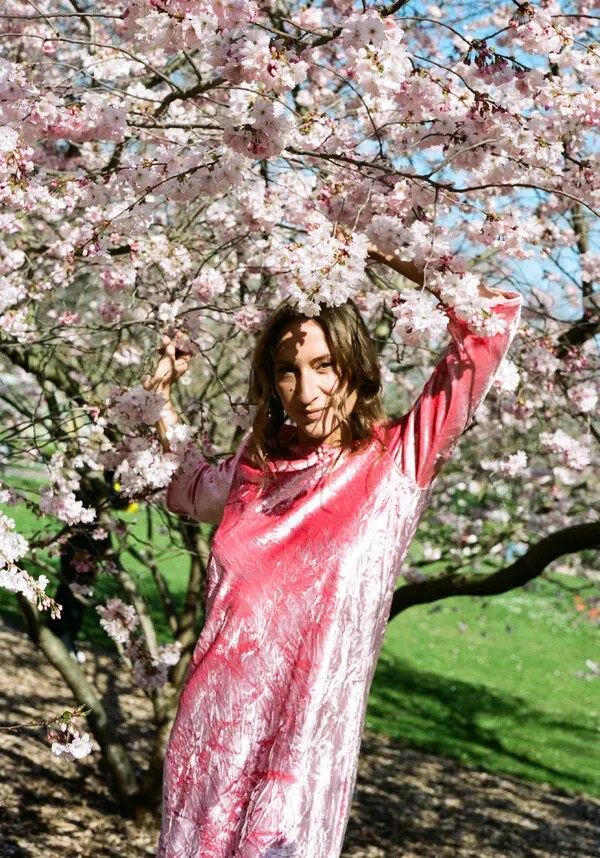
This philosophy stands in stark contrast to the legacy of her iconic grandmother, Sonia Rykiel, famously known for declaring, “My color is black. And black, if it’s worn right, is a scandal.” While Sonia’s pioneering “poor boy” knits scandalized the haute couture establishment of the late 1960s with their rebellious comfort, Lola’s Pompom Paris aims not to shock, but to delight and empower. Her signature motif is unapologetically pink, a vibrant palette liberally adorned with marabou feathers, sequins, and rhinestones, deployed with a blend of irony and earnestness that defines the brand’s unique allure. This is not about imitation, but about a joyful reinterpretation of what fashion can mean for the modern woman.
At a time when brands scramble for digital visibility and global reach, Pompom Paris operates almost as a secret society, with no online sales and minimal stock. Most garments are custom-made by a small team of seamstresses in an atelier just around the corner from her intimate Rue de Grenelle shop. This commitment to individuality and craft over commerciality reflects a radical departure from industry norms, signaling a potential shift in how luxury is perceived and consumed. As the fashion landscape continues to evolve, the unconventional model of Lola Rykiel Pompom Paris offers a compelling alternative to the prevailing fast-fashion paradigm.
The Anti-Algorithm Aesthetic: Lola Rykiel’s Vision for Pompom Paris
In an industry often criticized for its fleeting trends and rigid hierarchies, Lola Rykiel’s Pompom Paris presents a refreshing antithesis, carving out a niche where personal comfort and unapologetic self-expression reign supreme. Her vision deliberately positions Pompom in a separate dimension from the traditional Fashion Week spectacle, a system she candidly admits to disliking. “Fashion, for me, is like what’s in and what’s out, what’s good and what’s bad,” Ms. Rykiel stated in early March, articulating a profound rejection of the power dynamics inherent in mainstream design. Instead, her focus is on introspection and individual style: “What is interesting is to try to know yourself and to observe yourself and to be like, ‘OK, this looks great on me, so I’m going to wear it.’” This sentiment forms the bedrock of Pompom’s anti-algorithmic aesthetic, a philosophy that prioritizes genuine connection and bespoke creation over fleeting digital relevance.
Unpacking the “Dramatic and Comfortable” Ethos
Ms. Rykiel describes her designs as “dramatic and comfortable,” a paradox that perfectly encapsulates the brand’s playful yet luxurious appeal. Consider the leopard-print sequined dress, an eye-catching statement piece designed to fit like an oversize, off-the-shoulder T-shirt, yet meticulously lined in satin to ensure ultimate softness against the skin. Another standout is the Cruella jumpsuit, a black velour halter garment provocatively embellished with a trompe l’oeil manicured hand traced in rhinestones on the backside. Ms. Rykiel explained the provocative detail with characteristic candor: “It’s very clear that it’s a woman’s hand because I wanted it to be like I’m grabbing my own butt.” This playful subversion of traditional elegance is further evident in her dream to design everything without zippers, which she believes are “something that stresses people.” This attention to the wearer’s experience, prioritizing ease and pleasure, underscores Pompom Paris’s dedication to making women feel truly good about themselves.
The intentional independence of Pompom Paris from commercial pressures and digital metrics borders on radical. While many contemporary brands invest heavily in social media presence and influencer marketing to scale operations, Ms. Rykiel operates with little concern for such conventional commerciality. Her business model, centered on a single boutique and an atelier where most pieces are custom-made by a small team of seamstresses, harks back to an earlier era of haute couture. The commitment to crafting around the client’s desires is absolute. As she puts it, “If you don’t like rhinestones, satin and sequins, you might not be happy here. But if you do like that, you are the goddess, and we are going to create around you.” This approach to Lola Rykiel Pompom Paris is a deliberate rejection of mass production, offering a truly personal luxury experience that resonates with a growing desire for authenticity.
This deliberate divergence from mainstream fashion is not merely a stylistic choice but a philosophical one. By prioritizing the intrinsic value of comfort and the emotional resonance of a garment over its commercial viability or adherence to trends, Pompom Paris provides a compelling alternative to the pervasive fast-fashion culture. It challenges consumers to reconsider what true luxury means, steering away from brand ubiquity towards the unique satisfaction of bespoke creation. As the fashion world continues its rapid evolution, Pompom Paris offers a thoughtful counter-narrative, suggesting that the future of desirable clothing might lie not in wider reach, but in deeper, more personal connections. This profound understanding of design and its emotional impact is deeply rooted in a legacy that both inspires and challenges her creative journey.
A Legacy Reimagined: From Sonia Rykiel’s Revolution to Pompom’s Intimacy
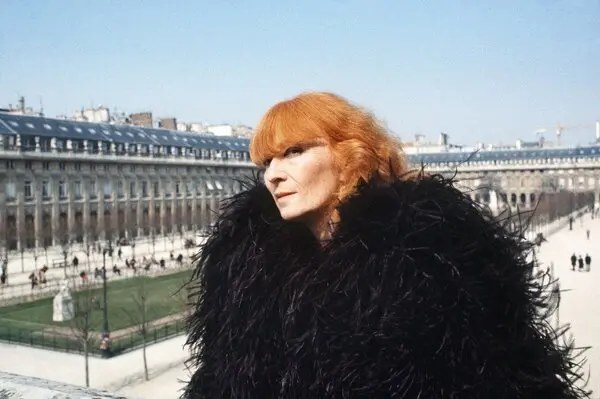
The shadow of an iconic fashion matriarch often compels progeny to either replicate or rebel; Lola Rykiel chose a nuanced path of reinvention, acknowledging her grandmother Sonia’s towering legacy while forging a distinct identity for Pompom Paris. Sonia Rykiel, a self-taught, iconoclastic designer, made her indelible mark on French fashion in May 1968, opening her first store at 6 Rue de Grenelle amidst the fervor of the Sorbonne student protests. Her revolutionary “poor boy” knits defied the staid conventions of the time, followed by innovative maternity wear that flattered rather than concealed, reversible garments, and slinky knitwear with extra-long arms favored by luminaries like Anouk Aimée and Audrey Hepburn. These contributions solidified her status as a French national hero, liberating women from bourgeois fashions and cementing her brand as synonymous with Saint-Germain-des-Prés’s bohemian attitude.
The Rise and Fall of a Parisian Icon
By the early 1990s, the Sonia Rykiel brand had burgeoned into a thriving enterprise, boasting a $75 million business and distributing collections through 250 retailers across 40 countries. This period represented the zenith of the brand’s commercial success, embodying a global reach that few independent designers achieved. However, the ensuing decades brought significant shifts. Sonia Rykiel retired in 2009 due to Parkinson’s disease, marking a turning point. Three years later, in 2012, the family sold an 80 percent stake in the business to a Hong Kong investment group. Following Sonia Rykiel’s death at age 86 in 2016, the family divested their remaining 20 percent stake, though they retained valuable real estate holdings, including the iconic Boulevard Saint-Germain flagship.
A Legacy Reimagined: From Sonia Rykiel’s Revolution to Pompom’s Intimacy (Continued)
Despite critically acclaimed collections under designers like Julie de Libran, the brand struggled to maintain its footing, eventually entering receivership and leading to liquidation in 2019. G-III Apparel Group subsequently acquired the Sonia Rykiel brand in 2021. This trajectory deeply impacted Lola Rykiel, who grew up immersed in the atelier and witnessing the brand’s evolution. For years, she consciously avoided the family business, finding the pressure “impossible to live up to,” and instead channeled her creative energy into dance, studying at the Martha Graham School in New York. However, a growing frustration with how far the business had strayed from her grandmother’s original vision by 2019 spurred her to found Pompom Paris, initially as a less serious creative outlet rooted in her athletic background, featuring “athletics and comfort sprinkled with rhinestones and humor.”
Lola’s mother, Nathalie Rykiel, has keenly observed her daughter’s distinctive personal taste. Nathalie noted that Lola “used to like brands that my mother and I didn’t really understand,” describing her preference for “very shiny, very gold, very strass” — an aesthetic that distinguishes Lola’s work from both Sonia’s minimalist black and a conventional “Barbie” or “Lolita” style. Julie de Libran, who worked with Sonia Rykiel and later started her own collection, recognized Lola’s inherent creative strength: “Lola has a lot of sides. She reads a lot. She’s interested in what’s going on in the world. Pompom is an expression of her. It’s completely its own thing.” This independent spirit, coupled with a deep reverence for the craft, allowed Lola to reclaim a piece of her family’s fashion heritage, but on her own, intimately scaled terms. The journey from a global fashion house to a bespoke atelier reflects a profound shift in priorities, setting the stage for Pompom’s radical commercial model.
Is Direct-to-Client the New Luxury? Pompom Paris’s Radical Retail Model
In an age where digital reach defines success for most brands, Pompom Paris champions an almost antiquated intimacy, forging a blueprint for truly exclusive luxury. Lola Rykiel’s approach to running Pompom Paris is so charmingly independent and anti-algorithmic that it challenges the very tenets of modern commerce. The brand deliberately avoids online sales, influencer marketing, and the pursuit of commercial scale. When asked how people discover Pompom, Ms. Rykiel delivers a deadpan, knowing response: “They don’t.” This intentional obscurity is not a business failing but a calculated strategy, ensuring that every interaction is personal, deliberate, and deeply authentic. Clients must physically visit the store on Rue de Grenelle, a pilgrimage that underscores the brand’s commitment to an exclusive, direct-to-client model.
Rejecting the Digital Imperative
The Pompom Paris boutique itself is an experience. It’s set up as a fantastical boudoir, beckoning visitors with a neon pink sign framed by a black velvet curtain, scattered with Swarovski crystals like stars in a night sky. Inside, velvet furnishings are adorned with satin pillows embroidered with provocative phrases such as “Blonde,” “Spiritual Bimbo,” and “I Love Men But They Don’t Make Me Happy.” This playful, sensuous atmosphere contributes to Pompom’s focus on “pleasure.” Ms. Rykiel recounts that “a lot of people come in and ask, ‘Is this a sex toy store?’” — a testament to the boundary-pushing nature of her aesthetic. She jokingly adds, “I’m like, ‘No, I’m not selling vibrators.’ I could, but I’m not going to.” This candidness hints at a shared family trait, as her mother, Nathalie Rykiel, did open Rykiel Woman in the early 2000s, a store that sold luxury sex toys alongside fur blankets and candles, aiming to “introduc[e] pleasure in a luxurious way because, before that, all the sex toys were gross and in Pigalle.” Lola even discovered a trove of her mother’s “huge, like a walkie-talkie” vibrators in what is now the Pompom atelier, humorously noting they were “probably because they were all made by men who were thinking, This is what they need.”
This deliberate, hands-on approach extends to Pompom’s production. Almost everything is custom-made by a small team of seamstresses working in the atelier on Rue des Saints-Pères, just around the corner from the shop. The collection offers extensive customization, allowing clients to request pieces that are “longer, shorter, more narrow at the waist.” If a client has a unique idea, Ms. Rykiel is genuinely eager to listen, fostering a collaborative design process. This bespoke model, with its emphasis on individual fit and personal input, stands in stark contrast to the mass-produced, standardized offerings of most contemporary fashion brands. It redefines luxury not through exclusivity of price point alone, but through the rarity of personal attention and tailored craftsmanship. This commitment to an intimate, personalized client relationship is perhaps best exemplified by her signature customizable pieces.
The Bomber: A Canvas for Emotional Expression and Personal Power
Beyond mere attire, Pompom’s bomber jacket epitomizes a subversive luxury, transforming garments into declarations of individual identity and audacious self-expression. The origins of Pompom Paris’s iconic customizable bomber jacket are deeply personal, stemming from a discovery Lola Rykiel made with her mother, Nathalie, while sifting through boxes of her grandmother Sonia’s old clothes. They unearthed a cropped black bomber jacket Sonia had made for herself, adorned with personalized patches. “It was so cool,” Ms. Rykiel recalled, describing it as “cropped and oversize, and the sleeves were super-long like her sweaters.” This piece sparked an immediate vision for Lola: “Wow, imagine if I could do that but in satin and with crystals on the back.” This revelation quickly led to a limited collection of pink and black styles created in collaboration with Café de Flore, the legendary Left Bank cafe where Sonia Rykiel famously had lunch every day. These initial bombers swiftly sold out, prompting Ms. Rykiel to expand the concept, establishing it as a cornerstone of the Lola Rykiel Pompom Paris collection.
The Philosophy of “Too Much”
Today, Pompom Paris offers these highly sought-after bombers in an impressive array of materials and finishes, ranging from vibrant red vinyl and luxurious faux leopard fur to denim cascading with crystals, camouflage, and satin in a multitude of colors including green, hot pink, and classic black. What truly sets these jackets apart, however, is the profound level of personalization. Clients can choose any word or phrase to be emblazoned across the back, over the heart, or as a hidden message on the lining. These custom garments range in price from 990 to 2,000 euros (approximately $1,146 to $2,315), a reflection of their bespoke craftsmanship and unique emotional value. Ms. Rykiel views the bomber not merely as a piece of clothing, but as an emotional object, a collaborative project with her clients to craft a perfect, resonant message. When clients express a desire for something unique but not “too much,” Ms. Rykiel playfully retorts, “Yes, let’s do it too much.” This philosophy embraces bold expression, echoing the audacious spirit of her grandmother, but with a distinct, playful twist.
The power of these personalized bombers lies in their ability to convey a wearer’s inner world to the outer one. Ms. Rykiel has facilitated memorable creations, such as the Jean-Paul Sartre quote “L’enfer, c’est les autres” (hell is other people) written in rhinestones across a black satin style. Fashion journalist Peggy Frey sports a green and black satin bomber embroidered with “Mother of Nazes,” a private joke that loosely translates to “Mother of Losers,” explaining, “It’s the nickname my two lovely children gave me. I wear it when I feel a little bit down.” Ms. Rykiel’s own dream is to create a bomber for her favorite author, Virginie Despentes, emblazoned with “Baise-Moi,” the controversial title of her first novel and film. Ms. Rykiel envisions these bombers as sources of “magical powers,” imagining a scenario where an admirer spots a client in the street, is struck by the provocative message, and remembers her. “I like the idea of stamping someone,” she asserts, adding, “He’s going to remember you for all his life, or maybe just for the day, and just be like, ‘Wow, that girl is cool.’” This level of personalization reflects a broader shift towards values-driven consumption in the high-fashion market.
Reimagining Luxury: Pompom Paris and the Future of Conscious Consumption
In an industry grappling with its environmental footprint and a consumer base increasingly weary of fleeting trends, Pompom Paris presents a compelling, if unconventional, model for luxury’s evolution. Lola Rykiel’s deliberate rejection of mass production and her focus on bespoke creations naturally align her brand with the burgeoning slow fashion movement, even if not explicitly labeled as such. By emphasizing longevity, emotional connection, and individualized craftsmanship, Pompom Paris offers a stark contrast to the disposable nature of fast fashion. This approach not only provides a unique value proposition for clients but also inherently mitigates some of the environmental and ethical concerns associated with high-volume manufacturing.
The Allure of Conscious Craftsmanship
A key aspect of Pompom Paris’s responsible luxury model is its sourcing strategy. Ms. Rykiel actively utilizes platforms like Nona Source, the LVMH deadstock fabric platform, for materials. This initiative allows her to access exquisite sequins, satin, and feathers that would otherwise go unused by larger luxury houses, transforming what might be considered waste into cherished, unique garments. This commitment to using existing resources, rather than demanding new production, subtly positions Lola Rykiel Pompom Paris at the forefront of conscious consumption within the high-end market. Her background in dance also informs her design ethos, imbuing pieces with a distinctive blend of “athletics and comfort sprinkled with rhinestones and humor,” reflecting a holistic view of fashion that marries aesthetic appeal with practical wearability.
Julie de Libran, a contemporary designer who understands the intricate pressures of the fashion world, has observed Lola Rykiel’s potent creative spirit. De Libran noted that Lola “reads a lot” and “is interested in what’s going on in the world,” concluding that “Pompom is an expression of her. It’s completely its own thing.” This assessment highlights the profound authenticity at the heart of Pompom Paris. It is a brand that is deeply personal, driven by a designer’s genuine values and vision, rather than market demands or shareholder expectations. This authenticity resonates strongly with modern consumers who increasingly seek out brands that reflect their own ethical considerations and desire for meaningful engagement over mere acquisition.
The unique operational model of Pompom Paris—its eschewal of digital sales, its focus on in-person consultations, and its commitment to custom, made-to-order garments—offers a powerful blueprint for what the future of luxury might entail. In a world saturated with digital noise and mass-produced goods, the intimate, artisanal experience provided by Pompom Paris feels profoundly refreshing and forward-thinking. It suggests that true luxury is not about widespread availability or brand recognition, but about the unique pleasure of owning something made just for you, with a story and a soul. As consumers increasingly seek authenticity and personal connection, brands like Lola Rykiel Pompom Paris may well define the next wave of high-end retail, demonstrating that exclusivity, sustainability, and personal pleasure can indeed coexist harmoniously in the world of fashion.
Frequently Asked Questions
Q: What is Pompom Paris’s unique approach to fashion?
Pompom Paris, founded by Lola Rykiel, rejects traditional fashion cycles, runway shows, and seasonal trends. Instead, it focuses on custom-made, ‘dramatic and comfortable’ designs that prioritize a woman’s pleasure and self-expression. The brand operates with an anti-algorithm philosophy, shunning online sales and mass production to cultivate an intimate, bespoke experience for clients at its Parisian boutique. This unique model positions Lola Rykiel Pompom Paris as a counter-narrative to fast fashion.
Q: How does Lola Rykiel incorporate her family’s legacy while forging her own path?
Lola Rykiel grew up immersed in the world of her grandmother, the iconic Sonia Rykiel, yet she deliberately forged a distinct identity for Pompom Paris. While she acknowledges the heritage of luxurious fabrics and an independent spirit, her designs feature a lighter, more playful aesthetic with pinks, sequins, and marabou feathers, a departure from Sonia’s signature black knits. Lola’s approach to Pompom Paris channels the creative spirit of her background while rejecting the commercial pressures that ultimately led to the decline of the original Sonia Rykiel brand.
Q: What kind of clothing does Pompom Paris offer?
Pompom Paris specializes in ‘dramatic and comfortable’ pieces designed to make women feel good. Key offerings include leopard-print sequined dresses lined in satin, velour tracksuits, and the distinctive Cruella jumpsuit featuring a rhinestone-traced hand. The brand is particularly known for its highly customizable bomber jackets, available in various materials like red vinyl or faux leopard fur, which can be emblazoned with personalized phrases. Every piece from Lola Rykiel Pompom Paris emphasizes bespoke craftsmanship and individual expression.
Q: Why does Pompom Paris avoid online sales and traditional marketing?
Lola Rykiel intentionally eschews online sales, social media, and influencer marketing for Pompom Paris to maintain a deeply personal, intimate connection with her clients. This anti-algorithmic approach ensures that almost every piece is custom-made by a small team of seamstresses at the brand’s atelier, allowing for extensive personalization. By limiting access to its Rue de Grenelle boutique, Pompom Paris cultivates an exclusive experience that prioritizes genuine client engagement and the unique pleasure of bespoke fashion over broad commercial reach.
